High-quality 3D assets at affordable prices — trusted by designers, engineers, and creators worldwide. Made with care to be versatile, accessible, and ready for your pipeline.
Included File Formats
This model is provided in 14 widely supported formats, ensuring maximum compatibility:
• - FBX (.fbx) – Standard format for most 3D software and pipelines
• - OBJ + MTL (.obj, .mtl) – Wavefront format, widely used and compatible
• - STL (.stl) – Exported mesh geometry; may be suitable for 3D printing with adjustments
• - STEP (.step, .stp) – CAD format using NURBS surfaces
• - IGES (.iges, .igs) – Common format for CAD/CAM and engineering workflows (NURBS)
• - SAT (.sat) – ACIS solid model format (NURBS)
• - DAE (.dae) – Collada format for 3D applications and animations
• - glTF (.glb) – Modern, lightweight format for web, AR, and real-time engines
• - 3DS (.3ds) – Legacy format with broad software support
• - 3ds Max (.max) – Provided for 3ds Max users
• - Blender (.blend) – Provided for Blender users
• - SketchUp (.skp) – Compatible with all SketchUp versions
• - AutoCAD (.dwg) – Suitable for technical and architectural workflows
• - Rhino (.3dm) – Provided for Rhino users
Model Info
• - All files are checked and tested for integrity and correct content
• - Geometry uses real-world scale; model resolution varies depending on the product (high or low poly)
• • - Scene setup and mesh structure may vary depending on model complexity
• - Rendered using Luxion KeyShot
• - Affordable price with professional detailing
Buy with confidence. Quality and compatibility guaranteed.
If you have any questions about the file formats, feel free to send us a message — we're happy to assist you!
Sincerely,
SURF3D
Trusted source for professional and affordable 3D models.
More Information About 3D Model :
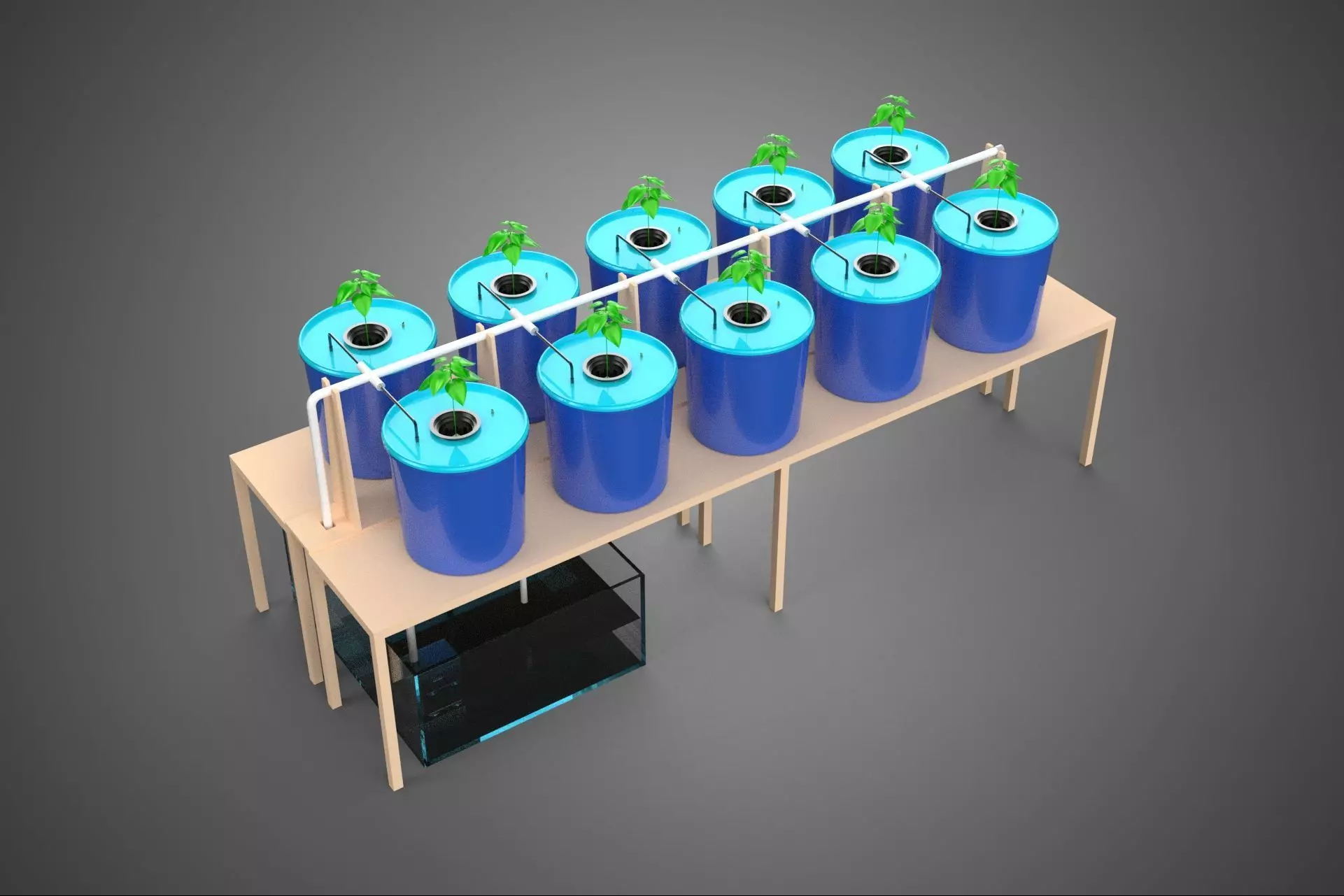
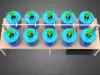
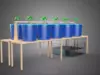
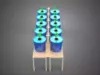
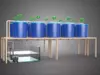
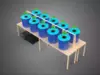
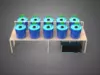
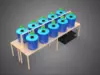
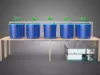
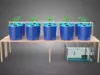
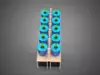
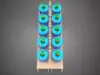
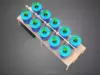
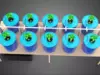
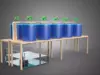
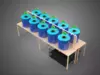
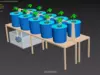
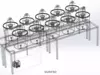
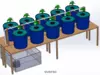
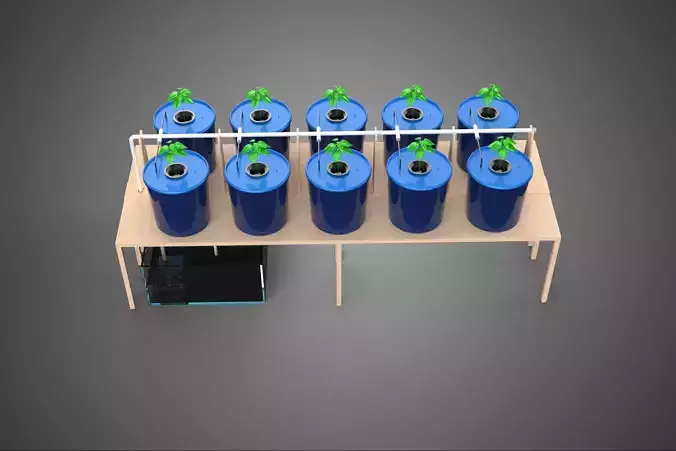
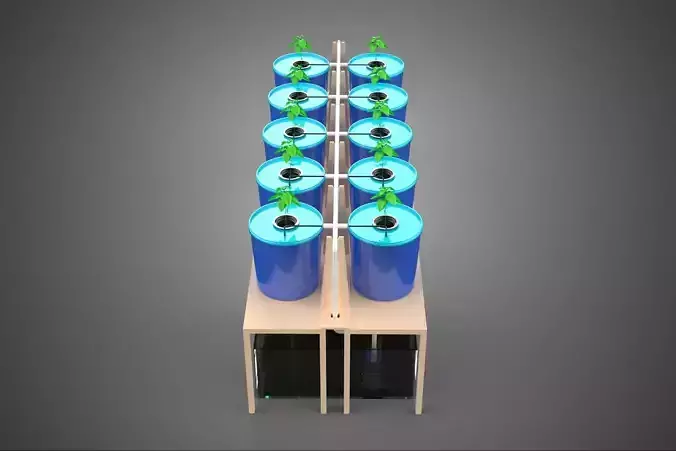
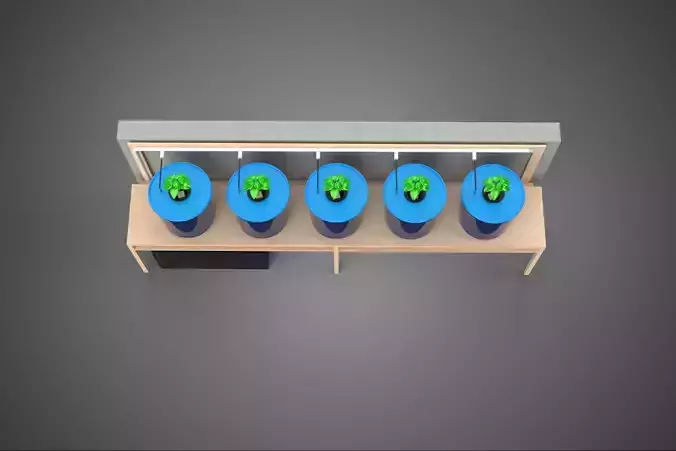
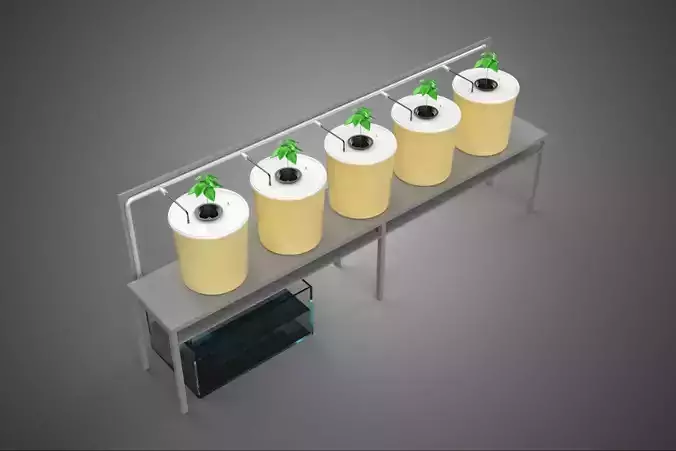
The 10 POT BATO METHOD DUTCH BUCKET SYSTEM HYDROPONICS PLANT STATION is a modular, recirculating, semi-closed hydroponic cultivation technique utilizing ten individual growing containers, commonly referred to as Bato buckets or Dutch buckets. This system is optimized for the cultivation of large, long-term fruiting crops that require substantial support and an extended growth cycle, such as tomatoes, cucumbers, peppers, eggplants, and vine plants.
Nomenclature and System Definition
The terms Bato Method and Dutch Bucket System are synonymous, deriving their name from the design of the proprietary bucket container, often credited to Dutch agricultural engineering, a region central to advanced protected cultivation. Unlike open systems where nutrient solution is used once and discarded (run-to-waste), or simple Deep Water Culture (DWC), the Dutch Bucket system is a modified drip irrigation setup that permits the efficient collection and reuse of the nutrient solution. The 10 POT designation defines the physical scale of the installation, indicating a small-to-medium-scale commercial or intensive hobbyist operation consisting of ten distinct planting sites.
Physical Components and Configuration
A typical 10-pot Bato system comprises several key integrated components:
- Bato Buckets (10x): These containers are typically constructed from opaque, UV-resistant plastic (polypropylene), usually holding 10 to 12 liters of substrate. A critical design feature is an internal drain fitting—often a siphon elbow or a small PVC pipe—positioned a few centimeters above the base of the bucket. This fitting prevents the total evacuation of the nutrient solution, maintaining a shallow reservoir at the bottom (approximately 2–5 cm deep), thereby providing a buffer for the roots and reducing the risk of desiccation during temporary pump failure.
- Inert Substrate: The buckets are filled with an inert, non-degrading growing medium such as perlite, coco coir (often mixed with perlite), rockwool cubes, or expanded clay pebbles (hydroton). This substrate provides mechanical support for the plant structure and ensures adequate aeration (oxygen availability) to the root zone, as the majority of water and nutrients are provided externally.
- Nutrient Reservoir: A centralized tank stores the bulk nutrient solution, composed of balanced minerals dissolved in water and maintained at precise pH and electrical conductivity (EC) levels suitable for the specific crop phase.
- Delivery and Return Lines: A submersible pump draws the solution from the reservoir and pushes it through a pressurized main supply line (manifold). Smaller drip lines, often equipped with adjustable emitters, deliver the solution directly to the base of each of the ten buckets. Excess solution that drains through the internal elbow fitting exits the bucket via a common return gutter or drainage pipe, which routes the solution back to the central reservoir for replenishment and recirculation.
### Operational Mechanics
The system operates on timed cycles. The pump activates several times throughout the day, depending on environmental factors (light intensity, temperature) and plant size, saturating the inert media.
The key functional advantage of the Bato method lies in its precise control over the root environment:
- Aeration: The retained layer of solution prevents the entire root mass from becoming waterlogged, promoting high oxygen levels in the upper substrate layers while ensuring the lower roots have continuous access to moisture and nutrients.
- Modularity: Because each plant resides in an isolated bucket, monitoring individual root health is simpler. Furthermore, if a single plant contracts disease or pest issues, it can be easily removed and isolated without compromising the entire station, a significant benefit over continuous trough systems like Nutrient Film Technique (NFT).
- Efficiency: By recirculating the drained solution, the system minimizes water usage and nutrient waste compared to run-to-waste systems.
### Applications and Advantages
The 10-pot scale is highly practical for researchers, educational settings, or high-yield indoor farming initiatives where crop specific requirements mandate large root zones and substantial vertical training (trellising). The Dutch Bucket system is praised for its robustness, reliability, and adaptability to various inert media types, providing a scalable and highly controlled environment for intensive hydroponic production.
KEYWORDS: Hydroponics, Bato Bucket, Dutch Bucket System, Recirculating, Semi-closed System, Inert Substrate, Perlite, Coco Coir, Greenhouse Cultivation, Vine Crops, Tomatoes, Cucumbers, Drip Irrigation, Modular System, Nutrient Solution, EC Control, pH Management, Aeration, Protected Environment, High-Yield Farming, 10 Pot System, Crop Production, Plant Station, Irrigation Manifold, Drain Fitting, Root Zone, Trellising, Controlled Environment Agriculture, Submersible Pump.