High-quality 3D assets at affordable prices — trusted by designers, engineers, and creators worldwide. Made with care to be versatile, accessible, and ready for your pipeline.
Included File Formats
This model is provided in 14 widely supported formats, ensuring maximum compatibility:
• - FBX (.fbx) – Standard format for most 3D software and pipelines
• - OBJ + MTL (.obj, .mtl) – Wavefront format, widely used and compatible
• - STL (.stl) – Exported mesh geometry; may be suitable for 3D printing with adjustments
• - STEP (.step, .stp) – CAD format using NURBS surfaces
• - IGES (.iges, .igs) – Common format for CAD/CAM and engineering workflows (NURBS)
• - SAT (.sat) – ACIS solid model format (NURBS)
• - DAE (.dae) – Collada format for 3D applications and animations
• - glTF (.glb) – Modern, lightweight format for web, AR, and real-time engines
• - 3DS (.3ds) – Legacy format with broad software support
• - 3ds Max (.max) – Provided for 3ds Max users
• - Blender (.blend) – Provided for Blender users
• - SketchUp (.skp) – Compatible with all SketchUp versions
• - AutoCAD (.dwg) – Suitable for technical and architectural workflows
• - Rhino (.3dm) – Provided for Rhino users
Model Info
• - All files are checked and tested for integrity and correct content
• - Geometry uses real-world scale; model resolution varies depending on the product (high or low poly)
• • - Scene setup and mesh structure may vary depending on model complexity
• - Rendered using Luxion KeyShot
• - Affordable price with professional detailing
Buy with confidence. Quality and compatibility guaranteed.
If you have any questions about the file formats, feel free to send us a message — we're happy to assist you!
Sincerely,
SURF3D
Trusted source for professional and affordable 3D models.
More Information About 3D Model :
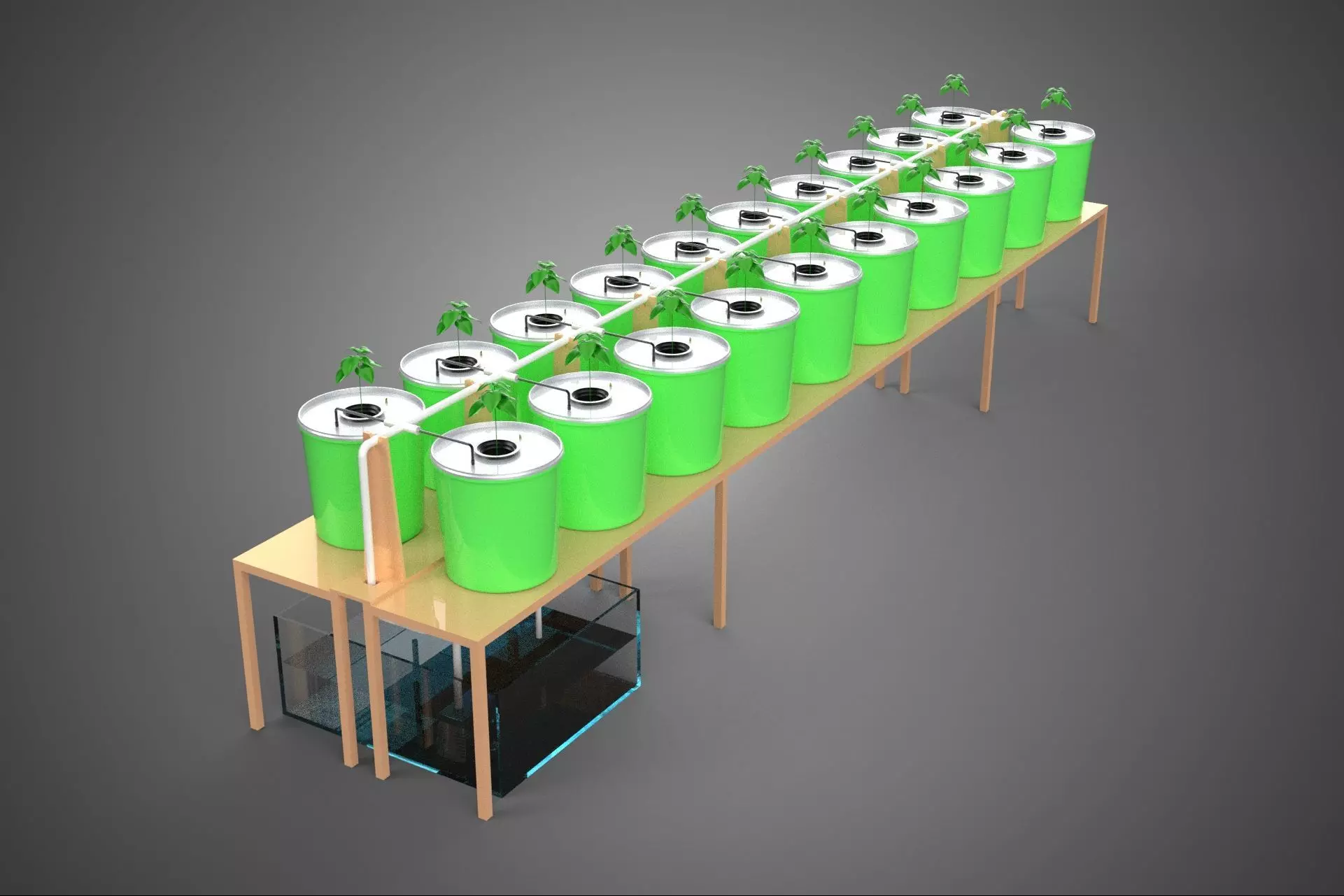
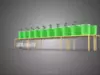
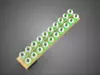
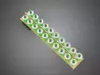
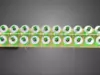
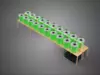
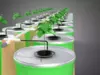
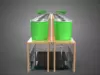
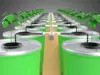
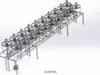
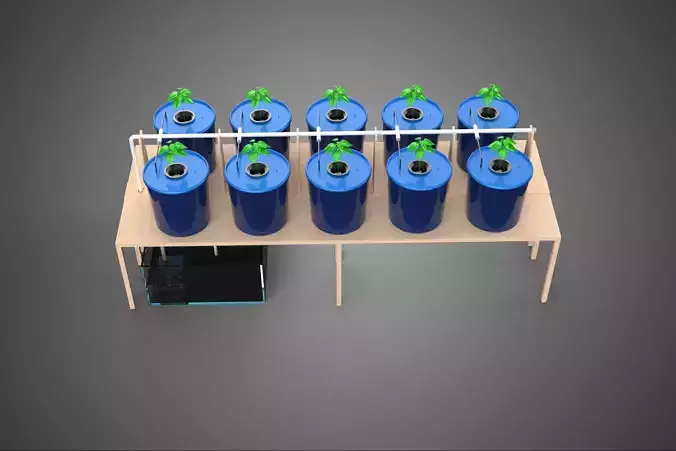
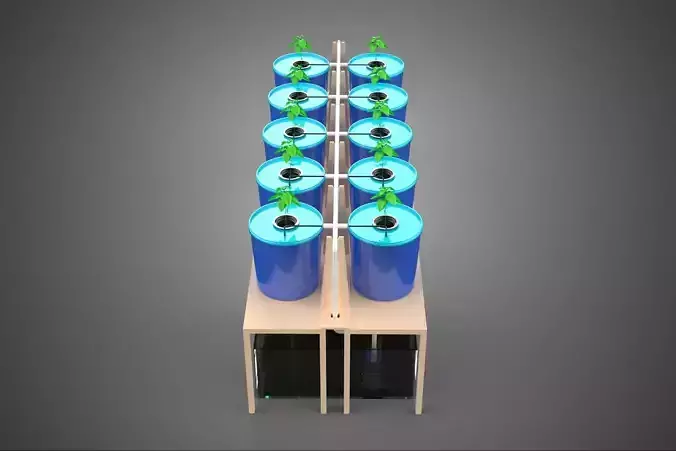
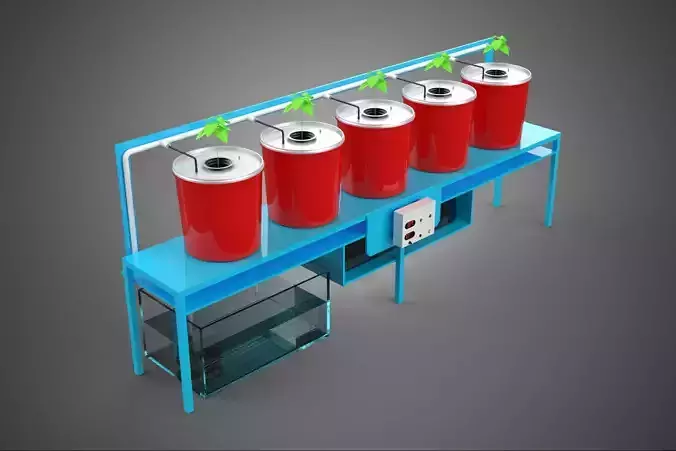
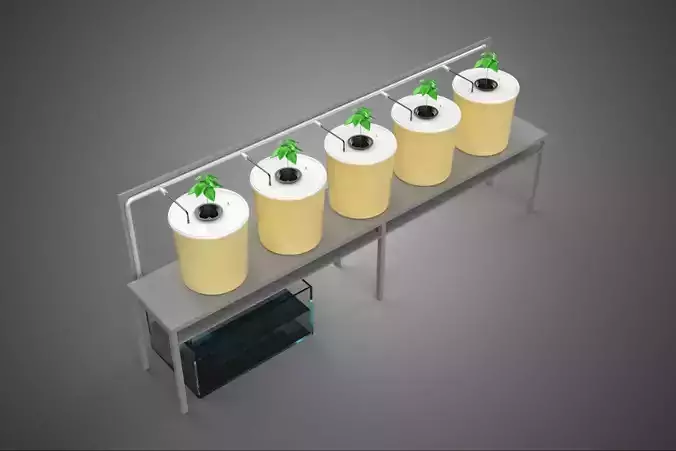
The 2 Row Dutch Bucket System Bato Hydroponic Recirculating 16 Plant is a specialized apparatus for substrate-based hydroponic cultivation, designed specifically for medium-scale commercial or intensive hobbyist applications involving large, vine-producing crops. Commonly referred to as a Bato Bucket system, this methodology utilizes drip irrigation within a closed, recirculating design to optimize nutrient delivery and water use efficiency.
System Definition and Nomenclature
The Dutch Bucket system derives its name from its popularization in the Netherlands for greenhouse horticulture. The core component is the Bato bucket, a proprietary or generalized cultivation vessel characterized by an internal siphon or specialized drain elbow located a few centimeters above the bucket base. This feature distinguishes the Bato Bucket method from standard drain-to-waste drip systems (DTW) by ensuring a shallow pool of nutrient solution is retained at the bottom of the vessel, providing a localized reservoir for the root structure while simultaneously promoting aeration in the upper root zone.
The designation Recirculating indicates that the system operates as a Closed Recirculating System (CRS). Excess nutrient solution (leachate) that drains from the buckets is collected and channeled back to a central reservoir (sump). The solution is then tested for Electrical Conductivity (EC) and pH, adjusted, and reintroduced into the irrigation cycle, minimizing water consumption and nutrient discharge into the environment.
Configuration and Components
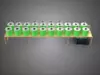
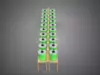
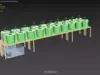
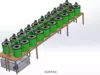
This specific configuration supports 16 individual plants arranged symmetrically in two parallel rows (typically eight plants per row) to maximize space efficiency and facilitate maintenance access.
- Bato Buckets (16 Units): Each bucket acts as the growing container, filled with an inert, non-soil substrate such as perlite, coco coir, or rockwool cubes. The substrate provides physical support and moisture retention while remaining chemically inert.
- Nutrient Reservoir (Sump): A centralized tank designed to hold the complete volume of the working nutrient solution. It houses the submersible pump, water level sensors, and ports for nutrient addition and pH adjustment.
- Delivery System: Consists of a primary pump connected to main feeder lines, which branch into smaller lateral drip lines. Each of the 16 buckets receives dedicated emitters (drip stakes), ensuring targeted and consistent delivery of the nutrient solution directly to the plant base.
- Recirculation Plumbing: A network of PVC piping or heavy-duty channels placed beneath the bucket rows collects the runoff solution. The drain elbows in the Bato buckets funnel the leachate into this network, which utilizes gravity flow to return the solution to the sump.
- Support Structure: Given the suitability for tall, vining plants, the system often requires an integrated external trellis or suspension system for supporting the mature crop weight.
### Operational Principles
The Bato Bucket system relies on periodic, pulsed delivery of nutrient solution. The frequency and duration of these pulses are governed by a central timer, adjusted according to the crop growth stage, light intensity, temperature, and the specific moisture retention properties of the selected substrate.
When the pump is activated, the drippers saturate the substrate. Excess solution drains out through the overflow elbow. Because the drain line is positioned above the base, a small amount of liquid—the perched water table—remains in the bucket bottom. This retained water prevents rapid desiccation and provides hydration to the lower root mass, while the bulk of the solution drains away, preventing the waterlogging and subsequent oxygen deprivation common in fully saturated systems.
The recirculated solution must be rigorously monitored. Crucial parameters include:
- Electrical Conductivity (EC): Measures the total concentration of dissolved nutrient salts. As plants consume water and nutrients, the EC shifts and requires daily calibration.
- pH Level: Determines the bioavailability of various mineral ions. The optimal pH range (typically 5.5 to 6.5) must be maintained to prevent nutrient lockout.
### Applications and Advantages
The 2 Row Dutch Bucket System is particularly well-suited for crops that require large root volumes, extended life cycles, and significant physical support, including:
- Tomatoes (Solanum lycopersicum)
- Cucumbers (Cucumis sativus)
- Bell Peppers and Chillies (Capsicum annuum)
- Eggplant (Solanum melongena)
Advantages include:
- Water Efficiency: Recirculation drastically reduces water consumption compared to drain-to-waste systems.
- Flexibility: Individual buckets allow for easy removal of diseased or spent plants without disturbing the remainder of the row.
- High Aeration: The controlled drainage inherent to the Bato design ensures superior root zone oxygenation compared to deep water culture (DWC).
- Scale: The modular 16-plant configuration is easily scalable by adding more rows and a larger reservoir.
KEYWORDS: Hydroponics, Bato Bucket, Dutch Bucket, Recirculating System, Closed Loop, Drip Irrigation, Substrate Hydroponics, Perlite, Coco Coir, 16 Plant, Tomato Cultivation, Cucumber, Peppers, Solanum lycopersicum, Nutrient Solution, EC Monitoring, pH Control, Greenhouse Technology, Horticulture, Crop Production, Recirculating Deep Culture, Sump Tank, Leachate, Aeration, Water Efficiency, Modular System, Formal Report, Vine Crops, Controlled Environment Agriculture, Drip Emitter.