High-quality 3D assets at affordable prices — trusted by designers, engineers, and creators worldwide. Made with care to be versatile, accessible, and ready for your pipeline.
Included File Formats
This model is provided in 14 widely supported formats, ensuring maximum compatibility:
• - FBX (.fbx) – Standard format for most 3D software and pipelines
• - OBJ + MTL (.obj, .mtl) – Wavefront format, widely used and compatible
• - STL (.stl) – Exported mesh geometry; may be suitable for 3D printing with adjustments
• - STEP (.step, .stp) – CAD format using NURBS surfaces
• - IGES (.iges, .igs) – Common format for CAD/CAM and engineering workflows (NURBS)
• - SAT (.sat) – ACIS solid model format (NURBS)
• - DAE (.dae) – Collada format for 3D applications and animations
• - glTF (.glb) – Modern, lightweight format for web, AR, and real-time engines
• - 3DS (.3ds) – Legacy format with broad software support
• - 3ds Max (.max) – Provided for 3ds Max users
• - Blender (.blend) – Provided for Blender users
• - SketchUp (.skp) – Compatible with all SketchUp versions
• - AutoCAD (.dwg) – Suitable for technical and architectural workflows
• - Rhino (.3dm) – Provided for Rhino users
Model Info
• - All files are checked and tested for integrity and correct content
• - Geometry uses real-world scale; model resolution varies depending on the product (high or low poly)
• • - Scene setup and mesh structure may vary depending on model complexity
• - Rendered using Luxion KeyShot
• - Affordable price with professional detailing
Buy with confidence. Quality and compatibility guaranteed.
If you have any questions about the file formats, feel free to send us a message — we're happy to assist you!
Sincerely,
SURF3D
Trusted source for professional and affordable 3D models.
More Information About 3D Model :
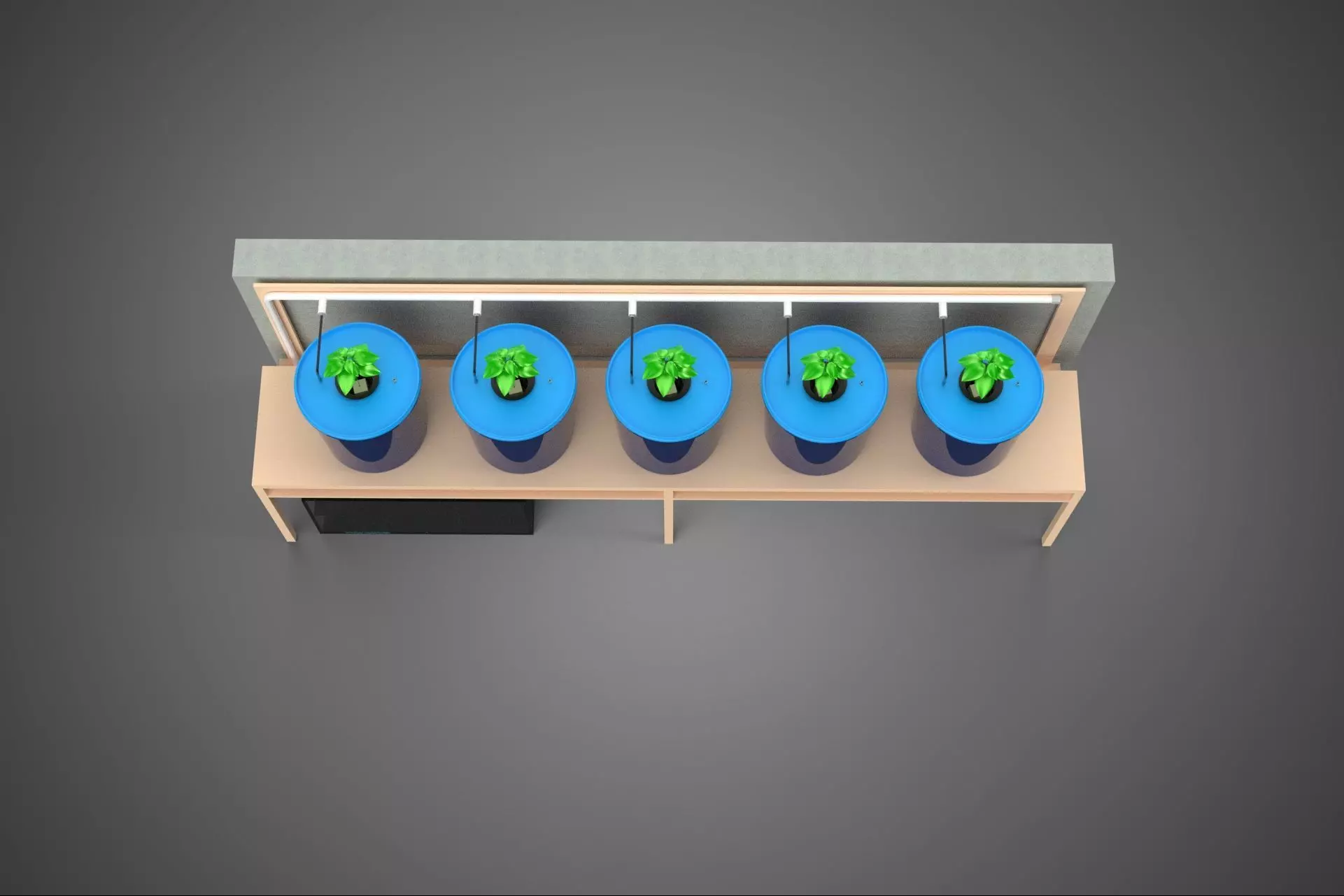
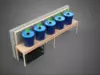
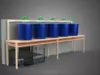
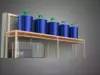
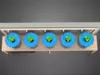
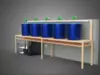
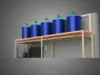
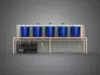
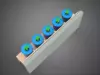
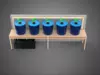
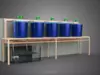
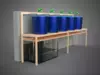
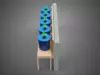
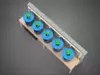
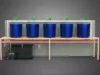
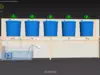
The 5 Pot Hydroponic Bato Bucket Grow Rack Plant Bench Feed Station defines a compact, integrated soilless cultivation apparatus, optimized primarily for medium- to high-yield fruiting or vining crops. This system utilizes the Bato Bucket (also widely known as the Dutch Bucket) methodology, combined with structural support and a centralized nutrient management system, facilitating efficient nutrient delivery and waste disposal typical of precision hydroponics.
1. System Components and Architecture
The described system is fundamentally modular, consisting of three primary operational zones: the growing containers, the structural support, and the nutrient management infrastructure.
1.1. Bato Buckets (Growing Containers)
The system utilizes five (5) individual Bato Buckets. These containers are specifically designed for drip hydroponics. They are typically constructed from UV-resistant, food-grade plastic (e.g., high-density polyethylene, HDPE) and are characterized by a unique internal drainage mechanism. Nutrient solution is delivered to the top of the inert substrate (such as perlite, cococoir, or rockwool) via a drip emitter. Excess solution drains out the base of the bucket through an inverted elbow fitting or siphon tube. This fitting maintains a small reservoir (a few centimeters) of nutrient solution at the bottom of the bucket, preventing the growing media from completely drying out while simultaneously ensuring sufficient aeration for the root zone. The excess solution is captured by a shared drain line and directed either back to the reservoir (recirculating system) or, more commonly, away from the system (non-recirculating or drip-to-waste, DTW).
1.2. Grow Rack and Plant Bench
The Grow Rack, or Plant Bench, serves as the structural foundation, elevating the five Bato Buckets to a manageable working height. This elevation is critical for two functions: simplifying access for maintenance (pruning, harvesting) and utilizing gravity for the efficient removal of spent nutrient solution. The bench or rack must be robust, generally fabricated from materials resistant to corrosion and moisture, such as galvanized steel, aluminum, or schedule 40 PVC piping. The structure ensures the buckets are aligned precisely over the main drain gutter or manifold, guaranteeing smooth drainage flow.
1.3. Feed Station (Nutrient Management)
The Feed Station is the centralized control hub for the hydroponic process. It consists of a large reservoir tank designed to hold the prepared nutrient solution (water mixed with specific mineral salts, adjusted for optimal pH and electrical conductivity [EC]). A submersible pump draws solution from the reservoir and pushes it through the main nutrient delivery line. This line branches off into smaller tubes, feeding the individual drip emitters located above each of the five buckets. The system typically operates on a timer, delivering precise, short bursts of solution several times per day, depending on the crop stage and environmental conditions (e.g., evapotranspiration rates). The precise control offered by the Feed Station minimizes nutrient variability and optimizes plant uptake.
2. Operational Methodology
The 5 Pot Bato Bucket system is inherently scalable and highly efficient for resource utilization compared to traditional soil methods.
Drip Delivery: Nutrient solution is delivered directly to the root zone via calibrated emitters, ensuring minimal waste and precise volume control.
Aeration and Drainage: The Bato Bucket’s design promotes high levels of dissolved oxygen in the root zone by ensuring that the majority of the substrate is not constantly saturated, while the small base reservoir prevents stress between irrigation cycles.
Crop Suitability: Due to the depth of the containers and the stable, highly-aerated environment, Bato Bucket systems excel at growing large, heavy-feeding, indeterminate vining plants, including tomatoes (Solanum lycopersicum), cucumbers (Cucumis sativus), capsicums (peppers), and certain varieties of melons.
The five-pot scale is particularly suitable for hobbyist applications, educational demonstrations, or specialized research projects requiring a small, easily managed footprint.
KEYWORDS: Hydroponics, Bato Bucket, Dutch Bucket, Drip System, Soilless Culture, Nutrient Film Technique, Deep Water Culture, Grow Rack, Plant Bench, Feed Station, Nutrient Solution, Reservior, Submersible Pump, Drip Emitter, pH Management, Electrical Conductivity, Vining Crops, Tomatoes, Cucumbers, Peppers, Indoor Gardening, Controlled Environment Agriculture, Substrate, Perlite, Coco Coir, Recirculating Hydroponics, Drip-to-Waste, Modular System, Root Zone, Aeration.