High-quality 3D assets at affordable prices — trusted by designers, engineers, and creators worldwide. Made with care to be versatile, accessible, and ready for your pipeline.
Included File Formats
This model is provided in 14 widely supported formats, ensuring maximum compatibility:
• - FBX (.fbx) – Standard format for most 3D software and pipelines
• - OBJ + MTL (.obj, .mtl) – Wavefront format, widely used and compatible
• - STL (.stl) – Exported mesh geometry; may be suitable for 3D printing with adjustments
• - STEP (.step, .stp) – CAD format using NURBS surfaces
• - IGES (.iges, .igs) – Common format for CAD/CAM and engineering workflows (NURBS)
• - SAT (.sat) – ACIS solid model format (NURBS)
• - DAE (.dae) – Collada format for 3D applications and animations
• - glTF (.glb) – Modern, lightweight format for web, AR, and real-time engines
• - 3DS (.3ds) – Legacy format with broad software support
• - 3ds Max (.max) – Provided for 3ds Max users
• - Blender (.blend) – Provided for Blender users
• - SketchUp (.skp) – Compatible with all SketchUp versions
• - AutoCAD (.dwg) – Suitable for technical and architectural workflows
• - Rhino (.3dm) – Provided for Rhino users
Model Info
• - All files are checked and tested for integrity and correct content
• - Geometry uses real-world scale; model resolution varies depending on the product (high or low poly)
• • - Scene setup and mesh structure may vary depending on model complexity
• - Rendered using Luxion KeyShot
• - Affordable price with professional detailing
Buy with confidence. Quality and compatibility guaranteed.
If you have any questions about the file formats, feel free to send us a message — we're happy to assist you!
Sincerely,
SURF3D
Trusted source for professional and affordable 3D models.
More Information About 3D Model :
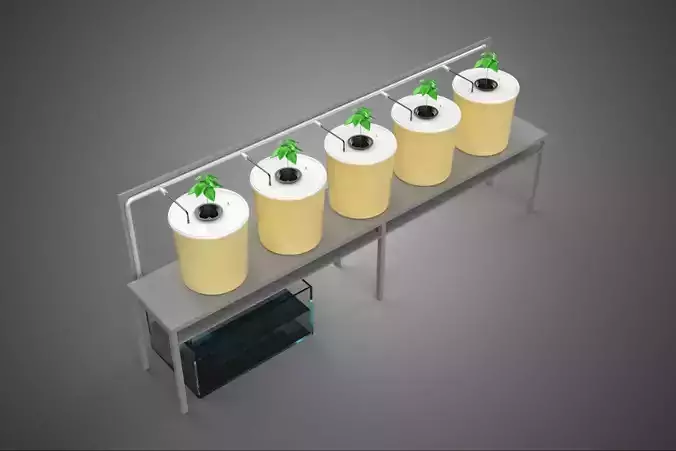
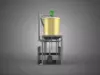
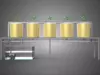
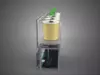
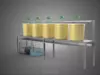
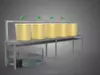
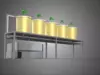
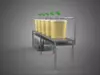
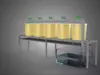
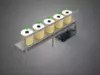
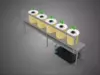
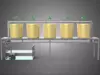
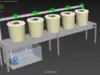
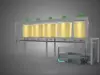
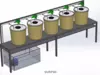
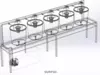
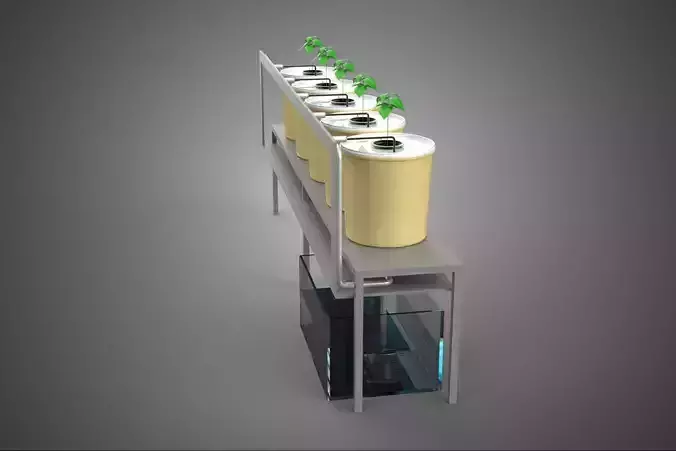
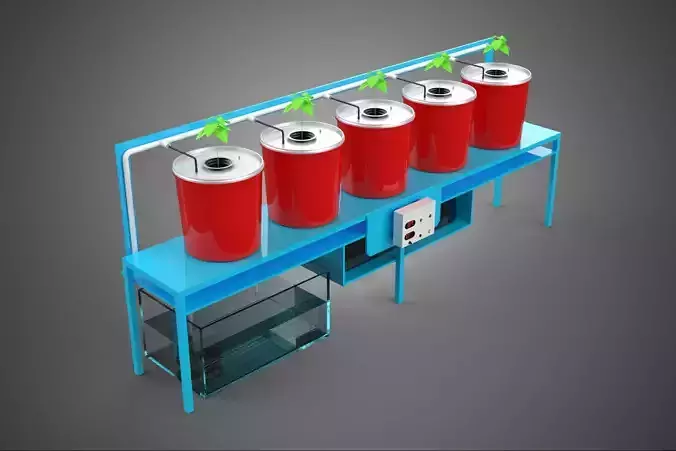
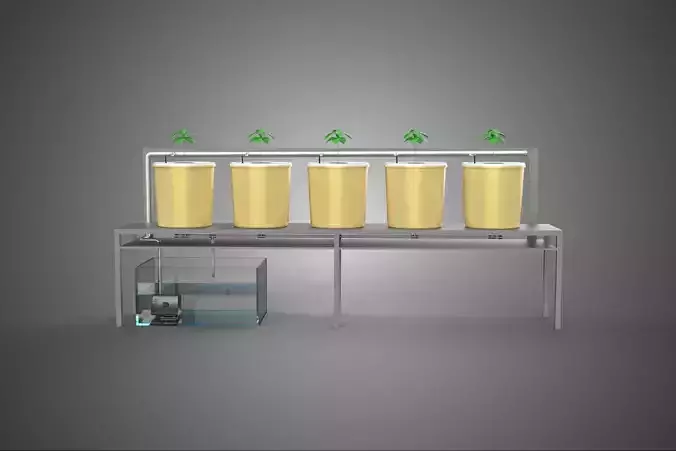
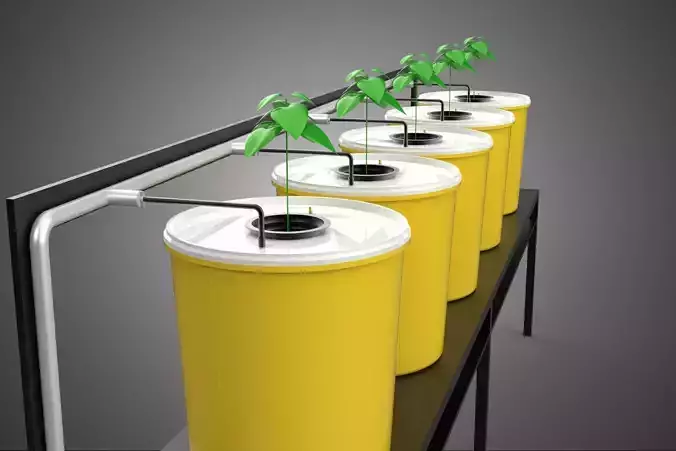
The Dutch Bucket System, also formally recognized as the Bato Bucket System, is a highly efficient, high-yield drip-irrigation hydroponic configuration specialized for cultivating large, long-duration, and vining crops such as tomatoes, peppers, cucumbers, and certain types of melons. The specific configuration described is a small-scale, 5-pot recirculating setup, meaning the system employs five individual growing containers interconnected within a closed-loop fluid delivery mechanism.
Operational Principle and Design
The system operates based on a precise, scheduled delivery of nutrient solution directly to the plant root zone, followed by the collection and subsequent reuse of the effluent. This methodology minimizes water and nutrient waste compared to run-to-waste (non-recirculating) systems.
Core Components
- Growing Containers (Bato Buckets): Five individual containers, typically constructed from opaque, food-grade plastic to prevent light penetration and subsequent algal growth. These buckets serve as housing for the inert growing medium (substrate) and the root structure. Each bucket is approximately 10 to 12 liters in volume and features a specialized drainage elbow or siphon mechanism.
- Substrate: The buckets are filled with an inert, high-porosity medium, most commonly perlite, coco coir, rockwool cubes, or a mixture thereof. The substrate provides structural support for the plant and maintains high aeration levels essential for root health, but contributes no inherent nutritional value.
- Reservoir Tank: A central, light-proof tank houses the main volume of the prepared nutrient solution (water mixed with specific mineral salts). This tank requires aeration via an air stone and pump to maintain high dissolved oxygen levels, crucial for preventing root disease (e.g., Pythium).
- Delivery System: A submersible pump located in the reservoir pushes the nutrient solution through a mainline manifold. Branching off this manifold are five micro-tubing lines, each terminated by a drip emitter (typically pressure-compensated) positioned at the base of the plant in each bucket.
- Recirculation Manifold (Return Line): The base of each Bato Bucket is equipped with an overflow port or elbow drain. This port ensures a small reserve of nutrient solution remains within the bucket (a slight ebb and flow mechanism) while the excess nutrient solution drains into a common return line, which gravity-feeds the solution back to the central reservoir.
### Mechanism of Recirculation
The system operates on a timed cycle, typically activated multiple times per day depending on the crop type, growth stage, and environmental conditions (especially evapotranspiration rates).
- Drip Feed: The timer activates the pump, forcing the nutrient solution out of the emitters. The slow drip ensures uniform saturation of the substrate without waterlogging the roots.
- Drainage: As the solution percolates through the medium, it delivers oxygen and nutrients to the roots. The excess solution drains via the elbow mechanism. This constant slow drainage flushes out accumulated salts and ensures the nutrient concentration within the root zone remains consistent with the reservoir.
- Rebalancing: The collected effluent returns to the reservoir, slightly altering the overall chemical profile (pH and Electrical Conductivity, or EC). Because the system is recirculating, regular monitoring and adjustment of pH and EC levels in the reservoir are mandatory to ensure optimal nutrient bioavailability and prevent osmotic stress to the plants.
### System Advantages and Applications
The Dutch Bucket System is highly favored in commercial and sophisticated hobby setups due to its efficiency in water management, modularity, and scalability. The 5-pot configuration is ideal for small greenhouse operations or intensive indoor gardening of high-value crops where consistent root environment and high yields are prioritized. The separation of individual plants into distinct buckets minimizes the spread of root-borne pathogens throughout the entire system.
KEYWORDS: Hydroponics, Dutch Bucket, Bato Bucket, Recirculating, Drip Irrigation, Soilless Cultivation, Substrate, Perlite, Coco Coir, Nutrient Solution, Reservoir, Closed-loop, EC Monitoring, pH Adjustment, Tomatoes, Peppers, Cucumbers, Vining Crops, High-yield, Aeration, Modular System, Drainage Manifold, Siphon Drain, Root Zone, Inert Medium, Mineral Salts, Timed Cycle, Emitter, Osmotic Stress, Greenhouse.