High-quality 3D assets at affordable prices — trusted by designers, engineers, and creators worldwide. Made with care to be versatile, accessible, and ready for your pipeline.
Included File Formats
This model is provided in 14 widely supported formats, ensuring maximum compatibility:
• - FBX (.fbx) – Standard format for most 3D software and pipelines
• - OBJ + MTL (.obj, .mtl) – Wavefront format, widely used and compatible
• - STL (.stl) – Exported mesh geometry; may be suitable for 3D printing with adjustments
• - STEP (.step, .stp) – CAD format using NURBS surfaces
• - IGES (.iges, .igs) – Common format for CAD/CAM and engineering workflows (NURBS)
• - SAT (.sat) – ACIS solid model format (NURBS)
• - DAE (.dae) – Collada format for 3D applications and animations
• - glTF (.glb) – Modern, lightweight format for web, AR, and real-time engines
• - 3DS (.3ds) – Legacy format with broad software support
• - 3ds Max (.max) – Provided for 3ds Max users
• - Blender (.blend) – Provided for Blender users
• - SketchUp (.skp) – Compatible with all SketchUp versions
• - AutoCAD (.dwg) – Suitable for technical and architectural workflows
• - Rhino (.3dm) – Provided for Rhino users
Model Info
• - All files are checked and tested for integrity and correct content
• - Geometry uses real-world scale; model resolution varies depending on the product (high or low poly)
• • - Scene setup and mesh structure may vary depending on model complexity
• - Rendered using Luxion KeyShot
• - Affordable price with professional detailing
Buy with confidence. Quality and compatibility guaranteed.
If you have any questions about the file formats, feel free to send us a message — we're happy to assist you!
Sincerely,
SURF3D
Trusted source for professional and affordable 3D models.
More Information About 3D Model :
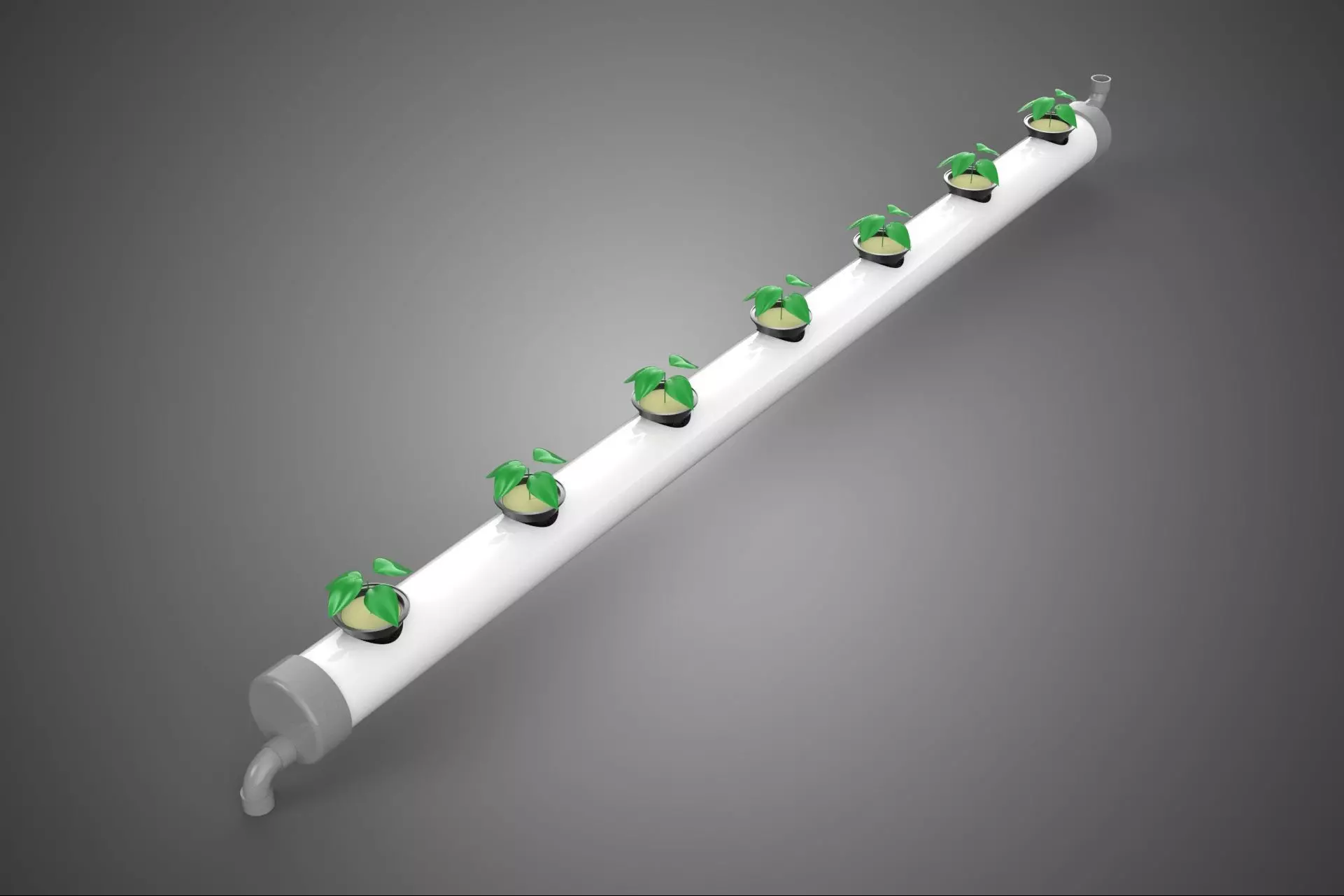
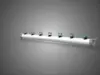
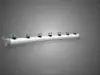
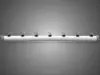
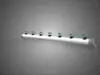
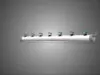
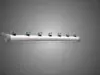
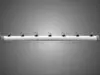
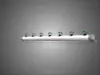
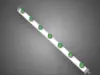
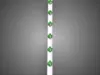
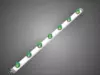
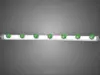
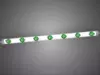
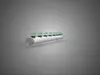
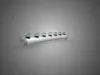
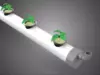
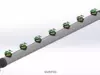
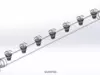
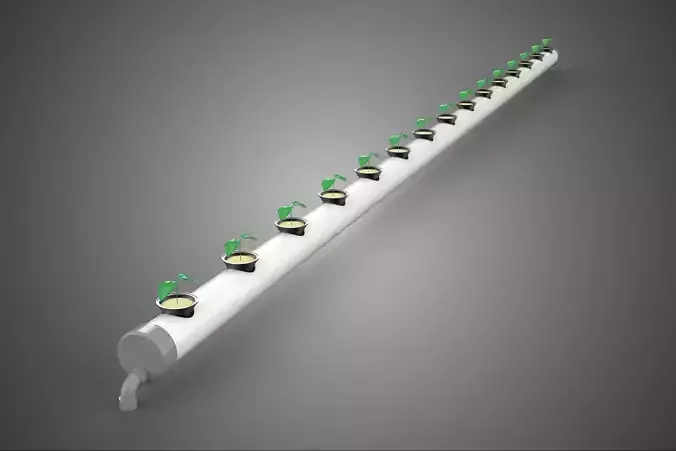
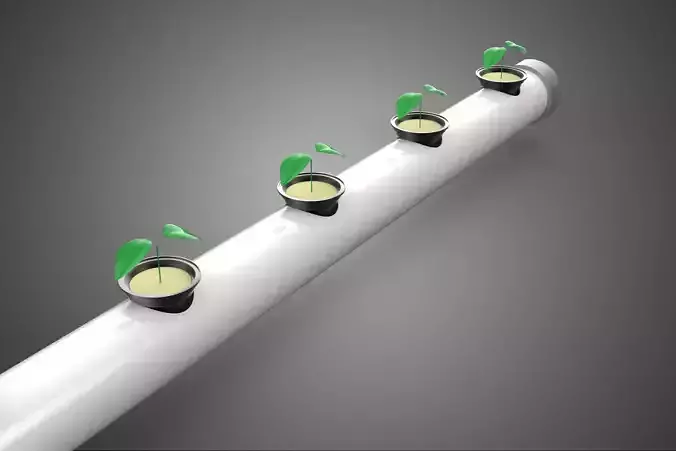
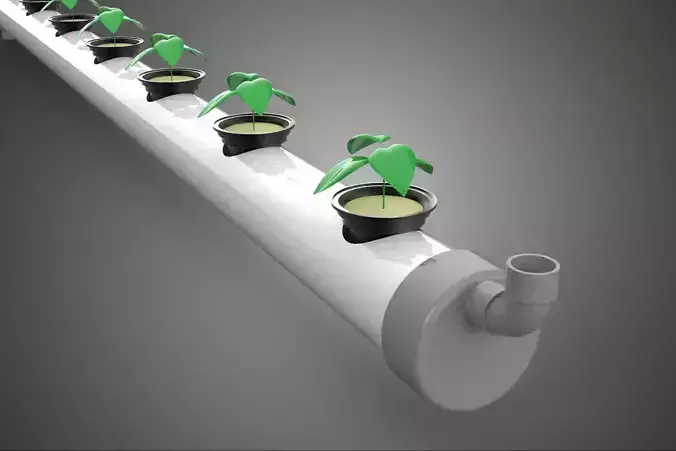
The term NFT Hydroponic PVC Tube Growing Channel Row Module Netpot Netcup refers to a specific, integrated component system utilized within Nutrient Film Technique (NFT) hydroponics, distinguishing itself through the materials used (Polyvinyl Chloride, PVC) and the specialized containers (Netpots/Netcups) employed to support plant growth. This assembly forms the fundamental structural unit for delivering essential water and dissolved nutrients to crops without the use of traditional soil substrates.
Structure and Function
NFT (Nutrient Film Technique):
NFT is a dynamic, recirculating hydroponic method where plant roots are suspended in a shallow, continuous stream (or film) of nutrient solution. This film, typically only a few millimeters deep, flows over the roots, ensuring constant access to water, minerals, and oxygen. The system is gravity-fed, usually maintaining a slight slope (typically 1:30 to 1:100) to facilitate drainage and prevent water stagnation, which can lead to anaerobic conditions detrimental to root health.
PVC Tube Growing Channel Row Module:
The core structural element is the growing channel, constructed from rigid PVC tubing or specialized rectangular PVC profiles. PVC is selected due to its durability, light weight, low cost, non-reactive nature (preventing nutrient contamination), and ease of cleaning and sterilization.
A Row Module signifies that multiple PVC tubes are aligned horizontally and connected in parallel or series, forming a standardized unit or bed within a larger hydroponic installation. The length and diameter of these tubes are calibrated based on the specific crop being cultivated (e.g., smaller diameters for lettuce and herbs; larger diameters for larger root masses).
Netpot/Netcup Integration:
Plants are typically started in an inert medium (such as rockwool, coco coir, or peat plugs) and then transplanted into specialized containers known as Netpots or Netcups. These containers are small, typically cylindrical plastic baskets characterized by a heavily perforated lattice structure.
- Function of Netpot/Netcup: They serve as the mechanical interface between the young plant and the PVC channel. They hold the initial growing medium and provide physical stability, while their open structure allows the nutrient film to easily reach and penetrate the emerging root mass.
- Placement: The Netpots are inserted into pre-cut holes along the upper surface of the PVC channel. The base of the Netpot usually extends slightly into the tube, positioning the root crown just above the flowing nutrient film.
### Operational Principles
The system operates based on the principle of minimal contact between the root system and the nutrient solution, optimizing aeration.
- Nutrient Delivery: A main reservoir pumps the filtered nutrient solution to the highest point of the Row Module.
- Flow: Gravity distributes the solution through the series of PVC channels.
- Absorption and Drainage: The roots, dangling within the channel, absorb the required water and nutrients. The excess solution drains via the channel's lower end back into the reservoir for recirculation, testing, and replenishment (fertigation).
- Oxygenation: Because only a thin film is utilized, the majority of the root mass remains suspended in the air within the channel, ensuring crucial oxygen uptake (respiration), which is vital for high metabolic rates and rapid growth.
### Advantages in Controlled Environment Agriculture (CEA)
This specific PVC-based NFT module system is highly favored in commercial CEA operations, including greenhouses and vertical farms, due to several inherent advantages:
- Water Efficiency: Recirculation minimizes water and nutrient waste compared to non-recirculating systems.
- Density and Scalability: The modular row design allows for high planting density and is easily scalable for large commercial operations.
- Disease Management: The non-soil substrate and elevated system reduce the incidence of soil-borne pathogens.
- Standardization: PVC components are standardized, allowing for easy assembly, maintenance, and replacement.
KEYWORDS: NFT, Hydroponics, PVC Tube, Growing Channel, Netpot, Netcup, Nutrient Film Technique, Recirculating Hydroponics, Controlled Environment Agriculture, CEA, Module, Row System, Soilless Cultivation, PVC Profile, Root Zone, Aeration, Plant Support, Commercial Hydroponics, Gravity Flow, Nutrient Solution, Drainage, Greenhouse Technology, Vertical Farming, Aquaculture Integration, Non-reactive Material, Plastic Components, Hydroponic System Design, Fertigation, Irrigation Technology, Crop Production.