High-quality 3D assets at affordable prices — trusted by designers, engineers, and creators worldwide. Made with care to be versatile, accessible, and ready for your pipeline.
Included File Formats
This model is provided in 14 widely supported formats, ensuring maximum compatibility:
• - FBX (.fbx) – Standard format for most 3D software and pipelines
• - OBJ + MTL (.obj, .mtl) – Wavefront format, widely used and compatible
• - STL (.stl) – Exported mesh geometry; may be suitable for 3D printing with adjustments
• - STEP (.step, .stp) – CAD format using NURBS surfaces
• - IGES (.iges, .igs) – Common format for CAD/CAM and engineering workflows (NURBS)
• - SAT (.sat) – ACIS solid model format (NURBS)
• - DAE (.dae) – Collada format for 3D applications and animations
• - glTF (.glb) – Modern, lightweight format for web, AR, and real-time engines
• - 3DS (.3ds) – Legacy format with broad software support
• - 3ds Max (.max) – Provided for 3ds Max users
• - Blender (.blend) – Provided for Blender users
• - SketchUp (.skp) – Compatible with all SketchUp versions
• - AutoCAD (.dwg) – Suitable for technical and architectural workflows
• - Rhino (.3dm) – Provided for Rhino users
Model Info
• - All files are checked and tested for integrity and correct content
• - Geometry uses real-world scale; model resolution varies depending on the product (high or low poly)
• • - Scene setup and mesh structure may vary depending on model complexity
• - Rendered using Luxion KeyShot
• - Affordable price with professional detailing
Buy with confidence. Quality and compatibility guaranteed.
If you have any questions about the file formats, feel free to send us a message — we're happy to assist you!
Sincerely,
SURF3D
Trusted source for professional and affordable 3D models.
More Information About 3D Model :
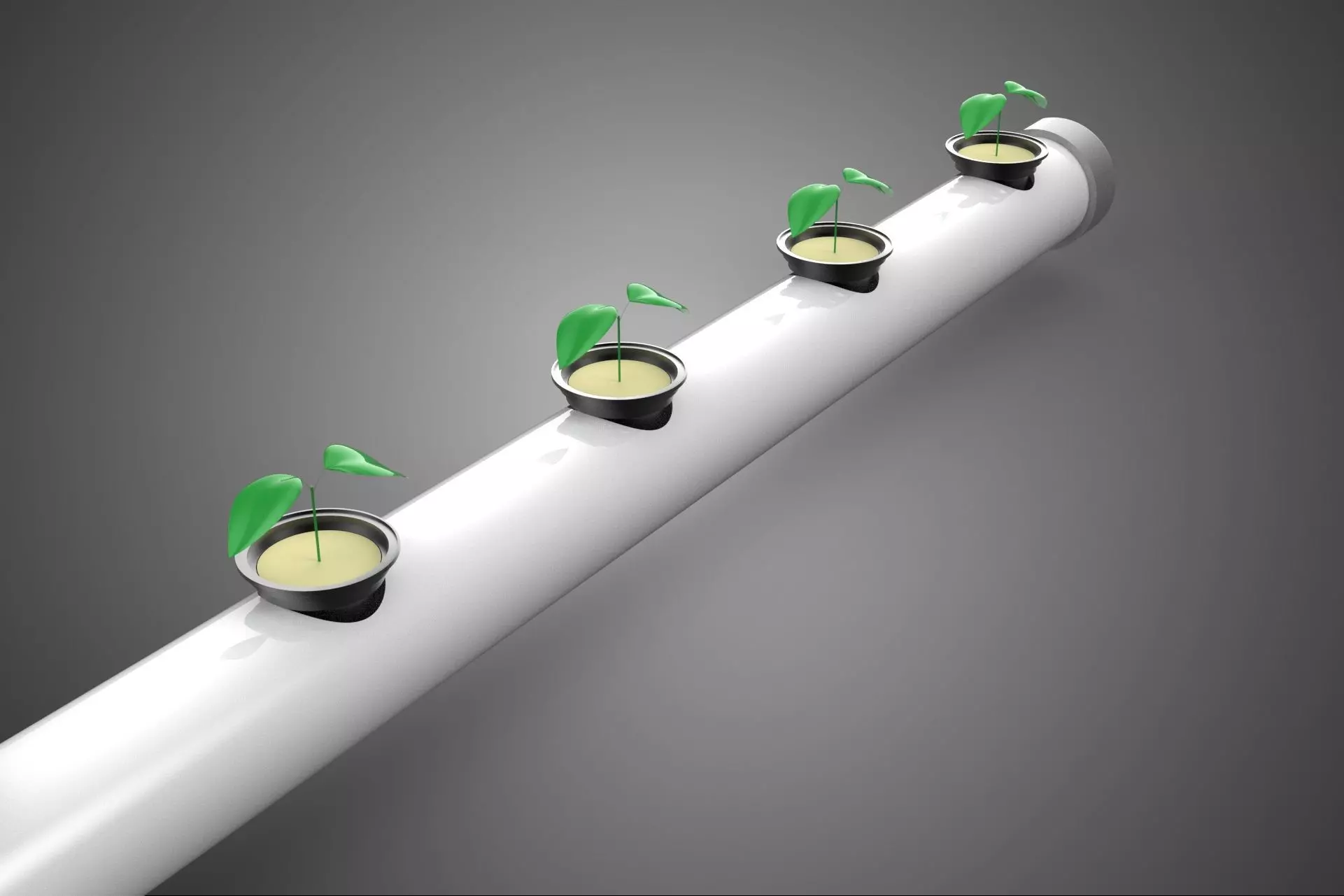
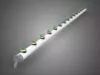
The DIY Plastic Pipe Tube Channel Net Pot Cup Plants Hydroponic Kit refers to a customizable, often self-assembled, horticultural system utilizing plastic components to cultivate plants without soil (soilless culture) via hydroponic methods. This nomenclature encompasses various designs, generally falling under the classification of active hydroponic systems such as Deep Water Culture (DWC), Nutrient Film Technique (NFT), or Drip Systems, but executed using readily available, non-specialized plastic plumbing materials.
Components and Structure
The core infrastructure of such a kit is built around rigid or semi-rigid plastic piping (often PVC or ABS, though sometimes polypropylene or polyethylene is used) which functions primarily to convey nutrient solution or serve as the plant support structure.
- Piping/Channels (Tube Channel): These components form the primary growth area and nutrient delivery pathways. In NFT systems, horizontal channels typically feature shallow grooves allowing a thin film of nutrient solution to flow over the roots. In DWC or recirculating systems, larger diameter pipes may serve as reservoirs or deep channels where roots are partially or fully submerged. Standard plumbing fittings (elbows, tees, couplings) are used to create the necessary network configuration, ensuring proper slope (for gravity-fed NFT) and connectivity.
- Nutrient Reservoir: A watertight plastic container (bucket, tote, or cistern) used to hold the nutrient solution (water mixed with specialized mineral salts) and often housing the submersible pump.
- Net Pots/Cups (Net Pot Cup): Small, perforated plastic containers used to hold the rooting medium (e.g., rockwool, coco coir, clay pebbles) and provide physical support for the seedlings. The perforations allow the roots to grow through the container directly into the nutrient stream or reservoir. Standard sizes often range from 2 to 5 inches in diameter.
- Delivery and Drainage Systems: Utilizes smaller plastic tubing (often polyethylene or vinyl) to transport the nutrient solution from the reservoir to the channels. A submersible pump drives the circulation. Drainage lines return the spent solution back to the reservoir, creating a recirculating system (closed loop). Non-recirculating systems (open loop) are less common in DIY pipe kits due to material cost and nutrient wastage.
- Ancillary Equipment: Typically includes an air pump and air stone (essential for DWC systems to oxygenate the solution and prevent root rot), timers for managing the pump cycles, and necessary mounting hardware or brackets (often also plastic or treated metal) to secure the structure.
### Operational Methodology
The DIY Plastic Pipe Kit relies on the principle of delivering essential minerals and water directly to the plant roots in an oxygen-rich environment.
- NFT Implementation: A pump pushes the nutrient solution to the highest point of the sloped channels. Gravity facilitates the flow down the channels, past the net pots where the roots absorb the solution. The continuous thin film ensures hydration while allowing the upper root portions to remain exposed to air for optimal oxygen absorption.
- DWC/Recirculating Implementation: Plant roots are suspended directly into the deep nutrient solution held within the plastic channels or individual containers. Oxygenation is maintained via vigorous bubbling from the air stone, crucial for metabolic function and preventing anaerobic conditions.
### Advantages of the DIY Approach
The popularity of this specific DIY configuration stems from several practical benefits:
- Cost-Effectiveness: Utilizing standardized PVC or ABS plumbing components significantly reduces the initial capital outlay compared to purchasing pre-fabricated, molded hydroponic channels or commercial systems.
- Customizability and Scalability: The modular nature of plastic pipe allows users to design the system footprint (linear, vertical, A-frame, or tiered) and capacity to match specific space constraints (e.g., balconies, greenhouses, basements). Systems can be easily expanded or modified.
- Accessibility: Components are universally available through hardware and plumbing supply retailers, eliminating reliance on specialized horticultural vendors.
### Applications
These DIY kits are primarily utilized for growing non-root crops, including leafy greens (lettuce, spinach), herbs (basil, mint), and fruiting crops with relatively shallow root systems (strawberries, smaller varieties of tomatoes or peppers). Their efficiency in water and nutrient use makes them suitable for controlled environment agriculture (CEA) and small-scale, home-based production.
KEYWORDS: Hydroponics, DIY, PVC, NFT, DWC, Soilless Culture, Recirculating System, Nutrient Film Technique, Deep Water Culture, Plastic Pipe, Customization, Horticulture, Urban Farming, Closed-Loop System, Plant Cultivation, Net Pot, Nutrient Reservoir, Plumbing Components, ABS Plastic, Modular Design, Submersible Pump, Air Stone, CEA, Leafy Greens, Home Gardening, Vertical Farming, Scalable, Cost-Effective, Root Zone Oxygenation, Self-Assembly.