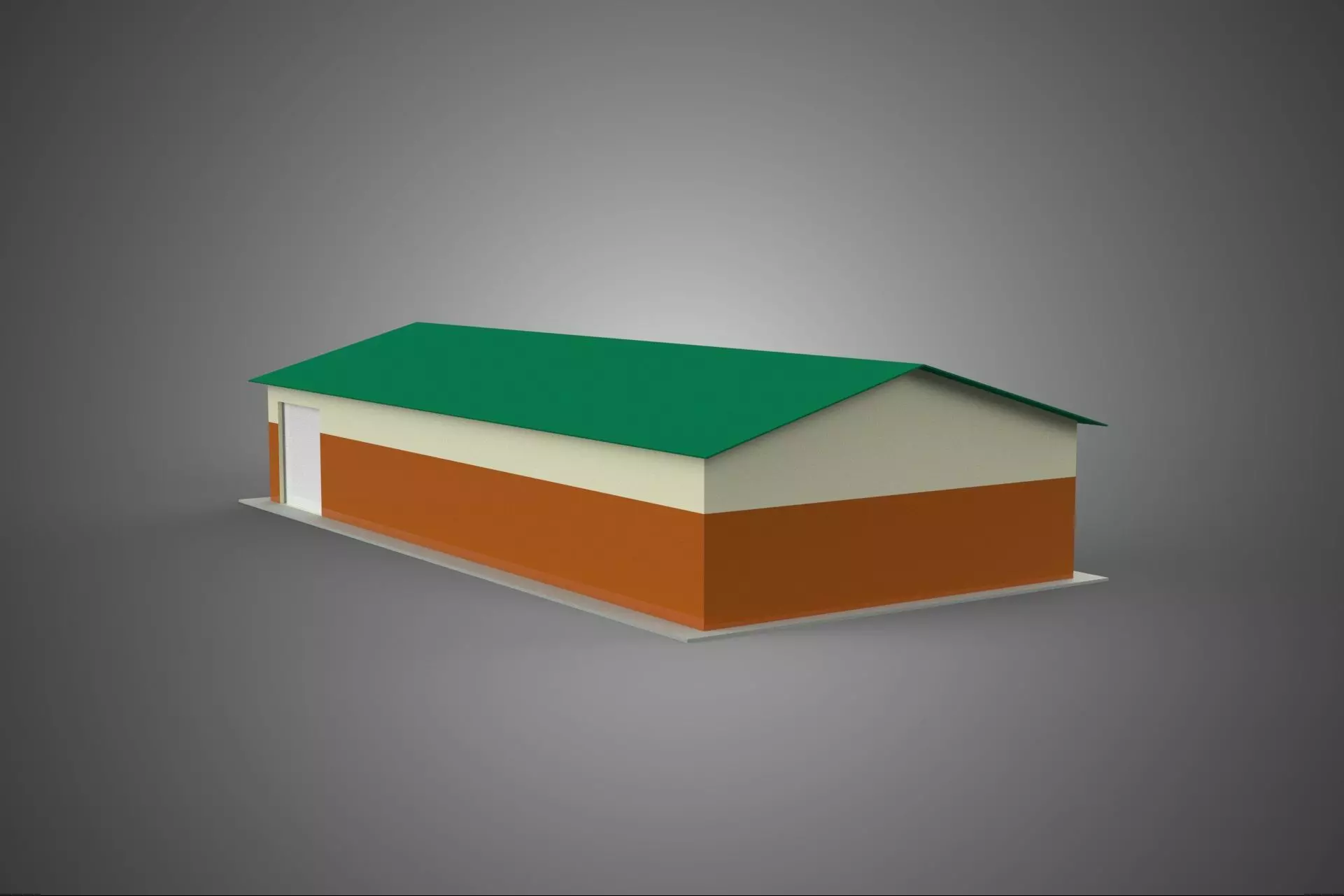
High-quality 3D assets at affordable prices — trusted by designers, engineers, and creators worldwide. Made with care to be versatile, accessible, and ready for your pipeline.
Included File Formats
This model is provided in 14 widely supported formats, ensuring maximum compatibility:
• - FBX (.fbx) – Standard format for most 3D software and pipelines
• - OBJ + MTL (.obj, .mtl) – Wavefront format, widely used and compatible
• - STL (.stl) – Exported mesh geometry; may be suitable for 3D printing with adjustments
• - STEP (.step, .stp) – CAD format using NURBS surfaces
• - IGES (.iges, .igs) – Common format for CAD/CAM and engineering workflows (NURBS)
• - SAT (.sat) – ACIS solid model format (NURBS)
• - DAE (.dae) – Collada format for 3D applications and animations
• - glTF (.glb) – Modern, lightweight format for web, AR, and real-time engines
• - 3DS (.3ds) – Legacy format with broad software support
• - 3ds Max (.max) – Provided for 3ds Max users
• - Blender (.blend) – Provided for Blender users
• - SketchUp (.skp) – Compatible with all SketchUp versions
• - AutoCAD (.dwg) – Suitable for technical and architectural workflows
• - Rhino (.3dm) – Provided for Rhino users
Model Info
• - All files are checked and tested for integrity and correct content
• - Geometry uses real-world scale; model resolution varies depending on the product (high or low poly)
• • - Scene setup and mesh structure may vary depending on model complexity
• - Rendered using Luxion KeyShot
• - Affordable price with professional detailing
Buy with confidence. Quality and compatibility guaranteed.
If you have any questions about the file formats, feel free to send us a message — we're happy to assist you!
Sincerely,
SURF3D
Trusted source for professional and affordable 3D models.
More Information About 3D Model :
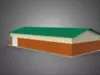
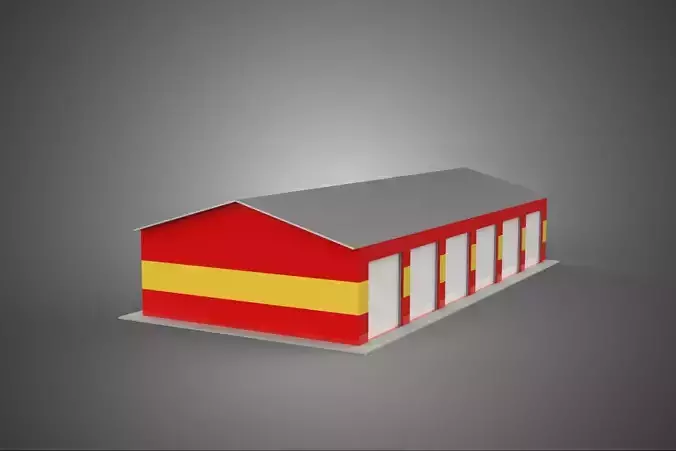
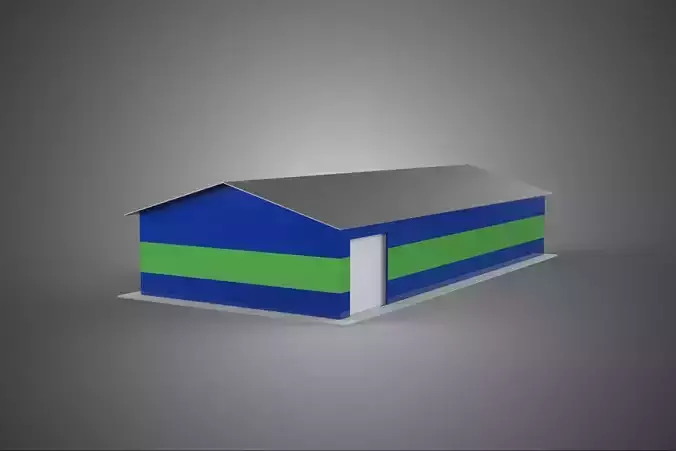
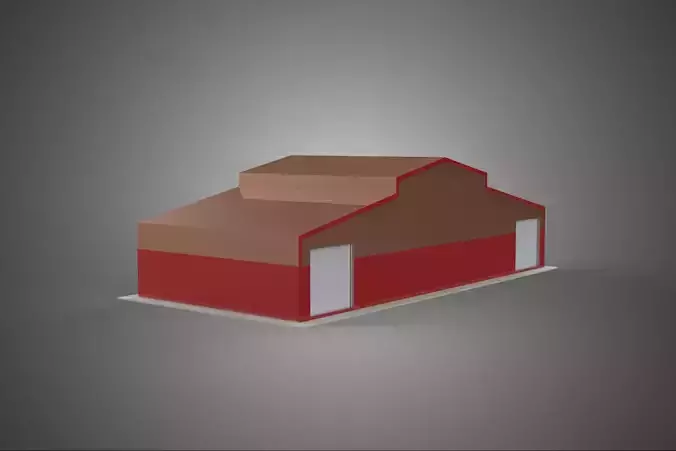
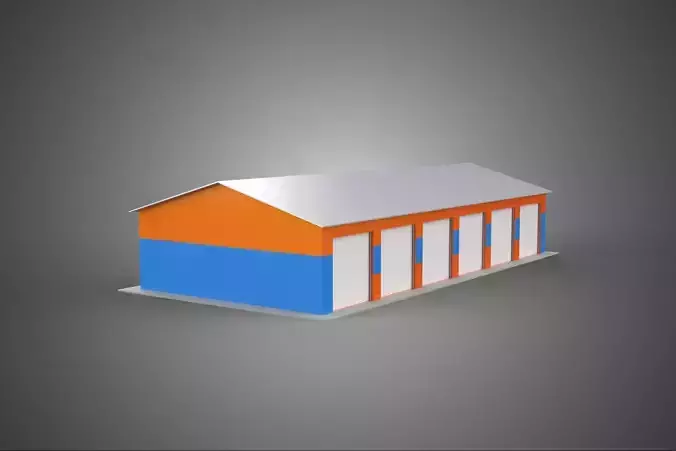
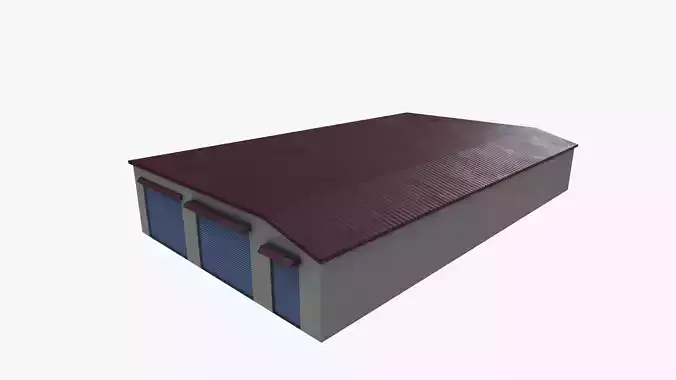
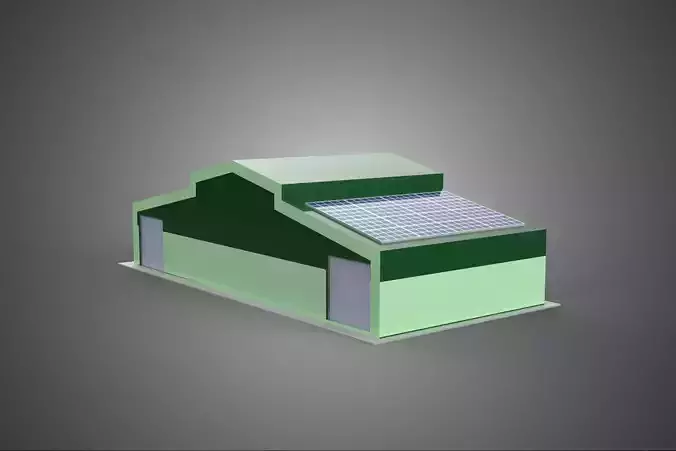
STANDARD INDUSTRIAL SHED WAREHOUSE STOREHOUSE DEPOT BARN BANK
The grouping designated Standard Industrial Shed Warehouse Storehouse Depot Barn Bank refers not to a single monolithic architectural entity, but rather to a functional and structural typology spectrum spanning industrial logistics, bulk storage, and, incongruously, specialized financial custody. The unifying characteristic among the primary components (Shed, Warehouse, Storehouse, Depot, Barn) is the commitment to standardized, cost-effective, and rapidly deployable construction methods, often utilizing clear-span structures designed for maximizing volume efficiency and operational flexibility.
Typological Differentiation
Shed, Warehouse, Storehouse, and Depot: These terms occupy the core of the industrial logistics typology. They are fundamentally defined by their role in inventory management, transit, and material handling.
- Shed: Generally the simplest structure, offering basic shelter and weather protection. Industrial sheds are often utilized for non-climate-sensitive storage, equipment staging, or as temporary worksites. They prioritize quick erection and minimal environmental control systems.
- Warehouse / Storehouse: Large commercial buildings explicitly designed for the systematic storage of goods, materials, and raw inventory prior to distribution. Modern warehouses feature high vertical clearances (often exceeding 12 meters) to accommodate specialized racking systems and automated material handling equipment (MHE). Standardization mandates features like optimized floor flatness, defined loading dock configurations, and adherence to specific fire suppression and environmental regulations.
- Depot: Functions primarily as a nodal transfer point within a logistical network. Depots emphasize rapid throughput and cross-docking capabilities rather than long-term storage. Architecturally, they are positioned strategically near major transportation corridors (rail, highway, port) and often feature extensive loading bays relative to their total floor area.
Barn: Historically associated with agricultural bulk storage (grain, hay) or livestock housing, the modern industrial barn aesthetic is often adopted for simple, large-footprint structures requiring substantial clear-span space but minimal internal finishing. Modern industrial adaptations utilize the basic structural simplicity of the barn—a large, often arched or gabled roof covering a significant area—for uses such as equipment maintenance or low-security non-perishable storage.
### Construction and Standardization
The structural commonality across the industrial storage spectrum (Shed through Depot) is the dominance of Pre-Engineered Metal Buildings (PEMB) or composite steel-and-concrete construction. Standardization in industrial architecture relies on modular components (pre-fabricated wall panels, standardized truss systems, common bay sizes) to ensure scalability, ease of construction, and conformity across multiple sites, maximizing efficiency in logistics operations. Key metrics include cubic utilization capacity (volume efficiency), energy performance, and floor load bearing capacity.
### The Anomaly: Bank
The inclusion of Bank fundamentally deviates from the functional and structural parameters established by the preceding categories. While a bank may house a storehouse function (vaults for currency or safe deposit boxes), its primary role is custodial and financial transaction facilitation, not industrial logistics.
- Functional Contrast: Industrial structures prioritize volume and flow; banks prioritize security, access control, and symbolic architectural permanence to project institutional stability.
- Architectural Contrast: Unlike the standardized, often utilitarian designs of industrial sheds, banks traditionally adopt specialized, often symbolically monumental, architectural styles. Furthermore, they require highly specialized internal construction, including reinforced concrete vaults, sophisticated alarm systems, and controlled access zones, mandates that are antithetical to the high-volume, low-security requirements of bulk industrial storage.
Therefore, the term Standard Industrial Shed Warehouse Storehouse Depot Barn Bank represents a conceptual juxtaposition, illustrating the spectrum of human needs for shelter and storage—ranging from basic industrial utility (Shed) and complex logistical management (Warehouse/Depot) to specialized, high-security custody of assets (Bank).
KEYWORDS: Industrial Architecture, Pre-Engineered Metal Buildings, PEMB, Logistics Hub, Warehouse Design, Storehouse, Clear-Span Structure, Modularity, Inventory Management, Supply Chain, Distribution Center, Depot, Shed Construction, Agricultural Storage, Barn Adaptation, Concrete Construction, Steel Frame, Cross-Docking, Throughput, Security, Financial Custody, Vault, Standardization, Commercial Real Estate, Facility Typology, MHE, Racking Systems, Cubic Capacity, Utilities, Asset Protection.