High-quality 3D assets at affordable prices — trusted by designers, engineers, and creators worldwide. Made with care to be versatile, accessible, and ready for your pipeline.
Included File Formats
This model is provided in 14 widely supported formats, ensuring maximum compatibility:
• - FBX (.fbx) – Standard format for most 3D software and pipelines
• - OBJ + MTL (.obj, .mtl) – Wavefront format, widely used and compatible
• - STL (.stl) – Exported mesh geometry; may be suitable for 3D printing with adjustments
• - STEP (.step, .stp) – CAD format using NURBS surfaces
• - IGES (.iges, .igs) – Common format for CAD/CAM and engineering workflows (NURBS)
• - SAT (.sat) – ACIS solid model format (NURBS)
• - DAE (.dae) – Collada format for 3D applications and animations
• - glTF (.glb) – Modern, lightweight format for web, AR, and real-time engines
• - 3DS (.3ds) – Legacy format with broad software support
• - 3ds Max (.max) – Provided for 3ds Max users
• - Blender (.blend) – Provided for Blender users
• - SketchUp (.skp) – Compatible with all SketchUp versions
• - AutoCAD (.dwg) – Suitable for technical and architectural workflows
• - Rhino (.3dm) – Provided for Rhino users
Model Info
• - All files are checked and tested for integrity and correct content
• - Geometry uses real-world scale; model resolution varies depending on the product (high or low poly)
• • - Scene setup and mesh structure may vary depending on model complexity
• - Rendered using Luxion KeyShot
• - Affordable price with professional detailing
Buy with confidence. Quality and compatibility guaranteed.
If you have any questions about the file formats, feel free to send us a message — we're happy to assist you!
Sincerely,
SURF3D
Trusted source for professional and affordable 3D models.
More Information About 3D Model :
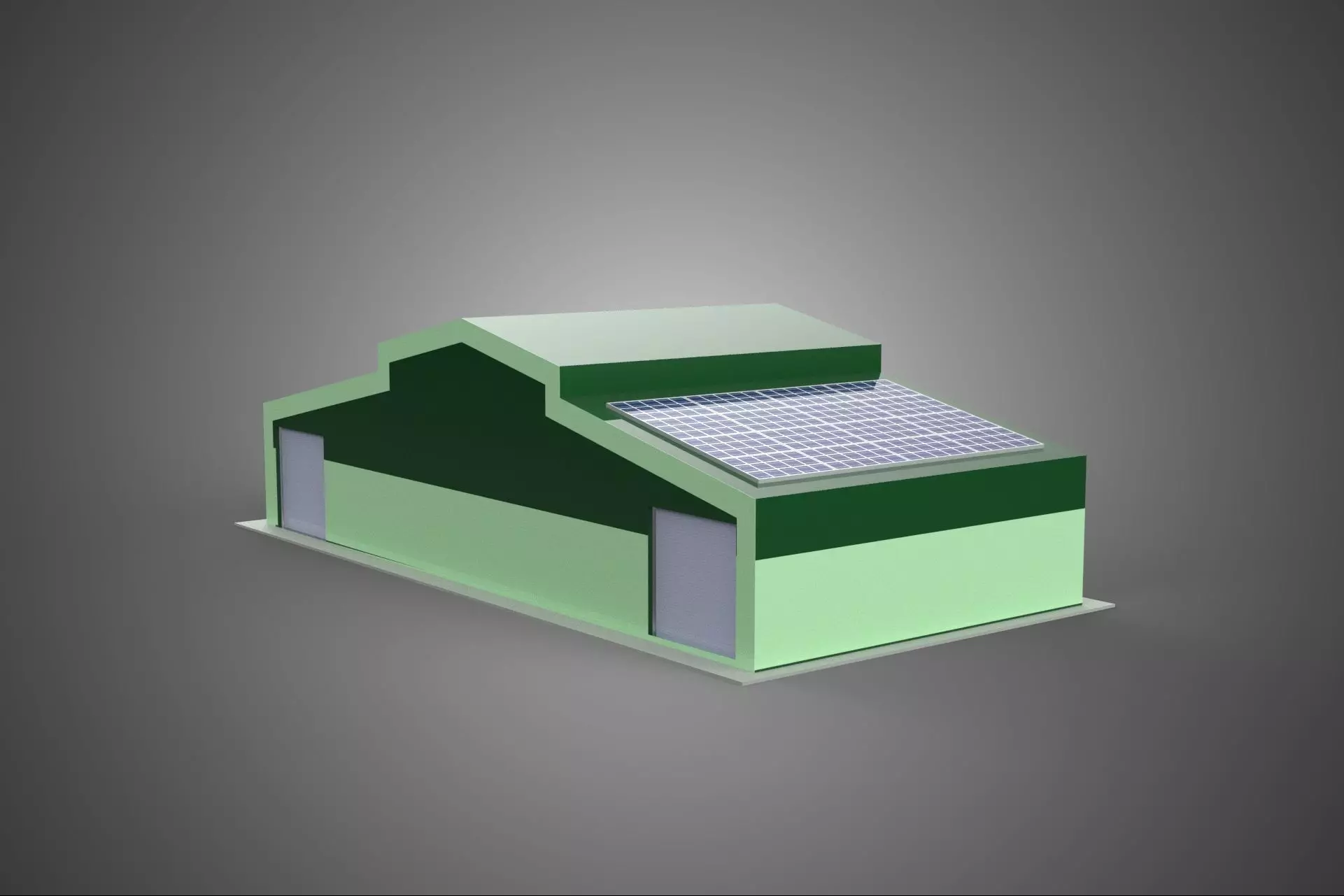
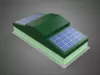
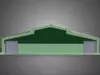
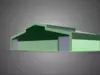
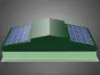
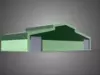
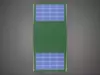
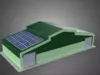
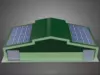
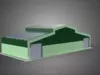
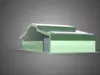
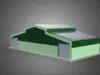
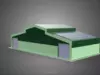
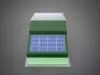
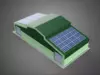
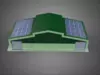
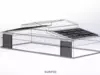
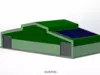
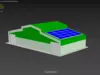
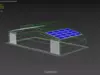
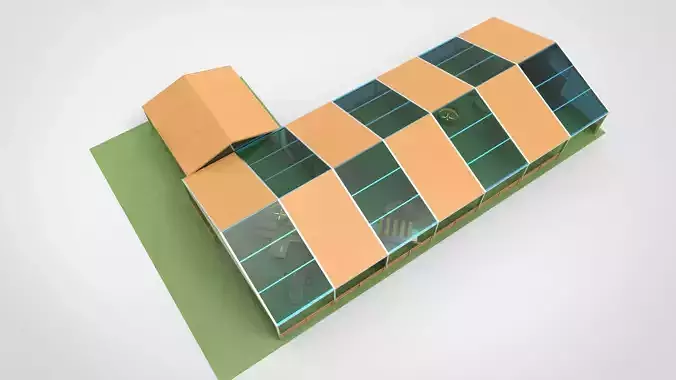
The Solar Panel Granary Shed Depot Barn Farm Agricultural Warehouse (often abbreviated as Solar-Powered Agricultural Storage Facility, or SPASF) designates a specialized category of farm infrastructure designed for the dual purpose of agricultural product storage and autonomous energy generation. This architectural integration merges conventional agrarian structures—such as barns, granaries, and storage sheds—with photovoltaic (PV) technology mounted upon or integrated into the roof system, thereby classifying it as a form of agrivoltaics focused on facility operation rather than field cultivation.
Classification and Function
The primary function of the facility remains the preservation, sorting, and temporary storage of bulk agricultural commodities (e.g., grains, hay, silage, processed feeds, equipment, and sometimes perishables requiring refrigeration). The specific naming convention (shed, depot, barn, warehouse) reflects the scale and primary contents, ranging from small equipment sheds to large-scale, climate-controlled depots used for distribution or long-term preservation.
The distinguishing feature is the incorporation of solar energy infrastructure. The solar panels serve two critical roles:
- On-site Energy Consumption: Providing electrical power necessary for the operational requirements of the storage facility itself. This includes powering essential systems such as ventilation fans, grain dryers, climate control mechanisms (heating, cooling, dehumidification), lighting, security systems, and conveyance equipment (augers, conveyors).
- Grid Export/Offset: Generating surplus electricity which, depending on regulatory framework and grid connectivity, can be fed back into the electrical grid (net metering) or utilized elsewhere on the farm premises, contributing to overall energy independence and reducing operational overhead.
### Architectural and Engineering Design
The structure is typically optimized for maximizing solar energy harvesting efficiency. Key design considerations include:
Roof Orientation and Pitch: The roof is often steeply pitched or specifically oriented (ideally true south in the Northern Hemisphere) to maximize solar insolation throughout the peak operating seasons. For very large facilities (warehouses/depots), flat roofs or multiple gabled sections may be used, often employing tilt-mounted racking systems to achieve the optimal angle.
Structural Integrity: The roofing structure must be engineered to support the considerable dead weight of the PV array, mounting hardware, and potential snow or wind loads, often requiring reinforced trusses or structural steel frames, especially for systems using heavy crystalline silicon modules.
Thermal Management: The presence of the PV array can influence the internal thermal environment. While panels can create a beneficial shading effect, reducing direct solar gain on the roof surface and thus lowering cooling costs, inadequate ventilation within the storage space can still lead to overheating, particularly in grain storage applications where temperature control is vital for mitigating spoilage (mold, insect infestation). Proper insulation and forced-air ventilation are standard requirements.
Granary Specifics: In granary applications, the walls and floor must be impervious to moisture and pests. The solar energy is frequently directed towards running high-capacity fans for aeration and low-temperature drying systems, crucial for maintaining optimal moisture content (typically below 14% for long-term storage of corn or wheat).
### Economic and Environmental Impact
The adoption of the Solar Panel Granary structure represents a move toward sustainable farming practices (Sustainable Intensification).
Economic Advantages: Reduced reliance on utility power dramatically lowers long-term operating costs. Furthermore, incentives, tax credits, and potential revenue from selling surplus power (feed-in tariffs) improve the return on investment (ROI) for the infrastructure.
Environmental Advantages: Utilizing solar energy reduces the carbon footprint associated with crop storage and processing, which traditionally rely on grid electricity or fossil fuels (e.g., propane or diesel for direct-fired dryers). This facilitates the certification of agricultural products as sustainably produced.
### Historical Context and Modern Applications
While agricultural structures and photovoltaic technology existed independently for decades, the integration accelerated significantly during the late 20th and early 21st centuries, driven by falling PV module costs and increasing energy prices. Modern iterations often utilize Battery Energy Storage Systems (BESS) to store generated power, ensuring critical systems (like ventilation) remain operational during nighttime or grid outages, thus safeguarding the stored commodities.
KEYWORDS: Agrivoltaics, Photovoltaic, Agricultural Storage, Granary, Barn, Warehouse, Sustainable Farming, Energy Independence, Grain Drying, Net Metering, Farm Infrastructure, Renewable Energy, PV Array, Climate Control, Aeration, Bulk Storage, Farm Depot, Energy Efficiency, Structural Engineering, Off-Grid Operation, Commodity Preservation, ROI, Carbon Footprint, Feed-in Tariff, Storage Shed, Ventilated Storage, Energy Optimization, Farm Operations, Agricultural Technology, BESS