High-quality 3D assets at affordable prices — trusted by designers, engineers, and creators worldwide. Made with care to be versatile, accessible, and ready for your pipeline.
Included File Formats
This model is provided in 14 widely supported formats, ensuring maximum compatibility:
• - FBX (.fbx) – Standard format for most 3D software and pipelines
• - OBJ + MTL (.obj, .mtl) – Wavefront format, widely used and compatible
• - STL (.stl) – Exported mesh geometry; may be suitable for 3D printing with adjustments
• - STEP (.step, .stp) – CAD format using NURBS surfaces
• - IGES (.iges, .igs) – Common format for CAD/CAM and engineering workflows (NURBS)
• - SAT (.sat) – ACIS solid model format (NURBS)
• - DAE (.dae) – Collada format for 3D applications and animations
• - glTF (.glb) – Modern, lightweight format for web, AR, and real-time engines
• - 3DS (.3ds) – Legacy format with broad software support
• - 3ds Max (.max) – Provided for 3ds Max users
• - Blender (.blend) – Provided for Blender users
• - SketchUp (.skp) – Compatible with all SketchUp versions
• - AutoCAD (.dwg) – Suitable for technical and architectural workflows
• - Rhino (.3dm) – Provided for Rhino users
Model Info
• - All files are checked and tested for integrity and correct content
• - Geometry uses real-world scale; model resolution varies depending on the product (high or low poly)
• • - Scene setup and mesh structure may vary depending on model complexity
• - Rendered using Luxion KeyShot
• - Affordable price with professional detailing
Buy with confidence. Quality and compatibility guaranteed.
If you have any questions about the file formats, feel free to send us a message — we're happy to assist you!
Sincerely,
SURF3D
Trusted source for professional and affordable 3D models.
More Information About 3D Model :
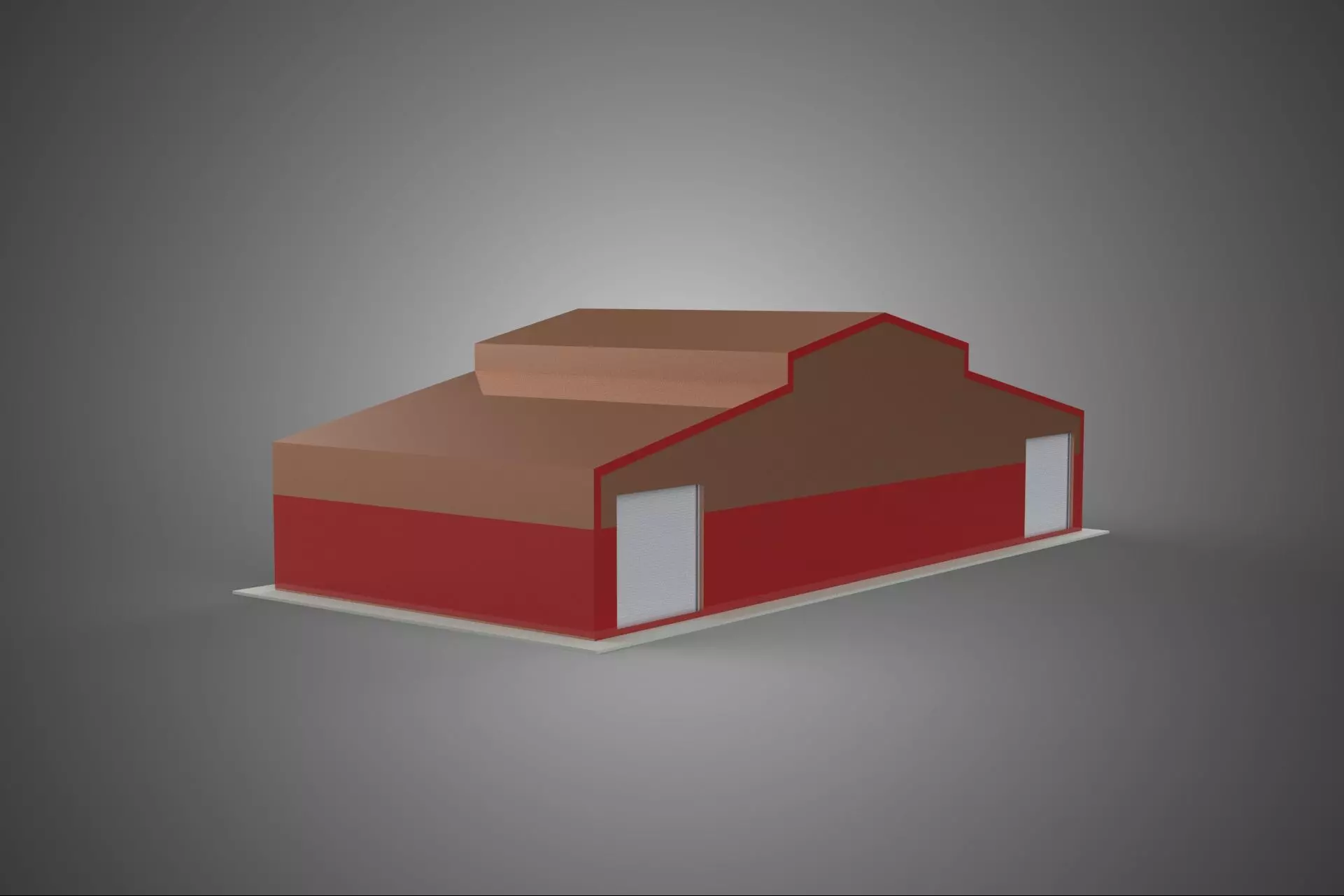
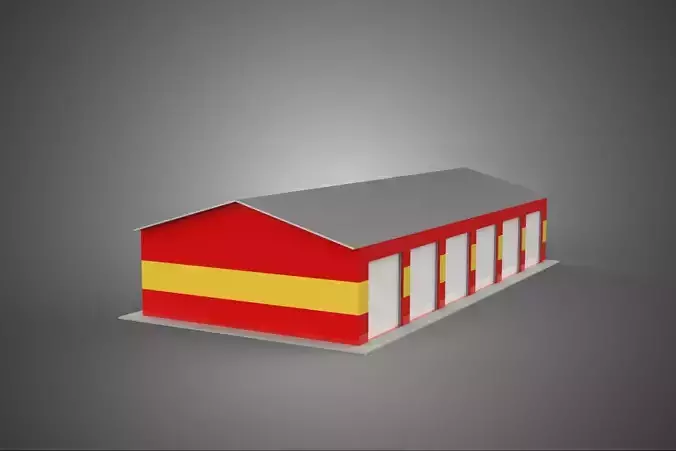
The collective title STORAGE FARM BARN SILO GRANARY SHED WAREHOUSE STOREHOUSE DEPOT refers to a diverse yet functionally unified category of structures and facilities primarily dedicated to the safekeeping, preservation, and logistical management of goods, materials, agricultural products, or manufactured items over extended periods. These structures range in scale, design, and specialization, fulfilling crucial roles in supply chains, agriculture, commerce, and industry. They represent essential infrastructure for managing inventory, mitigating risk from environmental factors or theft, stabilizing market supply, and facilitating distribution.
Functional Classification and Architectural Typology
These storage facilities can be broadly categorized based on their primary function and the environment in which they operate: agricultural, commercial/industrial, and general utility.
1. Agricultural Storage Structures
These facilities are primarily designed for preserving crops, fodder, livestock inputs, or machinery.
- Barn: Historically, a central structure on a farm used for storing hay, grain, and often housing livestock or farm machinery. Modern barns may be highly specialized, such as dairy barns or equipment barns. Their design emphasizes large internal volume and robust construction (often timber or steel framing).
- Silo: A tall, cylindrical structure used for storing bulk materials, particularly fermented fodder (silage), grain, coal, or cement. Silos are critical for anaerobic preservation in agriculture (tower silos) or for high-volume, mechanized handling in industrial settings (bunker silos, bag silos).
- Granary: A dedicated building or room designed specifically for storing processed grain (such as wheat, corn, or rice). Traditional granaries feature designs that minimize moisture and deter pests, often incorporating raised floors or specialized ventilation systems.
- Farm Storage: A general term encompassing various smaller facilities on a farm dedicated to inputs (seeds, fertilizers) or specialized outputs (vegetable cellars, root storage).
#### 2. Commercial and Industrial Storage Facilities
These structures are integral to logistics, manufacturing, and trade, dealing primarily with non-agricultural or processed goods.
- Warehouse: A large commercial building explicitly designed for the bulk storage of goods, often prior to distribution. Modern warehouses feature vast open spaces, high ceilings, and sophisticated material handling equipment (e.g., forklifts, automated storage and retrieval systems—AS/RS). They are key nodes in fulfillment and distribution networks.
- Storehouse: A term often used interchangeably with warehouse, sometimes implying a slightly smaller scale or one dedicated to long-term preservation rather than rapid throughput. It denotes a facility for holding non-perishable goods, materials, or equipment.
- Depot: Typically refers to a storage facility that serves as a transit point or an intermediate staging area, frequently associated with transportation networks (railway depots, military supply depots). Depots emphasize rapid access and turnaround, serving as centers for inventory aggregation and distribution.
#### 3. General Utility and Smaller Structures
These facilities are typically non-specialized or smaller in scale, offering basic protection.
- Shed: A simple, usually single-story structure used for temporary storage, protection of tools, small machinery, or general supplies. Sheds are characterized by their relatively lightweight construction (wood, metal sheeting) and flexibility in use.
### Historical Context and Evolution
The development of specialized storage infrastructure tracks closely with agricultural surpluses and the growth of complex trade networks. Ancient civilizations relied on communal granaries (e.g., those found in the Indus Valley Civilization) to manage food security. The Roman Empire utilized vast, specialized horrea (storehouses) for grain and trade goods.
The Industrial Revolution necessitated the development of large-scale warehouses and specialized depots to handle the immense volume of manufactured goods and raw materials, leading to standardized architectural forms and the integration of mechanized handling systems. Similarly, the invention of modern concrete and steel allowed for the creation of very large, durable silos, revolutionizing bulk handling in the 20th century.
### Economic and Logistical Significance
Storage facilities play a vital role in smoothing market fluctuations by decoupling production time from consumption time. They allow agricultural producers to store harvests until optimal market conditions arise and permit manufacturers to maintain safety stock against supply chain disruptions. Furthermore, they are essential for preserving the quality and value of perishable or sensitive goods by controlling environmental factors such as temperature, humidity, and light exposure. Advanced storage facilities are increasingly integrated with digital inventory management systems (WMS – Warehouse Management Systems) to optimize space utilization, tracking, and order fulfillment efficiency.
KEYWORDS: Inventory Management, Logistics, Supply Chain, Preservation, Agriculture, Commerce, Warehouse, Granary, Silo, Barn, Storage Structure, Distribution, Depot, Shed, Storehouse, Bulk Storage, Material Handling, Food Security, Commodity Storage, Fulfillment Center, Architectural Typology, Industrial Infrastructure, Farm Management, Grain Storage, Transit Point, Economic Stabilization, Temperature Control, WMS, Staging Area, Safety Stock.