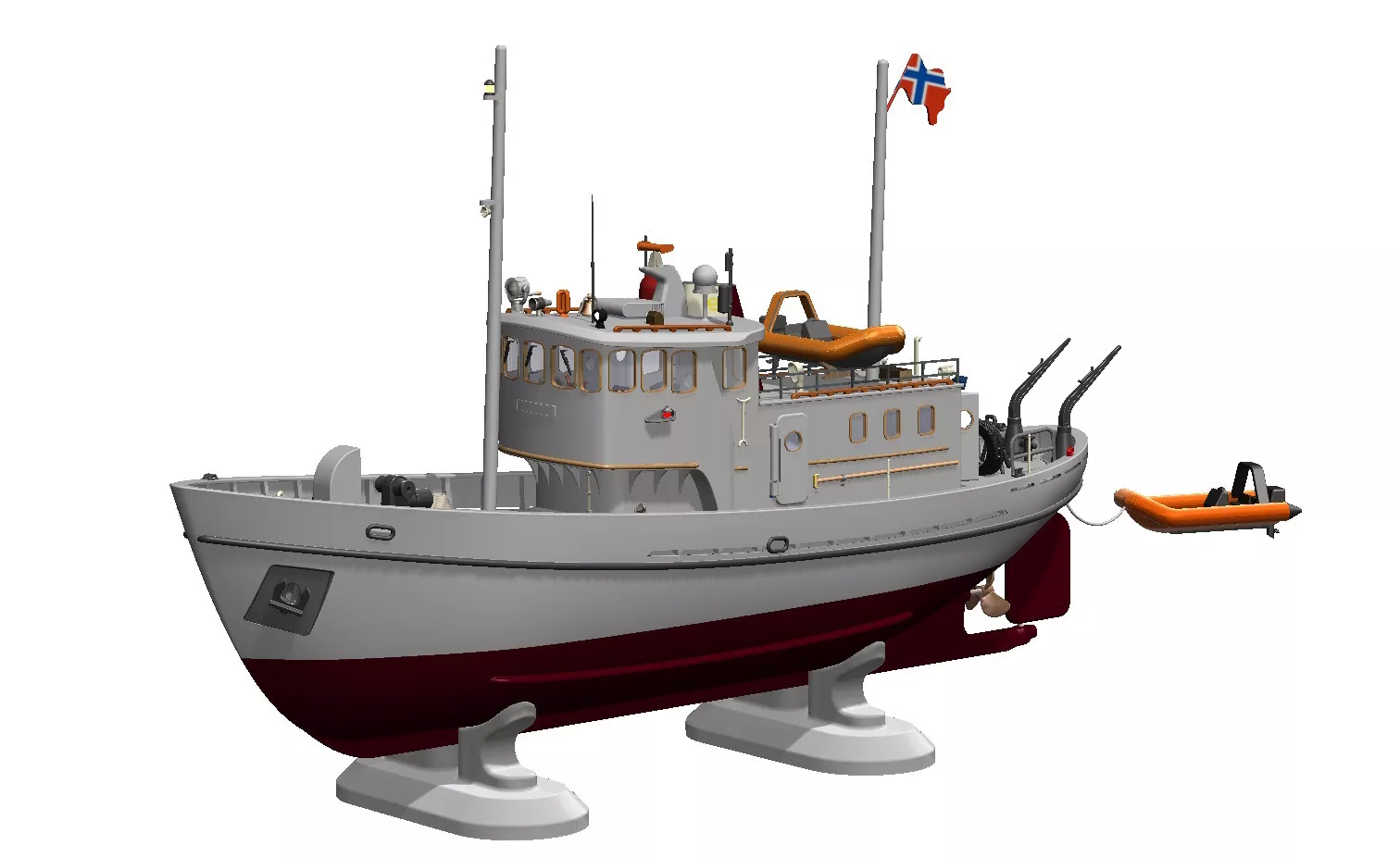
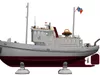
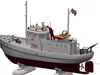
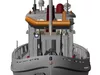
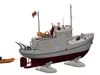
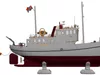
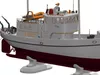
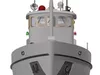
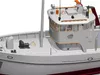
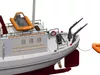
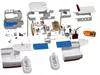
The RS 58 “Sørlandsskøyta” is an interesting representative of an important period in the development of Norwegian rescue vessels. Built in 1956, she was among the early steel-hulled rescue boats operated by the Norwegian Society for Sea Rescue (Redningsselskapet), combining the traditional working-boat character of earlier rescue craft with the more robust construction of the post-war era. Our model is inspired primarily by RS 58 “Sørlandsskøyta”, with its form and details developed mainly through the study of available photographs and historical visual references. It is not intended as a 100% dimensionally accurate museum reproduction; instead, the aim is to capture the overall character, proportions, arrangement and appearance of the vessel and its period. The design can therefore also be used as a starting point for builders interested in creating other similar Norwegian rescue and working boats from the same era, including vessels such as RS 59 Tønnes Puntervold, RS 60 Ulabrand II, RS 63 Torungen, RS 64 Oscar Nibe, RS 65 Karine Moe and RS 67 Ingeborg Platou, with suitable modifications to the details and superstructure. At 80 cm long and 1:16 scale, the model provides a substantial platform for both display and RC projects while retaining the distinctive character of these historic Scandinavian rescue boats.
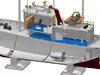
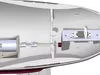
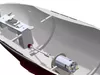
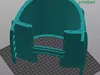
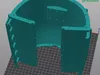
3D printing settingsThe model is designed as a fully RC-ready 80 cm build, while keeping the physical assembly relatively straightforward. The main hull consists of only four separate parts, each equipped with assembly bosses for alignment and for securing the sections while the glue sets. The superstructure is divided into eight separately printable parts, also using alignment bosses to simplify assembly. Three large interior access hatches are provided: a forward hatch that can be used for batteries or other equipment, a rear hatch located directly above the steering mechanism and servo, and a large central hatch providing access to the drive motor, electronics and battery. The complete superstructure can be bolted or magnetically attached to the central hatch, allowing it to be removed as one unit for installation, adjustment and maintenance of the RC equipment. Provision is made for 3 mm screws or 3 mm diameter magnets; holes are fully drilled in concealed areas and half-drilled in visible areas, allowing the builder to decide whether and how to complete them according to the intended use of the model. This makes the same file pack suitable for a permanent display build as well as a functional RC vessel, while giving builders considerable freedom to adapt the model to their own interpretation of this family of historic boats.
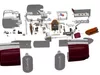
over 150 STL files shown in the renderings are included in the zip file while only hull files can be previewed.