High-quality 3D assets at affordable prices — trusted by designers, engineers, and creators worldwide. Made with care to be versatile, accessible, and ready for your pipeline.
Included File Formats
This model is provided in 14 widely supported formats, ensuring maximum compatibility:
• - FBX (.fbx) – Standard format for most 3D software and pipelines
• - OBJ + MTL (.obj, .mtl) – Wavefront format, widely used and compatible
• - STL (.stl) – Exported mesh geometry; may be suitable for 3D printing with adjustments
• - STEP (.step, .stp) – CAD format using NURBS surfaces
• - IGES (.iges, .igs) – Common format for CAD/CAM and engineering workflows (NURBS)
• - SAT (.sat) – ACIS solid model format (NURBS)
• - DAE (.dae) – Collada format for 3D applications and animations
• - glTF (.glb) – Modern, lightweight format for web, AR, and real-time engines
• - 3DS (.3ds) – Legacy format with broad software support
• - 3ds Max (.max) – Provided for 3ds Max users
• - Blender (.blend) – Provided for Blender users
• - SketchUp (.skp) – Compatible with all SketchUp versions
• - AutoCAD (.dwg) – Suitable for technical and architectural workflows
• - Rhino (.3dm) – Provided for Rhino users
Model Info
• - All files are checked and tested for integrity and correct content
• - Geometry uses real-world scale; model resolution varies depending on the product (high or low poly)
• • - Scene setup and mesh structure may vary depending on model complexity
• - Rendered using Luxion KeyShot
• - Affordable price with professional detailing
Buy with confidence. Quality and compatibility guaranteed.
If you have any questions about the file formats, feel free to send us a message — we're happy to assist you!
Sincerely,
SURF3D
Trusted source for professional and affordable 3D models.
More Information About 3D Model :
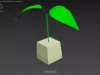
The STANDARD YELLOW FOAM SPONGE BLOCK ROCKWOOL STONEWOOL STARTER POT refers to a specialized, dimensionally stable horticultural growth medium, primarily composed of manufactured mineral wool fibers, designed specifically for the initiation of seeds and the rooting of vegetative cuttings. This starter medium is universally employed in controlled environment agriculture (CEA), particularly within hydroponic, aeroponic, and soilless cultivation systems.
Nomenclature and Composition
The product is fundamentally a propagation plug or cube made of mineral wool, commonly referred to by the industry terms Rockwool or Stonewool, which are functionally synonymous. This material is synthesized by melting natural rock (typically basalt, diabase, or dolomite) and/or industrial slag at temperatures exceeding 1,500 °C. The molten material is subsequently spun at high speed into fine, thread-like fibers, which are then compressed, interwoven, and bound using a small quantity of phenolic resin to form high-density, structured blocks.
The descriptor Standard Yellow Foam Sponge Block addresses both the consumer market presentation and the critical physical characteristics of the medium. While pure rockwool typically exhibits pale green or gray coloration, the Yellow designation may refer to standardized retail packaging, protective coatings, or the inclusion of stabilizing agents that impart a distinct hue. The terms Foam and Sponge Block emphasize the desired open-cell, fibrous structure—essential for high porosity—and the uniform, robust block format that facilitates handling and transplanting.
Physical and Chemical Properties
Rockwool starter blocks are prized for their highly consistent and reliable physical properties:
- Porosity and Aeration: The fibrous matrix creates a medium with extremely high total porosity, typically ranging from 90% to 95% total air space when dry. This structure ensures superior aeration, providing essential oxygen to the emerging root zone while simultaneously retaining significant moisture. The optimal air-to-water ratio achieved within the cube prevents anaerobic conditions that lead to root rot.
- Water Dynamics: Mineral wool exhibits powerful capillary action, allowing for uniform moisture distribution throughout the block. This stability ensures that the medium does not shrink, settle, or degrade over time, unlike organic substrates.
- Inertness and Sterility: The material is chemically inert, meaning it does not release nutrients or toxic compounds that could interfere with the formulated nutrient solution. Furthermore, the high-temperature manufacturing process renders the starter pot biologically sterile and free from pathogens, pests, or weed seeds, significantly reducing the risk of early-stage plant disease.
### Application in Propagation
The primary function of the starter pot is to provide an ideal, structured environment for initial plant development. Seeds or cuttings are typically placed into pre-drilled holes in the top surface of the block.
Pre-treatment: A critical step in utilizing rockwool is pH adjustment. Due to the inherent alkalinity (pH 7.0–8.5) imparted during manufacture, the blocks must be pre-soaked in a diluted, mildly acidic solution (typically pH 5.5–6.0) for several hours. This process buffers the medium, preventing nutrient lockout (especially of micronutrients) once the plant begins receiving nutrient solutions.
Transplanting: Once roots have sufficiently penetrated the starter block, the entire unit—often termed a plug—is seamlessly transferred into a larger, stable grow cube or slab, or directly inserted into the apertures of hydroponic systems (e.g., Deep Water Culture, Nutrient Film Technique). This integration minimizes transplant shock and root disturbance, supporting continuous, rapid growth.
The standardized dimensions of these starter pots facilitate automated handling and precise spacing in commercial propagation trays and climate-controlled nurseries.
KEYWORDS: Propagation, Rockwool, Stonewool, Hydroponics, Seed Starter, Mineral Wool, Inert Medium, Soilless Culture, Germination Block, Basalt Fiber, Slag Wool, Phenolic Resin, High Porosity, Water Retention, Aeration, pH Buffering, Nutrient Film Technique, Deep Water Culture, Vegetative Cuttings, Rooting Medium, Starter Cube, Seedling, Commercial Horticulture, Substrate, Standardized Block, Open-Cell Structure, Chemical Inertness, Transplant Plug, Capillary Action, Controlled Environment Agriculture.