High-quality 3D assets at affordable prices — trusted by designers, engineers, and creators worldwide. Made with care to be versatile, accessible, and ready for your pipeline.
Included File Formats
This model is provided in 14 widely supported formats, ensuring maximum compatibility:
• - FBX (.fbx) – Standard format for most 3D software and pipelines
• - OBJ + MTL (.obj, .mtl) – Wavefront format, widely used and compatible
• - STL (.stl) – Exported mesh geometry; may be suitable for 3D printing with adjustments
• - STEP (.step, .stp) – CAD format using NURBS surfaces
• - IGES (.iges, .igs) – Common format for CAD/CAM and engineering workflows (NURBS)
• - SAT (.sat) – ACIS solid model format (NURBS)
• - DAE (.dae) – Collada format for 3D applications and animations
• - glTF (.glb) – Modern, lightweight format for web, AR, and real-time engines
• - 3DS (.3ds) – Legacy format with broad software support
• - 3ds Max (.max) – Provided for 3ds Max users
• - Blender (.blend) – Provided for Blender users
• - SketchUp (.skp) – Compatible with all SketchUp versions
• - AutoCAD (.dwg) – Suitable for technical and architectural workflows
• - Rhino (.3dm) – Provided for Rhino users
Model Info
• - All files are checked and tested for integrity and correct content
• - Geometry uses real-world scale; model resolution varies depending on the product (high or low poly)
• • - Scene setup and mesh structure may vary depending on model complexity
• - Rendered using Luxion KeyShot
• - Affordable price with professional detailing
Buy with confidence. Quality and compatibility guaranteed.
If you have any questions about the file formats, feel free to send us a message — we're happy to assist you!
Sincerely,
SURF3D
Trusted source for professional and affordable 3D models.
More Information About 3D Model :
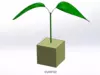
Horticultural Polyurethane Media Foam Sponge
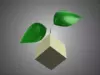
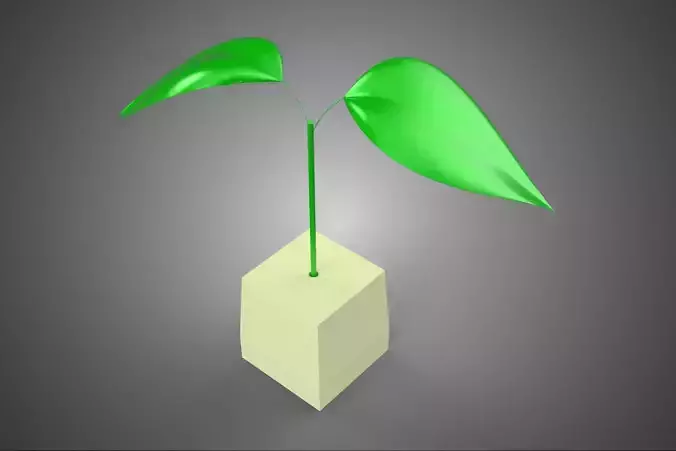
Horticultural Polyurethane (PU) media foam is a specialized, synthetic substrate engineered for soilless cultivation systems, commonly utilized in Controlled Environment Agriculture (CEA), propagation, and hydroponic gardening. This material, often referred to as PU plant cubes, sponge rockwool, or PU propagation blocks, serves as an inert, high-performance medium designed to support seed germination, vegetative propagation (cloning), and the establishment of root systems prior to transplanting into larger growing environments. It is recognized primarily as a modern, lightweight alternative to traditional propagation media, such as mineral wool (Rockwool).
Material Science and Structure
The medium is fabricated from flexible polyurethane, an organic polymer composed of organic units linked by carbamate (urethane) groups. During the manufacturing process, polymerization is controlled to create an open-cell foam structure. This structure is critical to its horticultural efficacy, characterized by numerous interconnected pores that provide mechanical support while facilitating gas exchange and nutrient delivery.
Key Physical Properties:
- Open-Cell Porosity: The high degree of interconnected porosity ensures an optimal balance between water holding capacity (WHC) and air-filled porosity (AFP). A high AFP is crucial for supplying oxygen to the developing roots, preventing anaerobic conditions (waterlogging) that inhibit growth and promote root rot.
- Chemical Inertness and pH Neutrality: Horticultural PU foam is chemically stable and non-reactive with standard nutrient solutions. Unlike some fibrous mineral substrates, PU foam is manufactured with a stable, near-neutral pH (typically 6.0–7.0), minimizing the need for initial chemical buffering or conditioning prior to use.
- Sterility: The material is biologically inert when new, offering a sterile environment that reduces the risk of initial pathogen transfer to young plants, a critical factor in sensitive propagation phases.
- Dimensional Stability: The foam maintains its structural integrity throughout the crop cycle, resisting compaction or deformation, which ensures consistent pore size distribution and root zone environment over time.
### Application in Propagation and Hydroponics
PU foam media is primarily utilized in the early stages of plant development:
- Seed Germination: Small PU cubes provide a consistent moisture environment necessary for successful seed sprouting.
- Vegetative Propagation (Cloning): Cuttings are inserted directly into the foam blocks, where the material’s stable moisture and mechanical support encourages rapid adventitious root formation.
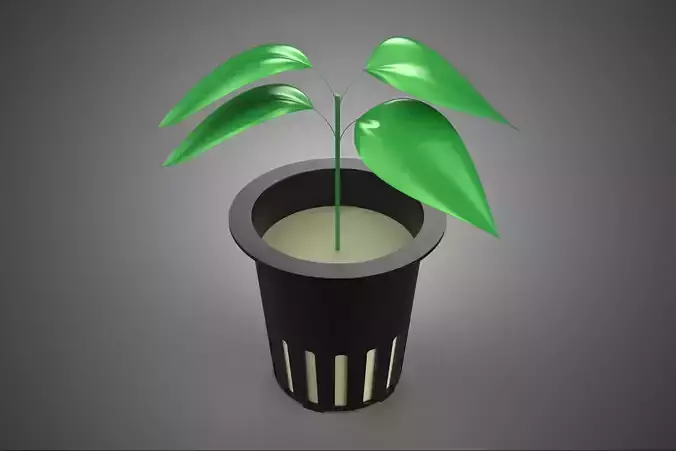
- Transplanting: Once established, the foam block containing the young plant is easily transferred directly into various hydroponic systems, including Deep Water Culture (DWC), Nutrient Film Technique (NFT), aeroponics, and ebb and flow (flood and drain) systems.
The standard size and shape of PU propagation blocks are often standardized to integrate seamlessly with standard plastic trays and hydroponic channels.
### Comparison to Rockwool
Horticultural polyurethane media is often compared directly to Rockwool (stone wool) due to their shared function as inert propagation substrates. PU foam offers several comparative advantages:
| Feature | Polyurethane Foam | Rockwool (Mineral Wool) |
| :--- | :--- | :--- |
| Weight | Significantly lighter when dry and saturated. | Heavier, particularly when fully saturated. |
| Handling | Soft, easy to cut; does not shed irritating particulate fibers. | Requires cautious handling; fibers can irritate skin and respiratory tract. |
| Initial pH | Neutral (6.0–7.0); ready for use without significant adjustment. | Typically highly alkaline (pH > 8.0); requires significant pre-soaking and pH buffering. |
| Disposal | Non-biodegradable (standard formulations). | Non-biodegradable; requires specialized disposal due to density. |
### Environmental and Disposal Considerations
While providing significant cultivation advantages, standard polyurethane foam is derived from petrochemical sources and is generally non-biodegradable. This necessitates proper disposal in landfills after the crop cycle. Research is underway to develop sustainable alternatives, including bio-based polyurethanes derived from renewable feedstocks and formulations designed for enhanced biodegradability, aiming to improve the overall environmental profile of the media.
***
KEYWORDS: Horticultural, Polyurethane, Hydroponics, Substrate, Media, Foam, Sponge, Propagation, Rockwool, Soilless Culture, Open-Cell, Air-Filled Porosity, Water Holding Capacity, Seed Starting, Cloning, Vegetative Propagation, Root System, Chemically Inert, pH Neutrality, CEA, Nutrient Film Technique, Deep Water Culture, Polymer, Mineral Wool Alternative, Non-Toxic, Dimensional Stability, Aeroponics, Grow Block, Synthetic Substrate, Greenhouse.