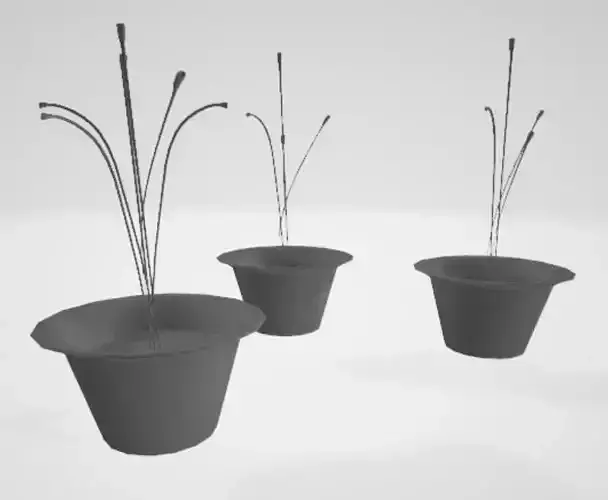
High-quality 3D assets at affordable prices — trusted by designers, engineers, and creators worldwide. Made with care to be versatile, accessible, and ready for your pipeline.
Included File Formats
This model is provided in 14 widely supported formats, ensuring maximum compatibility:
• - FBX (.fbx) – Standard format for most 3D software and pipelines
• - OBJ + MTL (.obj, .mtl) – Wavefront format, widely used and compatible
• - STL (.stl) – Exported mesh geometry; may be suitable for 3D printing with adjustments
• - STEP (.step, .stp) – CAD format using NURBS surfaces
• - IGES (.iges, .igs) – Common format for CAD/CAM and engineering workflows (NURBS)
• - SAT (.sat) – ACIS solid model format (NURBS)
• - DAE (.dae) – Collada format for 3D applications and animations
• - glTF (.glb) – Modern, lightweight format for web, AR, and real-time engines
• - 3DS (.3ds) – Legacy format with broad software support
• - 3ds Max (.max) – Provided for 3ds Max users
• - Blender (.blend) – Provided for Blender users
• - SketchUp (.skp) – Compatible with all SketchUp versions
• - AutoCAD (.dwg) – Suitable for technical and architectural workflows
• - Rhino (.3dm) – Provided for Rhino users
Model Info
• - All files are checked and tested for integrity and correct content
• - Geometry uses real-world scale; model resolution varies depending on the product (high or low poly)
• • - Scene setup and mesh structure may vary depending on model complexity
• - Rendered using Luxion KeyShot
• - Affordable price with professional detailing
Buy with confidence. Quality and compatibility guaranteed.
If you have any questions about the file formats, feel free to send us a message — we're happy to assist you!
Sincerely,
SURF3D
Trusted source for professional and affordable 3D models.
More Information About 3D Model :
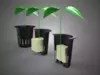
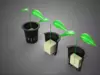
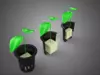
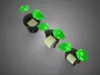
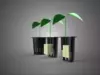
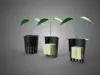
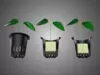
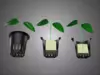
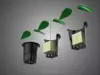
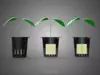
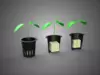
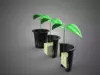
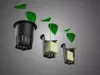
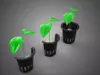
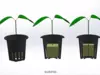
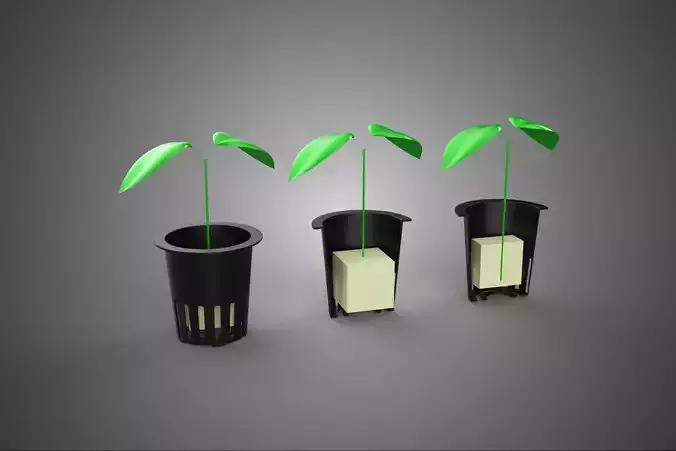
The composite unit referred to by the elements CROSS SECTION NET POT ROCKWOOL SPONGE FOAM CUBE PLANT CROP SEED describes the standardized method for initiating and transitioning seedlings into operational soilless cultivation systems, such as Deep Water Culture (DWC), Nutrient Film Technique (NFT), or ebb and flow systems. This configuration represents the critical interface where biological development (the seed/plant) interacts with the inert physical support structure and the nutrient delivery system.
Structural Components and Function
The system is defined by a nested arrangement of inert media and structural housing designed to optimize aeration, moisture retention, and physical stability for the young plant (seedling or clone).
1. The Seed and Germination Medium (Sponge/Foam Cube)
The process begins with the seed, which is typically placed within a small, highly absorptive starter medium—often a sponge, phenolic foam, or polyurethane cube. These materials are valued for their sterility, uniform pore structure, and exceptional capacity for capillary action, ensuring high rates of water retention necessary for germination while preventing saturation that leads to anaerobic conditions. These starter cubes provide the initial micro-environment where the radicle (primary root) emerges.
2. The Primary Growth Medium (Rockwool Cube)
Following successful germination, the starter cube, or the seed directly, is often encased or transplanted into a larger Rockwool cube. Rockwool, or mineral wool, is a fibrous material manufactured by spinning molten basaltic rock and binding agents. As a substrate, it is chemically inert, resistant to degradation, and provides an excellent balance of water holding capacity (WHC) and air-filled porosity (AFP)—typically retaining 70-85% water volume while maintaining 15-25% airspace essential for root zone oxygenation. Rockwool cubes provide the primary anchoring point for the developing plant until it is ready for transplanting.
3. The Structural Vessel (Net Pot)
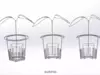
The entire assembly of the growing medium and the young plant is housed within the Net Pot. A net pot is a small, rigid container constructed from durable plastic, characterized by multiple lateral and basal perforations (mesh or netting structure). The net pot serves two primary purposes:
-
Stabilization: It physically secures the inert cube/rockwool medium, preventing displacement within the reservoir lid or channel.
-
Root Egress: The perforated structure facilitates unimpeded root growth. As the root system matures, the roots grow through the apertures of the net pot, extending directly into the nutrient solution reservoir below, thereby initiating the transfer of the plant from the static starter medium to the dynamic nutrient delivery system.
### Cross-Sectional Analysis
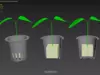
A cross section of this established system reveals the hierarchical relationship between the components:
-
Center: The germinated seed or developing plant/crop is located centrally.
-
Immediate Support: The plant stem base is encased by the porous starter material (sponge/foam) and subsequently, the larger Rockwool cube. This medium is saturated by nutrient solution wicking up from the reservoir.
-
Boundary/Interface: The Net Pot defines the outer boundary. The roots penetrate the cube and pass through the net pot’s mesh structure, transitioning from a confined environment to the open, oxygenated nutrient solution.
This integrated design ensures robust seedling establishment, minimized transplant shock, and optimal root access to necessary mineral nutrients and oxygen, forming the foundational stage for commercial hydroponic crop production.
KEYWORDS: Hydroponics, Soilless Culture, Rockwool, Net Pot, Germination, Seedling, Root Egress, Inert Medium, Substrate, Controlled Environment Agriculture, Nutrient Film Technique, Deep Water Culture, Starter Cube, Phenolic Foam, Polyurethane Sponge, Aeration, Capillary Action, Transplanting, Propagation, Root Zone, Crop Production, Plant Anatomy, Water Holding Capacity, Porosity, Mineral Wool, Stabilization, Nursery Stage, Nutrient Solution, CEA.