High-quality 3D assets at affordable prices — trusted by designers, engineers, and creators worldwide. Made with care to be versatile, accessible, and ready for your pipeline.
Included File Formats
This model is provided in 14 widely supported formats, ensuring maximum compatibility:
• - FBX (.fbx) – Standard format for most 3D software and pipelines
• - OBJ + MTL (.obj, .mtl) – Wavefront format, widely used and compatible
• - STL (.stl) – Exported mesh geometry; may be suitable for 3D printing with adjustments
• - STEP (.step, .stp) – CAD format using NURBS surfaces
• - IGES (.iges, .igs) – Common format for CAD/CAM and engineering workflows (NURBS)
• - SAT (.sat) – ACIS solid model format (NURBS)
• - DAE (.dae) – Collada format for 3D applications and animations
• - glTF (.glb) – Modern, lightweight format for web, AR, and real-time engines
• - 3DS (.3ds) – Legacy format with broad software support
• - 3ds Max (.max) – Provided for 3ds Max users
• - Blender (.blend) – Provided for Blender users
• - SketchUp (.skp) – Compatible with all SketchUp versions
• - AutoCAD (.dwg) – Suitable for technical and architectural workflows
• - Rhino (.3dm) – Provided for Rhino users
Model Info
• - All files are checked and tested for integrity and correct content
• - Geometry uses real-world scale; model resolution varies depending on the product (high or low poly)
• • - Scene setup and mesh structure may vary depending on model complexity
• - Rendered using Luxion KeyShot
• - Affordable price with professional detailing
Buy with confidence. Quality and compatibility guaranteed.
If you have any questions about the file formats, feel free to send us a message — we're happy to assist you!
Sincerely,
SURF3D
Trusted source for professional and affordable 3D models.
More Information About 3D Model :
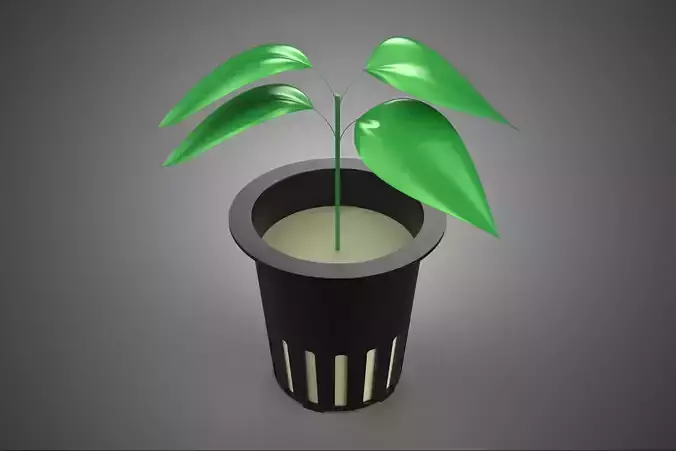
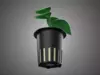
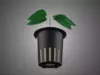
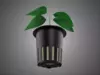
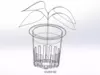
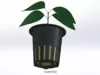
The aggregation of terms—Plant, Hydroponic, Net Pot, Cup, Mesh, Medium, Rockwool, Foam, Sponge, PU—describes the fundamental physical components and substrates used for anchoring and supporting plants within soilless culture systems. These elements collectively form the critical interface between the plant’s root zone and the nutrient delivery mechanism.
Definition and Function
In hydroponics, the cultivation of plants without soil, specialized apparatus is required to provide physical support and optimal moisture retention during the crucial stages of germination and initial growth. The Net Pot (or Cup) and the Growing Medium constitute this essential support system.
The Net Pot and Mesh Container
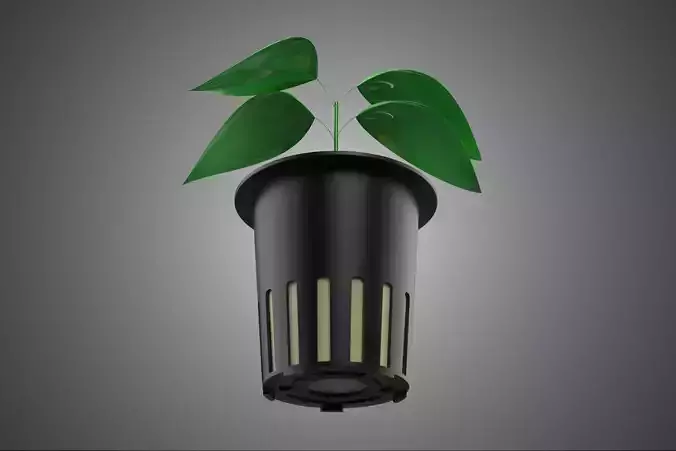
The Net Pot is a small, rigid container, typically fabricated from durable, inert plastic polymers such as polyethylene or polypropylene. Designed structurally as a Mesh or perforated cylinder, the Net Pot serves as the primary physical anchor for the plant within the hydroponic system (e.g., Deep Water Culture, Ebb and Flow, or Nutrient Film Technique).
Key Features:
- Structure: The porous, lattice-like structure of the Mesh walls allows the roots of the transplanted seedling to extend freely outward and downward into the nutrient reservoir, ensuring uninhibited access to the aqueous solution.
- Support: It holds the plant crown stable and prevents the growing Medium from falling into the reservoir, minimizing contamination or blockages in recirculation systems.
- Aeration: The large surface area of the perforations facilitates essential gas exchange around the upper root zone, preventing anaerobic conditions.
Net Pots are available in various diameters, often denoted by the size of the container (e.g., 2-inch or 3-inch cups), selected based on the projected root mass and lifespan of the crop.
### Hydroponic Growing Mediums
The Medium refers to the inert or semi-inert substrate placed inside the Net Pot, used specifically for seed germination, rooting cuttings, and providing initial stability before the roots reach full water immersion. These substrates are chosen for their consistent water-holding capacity, optimal aeration properties, and chemical neutrality.
#### 1. Rockwool (Mineral Wool)
Rockwool is a widely utilized hydroponic substrate produced by melting basaltic rock and spinning the molten material into fine, hydrophilic fibers. These fibers are compressed into cubes, blocks, or plugs.
- Composition: Primarily silicon dioxide and aluminum oxide.
- Properties: It possesses a high water-holding capacity (up to 80%) while maintaining significant air space (around 18-25%), which is vital for root oxygenation.
- Application: Commonly used as starter plugs for propagation due to its sterile nature and structural uniformity. New Rockwool must be pre-conditioned (buffered) to adjust its typically high initial pH.
#### 2. Foam and Sponge Media
Hydroponic Foam and Sponge substrates are synthetic polymer alternatives to mineral wool, offering a sterile, fiber-free environment for propagation.
- Structure: These media are engineered to have highly uniform, open-cell structures that provide predictable water retention and excellent root-to-air ratios.
- Reusability: Certain foams are durable and can potentially be sterilized and reused, depending on the polymer type.
#### 3. PU (Polyurethane) Foam
Polyurethane (PU) Foam is a specific class of polymer foam often manufactured into highly structured starter cubes. PU foam is chemically inert, non-biodegradable in the hydroponic environment, and resists compression, thereby maintaining consistent air space for developing roots.
- Advantages: PU plugs are lightweight, easily handled, and often supplied pre-cut or scored to simplify the insertion of seeds or cuttings. Their consistency ensures uniform moisture management across large propagation batches.
### System Integration
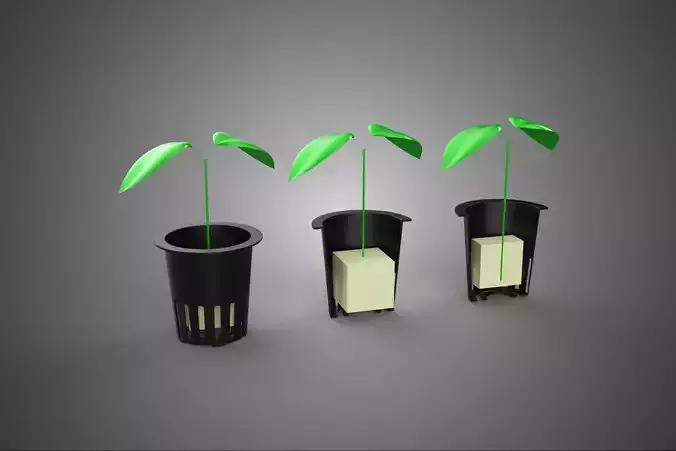
In typical hydroponic operation, a seedling or cutting is rooted within a small block of Rockwool or a PU Foam plug (the Medium). This medium is then placed inside the Net Pot, which is subsequently suspended in the nutrient reservoir opening. The pot stabilizes the plant while allowing the developing roots to penetrate the mesh and access the circulating nutrient solution directly.
KEYWORDS: Hydroponics, Net Pot, Growing Medium, Soilless Culture, Rockwool, Polyurethane Foam, PU, Foam Sponge, Deep Water Culture, DWC, Nutrient Film Technique, NFT, Aeration, Propagation, Substrate, Root Zone, Polymer, Mesh Cup, Seedling Plug, Inert Medium, Water Retention, PH Neutrality, Cultivation, Mineral Wool, Synthetic Media, Recirculation Systems, Plant Support, Container, Basaltic Rock, Polymer Foam.