High-quality 3D assets at affordable prices — trusted by designers, engineers, and creators worldwide. Made with care to be versatile, accessible, and ready for your pipeline.
Included File Formats
This model is provided in 14 widely supported formats, ensuring maximum compatibility:
• - FBX (.fbx) – Standard format for most 3D software and pipelines
• - OBJ + MTL (.obj, .mtl) – Wavefront format, widely used and compatible
• - STL (.stl) – Exported mesh geometry; may be suitable for 3D printing with adjustments
• - STEP (.step, .stp) – CAD format using NURBS surfaces
• - IGES (.iges, .igs) – Common format for CAD/CAM and engineering workflows (NURBS)
• - SAT (.sat) – ACIS solid model format (NURBS)
• - DAE (.dae) – Collada format for 3D applications and animations
• - glTF (.glb) – Modern, lightweight format for web, AR, and real-time engines
• - 3DS (.3ds) – Legacy format with broad software support
• - 3ds Max (.max) – Provided for 3ds Max users
• - Blender (.blend) – Provided for Blender users
• - SketchUp (.skp) – Compatible with all SketchUp versions
• - AutoCAD (.dwg) – Suitable for technical and architectural workflows
• - Rhino (.3dm) – Provided for Rhino users
Model Info
• - All files are checked and tested for integrity and correct content
• - Geometry uses real-world scale; model resolution varies depending on the product (high or low poly)
• • - Scene setup and mesh structure may vary depending on model complexity
• - Rendered using Luxion KeyShot
• - Affordable price with professional detailing
Buy with confidence. Quality and compatibility guaranteed.
If you have any questions about the file formats, feel free to send us a message — we're happy to assist you!
Sincerely,
SURF3D
Trusted source for professional and affordable 3D models.
More Information About 3D Model :
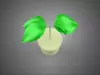
POLYURETHANE FOAM SPONGE ROCKWOOL HORTICULTURAL PU PLANT MEDIA
Polyurethane (PU) foam, specifically engineered in a sponge or block format, constitutes a synthetic, inert growing substrate utilized extensively in controlled environment agriculture (CEA), particularly in hydroponic systems and specialized propagation settings. This material is classified as a synthetic organic substrate, serving as a functional alternative or complement to traditional inert inorganic media such as Rockwool (stone wool), perlite, and coconut coir. The designation sponge emphasizes the requisite open-cell structure essential for efficient fluid dynamics and root zone aeration.
Composition and Manufacture
Polyurethane foams are polymers synthesized through the polyaddition reaction of a di- or polyisocyanate with a polyol (typically derived from petroleum or bio-based sources). The reaction utilizes catalysts and blowing agents (often water, which generates carbon dioxide) to create a porous matrix. For horticultural applications, the foam is manufactured to achieve a high degree of open porosity, typically ranging from 80% to 95%. This open-cell matrix ensures efficient gas exchange, which is critical for root respiration, while maintaining adequate capillarity for nutrient delivery.
The density and rigidity of the resulting foam are precisely controlled during manufacturing to optimize physical properties. Low-density, flexible polyurethane foams are preferred for seed starting and rooting cuttings due to their ease of handling and minimal compressive stress on emerging root structures. Unlike many flexible foams used in upholstery, horticultural PU media is formulated to be highly hydrolytically stable, resisting degradation in the moisture-rich, nutrient-laden environments of hydroponic culture.
Horticultural Properties
The functional efficacy of PU foam media is determined by a precise balance between its physical and chemical properties:
- Air-Filled Porosity (AFP) and Water Holding Capacity (WHC): Horticultural PU media is engineered to possess an optimal ratio of AFP to WHC. High total porosity facilitates rapid root penetration. Crucially, the material maintains a substantial reservoir of nutrient solution (WHC) while simultaneously retaining a high volume of air (AFP) post-saturation. This dual functionality minimizes the risk of root asphyxiation, a common issue in poorly draining substrates.
- Inertness and pH: Cured polyurethane foam is chemically inert, meaning it does not readily react with or absorb nutrient ions. It generally exhibits a neutral pH, eliminating the need for extensive pre-treatment or buffering required by certain natural or mineral substrates (e.g., initial high pH conditioning often necessary for Rockwool).
- Root Structure Interaction: The elastomeric, non-fibrous nature of the sponge allows for easier, less restrictive root growth compared to the dense, fibrous structure of stone wool. This characteristic aids in transplanting and reduces shock.
### Comparison to Rockwool
The inclusion of Rockwool in the media description often highlights PU media as a direct functional substitute or superior alternative in soilless culture:
| Feature | Polyurethane (PU) Foam | Rockwool (Stone Wool) |
| :--- | :--- | :--- |
| Material Type | Synthetic Organic Polymer | Inorganic Mineral Fiber |
| Weight | Extremely Lightweight (Dry and Saturated) | Heavy (Especially Saturated) |
| Handling/Safety | Low dust hazard; non-irritant | Potential for fibrous particle inhalation (irritant) |
| Root Penetration | Non-restrictive, sponge-like structure | Dense, fibrous structure |
| Pre-Treatment | Minimal (often rinse only); near-neutral pH | Mandatory acidification/buffering due to high initial pH |
### Applications
PU foam sponges are predominantly utilized in the early stages of the crop cycle, specifically:
- Seedling Propagation: Uniform cubes or plugs are ideal for microgreens, lettuce varieties, and other leafy vegetables intended for hydroponic systems (e.g., Nutrient Film Technique, Deep Water Culture).
- Asexual Propagation: Used for rooting cuttings of various ornamental and fruiting plants due to the stable moisture content it provides.
- Tissue Culture Acclimation: Provides a stable, sterile environment for ex vitro transfer of plantlets.
### Environmental Considerations
As a petrochemically derived polymer, polyurethane is inherently non-biodegradable and durable, granting it longevity within the growing environment. However, this permanence poses an end-of-life disposal challenge. Research into bio-based polyols and chemical recycling methods is ongoing to mitigate the environmental footprint associated with synthetic horticultural substrates.
KEYWORDS: Polyurethane, Hydroponics, Horticultural media, Rockwool alternative, Soilless culture, Plant propagation, Open-cell foam, Synthetic substrate, Polyol, Isocyanate, Seed starting, Water Holding Capacity, Air-Filled Porosity, Inert substrate, Controlled environment agriculture, CEA, Plug media, Foam sponge, Nutrient Film Technique, Deep Water Culture, Substrate stability, Root aeration, Non-biodegradable, Elastomeric, Porosity, Root zone, Chemical inertness, Hydrolytic stability, Nursery operations.