High-quality 3D assets at affordable prices — trusted by designers, engineers, and creators worldwide. Made with care to be versatile, accessible, and ready for your pipeline.
Included File Formats
This model is provided in 14 widely supported formats, ensuring maximum compatibility:
• - FBX (.fbx) – Standard format for most 3D software and pipelines
• - OBJ + MTL (.obj, .mtl) – Wavefront format, widely used and compatible
• - STL (.stl) – Exported mesh geometry; may be suitable for 3D printing with adjustments
• - STEP (.step, .stp) – CAD format using NURBS surfaces
• - IGES (.iges, .igs) – Common format for CAD/CAM and engineering workflows (NURBS)
• - SAT (.sat) – ACIS solid model format (NURBS)
• - DAE (.dae) – Collada format for 3D applications and animations
• - glTF (.glb) – Modern, lightweight format for web, AR, and real-time engines
• - 3DS (.3ds) – Legacy format with broad software support
• - 3ds Max (.max) – Provided for 3ds Max users
• - Blender (.blend) – Provided for Blender users
• - SketchUp (.skp) – Compatible with all SketchUp versions
• - AutoCAD (.dwg) – Suitable for technical and architectural workflows
• - Rhino (.3dm) – Provided for Rhino users
Model Info
• - All files are checked and tested for integrity and correct content
• - Geometry uses real-world scale; model resolution varies depending on the product (high or low poly)
• • - Scene setup and mesh structure may vary depending on model complexity
• - Rendered using Luxion KeyShot
• - Affordable price with professional detailing
Buy with confidence. Quality and compatibility guaranteed.
If you have any questions about the file formats, feel free to send us a message — we're happy to assist you!
Sincerely,
SURF3D
Trusted source for professional and affordable 3D models.
More Information About 3D Model :
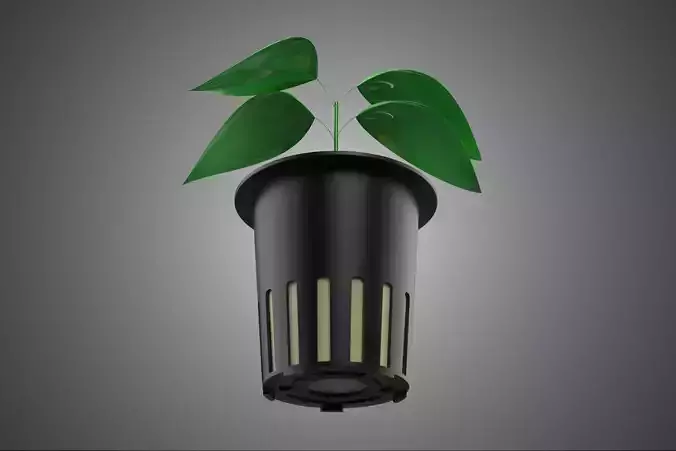
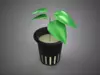
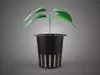
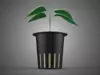
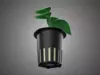
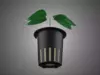
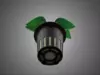
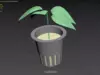
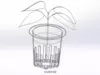
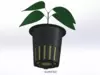
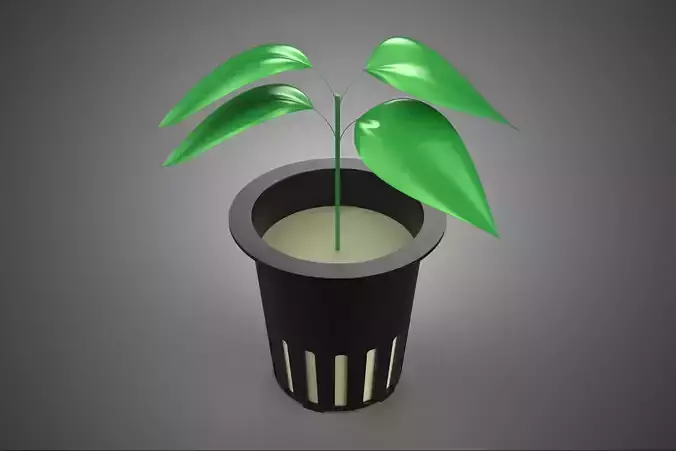
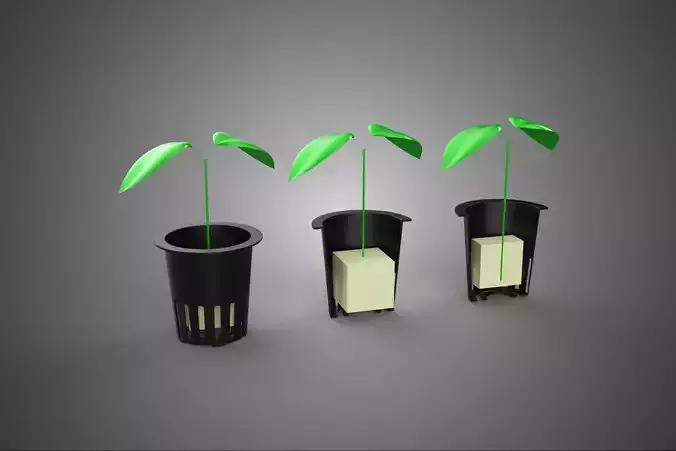
SOIL FREE SOILLESS HYDROPONIC NET POT CUP SEEDLING YOUNG PLANT
A hydroponic net pot, alternatively termed a net cup or soil-free seeding cup, is a specialized container employed universally in Controlled Environment Agriculture (CEA) systems, specifically hydroponics, aeroponics, and aquaponics. Its primary function is to secure and stabilize young plants, seedlings, or clones during the initial stages of growth and throughout their lifecycle, while simultaneously facilitating unimpeded access for root systems to the underlying nutrient solution or water reservoir. The term soil-free emphasizes its deployment in methodologies that negate the use of traditional earthen growing media.
Design and Structure
The net pot is engineered primarily from durable, inert, and often food-grade plastics, such as High-Density Polyethylene (HDPE) or polypropylene, ensuring chemical stability and resistance to degradation in continuously moist, nutrient-rich environments. The defining characteristic of the net pot is its open lattice or mesh sidewall and base structure, which distinguishes it from conventional opaque nursery containers.
Key structural components include:
- Mesh Walls: The apertures in the walls are specifically sized to allow the roots (radicles) of the developing plant to penetrate outward and downward unimpeded. This design maximizes exposure of the root mass to oxygenated air and the nutrient solution, a critical factor in optimizing uptake efficiency.
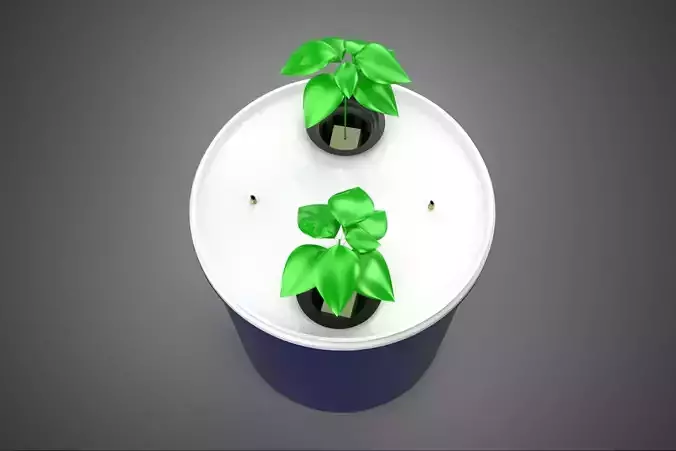
- Wide Lip/Rim: An integrated rim or flange encircles the top perimeter. This lip is designed to rest securely on the lid or channel opening of the hydroponic system (e.g., Deep Water Culture (DWC) reservoirs, Nutrient Film Technique (NFT) channels, or ebb and flow trays), ensuring the pot remains suspended above the reservoir while the base is partially submerged or exposed to mist.
- Inert Substrate Containment: Although soilless, net pots typically require a small volume of inert substrate to provide essential physical support for the seedling until the roots are sufficiently established. Common media used include rockwool cubes, coco coir, clay pebbles (Lightweight Expanded Clay Aggregate, or LECA), perlite, or specialized foam plugs. These materials are chosen for their neutrality, high porosity, and drainage capabilities.
### Application in Soilless Culture
Net pots are integral to the propagation and nursery phase in modern hydroponic operations.
#### Seedling and Young Plant Stabilization
Seeds are often germinated in smaller starter cubes (typically rockwool or coco plugs). Once the seedling has developed its first true leaves and a small root system, the entire plug is transferred directly into the net pot, which is then filled with a supplementary inert medium like clay pebbles for structural ballast. This process provides a sterile, controlled environment for the young plant.
#### Root System Development
In systems like DWC, the base of the net pot is suspended so that the inert media or the emerging roots are constantly in contact with or are just above the highly oxygenated nutrient solution. The mesh structure promotes strong root elongation through hydrotropism, encouraging rapid penetration into the reservoir. This maximizes surface area exposure for efficient absorption of water, dissolved minerals, and oxygen. The open design also minimizes the risk of root rot (Pythium) by preventing stagnant water accumulation near the crown of the plant.
#### System Compatibility
Net pots are engineered for standardization and compatibility across various soilless techniques:
- Deep Water Culture (DWC): Net pots sit in holes on a raft or reservoir lid, allowing roots to dangle freely into the aerated water.
- Nutrient Film Technique (NFT): Smaller net pots are placed in the channels where a thin film of nutrient solution flows past the base, allowing capillary action and root growth to sustain the plant.
- Ebb and Flow (Flood and Drain): Net pots are placed in the growing tray and temporarily submerged during the flooding phase, ensuring media saturation.
The transition from a seedling stage housed in a net pot to a mature plant utilizing the same apparatus minimizes transplant shock and simplifies large-scale commercial cultivation logistics.
KEYWORDS: Hydroponics, Net Pot, Soilless Culture, Seedling Propagation, Root Aeration, Inert Substrate, Deep Water Culture, Nutrient Film Technique, Aquaponics, Controlled Environment Agriculture, Rockwool, Coco Coir, Clay Pebbles, LECA, Transplant Shock Reduction, Plastic Container, Nursery Stage, Propagation Cup, Mesh Structure, Hydrotropism, Root Zone Management, Perlite, Sterile Environment, System Compatibility, Growth Optimization, Aeroponics, Radicle Development, Horticulture, CEA Technology, Hydroponic Reservoir.