High-quality 3D assets at affordable prices — trusted by designers, engineers, and creators worldwide. Made with care to be versatile, accessible, and ready for your pipeline.
Included File Formats
This model is provided in 14 widely supported formats, ensuring maximum compatibility:
• - FBX (.fbx) – Standard format for most 3D software and pipelines
• - OBJ + MTL (.obj, .mtl) – Wavefront format, widely used and compatible
• - STL (.stl) – Exported mesh geometry; may be suitable for 3D printing with adjustments
• - STEP (.step, .stp) – CAD format using NURBS surfaces
• - IGES (.iges, .igs) – Common format for CAD/CAM and engineering workflows (NURBS)
• - SAT (.sat) – ACIS solid model format (NURBS)
• - DAE (.dae) – Collada format for 3D applications and animations
• - glTF (.glb) – Modern, lightweight format for web, AR, and real-time engines
• - 3DS (.3ds) – Legacy format with broad software support
• - 3ds Max (.max) – Provided for 3ds Max users
• - Blender (.blend) – Provided for Blender users
• - SketchUp (.skp) – Compatible with all SketchUp versions
• - AutoCAD (.dwg) – Suitable for technical and architectural workflows
• - Rhino (.3dm) – Provided for Rhino users
Model Info
• - All files are checked and tested for integrity and correct content
• - Geometry uses real-world scale; model resolution varies depending on the product (high or low poly)
• • - Scene setup and mesh structure may vary depending on model complexity
• - Rendered using Luxion KeyShot
• - Affordable price with professional detailing
Buy with confidence. Quality and compatibility guaranteed.
If you have any questions about the file formats, feel free to send us a message — we're happy to assist you!
Sincerely,
SURF3D
Trusted source for professional and affordable 3D models.
More Information About 3D Model :
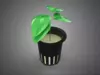
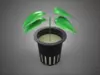
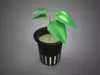
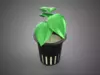
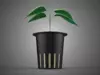
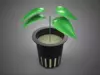
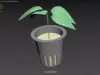
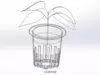
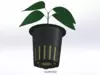
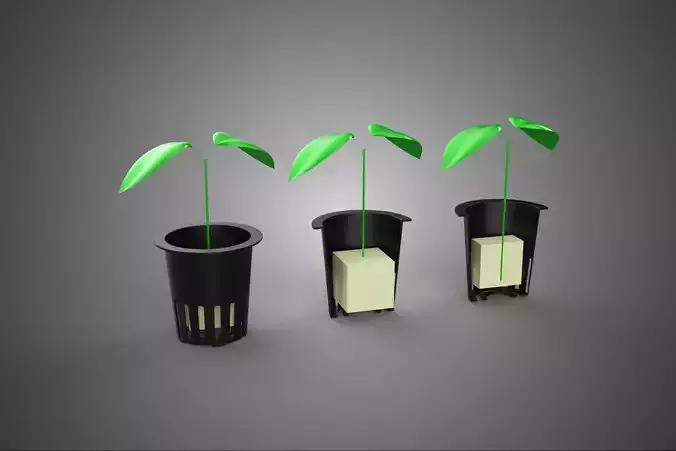
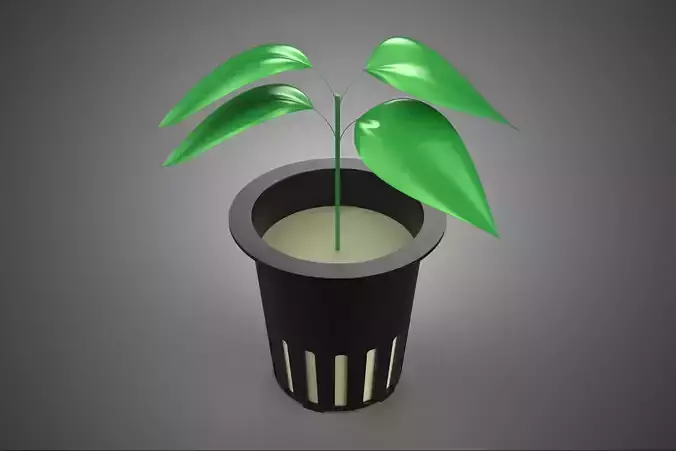
A net pot cup, frequently referred to simply as a net pot or mesh basket, is a critical component utilized in controlled environmental agriculture, specifically tailored for soilless cultivation techniques such as hydroponics and aeroponics. This specialized horticultural container functions primarily as a stable mechanical support for the plant, anchoring the stem, sprout, or seedling while permitting unrestricted access of the developing root system to nutrient solutions.
Nomenclature and Morphology
The net pot cup is characterized by its highly porous structure. Typically fabricated from chemically inert and durable plastic polymers—such as high-density polyethylene (HDPE) or polypropylene (PP)—the pot is designed to resist degradation from constant moisture, nutrient salts, and sterilization cycles.
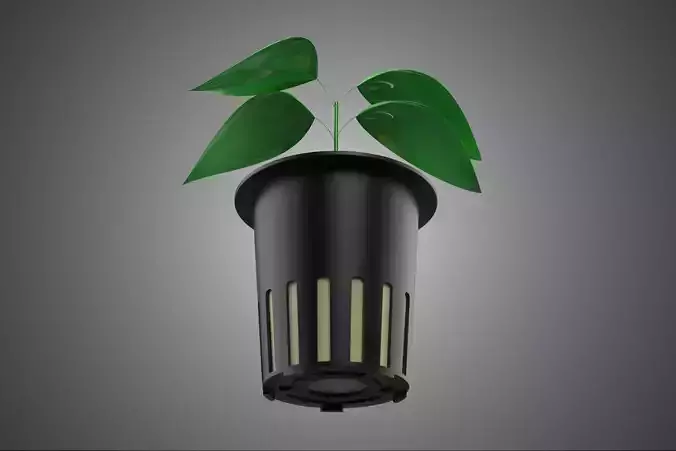
The defining morphological feature is the latticed sidewalls and base, which comprise numerous openings or mesh squares. This architecture serves two primary functions: maximum root egress and superior drainage and oxygen exchange (aeration). The top circumference of the container usually includes a reinforced lip or flange, which allows the pot to be securely suspended within corresponding apertures drilled into the support channels, lids, or reservoirs of various hydroponic systems, ensuring the base of the pot is optimally positioned relative to the nutrient delivery mechanism.
Net pots are produced in a spectrum of sizes, generally measured by internal diameter, ranging from small 2-inch cups used for microgreens and initial seedling transplantation to larger 6-inch or 8-inch cups necessary for supporting the mature root masses of fruiting plants, perennial species, or juvenile tree stock.
Operational Mechanism in Soilless Culture
Hydroponics
In deep water culture (DWC) or flood and drain systems, the net pot acts as a containment unit for inert growing media (e.g., expanded clay pebbles, perlite, rockwool, or coco coir) which stabilize the seedling or stem cutting. The mesh design ensures that the roots, once established, quickly grow through the pot’s perforations and penetrate the nutrient solution reservoir beneath. This design is crucial for preventing root suffocation, as the open structure facilitates the flow of oxygenated air around the root crown, mitigating the risks of waterlogging and anaerobic conditions common in conventional opaque containers.
Aeroponics
In pure aeroponic setups, net pots often require little or no media, acting strictly as collars or cradles to hold the stem of the plant. The fully suspended root mass is exposed directly to a fine nutrient mist, which provides optimal nutrient uptake and oxygenation. The net pot ensures the stability of the plant while maximizing the surface area of the root zone exposed to the atomized solution.
Horticultural Applications
The net pot cup is fundamental across the entire developmental trajectory of cultivated plants, from germination to maturity:
- Seedling and Sprout Stage: Small net pots are essential for the initial phase, providing a sterile environment for sprouted seeds or cloned stem cuttings prior to their transfer into the main production system.
- Stem Cuttings and Propagation: They facilitate the propagation of vegetative material by anchoring the stem securely while roots develop, often utilizing a rooting hormone applied to the media within the pot.
- Juvenile Tree Stock: Larger net pots are increasingly used in commercial operations to establish robust root systems in young trees intended for subsequent planting or specialized research environments. The promotion of a healthy, contained root ball reduces transplant shock when the plant is moved to a larger system or field environment.
The utilization of net pots streamlines cultivation by simplifying transplanting, facilitating sanitation, and standardizing the interface between the plant and the automated nutrient delivery infrastructure.
KEYWORDS: Hydroponics, Aeroponics, Net Pot, Mesh Basket, Soilless Culture, Root Support, Seedling Cup, Plant Container, Grow Media, Root Egress, Deep Water Culture, Nutrient Film Technique, Propagation, Stem Cutting, Sprout Anchor, Horticulture, Polypropylene, Latticed Structure, Root Aeration, Cloning, Reservoir Interface, Transplanting, Controlled Environment, Perlite, Rockwool, Clay Pebbles, Greenhouse Technology, Plant Stability, Juvenile Tree, Nutrient Solution.