High-quality 3D assets at affordable prices — trusted by designers, engineers, and creators worldwide. Made with care to be versatile, accessible, and ready for your pipeline.
Included File Formats
This model is provided in 14 widely supported formats, ensuring maximum compatibility:
• - FBX (.fbx) – Standard format for most 3D software and pipelines
• - OBJ + MTL (.obj, .mtl) – Wavefront format, widely used and compatible
• - STL (.stl) – Exported mesh geometry; may be suitable for 3D printing with adjustments
• - STEP (.step, .stp) – CAD format using NURBS surfaces
• - IGES (.iges, .igs) – Common format for CAD/CAM and engineering workflows (NURBS)
• - SAT (.sat) – ACIS solid model format (NURBS)
• - DAE (.dae) – Collada format for 3D applications and animations
• - glTF (.glb) – Modern, lightweight format for web, AR, and real-time engines
• - 3DS (.3ds) – Legacy format with broad software support
• - 3ds Max (.max) – Provided for 3ds Max users
• - Blender (.blend) – Provided for Blender users
• - SketchUp (.skp) – Compatible with all SketchUp versions
• - AutoCAD (.dwg) – Suitable for technical and architectural workflows
• - Rhino (.3dm) – Provided for Rhino users
Model Info
• - All files are checked and tested for integrity and correct content
• - Geometry uses real-world scale; model resolution varies depending on the product (high or low poly)
• • - Scene setup and mesh structure may vary depending on model complexity
• - Rendered using Luxion KeyShot
• - Affordable price with professional detailing
Buy with confidence. Quality and compatibility guaranteed.
If you have any questions about the file formats, feel free to send us a message — we're happy to assist you!
Sincerely,
SURF3D
Trusted source for professional and affordable 3D models.
More Information About 3D Model :
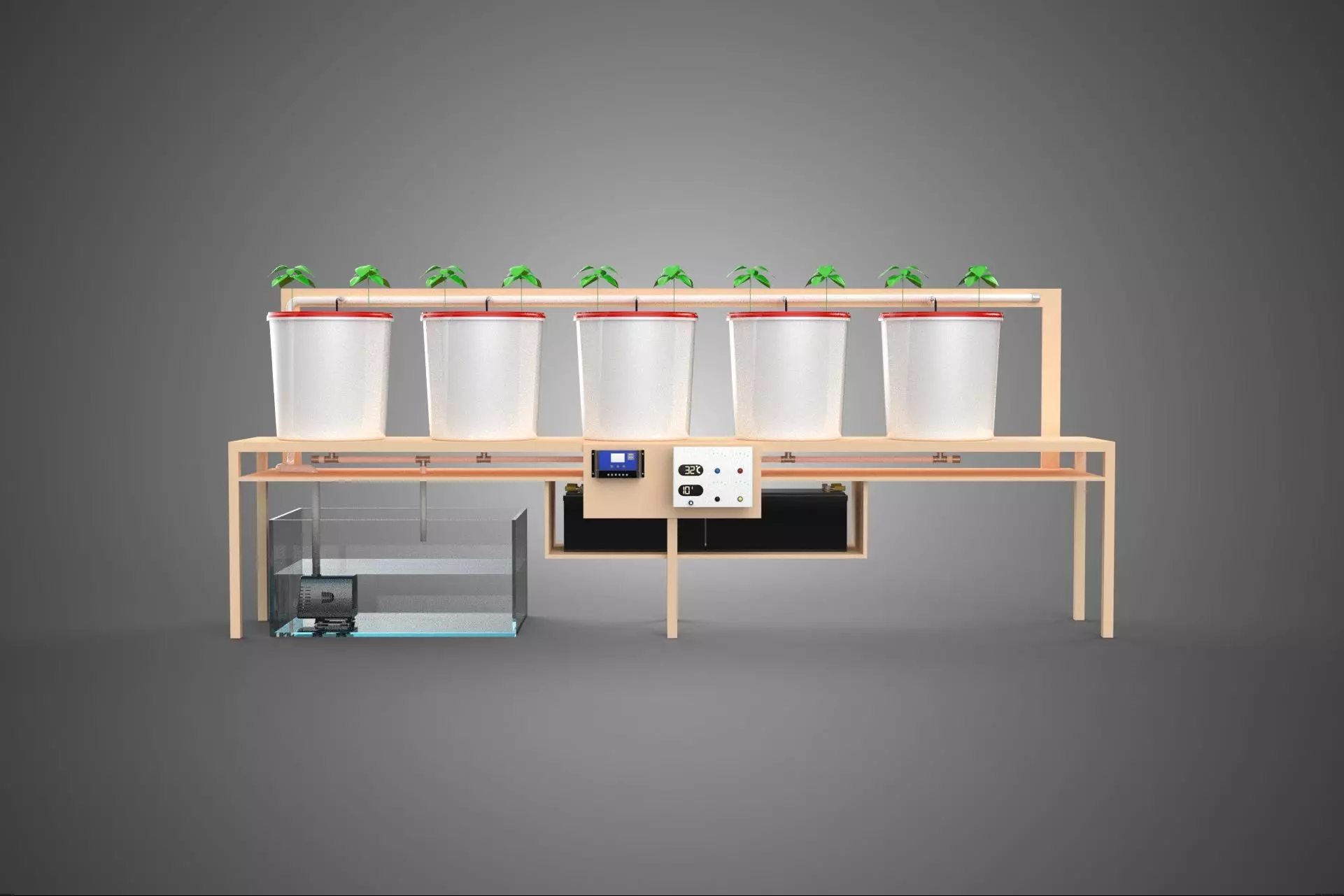
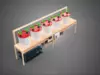
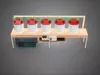
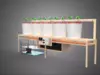
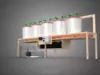
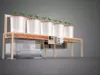
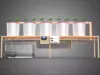
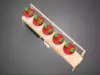
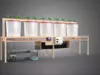
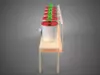
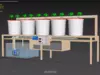
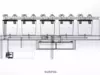
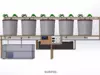
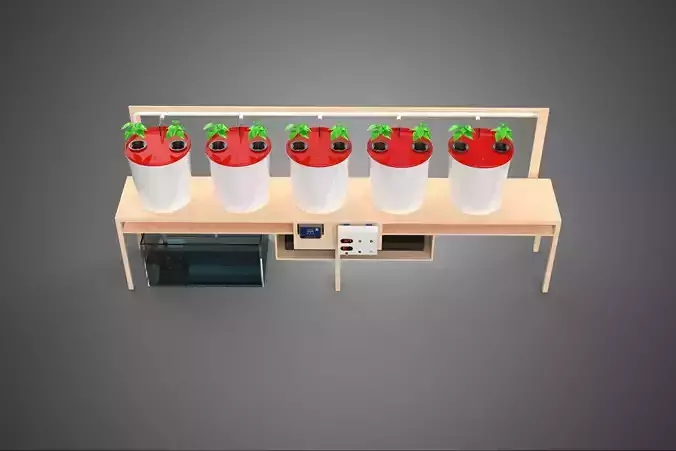
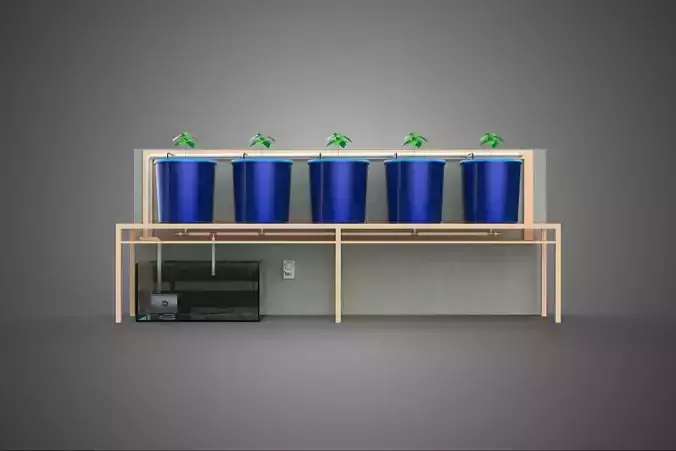
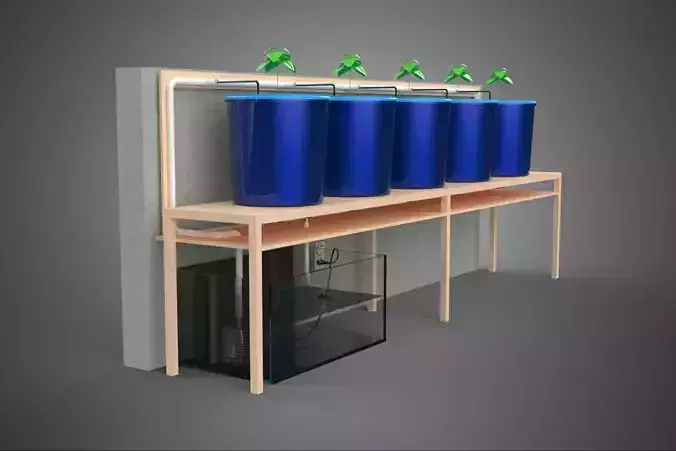
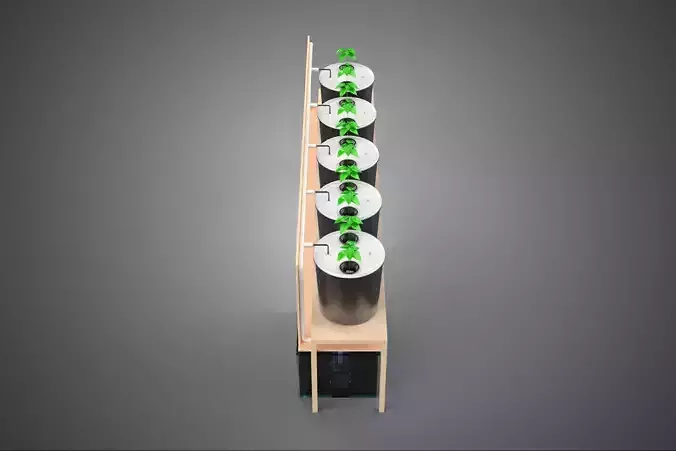
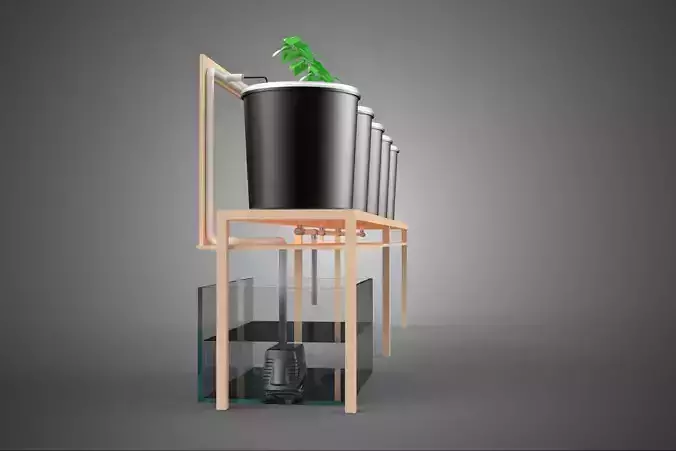
The IOT Hydroponic Plant Auto Control Dutch Bucket Irrigation System represents an advanced implementation of Controlled Environment Agriculture (CEA), integrating networked sensing and actuation technology with a specialized soil-less cultivation methodology. This system is engineered to provide precise, automated management of nutrient delivery and environmental parameters essential for optimal plant development, utilizing the Internet of Things (IoT) for remote monitoring, data logging, and control adjustments.
Methodology: Dutch Bucket Configuration
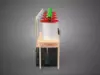
The Dutch Bucket system, also known as the Bato Bucket system, is a variant of hydroponics designed specifically for larger, typically fruiting crops such as tomatoes, peppers, cucumbers, and larger flowers. Each plant is housed in an individual bucket, often filled with an inert, non-soil medium (e.g., perlite, coco coir, rockwool, or expanded clay aggregate).
Nutrient solution is delivered to the base of the plant via micro-irrigation drip emitters at timed intervals. The key characteristic of the Dutch Bucket design is the efficient drainage mechanism. Excess solution does not accumulate at the roots; rather, it drains through an overflow elbow fitting situated near the bottom of the bucket. This allows for excellent root zone aeration while facilitating the recovery of the nutrient solution. In the common recirculating setup, this drainage is collected via a common return line and routed back to a main reservoir for filtration, replenishment, and reuse.
The IOT Control Framework
The automatic control function relies on a sophisticated IoT architecture comprising sensors, a central processing unit (CPU/microcontroller), actuators, and a cloud-based data platform.
1. Sensing and Data Acquisition
A continuous network of sensors monitors the critical variables affecting plant growth:
- Electrical Conductivity (EC): Measures the concentration of dissolved nutrient salts in the water, directly correlating to the plant’s nutrient uptake availability.
- Potential Hydrogen (pH): Measures the acidity or alkalinity of the nutrient solution. Since specific pH ranges dictate the solubility and absorption of different macro- and micronutrients, this parameter is critical and must be tightly regulated (typically 5.5 to 6.5).
- Temperature: Monitored in both the nutrient reservoir and the air environment, as extremes affect nutrient saturation, oxygen levels, and plant metabolic rates.
- Water Level/Flow: Ensures sufficient reservoir capacity and verifies proper irrigation delivery to the buckets.
Data gathered by these probes is transmitted wirelessly, often using protocols like Wi-Fi or MQTT, to the central CPU.
#### 2. Automated Actuation
The CPU interprets the real-time sensor data and executes control logic. If a monitored variable deviates from the established set point—which is determined by the specific crop and growth stage—the system triggers the appropriate actuators:
- Nutrient Dosing Pumps: Peristaltic pumps precisely inject concentrated stock solutions (typically macro-nutrients A and B, and potentially pH adjustment solutions) into the reservoir to restore the target EC and maintain nutritional balance.
- pH Regulation Pumps: Dedicated pumps inject controlled volumes of pH Up (base) or pH Down (acid) solutions to stabilize the hydrogen ion concentration.
- Irrigation Pump: Managed by timers or integrated environmental sensors (e.g., light intensity/DLI), this pump activates the drip lines according to the scheduled irrigation cycle, ensuring optimal substrate moisture.
- Auxiliary Controls: Depending on the sophistication of the setup, the system may also regulate supplementary systems such as climate control (fans, cooling pads, heating) and supplemental lighting (LED fixtures).
#### 3. Remote Management and Optimization
The IOT capability distinguishes this system by connecting the local control loop to a remote network. Processed data is logged to a cloud server or proprietary platform. This facilitates:
- Remote Access: Growers can monitor system status and adjust set points from any location.
- Alerting: Automated notifications warn operators of critical events (e.g., pump failure, low water level, dangerous parameter deviation).
- Predictive Analytics: Long-term data tracking allows for trend analysis, optimized resource forecasting, and iterative refinement of growing recipes to maximize yield stability and efficiency.
### System Advantages
The integration of automated control and the Dutch Bucket technique yields significant benefits, including maximized water and nutrient use efficiency through recirculation, precise environmental stability that promotes faster growth and higher yields, and reduced labor requirements due to minimized manual monitoring and dosing.
KEYWORDS: Hydroponics, IOT, Automation, Dutch Bucket, Bato Bucket, Recirculation, EC Control, pH Regulation, Nutrient Dosing, Controlled Environment Agriculture, Drip Irrigation, Soil-less Culture, Sensor Network, Peristaltic Pump, Microcontroller, Cloud Monitoring, Telemetry, Actuator, Grow Media, CEA, Water Efficiency, Precision Agriculture, Real-Time Data, Remote Management, Solenoid Valve, Plant Auto Control, Resource Optimization, Nutrient Film Technique, DWC, Fruiting Crops.