High-quality 3D assets at affordable prices — trusted by designers, engineers, and creators worldwide. Made with care to be versatile, accessible, and ready for your pipeline.
Included File Formats
This model is provided in 14 widely supported formats, ensuring maximum compatibility:
• - FBX (.fbx) – Standard format for most 3D software and pipelines
• - OBJ + MTL (.obj, .mtl) – Wavefront format, widely used and compatible
• - STL (.stl) – Exported mesh geometry; may be suitable for 3D printing with adjustments
• - STEP (.step, .stp) – CAD format using NURBS surfaces
• - IGES (.iges, .igs) – Common format for CAD/CAM and engineering workflows (NURBS)
• - SAT (.sat) – ACIS solid model format (NURBS)
• - DAE (.dae) – Collada format for 3D applications and animations
• - glTF (.glb) – Modern, lightweight format for web, AR, and real-time engines
• - 3DS (.3ds) – Legacy format with broad software support
• - 3ds Max (.max) – Provided for 3ds Max users
• - Blender (.blend) – Provided for Blender users
• - SketchUp (.skp) – Compatible with all SketchUp versions
• - AutoCAD (.dwg) – Suitable for technical and architectural workflows
• - Rhino (.3dm) – Provided for Rhino users
Model Info
• - All files are checked and tested for integrity and correct content
• - Geometry uses real-world scale; model resolution varies depending on the product (high or low poly)
• • - Scene setup and mesh structure may vary depending on model complexity
• - Rendered using Luxion KeyShot
• - Affordable price with professional detailing
Buy with confidence. Quality and compatibility guaranteed.
If you have any questions about the file formats, feel free to send us a message — we're happy to assist you!
Sincerely,
SURF3D
Trusted source for professional and affordable 3D models.
More Information About 3D Model :
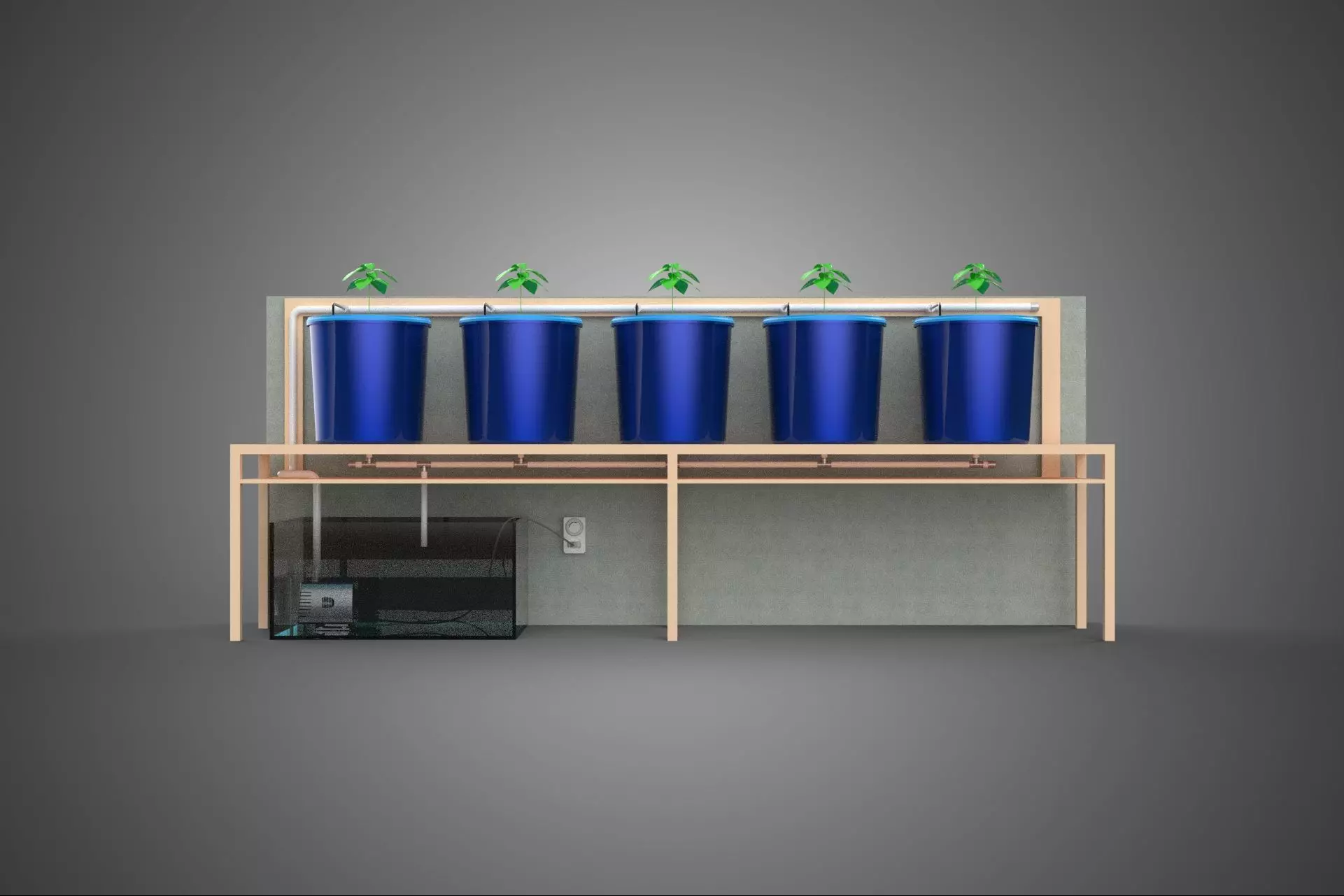
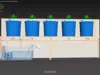
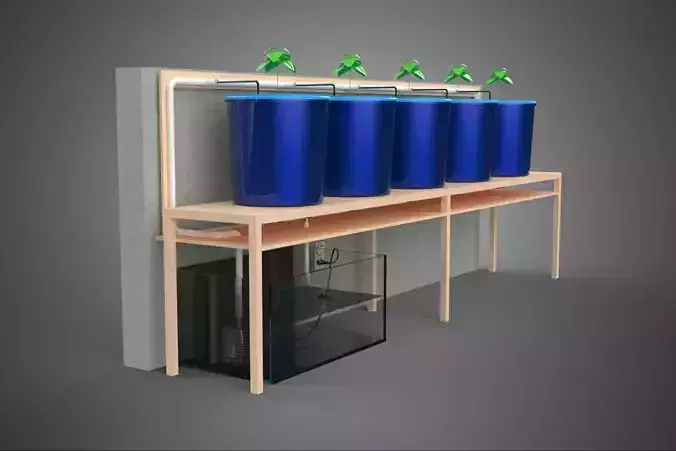
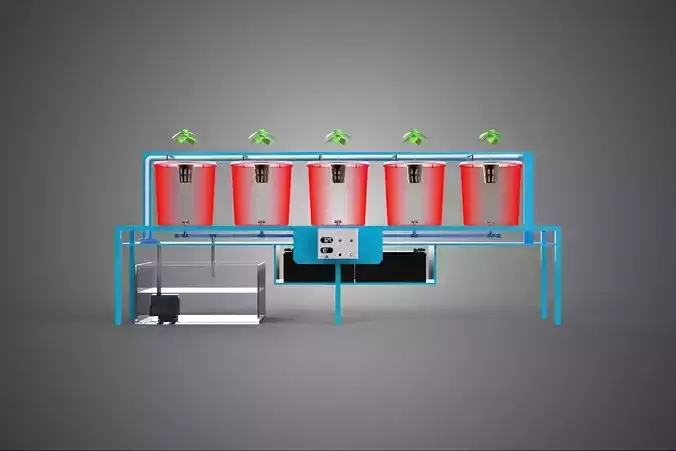
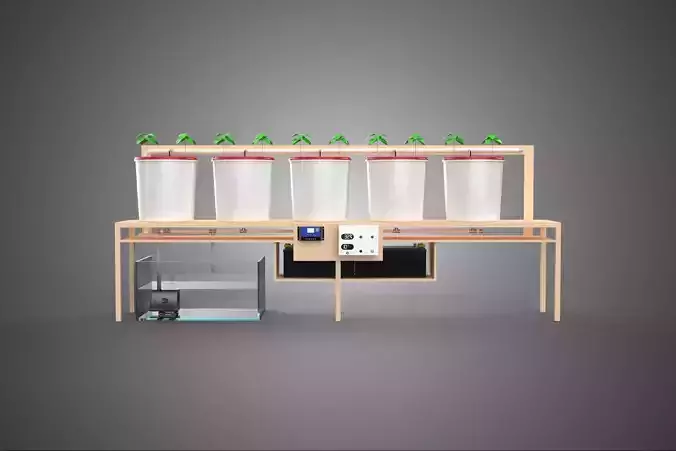
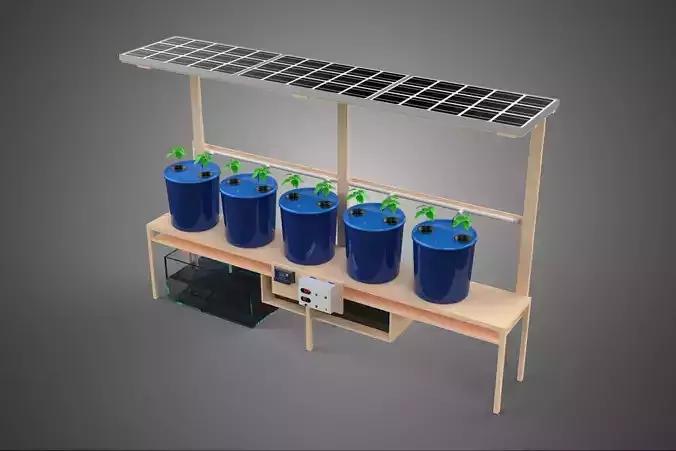
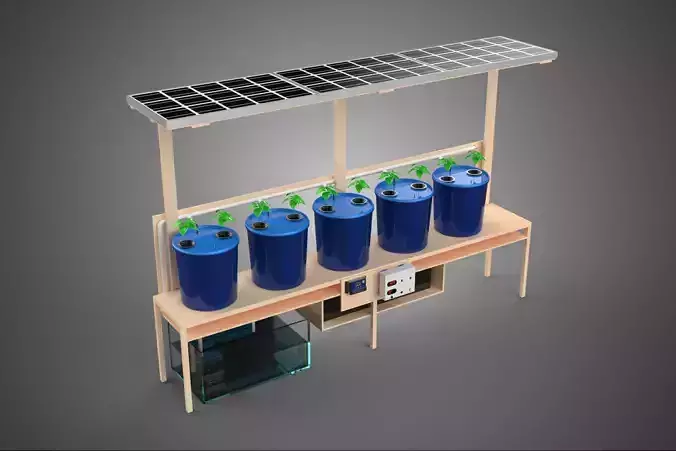
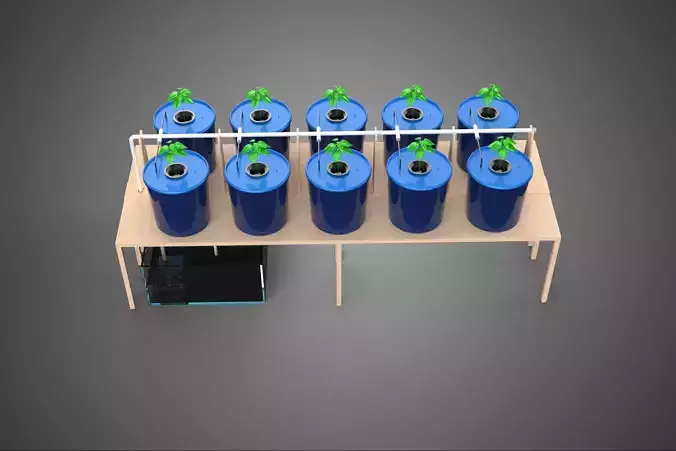
The Auto Timer Nutrient Hydroponic Plants Bucket Dutch Bato System describes a sophisticated, substrate-based method of soilless cultivation characterized by its modular design, use of inert growth media, and automated nutrient delivery mechanisms. It is a highly scalable system often classified as a recirculating or semi-closed hydroponic operation.
I. System Architecture: The Dutch Bato Bucket
The core structural component is the Dutch Bucket, or Bato Bucket. This is a specialized container, typically constructed from UV-resistant, opaque plastic, designed to house individual or small groupings of plants. Unlike deep water culture or Nutrient Film Technique (NFT), the Bato system uses a solid, inert medium—such as perlite, vermiculite, cocopeat (coco coir), or rockwool cubes—for physical support and localized moisture retention.
Bato buckets are usually arranged linearly on benches or ground supports above a central drainage gutter. Each bucket features an internal drainage elbow or fitting situated slightly above the floor of the container. This design feature maintains a shallow reservoir (typically 1–2 cm deep) of nutrient solution at the bottom of the bucket. This small residual volume prevents the rapid drying of the roots between irrigation cycles while ensuring that the bulk of the root mass remains exposed to air, promoting high levels of oxygenation.
II. Nutrient Delivery and Automation
The designation Auto Timer Nutrient refers to the system’s reliance on automated control for fertigation (the delivery of nutrient solution).
- Nutrient Solution: A balanced, pH-optimized aqueous solution containing essential macro- and micronutrients is stored in a main reservoir. The electrical conductivity (EC) and pH of this solution are meticulously monitored and adjusted to meet the specific demands of the target crop and its physiological stage.
- Delivery Mechanism: The system utilizes a main pump that draws the nutrient solution from the reservoir and distributes it via PVC piping to individual drip emitters located in each Bato bucket.
- Auto Timer Control: An electronic or digital timer governs the activation and deactivation of the delivery pump. Irrigation events are programmed for multiple short cycles throughout the day, ensuring that the root zone receives frequent, small doses of nutrient solution. This pulse feeding method minimizes media saturation, reduces anaerobic conditions, and maximizes nutrient absorption efficiency. Cycle duration and frequency are dynamically adjusted based on ambient conditions, light intensity (Daily Light Integral, DLI), and crop maturity.
### III. Operational Principles and Management
The Bato system offers flexibility in operational modes:
- Recirculating (Closed-Loop): Excess nutrient solution (leachate) that exits the drainage elbow of the buckets flows into the return gutter and is channeled back to the main reservoir. This solution is subsequently tested, topped up, and reused. This closed-loop design drastically improves water use efficiency and reduces nutrient effluent discharge.
- Drain-to-Waste (Open System): Alternatively, the leachate is collected and discarded or used for conventional outdoor landscaping. While simpler to manage for disease control, this method is less resource efficient.
The modularity of the Bato bucket system facilitates maintenance and disease management. If a single plant becomes infected by a root-borne pathogen (e.g., Pythium), that bucket can be isolated or removed without jeopardizing the entire system, a key advantage over continuous systems like NFT.
### IV. Applications
The Dutch Bato System is particularly well-suited for high-value, vine-producing crops (indeterminate growth) that require a substantial support structure and long growing cycles. Primary crops cultivated include:
- Tomatoes (Solanum lycopersicum)
- Cucumbers (Cucumis sativus)
- Bell Peppers and Chillies (Capsicum annuum)
- Eggplants (Solanum melongena)
- Certain high-density floral varieties (e.g., roses).
KEYWORDS: Dutch Bucket, Bato System, Hydroponics, Automated Irrigation, Soilless Culture, Recirculating Hydroponics, Drip Emitters, Fertigation, Perlite, Cocopeat, Rockwool, Timed Delivery, Root Zone, Indeterminate Crops, Tomatoes, Cucumbers, Water Efficiency, Closed-Loop System, Substrate Culture, Drain-to-Waste, Modular System, Precision Agriculture, EC Control, pH Management, Nutrient Solution, Reservoirs, Grow Buckets, Irrigation Scheduling, Leachate Collection, Nutrient Management.