High-quality 3D assets at affordable prices — trusted by designers, engineers, and creators worldwide. Made with care to be versatile, accessible, and ready for your pipeline.
Included File Formats
This model is provided in 14 widely supported formats, ensuring maximum compatibility:
• - FBX (.fbx) – Standard format for most 3D software and pipelines
• - OBJ + MTL (.obj, .mtl) – Wavefront format, widely used and compatible
• - STL (.stl) – Exported mesh geometry; may be suitable for 3D printing with adjustments
• - STEP (.step, .stp) – CAD format using NURBS surfaces
• - IGES (.iges, .igs) – Common format for CAD/CAM and engineering workflows (NURBS)
• - SAT (.sat) – ACIS solid model format (NURBS)
• - DAE (.dae) – Collada format for 3D applications and animations
• - glTF (.glb) – Modern, lightweight format for web, AR, and real-time engines
• - 3DS (.3ds) – Legacy format with broad software support
• - 3ds Max (.max) – Provided for 3ds Max users
• - Blender (.blend) – Provided for Blender users
• - SketchUp (.skp) – Compatible with all SketchUp versions
• - AutoCAD (.dwg) – Suitable for technical and architectural workflows
• - Rhino (.3dm) – Provided for Rhino users
Model Info
• - All files are checked and tested for integrity and correct content
• - Geometry uses real-world scale; model resolution varies depending on the product (high or low poly)
• • - Scene setup and mesh structure may vary depending on model complexity
• - Rendered using Luxion KeyShot
• - Affordable price with professional detailing
Buy with confidence. Quality and compatibility guaranteed.
If you have any questions about the file formats, feel free to send us a message — we're happy to assist you!
Sincerely,
SURF3D
Trusted source for professional and affordable 3D models.
More Information About 3D Model :
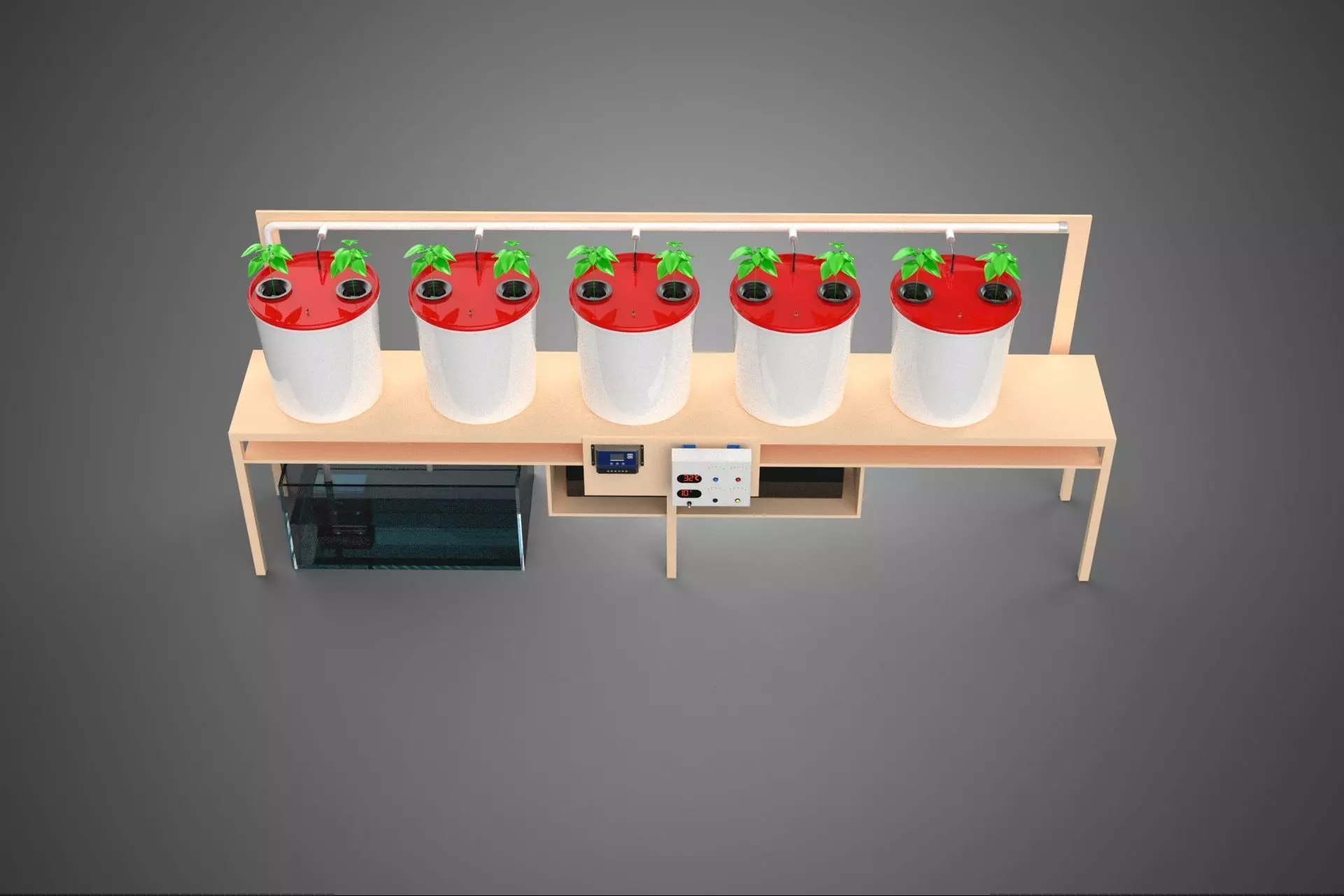
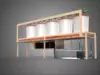
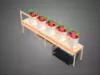
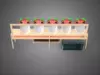
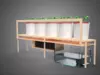
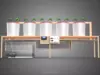
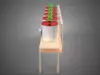
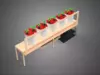
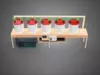
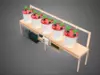
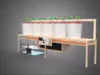
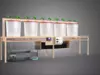
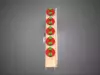
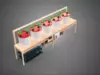
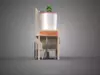
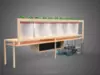
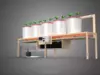
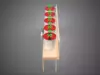
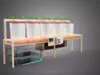
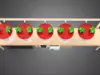
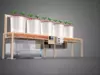
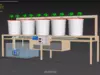
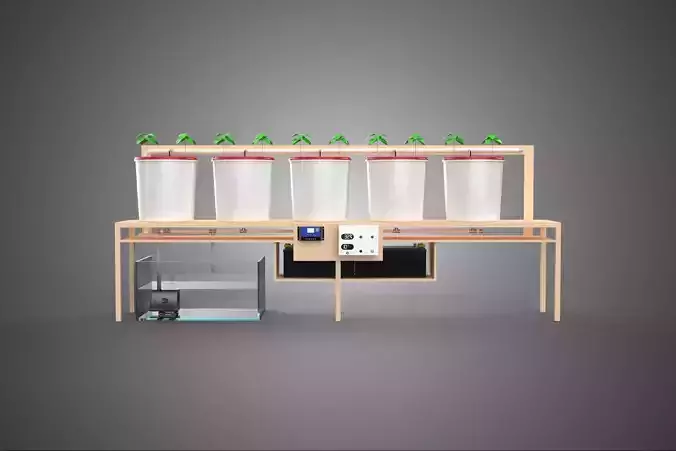
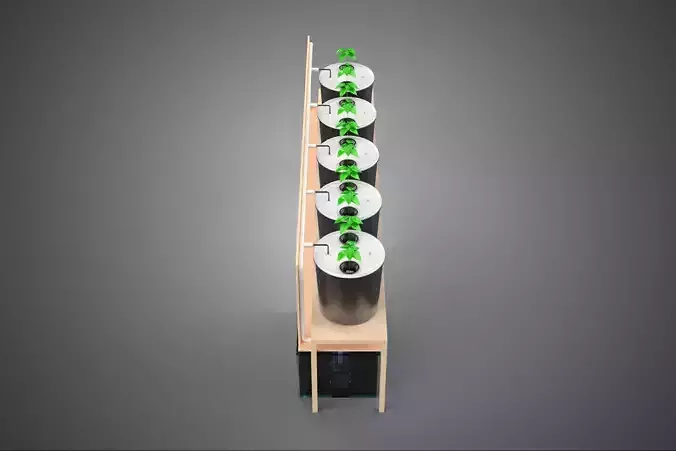
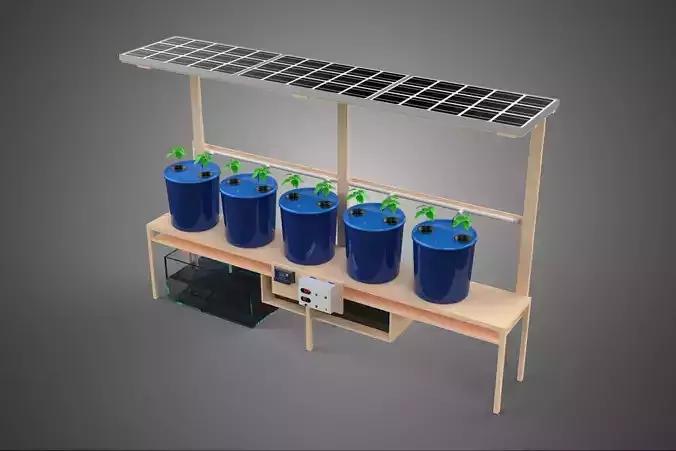
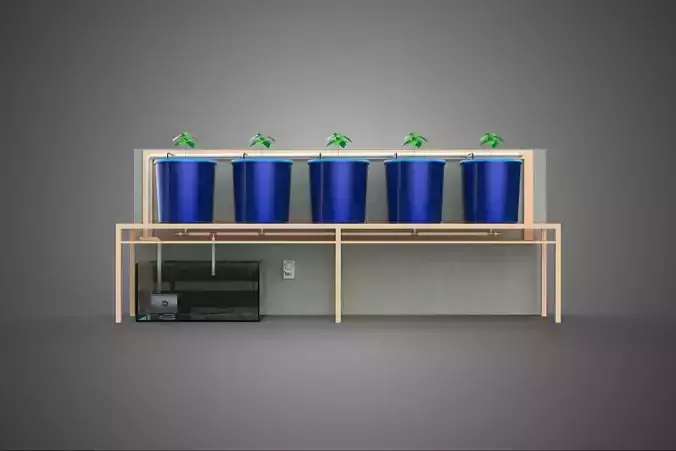
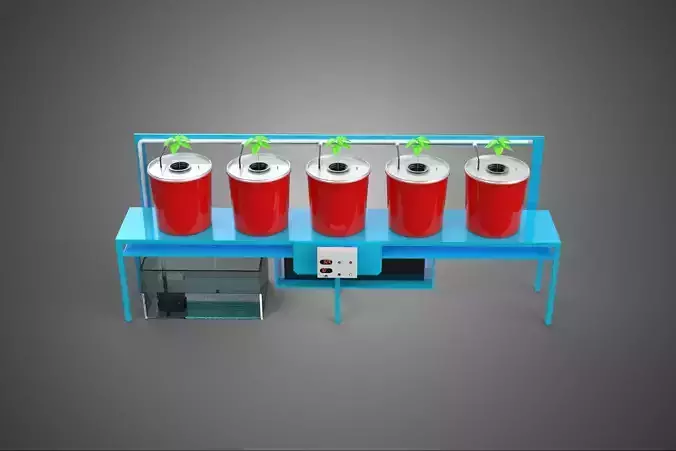
The IOT PLANT POT RECIRCULATING HYDROPONIC DUTCH BUCKET SYSTEM SETUP describes an advanced, automated controlled-environment agriculture (CEA) configuration that adapts the industrial-scale Dutch Bucket (or Bato Bucket) technique for smaller, often domestic or educational applications, integrating Internet of Things (IoT) technologies for sophisticated monitoring and control.
System Definition and Architecture
The Dutch Bucket System (DBS) is a form of recirculating hydroponics wherein nutrient solution is delivered via drip emitters to individual growing containers, typically containing inert substrate such as perlite, coco coir, or expanded clay pebbles (hydroton). The system is inherently recirculating; excess nutrient solution, having passed through the substrate and around the root zone, drains from the bottom of the container back to a central reservoir via a common manifold or drain line. This design minimizes water and nutrient waste compared to drain-to-waste systems.
The incorporation of the plant pot designation typically signifies a system scaled down from commercial operations, often optimizing aesthetics and size for indoor placement, while the IOT prefix signifies the digitization and automation of critical environmental and agronomic processes.
Components and Setup
A typical IOT DBS setup consists of several distinct modules working in concert:
1. The Physical Plant Module
This module comprises the growing containers (plant pots), drip lines, and the inert growing media. Each pot is designed with a drainage mechanism, often a specialized elbow fitting, positioned slightly above the bottom to maintain a small shallow reserve of nutrient solution at the base (a water-break or siphon elbow) before the excess drains away. This prevents the substrate from drying out entirely between irrigation cycles. The pots are strategically spaced to optimize light exposure and airflow.
2. The Fluid Management Module
This central unit includes the main nutrient reservoir, a submersible pump responsible for cycling the solution, and the manifold system that distributes the solution to the drip emitters at each bucket. A filtration system may be included to prevent clogs in the fine drip emitters. The recirculation manifold ensures the drained solution is returned to the reservoir for reprocessing.
3. The IOT Control Module
This is the core intelligence of the system, typically built around a low-power microcontroller unit (MCU), such as an ESP32 or a small single-board computer (SBC) like a Raspberry Pi. The MCU manages data acquisition and actuation based on pre-programmed parameters and remote instruction.
Monitoring Sensors: Key sensors continuously monitor critical agronomic parameters:
- Electrical Conductivity (EC) / Total Dissolved Solids (TDS): Measures nutrient concentration.
- pH Sensor: Monitors the acidity/alkalinity of the solution, critical for nutrient uptake.
- Water Temperature: Ensures optimal root zone temperature (typically 18°C to 24°C).
- Ambient Sensors: Measures air temperature, relative humidity, and optionally Photosynthetically Active Radiation (PAR) or LUX levels.
Actuators and Automation:
- Pumps: Controls the main submersible pump for timed irrigation cycles.
- Dosing Pumps: High-precision peristaltic pumps are used to automatically inject concentrated nutrient stock solutions (A and B), as well as pH up or pH down solutions, based on real-time sensor readings and remediation algorithms.
## Operational Principles
The system operates based on cyclical, demand-driven irrigation. The primary operational flow involves:
- Irrigation: The system initiates a pumping cycle, delivering a specific volume of solution to each pot, saturating the inert medium.
- Drainage: Gravitational drainage ensures the solution not absorbed by the medium or retained by the root mass returns to the reservoir.
- Data Telemetry: Sensor data is continuously collected, processed by the MCU, and transmitted via Wi-Fi or other wireless protocols (e.g., MQTT) to a cloud server or local dashboard.
- Automated Correction: If the telemetry indicates a deviation from the desired nutrient set points (e.g., pH falls below 5.5 or EC drops too low), the MCU activates the respective dosing pumps for precise adjustment.
- Remote Access: The cloud platform provides a graphical user interface (GUI) allowing growers to monitor the system's status remotely, adjust set points, view historical data trends, and receive critical alerts (e.g., low reservoir level or pump malfunction).
This high level of automation and data-driven control optimizes nutrient delivery, maximizes water use efficiency, and provides detailed insights into plant health and growth dynamics unattainable in traditional non-automated systems.
KEYWORDS: Hydroponics, IOT, Dutch Bucket, Recirculating, CEA, Plant Pot, Automation, Sensor, Microcontroller, pH, EC, TDS, Peristaltic Pump, Reservoir, Drip System, Submersible Pump, Inert Media, Controlled Environment, Data Logging, Cloud Platform, Telemetry, Agronomic Parameters, Nutrient Management, Water Efficiency, Siphon Elbow, Bato Bucket, Raspberry Pi, ESP32, Root Zone.