High-quality 3D assets at affordable prices — trusted by designers, engineers, and creators worldwide. Made with care to be versatile, accessible, and ready for your pipeline.
Included File Formats
This model is provided in 14 widely supported formats, ensuring maximum compatibility:
• - FBX (.fbx) – Standard format for most 3D software and pipelines
• - OBJ + MTL (.obj, .mtl) – Wavefront format, widely used and compatible
• - STL (.stl) – Exported mesh geometry; may be suitable for 3D printing with adjustments
• - STEP (.step, .stp) – CAD format using NURBS surfaces
• - IGES (.iges, .igs) – Common format for CAD/CAM and engineering workflows (NURBS)
• - SAT (.sat) – ACIS solid model format (NURBS)
• - DAE (.dae) – Collada format for 3D applications and animations
• - glTF (.glb) – Modern, lightweight format for web, AR, and real-time engines
• - 3DS (.3ds) – Legacy format with broad software support
• - 3ds Max (.max) – Provided for 3ds Max users
• - Blender (.blend) – Provided for Blender users
• - SketchUp (.skp) – Compatible with all SketchUp versions
• - AutoCAD (.dwg) – Suitable for technical and architectural workflows
• - Rhino (.3dm) – Provided for Rhino users
Model Info
• - All files are checked and tested for integrity and correct content
• - Geometry uses real-world scale; model resolution varies depending on the product (high or low poly)
• • - Scene setup and mesh structure may vary depending on model complexity
• - Rendered using Luxion KeyShot
• - Affordable price with professional detailing
Buy with confidence. Quality and compatibility guaranteed.
If you have any questions about the file formats, feel free to send us a message — we're happy to assist you!
Sincerely,
SURF3D
Trusted source for professional and affordable 3D models.
More Information About 3D Model :
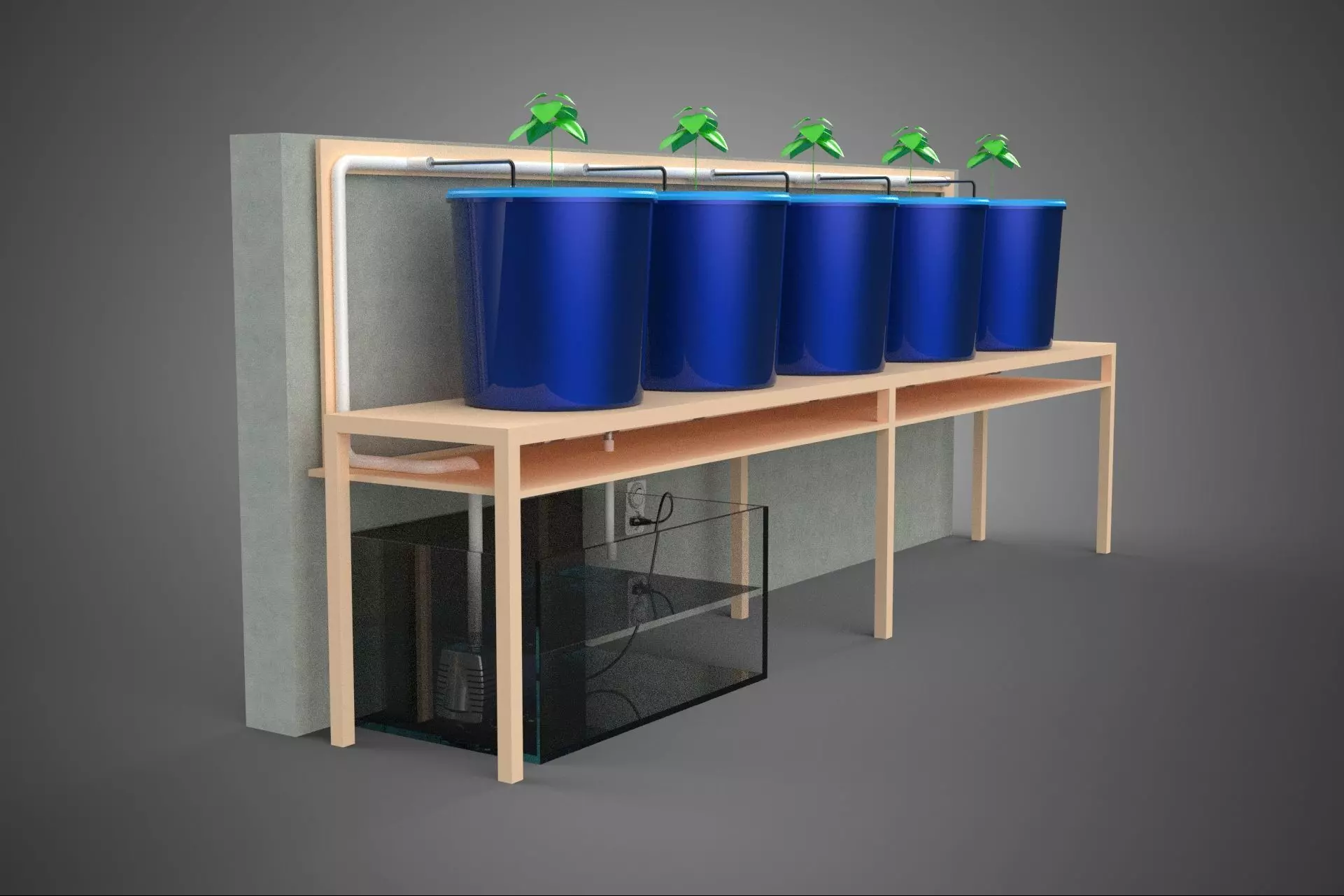
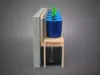
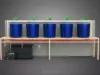
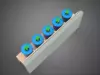
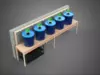
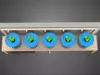
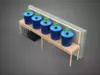
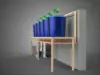
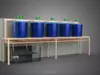
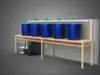
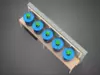
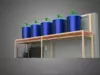
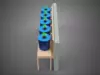
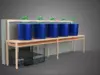
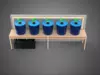
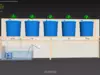
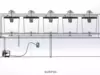
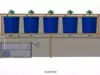
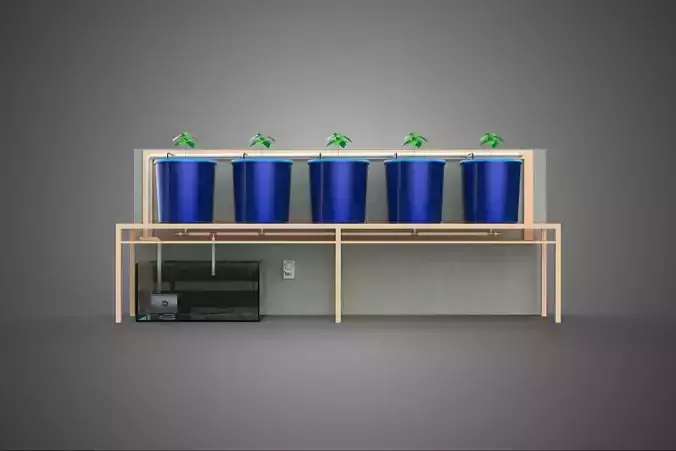
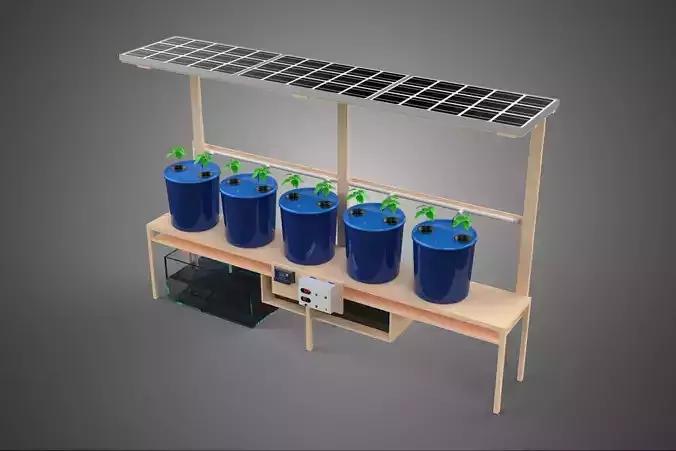
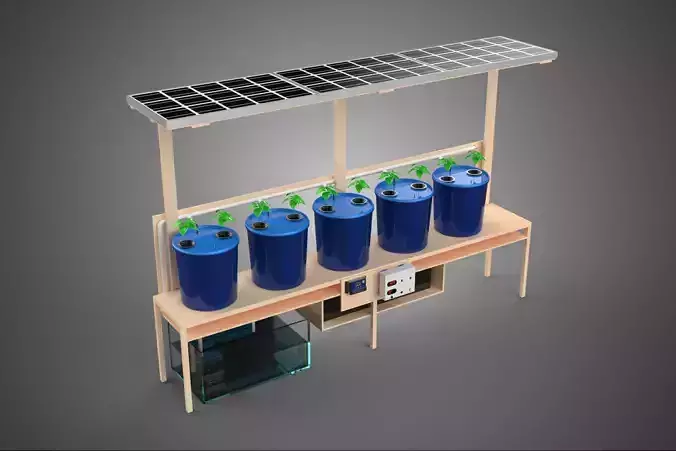
The Hydroponic Drip Irrigation Dutch Bucket Module Timer Control Set describes a specialized, automated system employed in Controlled Environment Agriculture (CEA) for the soilless cultivation of high-yield and indeterminate crops. This comprehensive setup integrates precise nutrient delivery, optimized root architecture support, and programmed cycle management to maximize resource efficiency and plant productivity.
System Architecture and Components
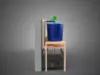
1. The Dutch Bucket Module (Bato Bucket):
The core structural component is the Dutch Bucket, also known as the Bato Bucket. This specialized container is designed to facilitate robust plant growth while managing effluent effectively. Unlike deep water culture (DWC) systems, the Dutch Bucket utilizes an inert growing medium (commonly perlite, coco coir, or rockwool) to provide physical support and moderate moisture retention.
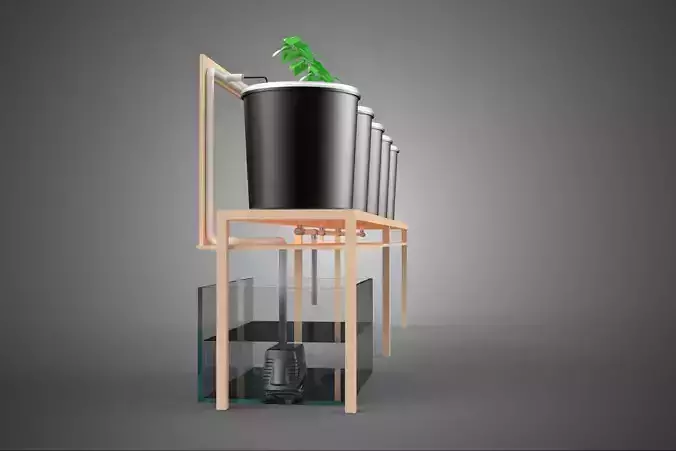
A defining characteristic of the Dutch Bucket is its specialized drainage mechanism, typically an elbow or inverted siphon, situated near the base. This mechanism ensures that a minimal reservoir of nutrient solution remains within the bottom of the bucket, maintaining a localized water table for immediate root access, while simultaneously draining excess solution into a communal return line. This design prevents oversaturation and promotes adequate root zone oxygenation crucial for large, actively transpiring plants. The buckets are typically arranged in scalable linear modules connected by a shared main drainage pipe.
2. Drip Irrigation Delivery System:
The irrigation methodology employed is precision drip irrigation, selected for its superior water and nutrient use efficiency (WUE). Nutrient solution is drawn from a centralized reservoir by a high-head pump and pressurized through a primary manifold. Secondary distribution lines (capillary tubes) branch off to deliver the solution directly to the root zone of individual plants via specialized emitters (drippers).
Emitters may be pressure-compensating (PC) to ensure uniform flow rates across long rows or elevation changes, or non-compensating, depending on system scale and design complexity. The pulsed delivery of nutrient solution directly to the substrate surface minimizes water loss through evaporation and reduces the risk of foliar diseases associated with overhead watering.
Automation and Control Set
The Timer Control Set is the automated mechanism governing the frequency and duration of irrigation events, which is critical due to the low water-holding capacity of the inert media. This control system dictates the operational cycle, ensuring that plants receive frequent, brief pulses of nutrient solution (fertigation).
Control hardware ranges from simple electromechanical timers to sophisticated digital controllers or programmable logic controllers (PLCs) that interface with environmental sensors (e.g., light intensity, humidity, temperature). The timer is programmed to activate the pump multiple times throughout the day, often triggered by daylight hours or cumulative solar radiation measurements. Precise timing ensures roots are constantly supplied with fresh nutrients while simultaneously preventing anoxic conditions that occur from prolonged saturation.
Operational Characteristics and Applications
The Dutch Bucket system is highly favored in commercial greenhouse operations for crops requiring extensive vegetative support and long harvest cycles. Key applications include the cultivation of vining indeterminate crops such as:
- Tomatoes (Solanum lycopersicum)
- Cucumbers (Cucumis sativus)
- Bell Peppers and Chili Peppers (Capsicum annuum)
- Eggplants (Solanum melongena)
The modular nature allows for easy expansion and reconfiguration. Furthermore, the system can be configured as a recirculating system (where drained effluent is sterilized, pH-adjusted, and reintroduced to the reservoir) or a drain-to-waste system (where effluent is discarded), offering flexibility based on crop requirements, environmental regulations, and economic considerations.
KEYWORDS: Hydroponics, Bato Bucket, Dutch Bucket, Drip Irrigation, Soilless Culture, Controlled Environment Agriculture (CEA), Timer Control, Nutrient Delivery, Automation, Effluent Management, Recirculation System, Drain-to-Waste, Perlite, Coco Coir, Root Zone Oxygenation, Commercial Greenhouse, Vining Crops, Tomatoes, Cucumbers, Water Use Efficiency (WUE), Pressure Compensating Emitter, Manifold System, Reservoir, Nutrient Solution, Electrical Conductivity (EC), pH Regulation, Root Aeration, Modular System, Scalability, Inert Media.