High-quality 3D assets at affordable prices — trusted by designers, engineers, and creators worldwide. Made with care to be versatile, accessible, and ready for your pipeline.
Included File Formats
This model is provided in 14 widely supported formats, ensuring maximum compatibility:
• - FBX (.fbx) – Standard format for most 3D software and pipelines
• - OBJ + MTL (.obj, .mtl) – Wavefront format, widely used and compatible
• - STL (.stl) – Exported mesh geometry; may be suitable for 3D printing with adjustments
• - STEP (.step, .stp) – CAD format using NURBS surfaces
• - IGES (.iges, .igs) – Common format for CAD/CAM and engineering workflows (NURBS)
• - SAT (.sat) – ACIS solid model format (NURBS)
• - DAE (.dae) – Collada format for 3D applications and animations
• - glTF (.glb) – Modern, lightweight format for web, AR, and real-time engines
• - 3DS (.3ds) – Legacy format with broad software support
• - 3ds Max (.max) – Provided for 3ds Max users
• - Blender (.blend) – Provided for Blender users
• - SketchUp (.skp) – Compatible with all SketchUp versions
• - AutoCAD (.dwg) – Suitable for technical and architectural workflows
• - Rhino (.3dm) – Provided for Rhino users
Model Info
• - All files are checked and tested for integrity and correct content
• - Geometry uses real-world scale; model resolution varies depending on the product (high or low poly)
• • - Scene setup and mesh structure may vary depending on model complexity
• - Rendered using Luxion KeyShot
• - Affordable price with professional detailing
Buy with confidence. Quality and compatibility guaranteed.
If you have any questions about the file formats, feel free to send us a message — we're happy to assist you!
Sincerely,
SURF3D
Trusted source for professional and affordable 3D models.
More Information About 3D Model :
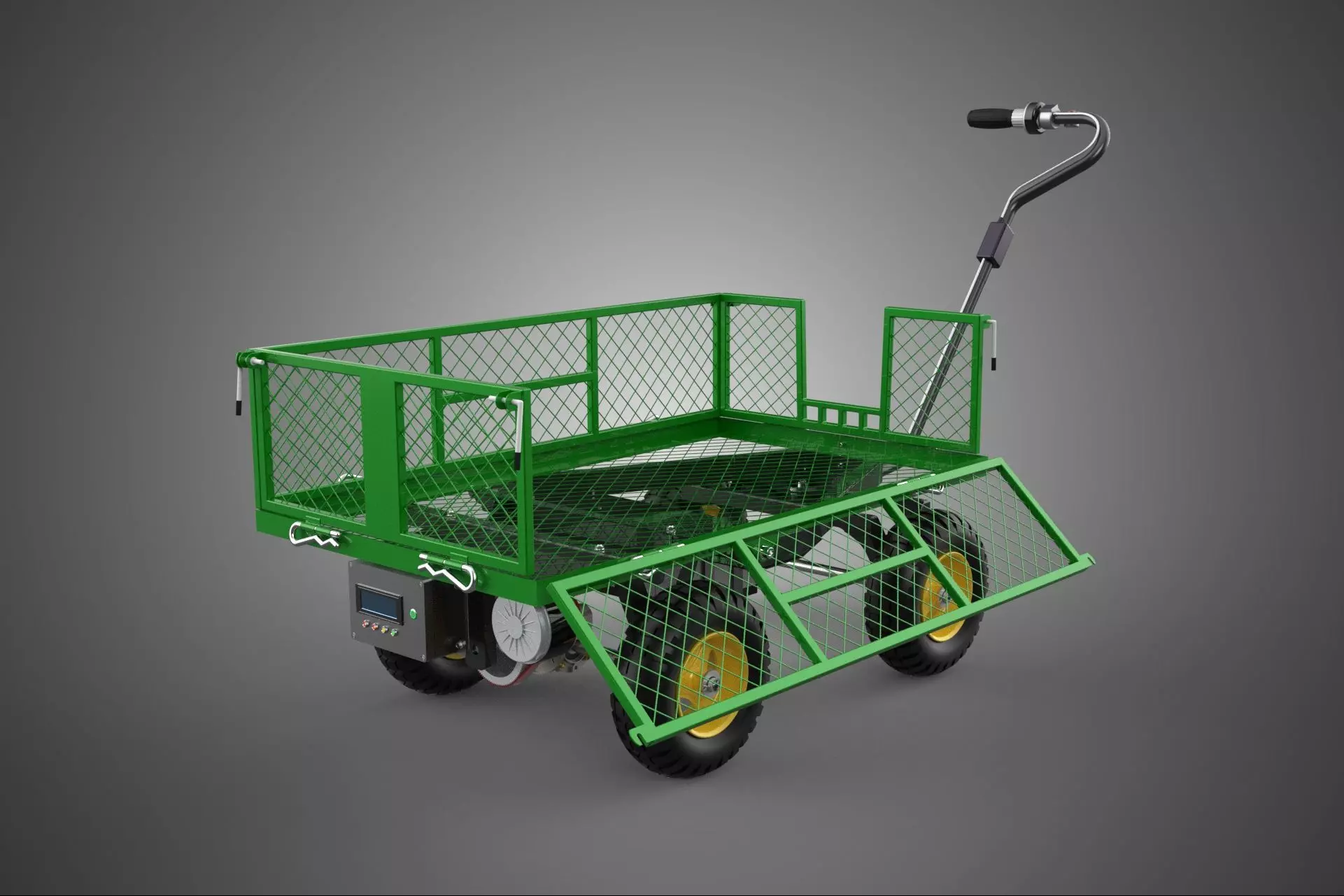
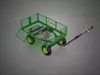
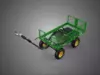
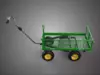
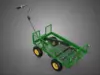
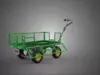
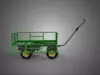
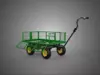
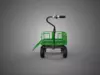
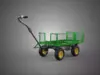
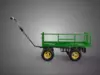
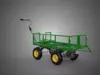
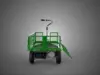
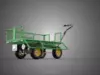
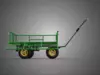
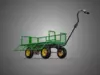
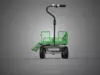
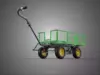
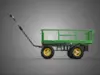
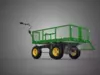
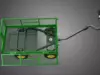
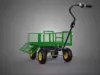
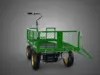
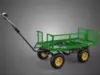
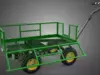
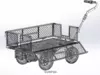
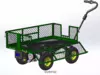
An Electric Convertible Drop Down Side Fence Tub Trolley Cart Wagon is a specialized and highly versatile material handling device designed for the efficient, assisted transport of diverse loads across various environments. It represents an advanced evolution of traditional utility carts and wagons, integrating motorized propulsion with a reconfigurable cargo area to enhance operational flexibility and reduce manual exertion.
Nomenclature Breakdown:
- Electric: Denotes the presence of a motorized system, typically powered by a rechargeable battery (e.g., lead-acid, lithium-ion). This electric drive provides propulsion assistance or full self-propulsion, significantly mitigating the physical effort required to move heavy or bulky items, especially over long distances or inclined terrains.
- Convertible: Refers to the device's inherent ability to transform its primary cargo configuration. This typically involves transitioning between an enclosed tub or box form and a flatbed platform, adapting its utility to different load types and dimensions.
- Drop Down Side Fence: Describes the perimeter walls or fences of the cargo area, which are designed to be articulated. These fences can pivot downwards or be quickly detached, facilitating unobstructed side loading and unloading, accommodating oversized items that exceed the internal dimensions of the tub, or enabling the conversion to a flatbed.
- Tub: Indicates an enclosed, trough-like cargo compartment when the side fences are in their upright, secured position. This configuration is ideal for containing loose bulk materials (e.g., soil, gravel, feed, refuse) or items that require secure perimeter containment during transit.
- Trolley Cart Wagon: A compound descriptor highlighting its function as a wheeled conveyance for goods. Trolley often implies a maneuverable, hand-controlled device; Cart signifies a general-purpose wheeled carrier; and Wagon suggests a robust, often larger capacity vehicle, traditionally pulled. The combination emphasizes its multifaceted utility, robust construction, and design features often found across these categories.
Purpose and Functionality:
The primary purpose of an Electric Convertible Drop Down Side Fence Tub Trolley Cart Wagon is to streamline material transport processes, enhance productivity, and minimize operator fatigue and injury risk. Its electric motor system substantially reduces the physical strain associated with manual hauling, making it suitable for prolonged use, by a wider range of operators, and in demanding work conditions. The convertible nature, specifically the drop-down side fences, allows the unit to serve multiple functions, from hauling granular materials in its enclosed tub configuration to transporting long, wide, or irregularly shaped objects when converted to a flatbed.
Key Features and Design Elements:
- Electric Propulsion and Control System:
- Motor: Typically employs a DC electric motor, often hub-mounted or driving an axle.
- Power Source: Rechargeable batteries (e.g., sealed lead-acid, LiFePO4) provide power, with varying capacities determining range and runtime.
- Controls: Features commonly include a variable speed throttle, forward and reverse selection, an emergency stop button, and a battery charge indicator. Some advanced models may offer programmable speed settings or remote-control capabilities.
- Braking: May include electromagnetic brakes for secure parking, regenerative braking for energy efficiency, or mechanical disc/drum brakes.
- Convertibility and Side Fences:
- Mechanism: Side fences are typically hinged at the bottom or employ quick-release pins, allowing them to pivot down flat against the frame or be completely removed. This enables easy transformation between a fully enclosed tub, a three-sided cart, a two-sided cart, or a completely open flatbed.
- Construction: Fences are commonly constructed from durable materials such as powder-coated steel, high-density polyethylene (HDPE), or composite panels, designed for resilience against impact and weather.
- Latching: Robust latching mechanisms ensure the fences are securely held in the upright position when configured as a tub, preventing accidental opening during transport.
- Cargo Area (Tub/Flatbed):
- Material: The floor of the cargo area is typically made from heavy-gauge steel, reinforced plastic, or marine-grade plywood, selected for its strength, impact resistance, and ease of cleaning.
- Capacity: Load capacity varies significantly by model, ranging from a few hundred pounds to over a thousand pounds, encompassing both weight and volumetric capacity.
- Chassis and Wheels:
- Frame: Constructed from robust materials such as welded steel tubing or aluminum, providing structural integrity and load-bearing strength.
- Wheels: Equipped with pneumatic tires for shock absorption and traction on uneven terrain, or solid/semi-pneumatic tires for puncture resistance in demanding industrial environments. Wheel size and tread patterns are optimized for specific applications (e.g., turf-friendly, off-road, industrial floor).
- Ergonomics and Safety:
- Handle/Steering: Features an ergonomic handle, often adjustable in height, with integrated controls for intuitive operation. Some larger models may incorporate a steering column.
- Safety Features: May include anti-tip designs, overload protection, audible reverse warnings, key-lock ignition, and automatic braking when the throttle is released.
Applications:
These devices are widely employed across various sectors requiring flexible and assisted material handling:
- Agricultural and Horticultural: Transporting soil, mulch, feed, fertilizers, harvested produce, tools, and irrigation equipment in farms, nurseries, gardens, and vineyards.
- Industrial and Manufacturing: Moving components, raw materials, finished goods, and waste within warehouses, factories, and assembly plants.