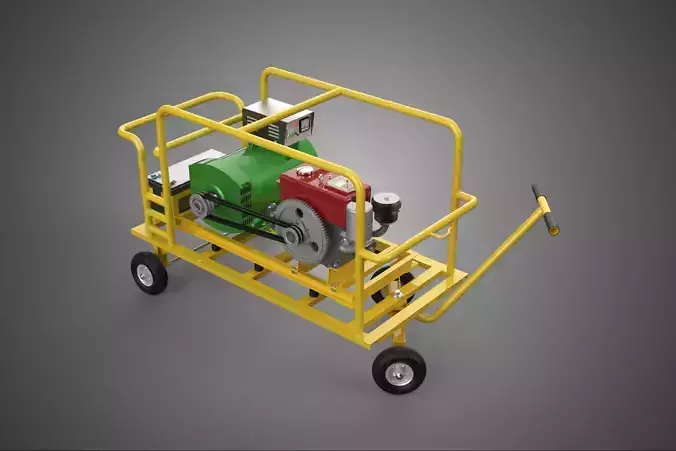
High-quality 3D assets at affordable prices — trusted by designers, engineers, and creators worldwide. Made with care to be versatile, accessible, and ready for your pipeline.
Included File Formats
This model is provided in 14 widely supported formats, ensuring maximum compatibility:
• - FBX (.fbx) – Standard format for most 3D software and pipelines
• - OBJ + MTL (.obj, .mtl) – Wavefront format, widely used and compatible
• - STL (.stl) – Exported mesh geometry; may be suitable for 3D printing with adjustments
• - STEP (.step, .stp) – CAD format using NURBS surfaces
• - IGES (.iges, .igs) – Common format for CAD/CAM and engineering workflows (NURBS)
• - SAT (.sat) – ACIS solid model format (NURBS)
• - DAE (.dae) – Collada format for 3D applications and animations
• - glTF (.glb) – Modern, lightweight format for web, AR, and real-time engines
• - 3DS (.3ds) – Legacy format with broad software support
• - 3ds Max (.max) – Provided for 3ds Max users
• - Blender (.blend) – Provided for Blender users
• - SketchUp (.skp) – Compatible with all SketchUp versions
• - AutoCAD (.dwg) – Suitable for technical and architectural workflows
• - Rhino (.3dm) – Provided for Rhino users
Model Info
• - All files are checked and tested for integrity and correct content
• - Geometry uses real-world scale; model resolution varies depending on the product (high or low poly)
• • - Scene setup and mesh structure may vary depending on model complexity
• - Rendered using Luxion KeyShot
• - Affordable price with professional detailing
Buy with confidence. Quality and compatibility guaranteed.
If you have any questions about the file formats, feel free to send us a message — we're happy to assist you!
Sincerely,
SURF3D
Trusted source for professional and affordable 3D models.
More Information About 3D Model :
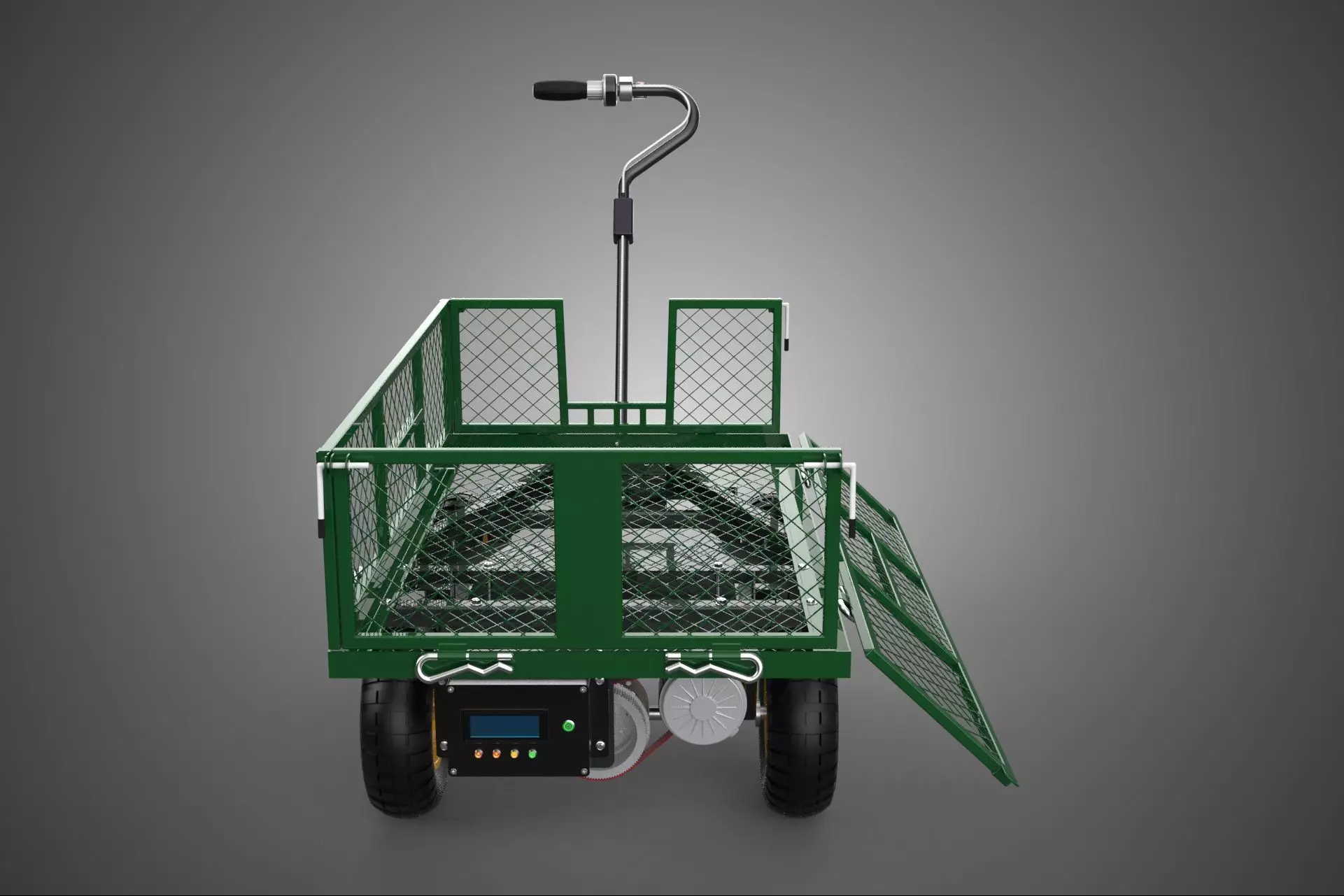
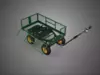
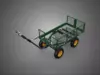
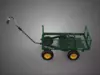
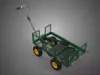
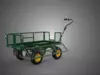
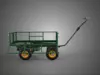
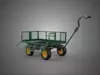
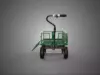
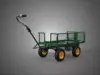
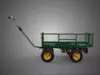
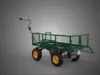
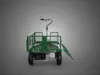
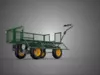
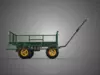
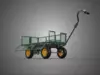
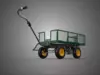
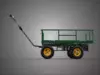
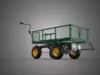
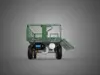
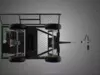
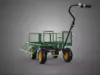
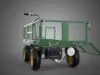
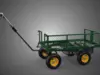
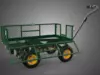
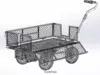
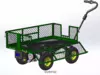
An electric cart, wagon, trolley, or wheelbarrow, within the context of garden, agriculture, and farm applications, refers to a diverse category of battery-powered material handling equipment designed to transport goods, tools, and bulk materials across various terrains. These devices mechanize tasks traditionally performed manually, significantly reducing physical exertion and increasing operational efficiency in horticultural, agricultural, and landscaping environments. They represent a significant evolution from conventional, human-powered wheelbarrows and carts, integrating electric propulsion for enhanced capability, reduced labor, and minimized environmental impact.
The nomenclature for these devices often overlaps, reflecting a range of designs and capacities tailored for specific uses. An Electric Wheelbarrow is typically a walk-behind, three or four-wheeled unit resembling its manual counterpart but with an electric motor assisting propulsion and often featuring an electric or gas-assist dump mechanism. It is ideal for confined spaces, moderate loads, and uneven terrain. An Electric Cart or Trolley generally refers to a four-wheeled platform or box-bodied vehicle, frequently walk-behind or sometimes with a stand-on platform, suitable for heavier loads and more stable transport over greater distances. An Electric Wagon implies a larger, often self-propelled or sometimes towed unit with a substantial cargo bed, commonly employed in farm settings for higher volume or weight transport, with some models offering ride-on capability. The unifying characteristic across these forms is their electric power source, differentiating them from gasoline-powered utility vehicles or purely manual equipment.
The primary function of these electric vehicles is the efficient and ergonomic transportation of diverse materials, including soil, compost, fertilizers, harvested crops, animal feed, tools, water containers, and construction debris. Their widespread adoption addresses the growing demand for sustainable, quieter, and less labor-intensive solutions in operations ranging from small home gardens and community plots to extensive commercial farms, nurseries, vineyards, and equestrian facilities. They effectively bridge the gap between heavy machinery and manual labor, offering a versatile mid-range solution.
Key features and components typically include:
- Electric Powertrain: Comprising an electric motor, typically direct current (DC), powered by rechargeable battery packs. Common battery types include sealed lead-acid (SLA) or, increasingly, lithium-ion (Li-ion), offering varying levels of energy density, cycle life, and charging speed. Motors range from 250W to several kilowatts, providing ample torque for varied terrains and inclines.
- Chassis and Frame: Constructed from durable materials such as steel or reinforced aluminum, frames are engineered for robust use and load-bearing capacity, often featuring powder-coated finishes for corrosion resistance.
- Wheels and Tires: Equipped with pneumatic tires for cushioning and traction on uneven ground, or solid, puncture-proof tires for demanding conditions. Turf-friendly treads are common to minimize soil compaction and damage to sensitive surfaces.
- Cargo Bed/Hopper: May include a fixed bed, a tilting dump bed (manual with gas-assist or electric hydraulic), or interchangeable attachments. Materials typically include high-density polyethylene (HDPE) for lighter, non-corrosive loads, or steel for heavy-duty applications. Capacities range from 100 kg for smaller wheelbarrows to over 1000 kg for larger farm carts.
- Controls and User Interface: Feature intuitive controls, often including variable speed throttles, forward/reverse switches, and regenerative braking systems. Safety mechanisms, such as electromagnetic brakes, dead man's switches, and overload protection, are standard. Ergonomic handles or steering wheels facilitate ease of operation.
Applications span a broad spectrum: in gardening and landscaping for moving soil, mulch, plants, and debris; in nurseries and greenhouses for transporting potted plants and growing media; on small and mid-sized farms for hauling feed, hay, harvested produce, and manure; in equestrian facilities for stall mucking and feed transport; and in vineyards and orchards for moving harvested fruit and pruning waste. They are also useful on construction sites for relocating materials where larger machinery is impractical.
The primary advantages of these electric utility devices include:
- Ergonomics and Labor Reduction: Significantly reduces physical strain on operators, mitigating injuries associated with heavy lifting and pushing.
- Increased Productivity: Enables faster material movement and allows operators to accomplish more tasks in less time.
- Environmental Benefits: Produces zero direct emissions during operation, making them suitable for indoor use (e.g., greenhouses) and contributing to cleaner air quality outdoors. Their quiet operation also reduces noise pollution.
- Cost-Effectiveness: Lower operating costs compared to gasoline-powered alternatives due to cheaper electricity and reduced maintenance requirements.
- Versatility: Many models offer modular designs with interchangeable attachments for specialized tasks, such as spraying or spreading, enhancing their overall utility.
The market offers a wide spectrum of electric material handlers, from simple walk-behind units to those incorporating stand-on or sit-on platforms for operator comfort during longer hauls. Specialized versions might include integrated sprayers for pest control, spreaders for seeds or fertilizers, or specific attachments for snow removal, further extending their utility beyond basic transport. Some advanced models integrate GPS or autonomous navigation for precision tasks, pointing to a future of increasing automation.
Electric carts, wagons, trolleys, and wheelbarrows have become indispensable tools in modern garden, agriculture, and farm operations.