High-quality 3D assets at affordable prices — trusted by designers, engineers, and creators worldwide. Made with care to be versatile, accessible, and ready for your pipeline.
Included File Formats
This model is provided in 14 widely supported formats, ensuring maximum compatibility:
• - FBX (.fbx) – Standard format for most 3D software and pipelines
• - OBJ + MTL (.obj, .mtl) – Wavefront format, widely used and compatible
• - STL (.stl) – Exported mesh geometry; may be suitable for 3D printing with adjustments
• - STEP (.step, .stp) – CAD format using NURBS surfaces
• - IGES (.iges, .igs) – Common format for CAD/CAM and engineering workflows (NURBS)
• - SAT (.sat) – ACIS solid model format (NURBS)
• - DAE (.dae) – Collada format for 3D applications and animations
• - glTF (.glb) – Modern, lightweight format for web, AR, and real-time engines
• - 3DS (.3ds) – Legacy format with broad software support
• - 3ds Max (.max) – Provided for 3ds Max users
• - Blender (.blend) – Provided for Blender users
• - SketchUp (.skp) – Compatible with all SketchUp versions
• - AutoCAD (.dwg) – Suitable for technical and architectural workflows
• - Rhino (.3dm) – Provided for Rhino users
Model Info
• - All files are checked and tested for integrity and correct content
• - Geometry uses real-world scale; model resolution varies depending on the product (high or low poly)
• • - Scene setup and mesh structure may vary depending on model complexity
• - Rendered using Luxion KeyShot
• - Affordable price with professional detailing
Buy with confidence. Quality and compatibility guaranteed.
If you have any questions about the file formats, feel free to send us a message — we're happy to assist you!
Sincerely,
SURF3D
Trusted source for professional and affordable 3D models.
More Information About 3D Model :
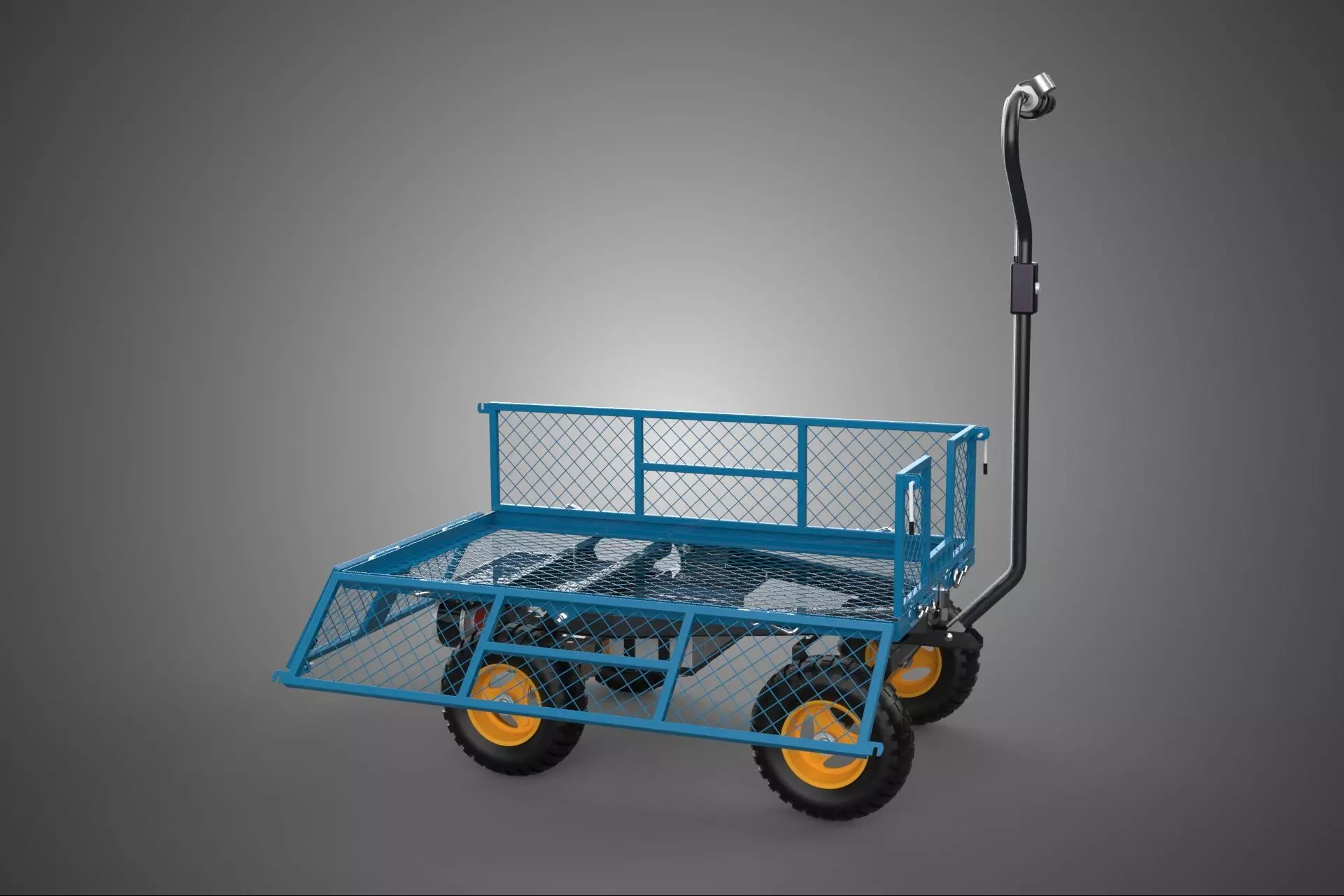
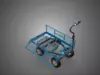
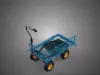
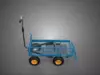
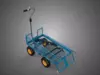
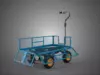
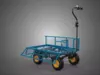
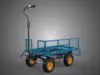
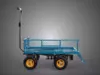
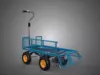
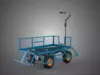
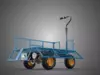
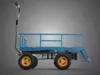
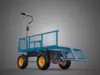
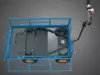
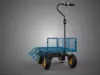
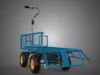
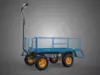
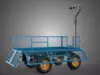
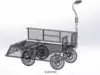
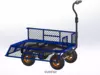
A Heavy Duty Electric Steel Mesh Garden Cart Trolley with Four Wheels is a specialized piece of mobile equipment designed for the robust and efficient transport of various materials across demanding environments, such as horticultural sites, agricultural plots, landscaping projects, and general utility applications. This device distinguishes itself by integrating reinforced construction, advanced electric propulsion, and a stable four-wheel design, positioning it as a high-capacity, power-assisted alternative to traditional manual carts or wheelbarrows.
Construction and Design:
- Heavy Duty Framework: The heavy duty specification indicates a construction engineered to withstand significant loads and rigorous operational conditions. The primary frame is typically fabricated from high-gauge steel, often treated with a powder-coating or galvanization process to enhance resistance against corrosion, abrasion, and environmental elements like moisture and UV radiation. Critical stress points are commonly reinforced, and the chassis is designed to maintain structural integrity under its maximum rated load capacity, preventing deformation.
- Steel Mesh Bed: The cargo containment area consists of a robust steel mesh basket or bed. This material and design configuration offers distinct advantages:
- Strength and Durability: Steel provides inherent structural integrity, capable of securely containing dense and heavy materials.
- Visibility: The open mesh design allows for visual inspection of contents and the ground beneath, aiding in safe navigation.
- Drainage and Airflow: It facilitates the drainage of liquids from wet materials (e.g., soil, mulch, wet leaves) and promotes air circulation, which can be advantageous for certain types of cargo.
- Ease of Cleaning: The open design simplifies the removal of dirt, debris, and residues.
- Versatility: Many models incorporate removable or collapsible side panels, enabling the conversion of the mesh bed into a flatbed configuration for transporting oversized or irregularly shaped items that exceed the dimensions of the contained bed.
- Four-Wheel Configuration: The four wheels design provides superior stability and balanced load distribution compared to two-wheeled or three-wheeled variants. This quad-wheel setup typically features:
- Pneumatic Tires: Commonly equipped with pneumatic (air-filled) tires, which offer excellent shock absorption, contributing to a smoother ride over uneven terrain and reducing impact on both the cart and its contents. Tire treads are usually designed for optimal traction across various surfaces, including grass, gravel, dirt, and paved pathways.
- Steering Mechanism: The front wheels are generally steerable, often controlled via a pivot steering mechanism connected to a D-handle or T-handle. This allows for precise maneuvering. More advanced designs might incorporate an articulating steering system for enhanced agility in confined spaces.
- Axles and Bearings: Robust axles and high-quality sealed bearings are integral for managing heavy loads efficiently and ensuring smooth, low-friction wheel rotation over extended periods.
Electric Propulsion System:
The electric component is a defining feature, providing motorized assistance for movement, thereby significantly reducing manual effort and enabling the transport of heavier loads over longer distances or up inclines. The system typically comprises:
- Electric Motor: A direct current (DC) motor, frequently a brushless type for enhanced efficiency, lower maintenance, and extended lifespan, drives one or more of the wheels. The motor's power output is specified according to the cart's intended load capacity and desired speed characteristics.
- Battery System: A rechargeable battery pack serves as the power source. Modern designs often utilize lithium-ion (Li-ion) batteries for their high energy density, longer cycle life, and consistent power delivery. Alternatively, sealed lead-acid (SLA) batteries may be employed in more budget-conscious models. Battery capacity directly correlates with operational range and runtime.
- Control System: An intuitive control interface, often integrated into the ergonomic handle, allows the operator to manage functions such as variable speed control, forward and reverse direction, and real-time battery status monitoring. Essential safety features, including an emergency stop button and potentially an automatic braking system, are standard.
- Charging Mechanism: An integrated or external charger is supplied for convenient recharging of the battery pack from a standard electrical outlet.
Functionality and Applications:
This type of electric cart trolley is engineered for a diverse range of demanding tasks:
- Material Transport: Exemplary for moving dense and bulky materials such as soil, gravel, sand, mulch, firewood, bricks, paving stones, heavy tools, potted plants, and construction debris.
- Landscaping and Gardening: Facilitates efficient transportation of gardening supplies, removal of yard waste, and distribution of landscaping materials across expansive properties or challenging terrains.
- Agricultural and Horticultural Use: Suitable for small-scale farm operations, nursery logistics, and the movement of feed, produce, or light farm equipment.
- Commercial and Industrial Settings: Can be utilized in warehouses, manufacturing facilities, or light industrial environments for internal logistics and material handling.
- Ergonomics: The electric drive substantially reduces physical strain on the operator, making the equipment accessible and efficient for users who might otherwise struggle with the manual exertion required for heavy lifting and pulling.
Advantages:
- Reduced Physical Exertion: Electric motor assistance minimizes manual labor, particularly when navigating inclines or transporting heavy loads.
- Increased Productivity: Enables faster and more frequent movement of materials, directly enhancing operational efficiency.