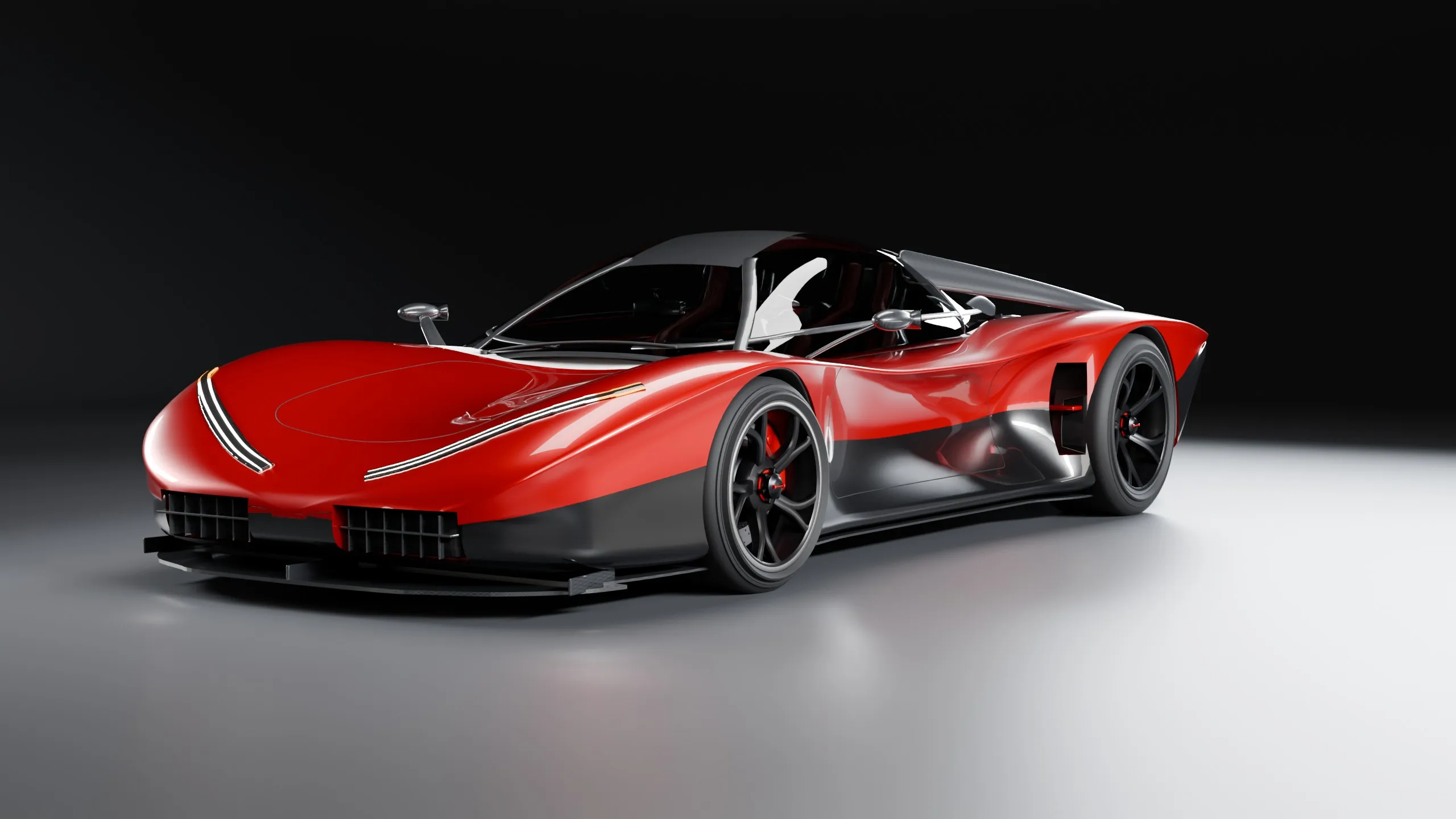
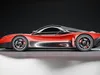
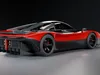
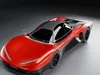
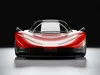
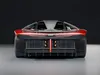
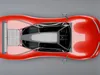
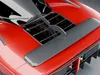
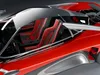
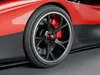
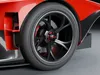
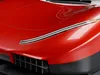
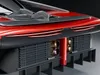
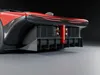
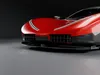
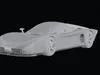
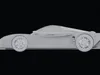
ARKA is an original hypercar design built at real-world scale (1 unit = 1 m). It takes its stance from modern mid-engine V12 hypercars but uses its own design language, Twin-Stream Split: a sharp Redline shoulder crease from nose to tail, a scooped Split channel in each door that feeds the rear intakes, a keel nose and keel tail, flying carbon buttresses over a glass V12 cover, and two-tone paint with gloss red flowing over gloss black.
What's modelled
- Body: two-tone shell with real panel shut lines (butterfly doors, front lid, engine cover, rear clam, fuel flap), flush door handles, side mirrors on blade arms, flying buttresses, carbon roof spine and centre spine fin
- Glasshouse: clear canopy with A-pillars, door-glass frames, seals and a wiper; the cabin is fully visible through the glass
- Lighting: twin-stream LED headlamp blades with amber indicator tips; twin red light bars on a black lamp carrier, a centre keel brake light and reverse lamps
- V12 engine bay under a glass cover: crackle-red cam covers with coil packs, 12 polished velocity stacks on a carbon plenum, coolant tank, oil filler, carbon strut brace, titanium 6-into-1 headers and 2+2 stacked exhaust tips
- Wheels: forged centre-lock split-spoke wheels with a machined lip and deep dish; 275/30 ZR20 front and 345/30 ZR21 rear tyres
- Brakes: ventilated, drilled carbon-ceramic discs (410 x 38 mm front, 390 x 32 mm rear) with red monoblock calipers and visible pads
- Suspension: visible double wishbones, pushrods, uprights, toe links, brake cooling ducts and arch liners
- Underbody and aero: flat floor, splitter with keel fin and fences, split vanes in the front and side intakes, 7-strake diffuser, louvred rear grilles and an active rear wing
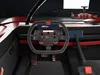
- Cockpit: carbon tub, two carbon bucket seats in red leather and black suede-look microfibre with harnesses, flat-top steering wheel with paddles, digital displays, toggle-switch console, start button under a flip cover, pedal box, door cards, roll hoop, fire extinguisher and rear-view mirror
Scene (Blender file)
- 9 named collections (body, glass, lights, wheels and brakes, suspension, V12, underbody and aero, interior, details), all parented to one root empty
- Studio with an infinity cove, overhead softbox, strip and rim lights, and 18 cameras; Cycles with AgX colour management
- Renders come straight out of Blender with no post-processing
Formats
- Blender (.blend), full scene with studio and cameras
- FBX, GLB (plus a lighter decimated GLB), OBJ + MTL and USD, car only, modifiers applied
Notes
- Materials are procedural Principled BSDF with no image textures. FBX, GLB, OBJ and USD carry base colour, metallic and roughness; paint flake, carbon weave, tyre tread and leather grain are shader effects that only show in Blender.
- UVs are automatic projections (fine for tiling materials, not a hand-packed atlas).
- Static model at ride height; doors, lids and wing are closed (shut lines only); not rigged. The engine is modelled where it can be seen.
- An original design: no real brand names, logos or text anywhere.
Technical
- 276,087 polygons / 275,959 vertices (546,498 triangles), car only
- 107 mesh objects, 36 procedural PBR materials
- About 4,789 x 2,039 x 1,149 mm; wheelbase 2,700 mm; real-world metric scale, no plugins needed