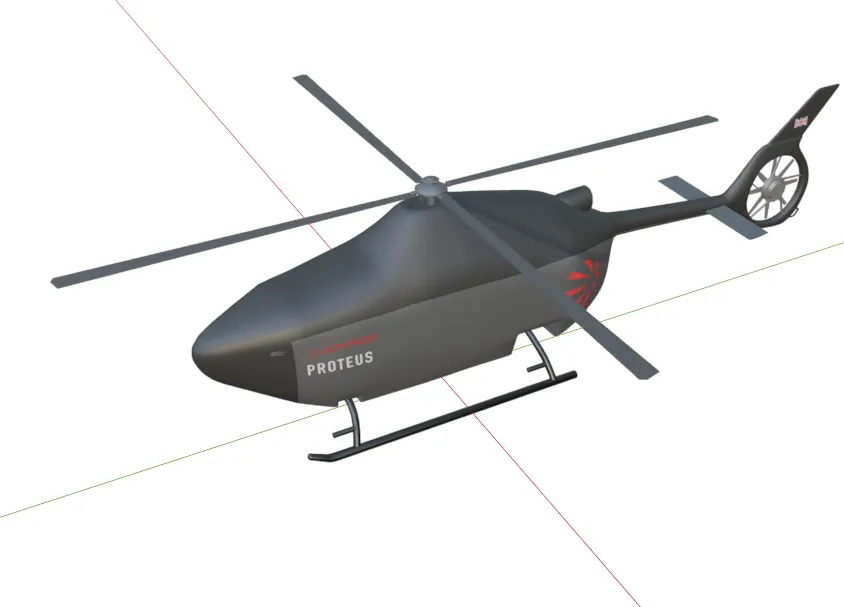
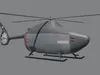
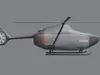
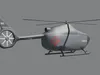
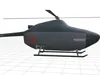
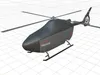
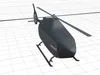
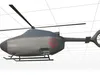
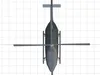
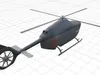
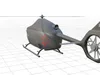
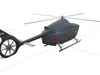
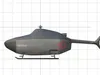
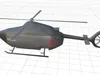
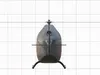
Perfect for use in games, simulations, and visualisation projects.
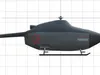
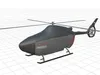
Proteus is an uncrewed helicopter developed as a technology demonstrator for the Royal Navy, and it is the service's first crewless helicopter of its size. It is a medium-sized rotary-wing uncrewed air system in the two to three tonne class, and it is far larger, more complex, and more autonomous than the small drones the navy already flies, such as its octocopters and the small Peregrine helicopter. Rather than starting from a blank sheet, it is based on an existing crewed light single-engine helicopter design, which gave the programme a proven airframe to build on. Starting from a flying design saved time and reduced risk, because the rotor system, structure, and basic handling were already well understood, which left the engineers free to concentrate on autonomy, payloads, and operating from ships. The aim is to show that an autonomous helicopter can operate from ships alongside crewed aircraft, and to provide evidence for a future medium VTOL uncrewed aircraft for the fleet. The result is a familiar-looking helicopter with a compact single main rotor, a tail rotor, and skids, finished in a two-tone grey scheme that closely resembles the navy's current Wildcat. The Royal Navy sees Proteus as part of a hybrid air wing, in which uncrewed aircraft work side by side with crewed helicopters such as the Wildcat and the Merlin rather than replacing them. The thinking is that each type should do the job it suits best. Crewed helicopters are flexible, can react to unexpected situations, and carry people, but they are expensive, limited by crew hours, and put lives at risk. Uncrewed helicopters can fly long, repetitive, or dangerous sorties, freeing the crewed aircraft for the most complex and demanding tasks. The first role is anti-submarine warfare support, where an uncrewed helicopter can search for submarines, drop sonobuoys, and lower a dipping sonar, while crewed aircraft handle the most complex and risky tasks. Sonobuoys are small, expendable listening devices dropped into the sea to detect underwater sounds, and a dipping sonar is a transducer lowered on a cable from a hovering helicopter to search below the surface. Both are slow, patient tasks that suit an aircraft that never tires.
The aircraft is also intended to cover intelligence, surveillance and reconnaissance, airborne early warning, and cargo transport. Because it is a rotary-wing aircraft, it can operate from escort ships such as frigates and destroyers, and it is not limited to the aircraft carriers. That gives the fleet more flexibility and helps to build mass at sea at a lower cost and risk to crews. A frigate with an uncrewed helicopter on its flight deck can extend its own senses far beyond the horizon, searching for contacts, relaying information, and moving small loads between ships without sending a crewed aircraft. Without a pilot on board, the aircraft can also fly long, tiring, or dangerous missions without risking lives, and its endurance is not limited by crew fatigue. It can stay on task through the night, in poor weather, and in places where the risk to a crew would be too high. Modularity is central to the design. Payloads are intended to be interchangeable, and concepts shown for the programme include a sonobuoy dispenser, a lightweight dipping sonar, and a cargo or logistics transfer pod. The same payload approach is meant to be shared with the navy's fixed-wing uncrewed concept, so that sensors and systems can move between aircraft instead of being developed separately for each one. This approach lets one airframe change role quickly, acting as a submarine hunter in the morning and a resupply aircraft in the afternoon. A shared payload standard also makes upgrades cheaper, because a new sensor developed once can be fitted to several types of aircraft and used across the fleet. The programme is part of a wider maritime aviation transformation strategy that looks ahead to 2040, using uncrewed systems where possible and crewed aircraft where necessary.
The programme was funded at about £60 million, and the aircraft was designed and built in the UK, supporting around a hundred skilled engineering jobs at the manufacturer's site in Somerset. It was developed relatively quickly, with defence innovation teams working closely with industry, and the project is seen as a model for how new capabilities can move from concept to flight in a short time. Ground running trials took place in December 2025, and the aircraft made its maiden flight in January 2026 from an airfield on the Lizard Peninsula in Cornwall, with the navy, industry, and defence innovation teams watching. The flight was described as a significant step towards the navy's vision for maritime aviation, and it showed that the aircraft can fly under autonomous control. In the longer term, an operational version could join the fleet in ship-based squadrons, where it would be launched and recovered at sea in the same way as crewed helicopters. Operating from a ship is one of the hardest parts of the task. A flight deck is small, it pitches and rolls with the waves, and the air around it is disturbed by the ship's superstructure and the wind. An autonomous helicopter must be able to approach, hover, and land on that moving deck precisely and safely, and to launch and recover in a wide range of weather and sea states. Later phases of testing will therefore need to prove reliable deck operations, safe handling alongside crewed aircraft, secure communications with the ship, and procedures for the crews who will load, refuel, and maintain the aircraft. These are the kinds of questions that a demonstrator exists to answer.
Proteus also reflects a wider international trend. The best-known operational uncrewed helicopter has been the American Fire Scout, and many navies are now exploring larger autonomous rotorcraft that can fly from small ships, carry heavier payloads, and operate for longer. Proteus takes this idea further by using a helicopter-sized airframe, modular payloads, and autonomy that is designed from the start to work with crewed aircraft. It also follows a broader shift in naval thinking, in which fleets look to combine a smaller number of expensive crewed platforms with a larger number of cheaper uncrewed ones, so that they can cover more sea, carry more sensors, and absorb losses more easily. For game developers and simulation designers, this model is a good fit for near-future naval and maritime scenarios, anti-submarine warfare and surveillance missions, ship-based drone operations, flight simulators, strategy and command games, training visualisations, and modern or speculative military settings. It also works well as an AI-controlled scout or supply aircraft, a deck-landing asset for frigate and destroyer scenes, or a background aircraft on naval bases and flight decks. Designers can use it for sonobuoy and sonar mechanics, where the player must find a submarine, for logistics missions that ferry cargo between ships, and for command games in which one operator manages several uncrewed aircraft at once. It can also serve in training and tutorial scenes that teach players how a hybrid crewed and uncrewed air wing operates. The compact shape and the familiar naval grey scheme make it easy to place on a flight deck next to crewed helicopters for scale and contrast.
It is worth keeping some perspective. Proteus is a technology demonstrator and not a production aircraft, so it has not been confirmed for service, and its final configuration, payloads, and performance may differ from any current concept. Moving from a successful first flight to certification, integration with ships, and regular operations is a long process for any military aircraft, and it is especially demanding for an autonomous aircraft operating from a moving deck at sea. Published figures for weights, payload, and performance are limited, and some details come from early statements and reports and may change as the programme matures. This model is a stylised representation, and any specifications should be treated as indicative.
Formats include: OBJ, FBX. Feel free to check out the other models, just click on the user name to see the complete portfolio.