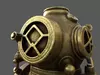
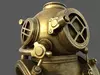
Professional diving is underwater diving where the divers are paid for their work. Occupational diving has a similar meaning and applications. The procedures are often regulated by legislation and codes of practice as it is an inherently hazardous occupation and the diver works as a member of a team. Due to the dangerous nature of some professional diving operations, specialized equipment such as an on-site hyperbaric chamber and diver-to-surface communication system is often required by law, and the mode of diving for some applications may be regulated.
There are several branches of professional diving, the best known of which is probably commercial diving and its specialised applications, commercial offshore diving, inshore civil engineering diving, marine salvage diving, hazmat diving, and ships husbandry diving. There are also applications in scientific research, marine archaeology, fishing and aquaculture, public safety, law enforcement, military service, media work and diver training.
Any person wishing to become a professional diver normally requires specific training that satisfies any regulatory agencies which have regional or national authority, such as US Occupational Safety and Health Administration, United Kingdom Health and Safety Executive or South African Department of Employment and Labour.[1][2] International recognition of professional diver qualifications and registration exists between some countries.[3]
Procedural aspectsThe primary procedural distinction between professional and recreational diving is that the recreational diver is responsible primarily for their own actions and safety but may voluntarily accept limited responsibility for dive buddies, whereas the professional diver is part of a team of people with extensive responsibilities and obligations to each other and usually to an employer or client, and these responsibilities and obligations are formally defined in contracts, legislation, regulations, operations manuals, standing orders and compulsory or voluntary codes of practice. In many cases a statutory national occupational health and safety legislation constrains their activities.[2][1] The purpose of recreational diving is basically for personal entertainment, while the professional diver has a job to do, and diving is necessary to get that job done. Recreational diving instruction and dive leadership are legally considered professional diving in some jurisdictions, particularly when the diver is employed for that purpose, and even when this is not the case, occupational health and safety regulation may apply, even when self employed, regarding duty of care to clients.[4][5]
Diving operationsA diving operation is a professional dive and the activity in preparation for, and in support of, the specific dive. The diving operation is controlled by the diving supervisor, is expected to follow the dive plan, is conducted by the diving team, and is recorded in the diving operations record (though the terms may have regional variations). A diving operation is over when the last diver has completed decompression and is out of the water.[2]
Diving projectsA diving project is a coordinated set of diving operations for a particular purpose, often the responsibility of a diving contractor. This would include mobilisation and setup of the diving spread at the start, and demobilisation at the end of the project. Depending on the size of the project, the project manager may be the senior supervisor, or the diving superintendent.[2]
Diving contractorA diving contractor is the legal entity responsible for the execution of diving operations for a client. The diving contractor is responsible for ensuring that the diving operations are safe, that a competent diving team is appointed, and the contracted work is done to specifications.[2]
Diving teamMain article: Diving teamA diving team is a group of people who conduct a diving operation. A characteristic of professional diving is the specification for minimum personnel for the diving support team. This typically specifies the minimum number of team members and their appointed responsibilities in the team based on the circumstances and mode of diving, and the minimum qualifications for specified members of the diving team. The minimum team requirements may be specified by regulation or code of practice. Specific appointments within a dive team for which competences are specified and registration may be required are listed below.[2][5][6][7]
Core diving team:
Diving supervisor – Professional diving team leader responsible for safety[2]Working diver – The person who is intended to do the underwater work during a professional dive[2]Stand-by diver – A member of a dive team who is ready to assist or rescue the working diver[2]Diver's tender – Assistant to a diver[2]Diving medical practitioner – Specialist in diagnosis, treatment and prevention of disorders caused by underwater diving – On telephonic standby.[2]Additional member for surface-supplied air diving using a low pressure compressor:
Compressor operator – Person competent to operate a diving air compressor[2]Additional member for bell diving:
Bellman – The member of a dive team who acts as stand-by diver and tender from the diving bell[2]Launch and recovery system winch operator[2]Additional member for dives with a chamber on site:
Chamber operator – A person who operates a diving chamber[2]Additional member for surface-supplied mixed gas diving:
Gas man – Person who controls the breathing gas supply to a surface-supplied mixed-gas diver[2]Additional members for offshore diving:
Diving medical technician – Person trained in advanced first aid for divers[6]Systems technician – Person competent to maintain diving systems[6]Diving superintendent – A management position responsible for diving operations[6]Additional personnel for saturation diving:
Life support technician – A member of a saturation diving team who operates the surface habitat - One per shift.[2]Life support supervisor – Senior life support technician[2]Additional members for remotely operated underwater vehicle support:
ROV pilot – A person competent to operate a remotely controlled underwater vehicle[2]ROV Supervisor – A senior ROV pilot appointed to supervise the ROV team[2]Regulation of activitiesMain article: Diving regulationsProfessional diving activities are generally regulated by health and safety legislation, but in some cases may be exempted from the national or state diving regulations for specific diving applications, such as scientific diving or public safety diving, when they operate under a recognised code of practice for that application.[8][9] Commercial offshore diving takes place outside the limits of national jurisdiction and is generally regulated by industry consensus standards of voluntary membership organisations such as the International Marine Contractors Association (IMCA).[10]
Codes of practiceMain article: Code of practiceA code of practice for professional diving is a document that complements occupational health and safety laws and regulations to provide detailed practical guidance on how to comply with legal obligations, and should be followed unless another solution with the same or better health and safety standard is in place,[11] or may be a document for the same purpose published by a self-regulating body to be followed by member organisations.[12][6]
Codes of practice published by governments do not replace the occupational health and safety laws and regulations, and are generally issued in terms of those laws and regulations. They are intended to help understand how to comply with the requirements of regulations. A workplace inspector can refer to a code of practice when issuing an improvement or prohibition notice, and they may be admissible in court proceedings. A court may use a code of practice to establish what is reasonably practicable action to manage a specific risk. Equivalent or better ways of achieving the required work health and safety may be possible, so compliance with codes of practice is not usually mandatory, providing that any alternative systems used provide a standard of health and safety equal to or better than those recommended by the code of practice.[13]
Operations manualThe operations manual is the diving contractor's in-house documentation specifying the procedures authorised for diving operations conducted by the company. It will refer to relevant legislation and codes of practice and will specify the organisation of the company and the chain of responsibility. Standard operating procedures for the activities normally conducted by the company may be described in sufficient detail that all affected parties can understand how the organisation operates,[2] or may refer to other documents such as the equipment manufacturer's maintenance instructions for details.
RecordsProfessional diving operations are generally required to be documented for legal reasons related to contractual obligations and health and safety. Divers are required to keep their personal diving logbooks up to date, supervisors are required to record the specifics of a diving operation on the diving operations record. The dive plan is generally documented, and includes a description of the planned work, specification of the equipment to be used, the expected dive profile, and the outcome of the relevant risk assessment.[2]