DESCRIPTION

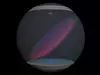
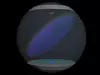
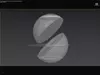
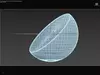
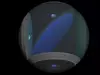
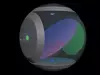
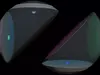
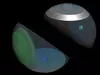
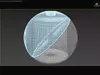
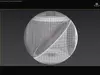
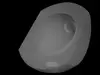
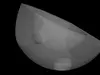
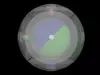
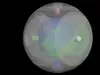
Dual / Triple Angled LED Module - Concept.

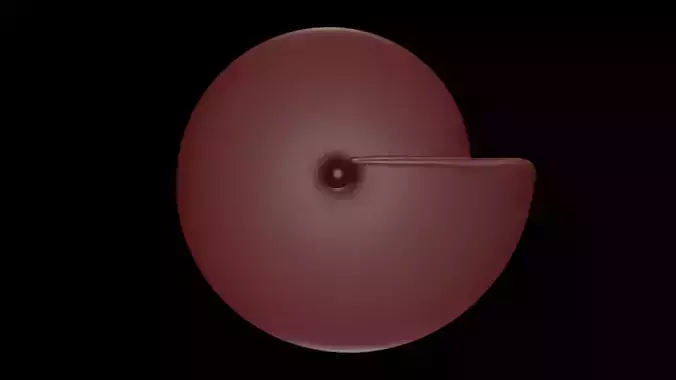
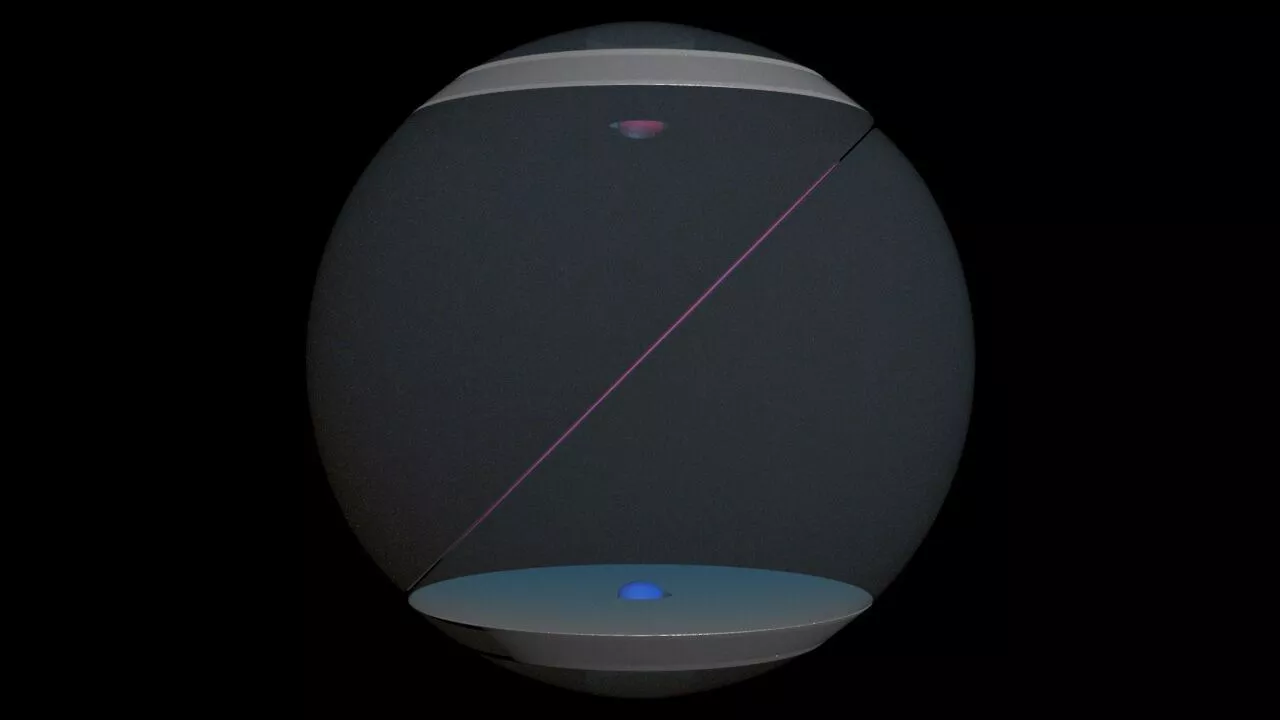
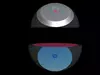
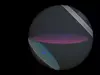
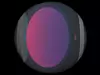
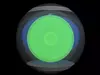
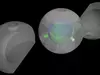
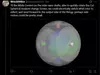
One small solid crystal sphere, sliced in half to create a medium change between the two glass surfaces, supporting light. Now the LED's color can be seen under a 45 degree angle from the source. Two modules, Two LED's, Two colors can be used and or mixed. A small camera module could perhaps also be installed instead of a LED, creating some type of light I/O system, sending and receiving light signals in the exact center of the contraption. Perhaps a LASER could also fit instead of a slower LED. The LED spheres can be magnetically linked together to form a larger screen. Sideways, or Top to Bottom, forming a lattice of light known color emitting spheres. Depending on scale maybe all 3 or 4 primary color LED's could be fitted, depending on need etc. The pair can be orientated sideways different ways.

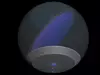
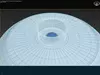
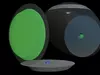
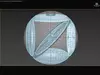
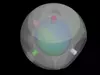
I had to update up to Three leds, the space was too perfect. now Three color LED's or Lasers can be used onto the center screen, and one side has space for a tiny lens as large as the LED holding platforms.Three colors complete the Primary colors needed to mix and create all other colors to our eyes. Three allows for Full Color spectrum to be generated, and outputted. Included all original 3dsmax Drawings.

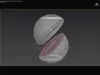
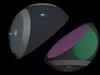
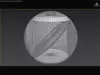
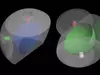
Now that i think about it, it could even go up to 5 sides with LED's, but instead of single cut through to form the medium change, we would need another boolean spherical bubble in the center of the contraption, serving as the projection screen for 5 input projection sides. Like so, boolean removed a sphere from the form, to create a spherical projection screen we could project on from 5 sides, and see from the last available 6th side. Two sides could be or hold a thin battery to make it more mobile as a system, perhaps rechargeable, wearable. Added 5D object files.

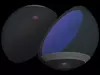
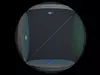
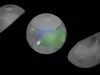
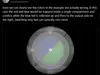
*If the White Centers on the sides were shafts, able to quickly rotate the Cut Spherical medium change Screen, we could electrically switch what color to reflect, and send forward to the output side of the thingy. perhaps side motors could be pretty small. Here we can clearly see the colors in the example are actually wrong, in this case the red and blue would be trapped inside a single compartment and conflict, while the blue led is reflected up and then to the output side on the right. Switching very fast can optically mix colors. Now we could project 3 different primary colors forwards, from the exact same location. Scale the principle down to our machines ability.

Thank you for supporting my work, please leave a like and a follow :) Have a great day.

REVIEWS & COMMENTS

See what other buyers think about this model - real feedback on quality,
accuracy, and usability.
There are no reviews or comments yet. Please be the first one to write it.

Dual - Triple - 5D Angled LED Module - Concept 3D model

$15.00
Editorial License (no AI)
Like this model to show appreciation to the designer.
See how many times this model was viewed.
Share this model to support the designer and boost their visibility.
File formats
STL
Stereolithography | 10 files<br />File Size: 5.28 MB
OBJ
OBJ | 6 files<br />File Size: 5.11 MB
FBX
Autodesk FBX | 3 files<br />File Size: 1.28 MB
MAX
Autodesk 3ds Max | 5 files<br />File Size: 7.25 MB
Verified by CGTrader
Verified models are of higher quality as they have
passed CGT Standard technical and visual checks,
making them more professional-grade 3D assets.
Learn more.
FBX
This FBX file has successfully passed the CGT Standard technical and visual checks. The verification results are detailed in the section below.
File & scene
Binary FBX
Binary FBX file is more compact and faster to load and process.
Learn more
No unsupported objects
Unsupported objects:
- Lights
- Cameras
Learn more
Geometry
No N-gons
N-gons are polygons with five or more sides which might cause issues in certain processes like rendering or animation. Learn more
No faceted geometry
Faceted geometry uses flat surfaces without smoothing, which can look unrealistic on curves.
Learn more
Manifold geometry
Manifold geometry ensures all surfaces are properly connected, avoiding issues like edges shared by more than two faces.
Learn more
Textures & material
PBR textures
PBR textures simulate how light interacts with materials, making the model look realistic under different lighting.
Required PBR textures:
- Base Color
- Roughness
- Metalness
- Normal
Learn more
No embed textures
Embedded textures are stored inside the model file, increasing its size and sometimes causing compatibility issues.
Learn more
Square textures
Texture aspect ratio is the width-to-height ratio of a texture. Expected texture aspect ratio: 1:1
Learn more
Power of 2 texture sizes
Textures with dimensions in power of two (e.g. 512x512px, 1024x1024px) are used to optimize performance and memory usage.
Learn more
Assigned materials
Materials are applied to the 3D model to allow visualize a model's surface properties and appearance.
Learn more
UVs & naming
No UV overlaps
UVs overlap when multiple points on the 3D model's surface are mapped to the same point on the UV island causing texture stretching.
Learn more
UV unwrapped model
A UV unwrapped model means its 3D surface is flattened into 2D space, allowing textures to be applied accurately.
Learn more
Allowed characters
Allowed ASCII characters: a-zA-Z0-9-_
Learn more
Provided by designer
Information and details shared directly by the model's designer.
3D Features
Materials
The model has material settings that define how surfaces look (color, shine, transparency, etc.).
3D printing
Indicates whether the designer marked this model as suitable for 3D printing.
Model is not 3D printable
The designer indicates this model is intended for digital use only (rendering, animation, or AR/VR) and not for 3D printing.
Geometry
Subdivision ready
A polygon model designed to smooth cleanly when subdivision is applied.
Unwrapped UVs
Publish date
Model ID
Chat