High-quality 3D assets at affordable prices — trusted by designers, engineers, and creators worldwide. Made with care to be versatile, accessible, and ready for your pipeline.
Included File Formats
This model is provided in 14 widely supported formats, ensuring maximum compatibility:
• - FBX (.fbx) – Standard format for most 3D software and pipelines
• - OBJ + MTL (.obj, .mtl) – Wavefront format, widely used and compatible
• - STL (.stl) – Exported mesh geometry; may be suitable for 3D printing with adjustments
• - STEP (.step, .stp) – CAD format using NURBS surfaces
• - IGES (.iges, .igs) – Common format for CAD/CAM and engineering workflows (NURBS)
• - SAT (.sat) – ACIS solid model format (NURBS)
• - DAE (.dae) – Collada format for 3D applications and animations
• - glTF (.glb) – Modern, lightweight format for web, AR, and real-time engines
• - 3DS (.3ds) – Legacy format with broad software support
• - 3ds Max (.max) – Provided for 3ds Max users
• - Blender (.blend) – Provided for Blender users
• - SketchUp (.skp) – Compatible with all SketchUp versions
• - AutoCAD (.dwg) – Suitable for technical and architectural workflows
• - Rhino (.3dm) – Provided for Rhino users
Model Info
• - All files are checked and tested for integrity and correct content
• - Geometry uses real-world scale; model resolution varies depending on the product (high or low poly)
• • - Scene setup and mesh structure may vary depending on model complexity
• - Rendered using Luxion KeyShot
• - Affordable price with professional detailing
Buy with confidence. Quality and compatibility guaranteed.
If you have any questions about the file formats, feel free to send us a message — we're happy to assist you!
Sincerely,
SURF3D
Trusted source for professional and affordable 3D models.
More Information About 3D Model :
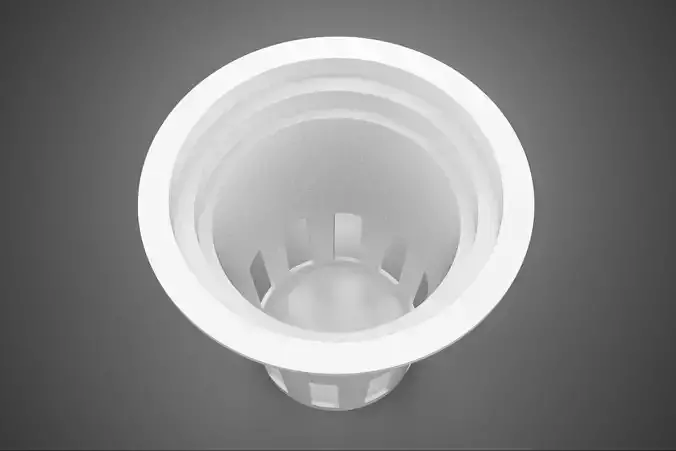
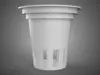
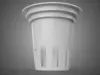
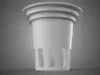
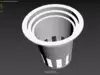
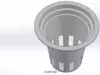
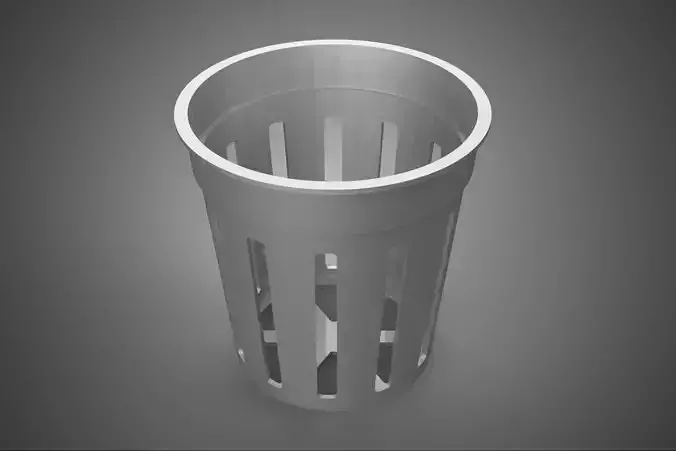
The net pot, formally designated as a White Plastic Net Pot Growth Mesh Cup Basket, is a specialized horticultural container utilized extensively in soilless cultivation systems, predominantly hydroponics, and specifically optimized for methods such as Deep Water Culture (DWC). Its design facilitates crucial root access to nutrient solutions while providing essential physical support for developing plants.
I. Definition and Nomenclature
A net pot is a rigid, often reusable, vessel designed to hold a plant’s rooting medium (such as expanded clay aggregates, perlite, coco coir, or rockwool cubes) while maximizing exposure of the roots to the external environment. It functions as the primary interface component between the plant and the hydroponic reservoir system. The nomenclature reflects its construction: Net Pot refers to the lattice structure that resembles a mesh or net, and Basket emphasizes its role as a supportive carrier.
II. Design and Material Specifications
Material: Net pots are typically injection-molded from durable, non-reactive, and food-grade polymers, most commonly polypropylene (PP) or high-density polyethylene (HDPE). The selection of plastic ensures longevity, resistance to nutrient solution degradation (pH fluctuations), and ease of sterilization.
Color and Thermal Properties: The characteristic white coloration is deliberate. White polymer surfaces maximize the reflectance of incident light, reducing the absorption of solar or artificial radiant energy. This thermal mitigation helps maintain a consistent, cooler temperature within the root zone, preventing stress, inhibiting the proliferation of pathogenic fungi and bacteria, and optimizing dissolved oxygen levels in the nutrient solution.
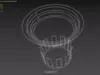
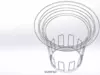
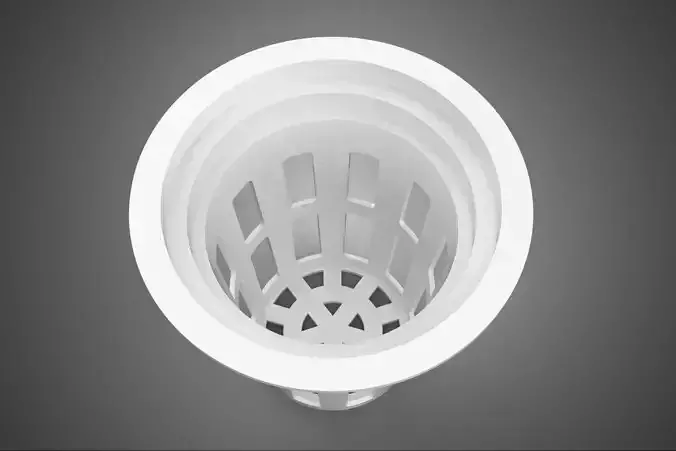
Structure: The net pot features a robust upper rim designed for secure placement within pre-cut openings in reservoir lids or channel troughs. The main body tapers downward and is defined by a dense lattice or mesh pattern composed of numerous slits or openings. This permeable structure is the core functional element, enabling roots to penetrate the container walls—a process known as root egress—and freely proliferate into the surrounding reservoir or delivery channel.
III. Functional Role in Hydroponics
The design of the net pot is optimized for maximum water drainage and essential gaseous exchange. When used in conjunction with inert, porous media, the mesh structure ensures that stale air doesopropanol not accumulate around the root mass, promoting continuous aeration necessary for respiration and mitigating anaerobic conditions.
IV. Specific Application: Deep Water Culture (DWC)
In Deep Water Culture (DWC) systems, plants are suspended over a reservoir where the roots are submerged directly into an oxygenated nutrient solution. The white plastic net pot is integral to this setup:
- Suspension: The pot is inserted into a hole in the opaque reservoir lid, ensuring light blockage to prevent algae growth in the solution.
- Root Migration: Initial planting often involves placing the net pot so the rooting medium base is just touching the surface of the nutrient solution.
- Maturity: As the plant grows, the roots rapidly grow through the mesh openings, descending fully into the deep reservoir volume. The basket provides the necessary anchor for the plant's aerial mass while allowing the roots complete access to the water, air, and nutrient mixture delivered via an air pump and air stone.
The efficiency of the net pot in DWC directly contributes to the high growth rates and yields characteristic of this hydroponic methodology by facilitating unhindered root expansion and maximizing nutrient absorption surface area.
KEYWORDS: Hydroponics, Deep Water Culture, DWC, Net Pot, Root Basket, Growth Cup, Soilless Culture, Controlled Environment Agriculture, CEA, Polypropylene, HDPE, Nutrient Solution, Root Zone, Aeration, Egress, Substrate, Rockwool, Clay Pebbles, Perlite, Nutrient Film Technique, NFT, Aeroponics, Horticulture, Indoor Gardening, Planter Insert, Hydroponic Equipment, Propagation, Plant Support, Mesh Design, Container.