High-quality 3D assets at affordable prices — trusted by designers, engineers, and creators worldwide. Made with care to be versatile, accessible, and ready for your pipeline.
Included File Formats
This model is provided in 14 widely supported formats, ensuring maximum compatibility:
• - FBX (.fbx) – Standard format for most 3D software and pipelines
• - OBJ + MTL (.obj, .mtl) – Wavefront format, widely used and compatible
• - STL (.stl) – Exported mesh geometry; may be suitable for 3D printing with adjustments
• - STEP (.step, .stp) – CAD format using NURBS surfaces
• - IGES (.iges, .igs) – Common format for CAD/CAM and engineering workflows (NURBS)
• - SAT (.sat) – ACIS solid model format (NURBS)
• - DAE (.dae) – Collada format for 3D applications and animations
• - glTF (.glb) – Modern, lightweight format for web, AR, and real-time engines
• - 3DS (.3ds) – Legacy format with broad software support
• - 3ds Max (.max) – Provided for 3ds Max users
• - Blender (.blend) – Provided for Blender users
• - SketchUp (.skp) – Compatible with all SketchUp versions
• - AutoCAD (.dwg) – Suitable for technical and architectural workflows
• - Rhino (.3dm) – Provided for Rhino users
Model Info
• - All files are checked and tested for integrity and correct content
• - Geometry uses real-world scale; model resolution varies depending on the product (high or low poly)
• • - Scene setup and mesh structure may vary depending on model complexity
• - Rendered using Luxion KeyShot
• - Affordable price with professional detailing
Buy with confidence. Quality and compatibility guaranteed.
If you have any questions about the file formats, feel free to send us a message — we're happy to assist you!
Sincerely,
SURF3D
Trusted source for professional and affordable 3D models.
More Information About 3D Model :
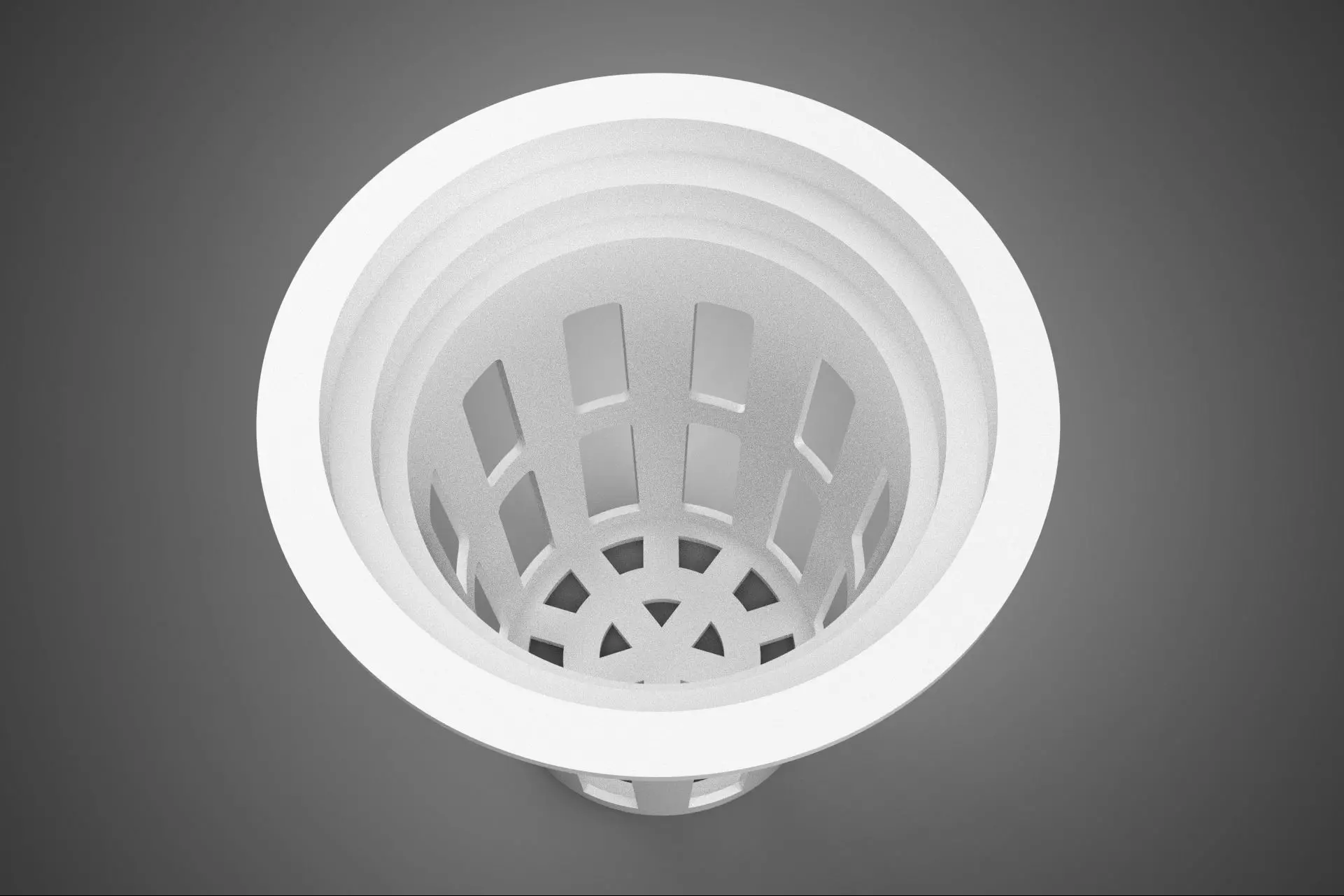
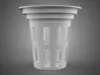
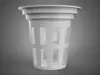
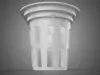
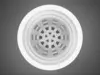
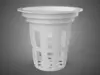
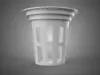
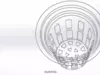
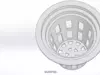
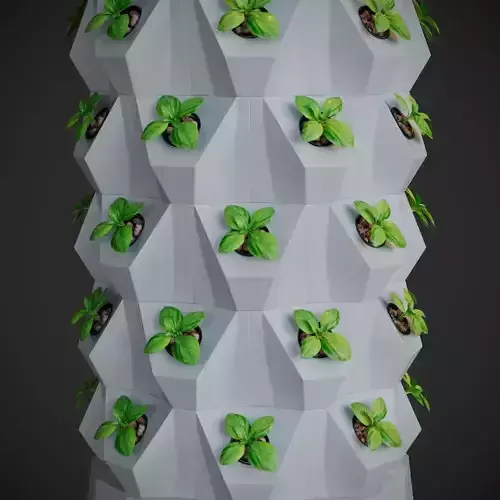
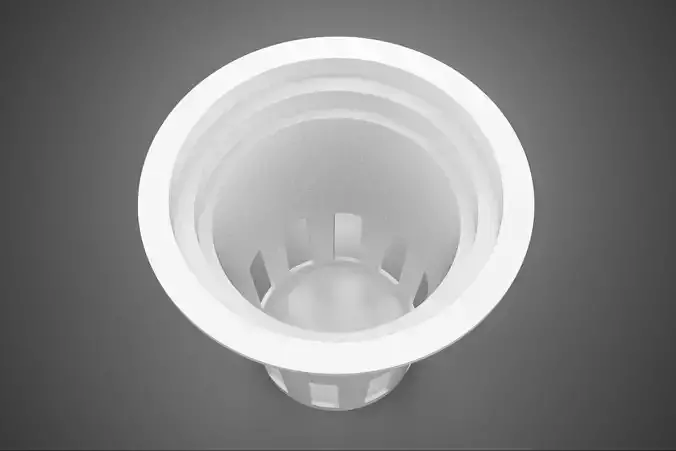
A Net Pot, also known in horticulture as a mesh basket, slotted cup, or hydroponic bucket insert, is a specialized container used extensively in soilless cultivation systems, including hydroponics, aeroponics, and aquaponics. Its design is fundamentally defined by its permeable, open-lattice structure, which differentiates it from traditional solid-walled plant pots.
Design and Material Composition
Net pots are constructed almost universally from inert, non-reactive plastic polymers, most commonly polypropylene (PP) or high-density polyethylene (HDPE). These materials are selected for their durability, resistance to degradation from prolonged exposure to water and nutrient solutions, and chemical stability, ensuring they do not leach harmful compounds into the growing environment.
The defining characteristic of the net pot is the highly perforated structure. The sides and base are composed of numerous slots or mesh holes. This engineering serves several critical functions:
- Maximum Root Egress: The large openings permit the rapid, unimpeded growth of roots out of the pot and directly into the nutrient reservoir or grow chamber.
- Efficient Drainage and Aeration: The open lattice ensures that there is no pooling of liquid within the container, preventing root rot and guaranteeing maximum oxygen availability to the root zone (a concept crucial for healthy hydroponic growth).
- Minimal Media Usage: By facilitating root penetration, the design allows growers to minimize the volume of inert growing medium required, focusing solely on initial stabilization.
Net pots are typically manufactured in standardized sizes, ranging from small 2-inch (5 cm) diameters suitable for clones and seedlings, up to large 8-inch (20 cm) or 10-inch (25 cm) diameters for supporting mature, fruiting plants. They often feature an outer rim or lip designed to seat securely into pre-cut holes in the lids or channels of hydroponic systems.
### Operational Mechanism in Soilless Cultivation
The net pot acts primarily as a structural anchor, providing initial stability for the plant while optimizing root access to the necessary moisture and nutrients.
1. Deep Water Culture (DWC) and Recirculating Systems:
In DWC, the net pot is suspended in the reservoir lid, with the base often positioned just above or slightly submerged in the oxygenated nutrient solution. The growing medium (such as hydroton clay pebbles, rockwool, or perlite) wicks the solution upward to the crown of the plant. As the plant matures, the roots rapidly extend through the mesh and dangle freely into the reservoir, absorbing nutrients directly.
2. Nutrient Film Technique (NFT) and Drip Systems:
In systems where the nutrient delivery is constant but shallow (NFT) or intermittent (drip systems), the net pot ensures that the small volume of inert media does not become waterlogged, facilitating quick transition of the roots from the propagation media to the nutrient stream flowing across the channel floor.
3. Air Pruning Effect:
The open mesh design exposes roots that grow laterally through the slots to the air outside the pot. This process, known as air pruning, causes the tips of the roots to dehydrate and die back, stimulating the proliferation of numerous lateral feeder roots within the basket and promoting a denser, more vigorous root ball.
### Usage with Growing Media
While net pots are integral to soilless methods, they usually require the integration of a porous, non-nutritive substrate to hold the young plant stable and provide initial moisture retention. Common media used in conjunction with net pots include:
- Clay Pebbles (Hydroton): Lightweight, reusable, and excellent for aeration and drainage.
- Rockwool: Used especially during the germination or cloning phase, providing structure and high water retention.
- Coco Coir/Perlite Mixtures: Provides a balance of moisture retention and air porosity.
The use of the net pot minimizes media interaction, ensuring that the roots’ primary nutrient uptake occurs directly from the circulated solution, fulfilling the core principle of soil-less cultivation.
KEYWORDS: Hydroponics, Soilless culture, Net pot, Mesh basket, Root support, Deep water culture (DWC), Nutrient film technique (NFT), Ebb and flow, Aeroponics, Hydroton, Clay pebbles, Rockwool, Perlite, Polypropylene, HDPE, Horticultural equipment, Root development, Nutrient solution, Reservoir, Plant stabilization, Growing medium, Slotted cup, Air pruning, Drainage, Cloning, Seed starting, Hydroponic system, Growing container, Propagation, Aquaponics