High-quality 3D assets at affordable prices — trusted by designers, engineers, and creators worldwide. Made with care to be versatile, accessible, and ready for your pipeline.
Included File Formats
This model is provided in 14 widely supported formats, ensuring maximum compatibility:
• - FBX (.fbx) – Standard format for most 3D software and pipelines
• - OBJ + MTL (.obj, .mtl) – Wavefront format, widely used and compatible
• - STL (.stl) – Exported mesh geometry; may be suitable for 3D printing with adjustments
• - STEP (.step, .stp) – CAD format using NURBS surfaces
• - IGES (.iges, .igs) – Common format for CAD/CAM and engineering workflows (NURBS)
• - SAT (.sat) – ACIS solid model format (NURBS)
• - DAE (.dae) – Collada format for 3D applications and animations
• - glTF (.glb) – Modern, lightweight format for web, AR, and real-time engines
• - 3DS (.3ds) – Legacy format with broad software support
• - 3ds Max (.max) – Provided for 3ds Max users
• - Blender (.blend) – Provided for Blender users
• - SketchUp (.skp) – Compatible with all SketchUp versions
• - AutoCAD (.dwg) – Suitable for technical and architectural workflows
• - Rhino (.3dm) – Provided for Rhino users
Model Info
• - All files are checked and tested for integrity and correct content
• - Geometry uses real-world scale; model resolution varies depending on the product (high or low poly)
• • - Scene setup and mesh structure may vary depending on model complexity
• - Rendered using Luxion KeyShot
• - Affordable price with professional detailing
Buy with confidence. Quality and compatibility guaranteed.
If you have any questions about the file formats, feel free to send us a message — we're happy to assist you!
Sincerely,
SURF3D
Trusted source for professional and affordable 3D models.
More Information About 3D Model :
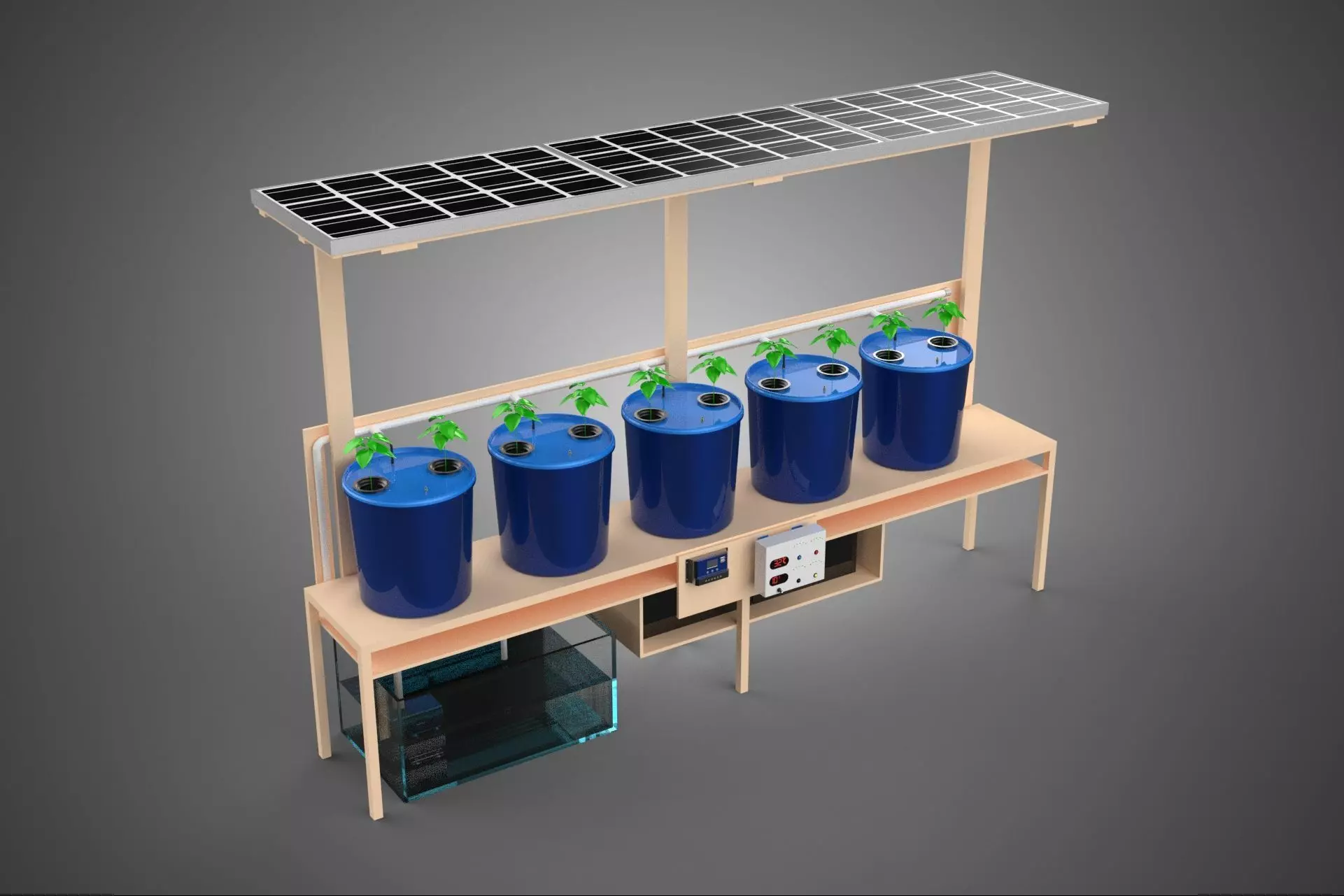
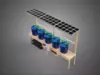
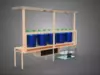
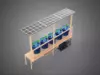
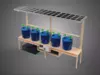
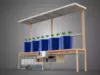
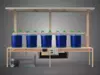
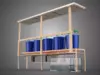
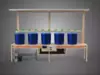
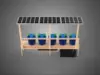
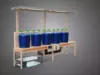
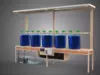
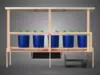
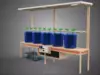
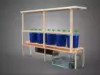
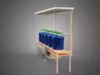
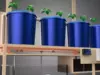
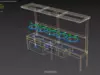
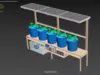
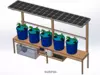
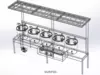
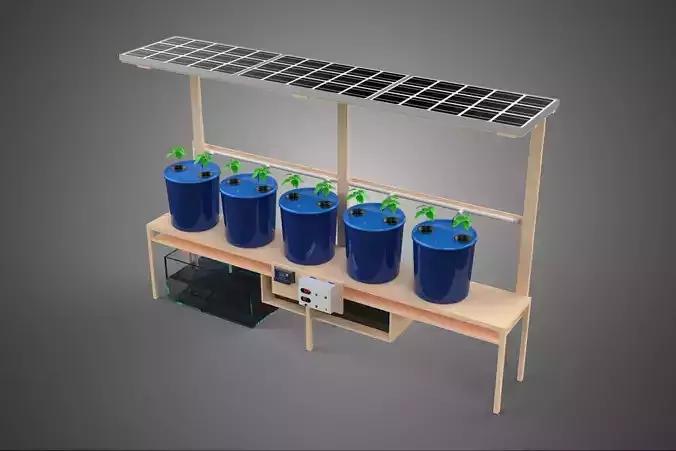
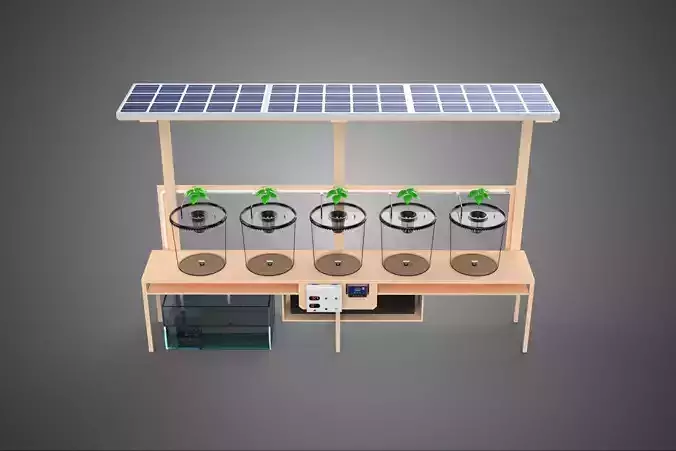
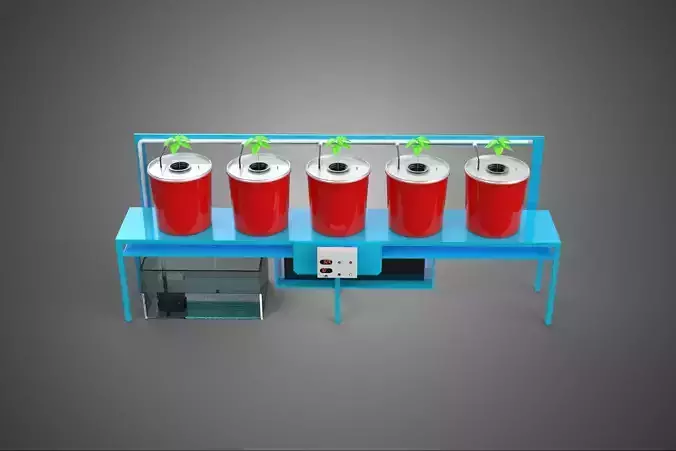
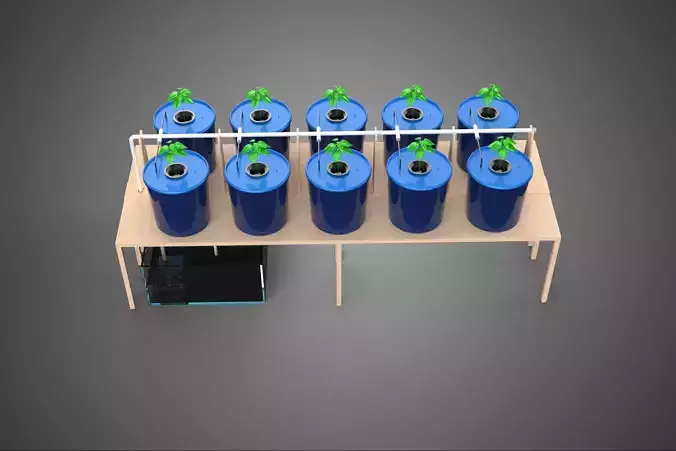
The IOT Solar Powered Dutch Bucket System Hydroponic Farming Plant represents an advanced integration of controlled environment agriculture (CEA) methodologies, renewable energy sourcing, and digital monitoring to optimize resource utilization and crop yield. This system merges the highly efficient Dutch Bucket (or Bato Bucket) hydroponic technique with Internet of Things (IoT) technology for real-time data acquisition and automated control, all powered by a standalone photovoltaic (PV) array.
System Architecture and Hydroponic Mechanism
The foundation of the system is the Dutch Bucket method, a popular recirculating deep-drip hydroponic setup predominantly used for large, vine-bearing crops such as tomatoes, peppers, cucumbers, and sometimes certain berry varieties.
Dutch Bucket Subsystem: Plants are cultivated in individual buckets, typically filled with inert, non-soil substrates like perlite, coco coir, rockwool, or clay pebbles, which provide structural support and aeration. A nutrient solution, formulated to precise specifications, is delivered to the base of the plant via a drip emitter connected to a main feed line. The system operates on a timed or sensor-triggered cycle. Excess nutrient solution, which drains from the bottom of the buckets, is collected via a common return line and flows back into a central reservoir. This recirculating design significantly reduces water and fertilizer consumption compared to traditional soil-based or non-recirculating hydroponic methods.
IoT Integration and Precision Agriculture
The implementation of IoT technology transforms the standard Dutch Bucket setup into a smart farming system capable of autonomous operation and remote management.
Monitoring and Sensing: The core of the IoT component is a centralized microcontroller unit (MCU) or single-board computer, which interfaces with a suite of environmental and solution-specific sensors. Critical parameters continuously monitored include:
- Solution Metrics: Electrical Conductivity (EC) or Total Dissolved Solids (TDS), which measures the concentration of mineral nutrients; pH level, essential for nutrient uptake efficiency; and water temperature.
- Environmental Metrics: Ambient air temperature, relative humidity, light intensity (lux or Photosynthetically Active Radiation, PAR), and substrate moisture (optional, depending on medium).
Data Processing and Control: Sensor data is processed by the MCU and transmitted, typically via Wi-Fi, cellular, or LoRa protocols, to a cloud-based server or local gateway. Farmers and researchers can access this data remotely via a dashboard interface. The system utilizes algorithms to activate corrective mechanisms, such as:
- Automated dosing pumps for introducing acid/base buffers (pH adjustment) and concentrated nutrient solutions (EC adjustment).
- Activation of irrigation pumps based on established schedules, light levels, or cumulative evapotranspiration calculations.
- Control of supplementary systems like ventilation fans, shade cloths, or LED grow lights (if applicable) based on climate data.
### Solar Power Subsystem (Renewable Energy)
To ensure operational independence and promote sustainability, the system is powered by an off-grid or grid-tied solar photovoltaic (PV) array.
Energy Components: The solar subsystem typically consists of monocrystalline or polycrystalline PV panels, a solar charge controller (MPPT or PWM) to regulate voltage, and a deep-cycle battery bank (e.g., lithium-ion or lead-acid) for energy storage, enabling continuous operation during nighttime or cloudy periods. Power is supplied to all low-voltage DC components (pumps, sensors, MCU) directly, often utilizing high-efficiency DC pumps to minimize conversion losses. An inverter may be included to power any necessary AC devices, such as high-output supplemental lighting or large circulation pumps, though minimizing AC components is usually preferred for off-grid efficiency.
### Operational Advantages
The integration of these three components—hydroponics, IoT, and solar power—yields significant operational advantages: enhanced resource efficiency through water and nutrient recirculation; minimized operational costs due to reliance on renewable energy; improved crop health and yield through data-driven precision control; and reduced labor requirements via comprehensive automation and remote monitoring capabilities.
KEYWORDS: Hydroponics, IoT, Solar Power, Dutch Bucket, Bato System, Controlled Environment Agriculture, Sustainable Farming, Precision Agriculture, Renewable Energy, Recirculating System, Sensor Technology, Electrical Conductivity, pH Control, Automated Dosing, Photovoltaic Array, Remote Monitoring, Smart Farming, Water Efficiency, Off-Grid Agriculture, Microcontroller, Perlite, Deep-Cycle Battery, Climate Control, Nutrient Management, Greenhouse Automation, Data Logging, Resource Optimization, Recirculating Deep Culture, Crop Yield, Digital Agriculture.