High-quality 3D assets at affordable prices — trusted by designers, engineers, and creators worldwide. Made with care to be versatile, accessible, and ready for your pipeline.
Included File Formats
This model is provided in 14 widely supported formats, ensuring maximum compatibility:
• - FBX (.fbx) – Standard format for most 3D software and pipelines
• - OBJ + MTL (.obj, .mtl) – Wavefront format, widely used and compatible
• - STL (.stl) – Exported mesh geometry; may be suitable for 3D printing with adjustments
• - STEP (.step, .stp) – CAD format using NURBS surfaces
• - IGES (.iges, .igs) – Common format for CAD/CAM and engineering workflows (NURBS)
• - SAT (.sat) – ACIS solid model format (NURBS)
• - DAE (.dae) – Collada format for 3D applications and animations
• - glTF (.glb) – Modern, lightweight format for web, AR, and real-time engines
• - 3DS (.3ds) – Legacy format with broad software support
• - 3ds Max (.max) – Provided for 3ds Max users
• - Blender (.blend) – Provided for Blender users
• - SketchUp (.skp) – Compatible with all SketchUp versions
• - AutoCAD (.dwg) – Suitable for technical and architectural workflows
• - Rhino (.3dm) – Provided for Rhino users
Model Info
• - All files are checked and tested for integrity and correct content
• - Geometry uses real-world scale; model resolution varies depending on the product (high or low poly)
• • - Scene setup and mesh structure may vary depending on model complexity
• - Rendered using Luxion KeyShot
• - Affordable price with professional detailing
Buy with confidence. Quality and compatibility guaranteed.
If you have any questions about the file formats, feel free to send us a message — we're happy to assist you!
Sincerely,
SURF3D
Trusted source for professional and affordable 3D models.
More Information About 3D Model :
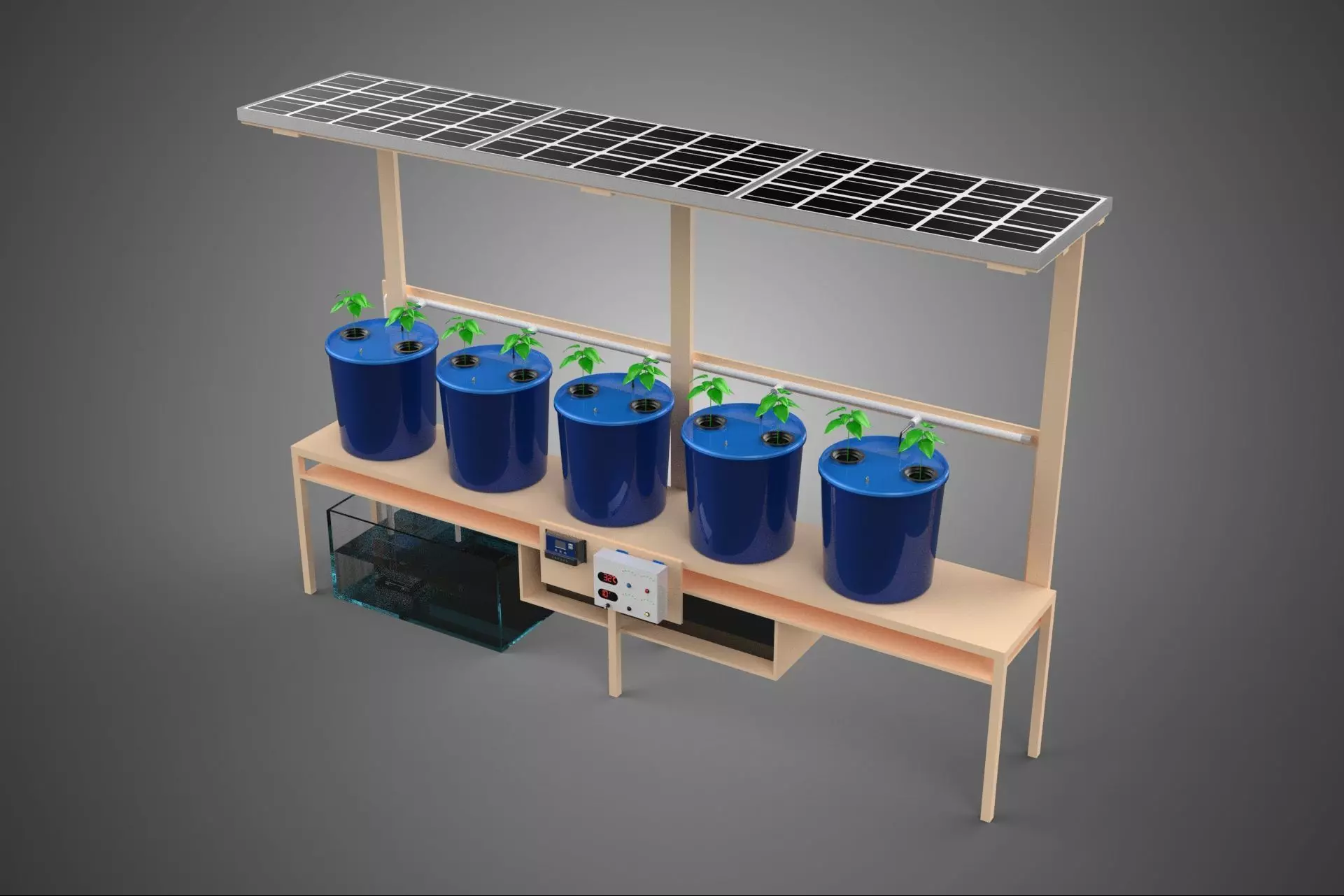
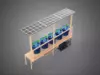
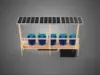
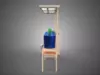
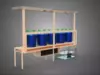
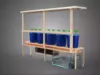
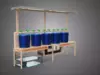
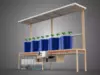
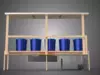
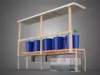
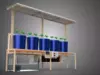
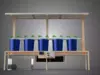
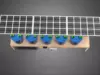
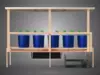
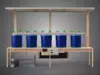
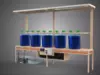
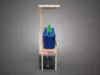
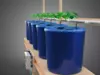
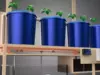
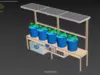
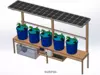
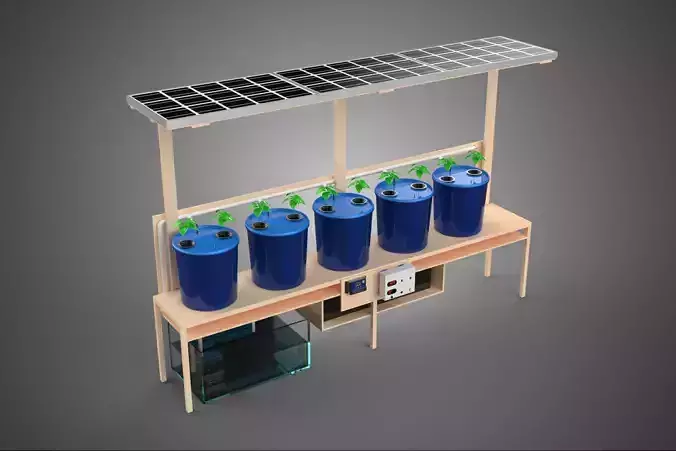
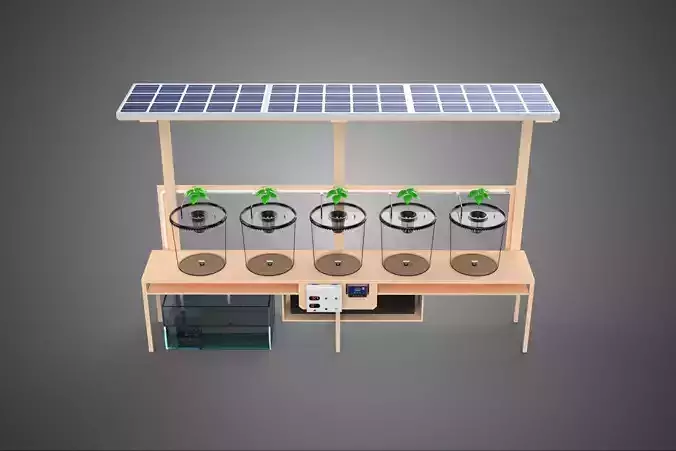
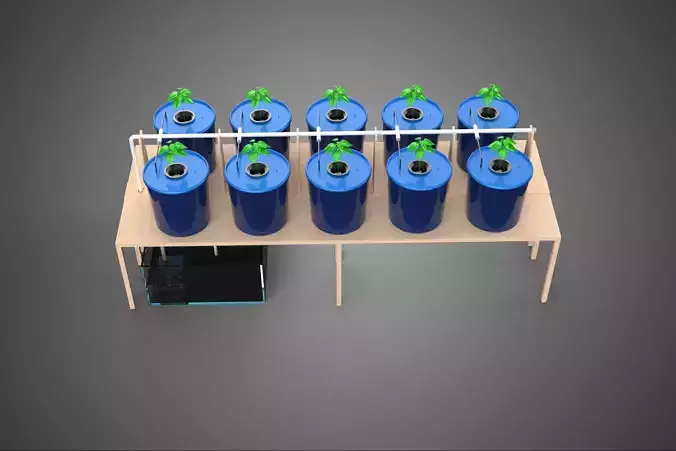
The Solar Panel IoT Irrigation Dutch Bucket System Hydropobic Plant refers to an integrated, autonomous cultivation system utilizing soilless agriculture (hydroponics) within a controlled environment framework. This technology leverages renewable energy harvesting, advanced sensor networks (Internet of Things, IoT), and precision nutrient delivery to optimize crop yield and resource efficiency, particularly suited for fruiting vegetables and long-duration crops.
System Architecture and Operation
The system is defined by the synergistic operation of four primary components: the structural hydroponic method, the automated irrigation control, the IoT monitoring network, and the autonomous solar power source.
I. Hydroponic Structure (Dutch Bucket Method)
The core cultivation mechanism employs the Dutch Bucket, also known as the Bato Bucket, system. This technique utilizes individual containers, typically filled with an inert substrate such as perlite, coco coir, or rockwool, which provides structural support while remaining chemically neutral. Plants are cultivated one or two per bucket. Nutrient solution is delivered to the base of the plant via drip emitters according to a prescribed schedule. A critical feature is the specialized drainage elbow located near the bottom of the bucket, designed to maintain a small reservoir of solution (preventing root desiccation) while ensuring excess, spent nutrient solution drains into a collection trough. This runoff is channeled back to a central reservoir for testing, replenishment, and potential recirculation, establishing a semi-recirculating or fully closed-loop system that dramatically reduces water and nutrient waste compared to conventional agriculture.
II. Energy Autonomy (Solar Panel Integration)
Electrical power for all mechanical and computational processes is supplied by photovoltaic (PV) solar panels. This integrated renewable energy source renders the system grid-independent, allowing deployment in remote areas lacking reliable power infrastructure, and significantly lowering the operational carbon footprint. The solar array charges a battery bank, which in turn powers the critical components: the submersible pumps (responsible for solution delivery and aeration), the solenoid valves (controlling flow), the microcontrollers, and the wireless communication modules.
III. IoT and Precision Irrigation Control
The Internet of Things (IoT) framework forms the intelligence layer of the system, facilitating highly precise control over the cultivation environment (Precision Agriculture). A network of digital and analog sensors continuously monitors crucial parameters:
- Solution Quality: Electrical Conductivity (EC) sensors measure nutrient concentration, while pH sensors track acidity/alkalinity, both critical for nutrient uptake efficacy. Dissolved Oxygen (DO) and temperature probes monitor the health of the root zone solution.
- Environmental Conditions: Ambient temperature, humidity, and Photosynthetically Active Radiation (PAR) or light intensity sensors are utilized to optimize growth conditions and control ancillary systems (e.g., ventilation).
Data collected by these sensors is aggregated by a central microcontroller unit (MCU). This data is processed locally, triggering automated adjustments (e.g., actuating pumps for irrigation events, triggering dosing pumps for pH correction), and is simultaneously transmitted via wireless protocols (e.g., Wi-Fi, LoRaWAN, GSM) to a cloud-based server or local database. This remote connectivity allows growers to monitor system health, analyze historical data logs, receive predictive maintenance alerts, and remotely adjust irrigation parameters in real-time.
### Advantages and Applications
The integrated Solar Panel IoT Dutch Bucket system offers several substantial advantages over traditional farming and rudimentary hydroponic setups, including enhanced resource efficiency through water recirculation and solar power use, minimized labor requirements via comprehensive automation, and increased yield predictability due to precise environmental control. It is primarily applied in controlled environment agriculture (CEA) settings for high-value crops such as tomatoes, cucumbers, peppers, and melons.
KEYWORDS: Hydroponics, Precision Agriculture, IoT, Solar Power, Dutch Bucket, Bato Bucket, Controlled Environment Agriculture (CEA), Recirculating System, Sensor Network, Automated Irrigation, Photovoltaics, Soilless Cultivation, Nutrient Film Technique (NFT), EC Monitoring, pH Monitoring, Remote Sensing, Sustainable Farming, Resource Efficiency, Microcontroller, Actuator, Drip System, Wireless Communication, Agrivoltaics, Water Conservation, Crop Optimization, Renewable Energy, Data Logging, Perlite, Closed-Loop System, Smart Farm.