High-quality 3D assets at affordable prices — trusted by designers, engineers, and creators worldwide. Made with care to be versatile, accessible, and ready for your pipeline.
Included File Formats
This model is provided in 14 widely supported formats, ensuring maximum compatibility:
• - FBX (.fbx) – Standard format for most 3D software and pipelines
• - OBJ + MTL (.obj, .mtl) – Wavefront format, widely used and compatible
• - STL (.stl) – Exported mesh geometry; may be suitable for 3D printing with adjustments
• - STEP (.step, .stp) – CAD format using NURBS surfaces
• - IGES (.iges, .igs) – Common format for CAD/CAM and engineering workflows (NURBS)
• - SAT (.sat) – ACIS solid model format (NURBS)
• - DAE (.dae) – Collada format for 3D applications and animations
• - glTF (.glb) – Modern, lightweight format for web, AR, and real-time engines
• - 3DS (.3ds) – Legacy format with broad software support
• - 3ds Max (.max) – Provided for 3ds Max users
• - Blender (.blend) – Provided for Blender users
• - SketchUp (.skp) – Compatible with all SketchUp versions
• - AutoCAD (.dwg) – Suitable for technical and architectural workflows
• - Rhino (.3dm) – Provided for Rhino users
Model Info
• - All files are checked and tested for integrity and correct content
• - Geometry uses real-world scale; model resolution varies depending on the product (high or low poly)
• • - Scene setup and mesh structure may vary depending on model complexity
• - Rendered using Luxion KeyShot
• - Affordable price with professional detailing
Buy with confidence. Quality and compatibility guaranteed.
If you have any questions about the file formats, feel free to send us a message — we're happy to assist you!
Sincerely,
SURF3D
Trusted source for professional and affordable 3D models.
More Information About 3D Model :
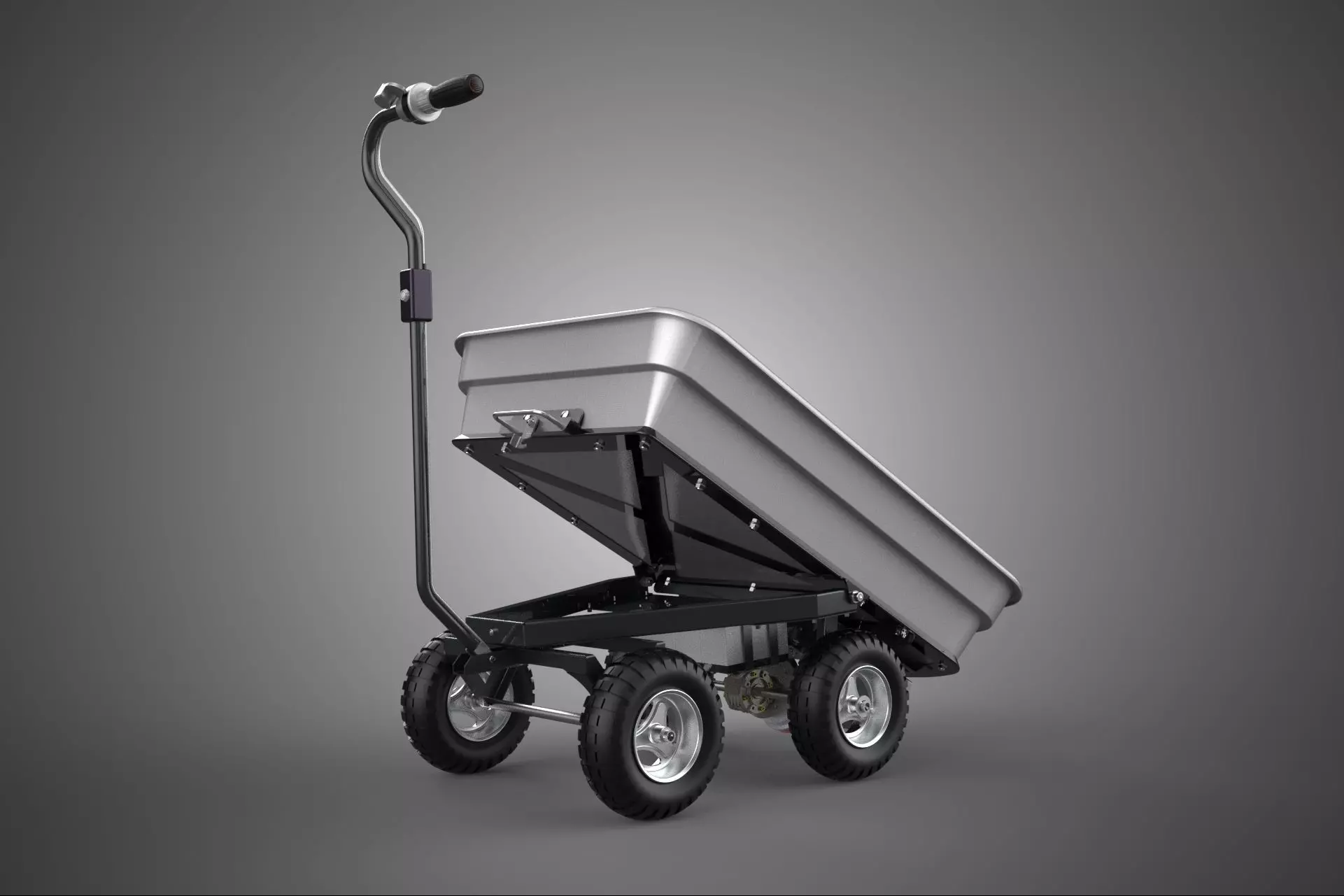
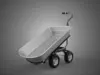
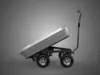
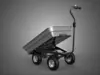
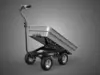
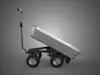
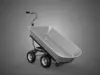
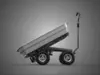
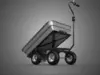
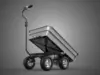
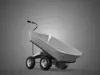
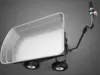
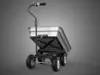
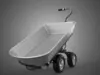
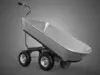
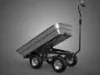
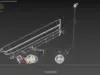
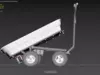
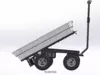
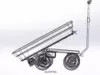
A motorized plastic bin tub tray garden utility cart wagon trolley is a specialized piece of mobile material handling equipment engineered for the efficient and low-effort transport of various loads across diverse terrains. It distinguishes itself from conventional manual carts by incorporating an integrated propulsion system, typically powered by an electric motor or a small internal combustion engine, which significantly reduces the physical exertion required for movement and hauling. This classification encompasses a range of devices designed primarily for utility tasks in horticultural, landscaping, agricultural, construction, and general outdoor environments.
Nomenclature Clarification:
The comprehensive title MOTORIZED PLASTIC BIN TUB TRAY GARDEN UTILITY CART WAGON TROLLEY combines several terms to precisely describe the device's key attributes:
- Motorized: Indicates the presence of a self-propulsion system, differentiating it from push or pull manual conveyances.
- Plastic: Refers to the primary material used for the load-bearing receptacle, implying properties like durability, weather resistance, and ease of cleaning.
- Bin/Tub/Tray: Describes the form factor of the container, an open-top receptacle suitable for holding bulk materials. These terms suggest versatility for different types of cargo, from loose aggregates (bin/tub) to more organized items (tray).
- Garden Utility: Defines its primary functional domain and application sphere, emphasizing its role in tasks related to gardening, landscaping, and general outdoor utility.
- Cart/Wagon/Trolley: These terms are broadly synonymous in this context, all referring to wheeled vehicles designed for transporting loads. Wagon often implies a four-wheel configuration with a steering handle, cart can be more generic, and trolley sometimes suggests a two-wheel or multi-directional castor-wheel design.
Design and Construction:
- Motorization System: The core distinguishing feature is its integrated power unit.
- Electric Models: These commonly utilize rechargeable lead-acid or lithium-ion batteries to power a DC electric motor. Advantages include quiet operation, zero emissions (making them suitable for enclosed spaces like greenhouses), lower maintenance, and immediate torque.
- Internal Combustion Models: Equipped with small gasoline engines (e.g., 4-stroke), these typically offer extended runtimes, higher power output for heavier loads, and suitability for remote operations where recharging facilities are limited.
The motor drives one or more wheels, providing forward motion, often with reverse capability, controlled via a throttle mechanism (e.g., twist grip, thumb lever, or foot pedal).
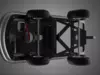
- Chassis and Wheels: A robust frame, usually constructed from steel tubing or channel, provides structural integrity for supporting the load, motor, and drivetrain components. The chassis is mounted on wheels, which are typically pneumatic tires for superior shock absorption and traction across uneven, soft, or rough terrain characteristic of garden and utility environments. Solid rubber tires may be used for specific industrial applications requiring puncture resistance. Wheel configurations vary:
- Two-wheel drive with steerable castors: Offers excellent maneuverability.
- Four-wheel drive with articulated steering: Provides stability and improved traction on challenging surfaces.
- Traditional wagon-style steering: A front axle pivots via a pull handle or tiller.
- Plastic Container (Bin/Tub/Tray): The load-carrying component is fabricated from durable, high-impact plastics such such as high-density polyethylene (HDPE) or polypropylene (PP). These materials are selected for their resistance to UV degradation, corrosion, rust, impact, and various chemicals, ensuring a long operational lifespan and ease of cleaning. The open-top design facilitates convenient loading and unloading of bulk materials like soil, mulch, gravel, tools, plants, waste, firewood, or construction debris. Many models incorporate a tilt or dump mechanism, allowing for rapid and efficient discharge of contents by tilting the bin. Capacities range from small volumes for domestic use to larger capacities for commercial applications.
- Controls and Ergonomics: User interfaces generally include a power switch, variable speed controls, and a steering mechanism (e.g., a tiller handle, a traditional wagon pull handle with steering linkage, or handlebar-style controls). Emphasis is often placed on ergonomic handle designs to minimize operator strain. Safety features frequently include automatic braking systems, emergency stop buttons, and overload protection to prevent damage and ensure safe operation.
Applications:
Motorized utility carts are indispensable across various sectors:
- Gardening and Landscaping: Transporting soil, compost, gravel, plants, tools, firewood, and garden waste.
- Nurseries and Greenhouses: Efficiently moving potted plants, growing media, fertilizers, and supplies within facilities.
- Farms and Estates: Hauling feed, hay bales, produce, tools, and general supplies across properties.
- Construction Sites: Relocating bricks, sand, cement bags, small equipment, and debris over uneven ground.
- Industrial and Warehouse Settings: Moving goods and materials within large facilities, particularly electric models where noise and emission control are critical.
- Residential Use: For heavy-duty yard work, DIY projects, and property maintenance, significantly reducing manual effort.
Advantages:
- Reduced Manual Labor: Eliminates the strenuous pushing or pulling associated with manual carts, mitigating operator fatigue and reducing the risk of musculoskeletal injuries, particularly with heavy or bulky loads.
- Enhanced Efficiency and Productivity: Facilitates faster and easier transport of materials, improving operational speed and overall workflow.