High-quality 3D assets at affordable prices — trusted by designers, engineers, and creators worldwide. Made with care to be versatile, accessible, and ready for your pipeline.
Included File Formats
This model is provided in 14 widely supported formats, ensuring maximum compatibility:
• - FBX (.fbx) – Standard format for most 3D software and pipelines
• - OBJ + MTL (.obj, .mtl) – Wavefront format, widely used and compatible
• - STL (.stl) – Exported mesh geometry; may be suitable for 3D printing with adjustments
• - STEP (.step, .stp) – CAD format using NURBS surfaces
• - IGES (.iges, .igs) – Common format for CAD/CAM and engineering workflows (NURBS)
• - SAT (.sat) – ACIS solid model format (NURBS)
• - DAE (.dae) – Collada format for 3D applications and animations
• - glTF (.glb) – Modern, lightweight format for web, AR, and real-time engines
• - 3DS (.3ds) – Legacy format with broad software support
• - 3ds Max (.max) – Provided for 3ds Max users
• - Blender (.blend) – Provided for Blender users
• - SketchUp (.skp) – Compatible with all SketchUp versions
• - AutoCAD (.dwg) – Suitable for technical and architectural workflows
• - Rhino (.3dm) – Provided for Rhino users
Model Info
• - All files are checked and tested for integrity and correct content
• - Geometry uses real-world scale; model resolution varies depending on the product (high or low poly)
• • - Scene setup and mesh structure may vary depending on model complexity
• - Rendered using Luxion KeyShot
• - Affordable price with professional detailing
Buy with confidence. Quality and compatibility guaranteed.
If you have any questions about the file formats, feel free to send us a message — we're happy to assist you!
Sincerely,
SURF3D
Trusted source for professional and affordable 3D models.
More Information About 3D Model :
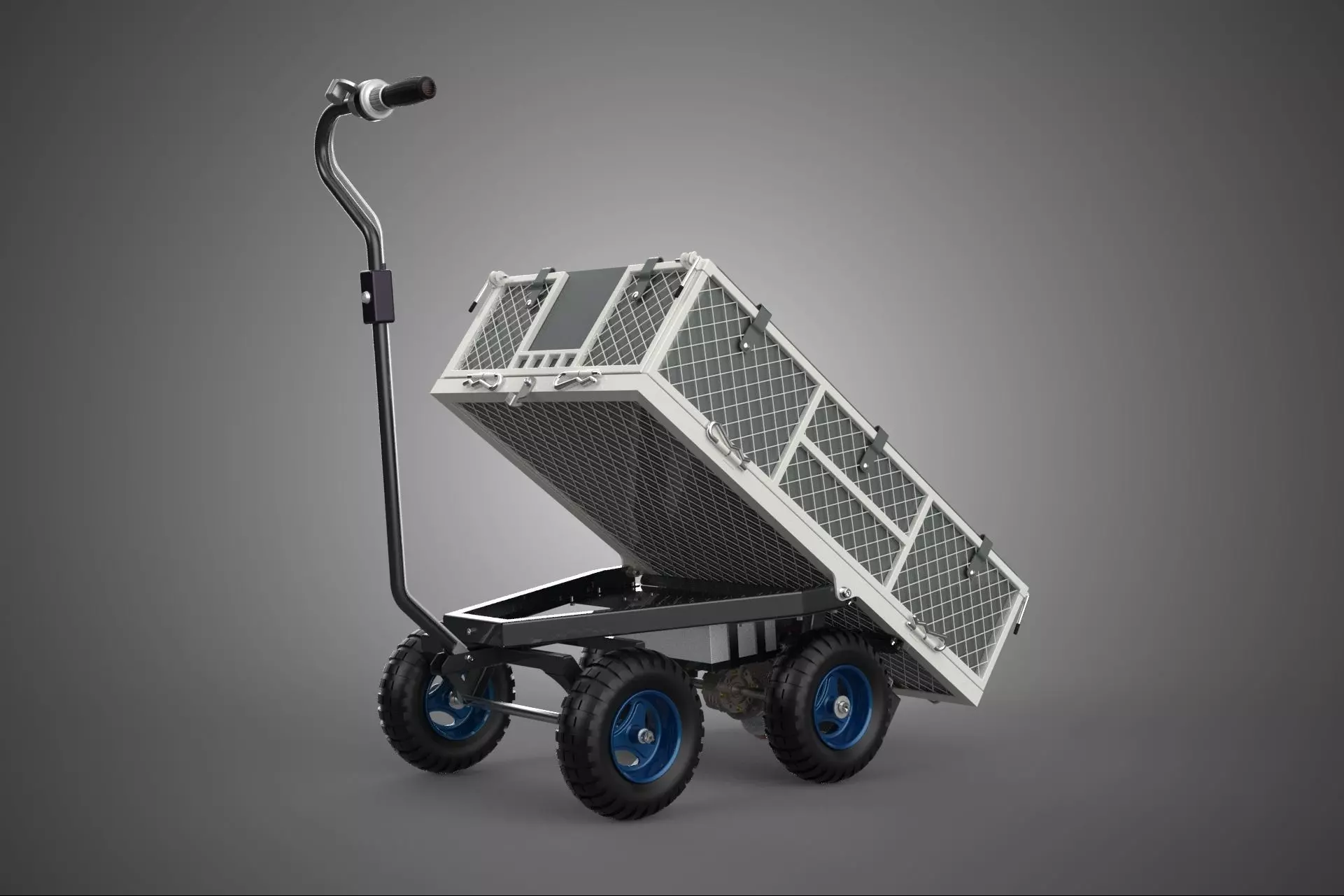
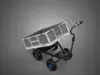
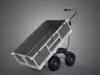
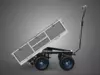
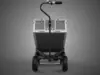
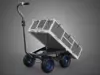
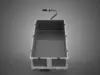
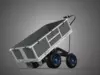
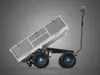
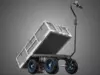
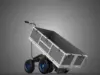
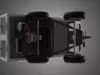
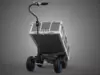
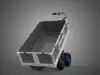
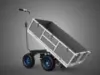
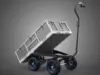
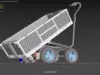
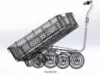
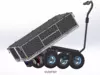
An Electric Powered Tipping Tipper Bed Utility Cart Trolley Wagon 4 is a specialized material handling device engineered for the efficient transport and automated discharge of bulk materials and various goods. It represents an advanced iteration of conventional utility carts, integrating electric propulsion with a mechanical tipping function for enhanced operational ergonomics and productivity across a multitude of environments.
Nomenclature:
The composite designation meticulously delineates the device's key functional attributes and design characteristics. Electric Powered unequivocally indicates a drivetrain fueled by a rechargeable battery system and an electric motor, distinguishing it from manual or internal combustion engine-powered alternatives. Tipping Tipper Bed refers to the integrated cargo platform designed with a pivot mechanism that enables it to tilt, facilitating the swift and controlled unloading of its contents. The terms Utility Cart, Trolley, and Wagon are largely synonymous within this context, collectively describing a robust, wheeled, mobile apparatus for general-purpose material transport. They emphasize the device's versatility and capacity for carrying diverse loads. The numeral 4 typically functions as a specific model number, series designation, or version iteration within a manufacturer's product line, implying a particular set of specifications, design improvements, or a generational update to the product.
Design and Operation:
- Electric Propulsion System: Central to its operation is an electric propulsion system, typically comprising a direct current (DC) motor, often of the brushless type for enhanced efficiency and longevity. This motor is powered by rechargeable batteries, commonly utilizing lead-acid (e.g., AGM) or lithium-ion (e.g., LiFePO4) chemistries, chosen for their power density and cycle life. The system provides variable speed control, typically managed via a handlebar-mounted throttle or tiller controls, and includes forward and reverse capabilities. Integrated battery management systems (BMS) are standard, protecting against overcharge, over-discharge, and optimizing overall battery performance and lifespan. Electric power confers benefits such as quiet operation, zero direct emissions, and reduced routine maintenance compared to internal combustion engines.
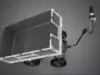
- Tipping Mechanism: The defining tipping tipper bed feature facilitates rapid and labor-saving discharge of materials. This mechanism can be activated manually via a release lever and ergonomic tilt design for lighter loads, or, more commonly, is hydraulically or electrically actuated for heavier capacities. Hydraulic tipping systems typically employ a small electric pump and cylinder for lifting the bed, while electric actuators utilize a linear motor. The cargo bed pivots on a strategically located axis, allowing contents to be deposited precisely at the desired location, significantly reducing manual effort and minimizing spillage.
- Cargo Bed: Constructed from durable and impact-resistant materials such as high-density polyethylene (HDPE) or reinforced steel, the cargo bed is engineered for resilience and substantial load-bearing capacity. Designs frequently feature robust sidewalls, which may be fixed, removable, or hinged (drop-down), offering considerable versatility for accommodating various types of loads, ranging from granular materials like soil, sand, and gravel, to bulky items such as firewood, tools, or construction debris. Load capacities are model-dependent, varying from several hundred kilograms to over a metric ton in industrial-grade units.
- Chassis and Mobility: The chassis is typically fabricated from heavy-gauge tubular or boxed steel, providing a stable, rigid, and robust foundational platform. Mobility is facilitated by four pneumatic or solid rubber wheels, selected for optimal traction, durability, and shock absorption across varied terrains, including uneven ground. Steering mechanisms often involve a pivotal front axle (akin to a traditional wagon) or articulated steering via the handlebar/tiller, offering precise maneuverability. Braking systems commonly incorporate electromagnetic brakes integrated into the motor for parking and regenerative braking, often supplemented by mechanical disc or drum brakes for operational stopping, ensuring safe and controlled deceleration, particularly on inclines or with heavy loads.
Applications:
Electric Powered Tipping Tipper Bed Utility Carts find extensive application across a diverse array of sectors. These include agriculture (e.g., feed distribution, harvest collection, muck spreading), landscaping and horticulture (e.g., soil, mulch, plant, and waste transport), construction (e.g., debris removal, material hauling on job sites, concrete mixing support), industrial facilities (e.g., warehouse logistics, waste management, internal material movement), and large residential estates for general maintenance and yard work. Their versatility makes them indispensable for tasks requiring frequent material movement and precise, easy unloading.
Advantages:
The primary advantages of these devices include a significant reduction in manual labor and associated physical strain, leading to improved operator safety and comfort. They offer increased operational efficiency due to faster loading and unloading cycles, lower noise pollution, and zero direct emissions, making them suitable for indoor use or environmentally sensitive areas. Their electric nature often translates to lower running costs due to cheaper electricity compared to fossil fuels, and reduced maintenance requirements typical of electric motors and fewer moving parts compared to complex internal combustion systems.
Variants and Customization:
Specific models within this category, often differentiated by the 4 or similar numerical identifiers, may feature variations in battery capacity, motor power, load capacity, bed material, tire type, and integrated accessories.