High-quality 3D assets at affordable prices — trusted by designers, engineers, and creators worldwide. Made with care to be versatile, accessible, and ready for your pipeline.
Included File Formats
This model is provided in 14 widely supported formats, ensuring maximum compatibility:
• - FBX (.fbx) – Standard format for most 3D software and pipelines
• - OBJ + MTL (.obj, .mtl) – Wavefront format, widely used and compatible
• - STL (.stl) – Exported mesh geometry; may be suitable for 3D printing with adjustments
• - STEP (.step, .stp) – CAD format using NURBS surfaces
• - IGES (.iges, .igs) – Common format for CAD/CAM and engineering workflows (NURBS)
• - SAT (.sat) – ACIS solid model format (NURBS)
• - DAE (.dae) – Collada format for 3D applications and animations
• - glTF (.glb) – Modern, lightweight format for web, AR, and real-time engines
• - 3DS (.3ds) – Legacy format with broad software support
• - 3ds Max (.max) – Provided for 3ds Max users
• - Blender (.blend) – Provided for Blender users
• - SketchUp (.skp) – Compatible with all SketchUp versions
• - AutoCAD (.dwg) – Suitable for technical and architectural workflows
• - Rhino (.3dm) – Provided for Rhino users
Model Info
• - All files are checked and tested for integrity and correct content
• - Geometry uses real-world scale; model resolution varies depending on the product (high or low poly)
• • - Scene setup and mesh structure may vary depending on model complexity
• - Rendered using Luxion KeyShot
• - Affordable price with professional detailing
Buy with confidence. Quality and compatibility guaranteed.
If you have any questions about the file formats, feel free to send us a message — we're happy to assist you!
Sincerely,
SURF3D
Trusted source for professional and affordable 3D models.
More Information About 3D Model :
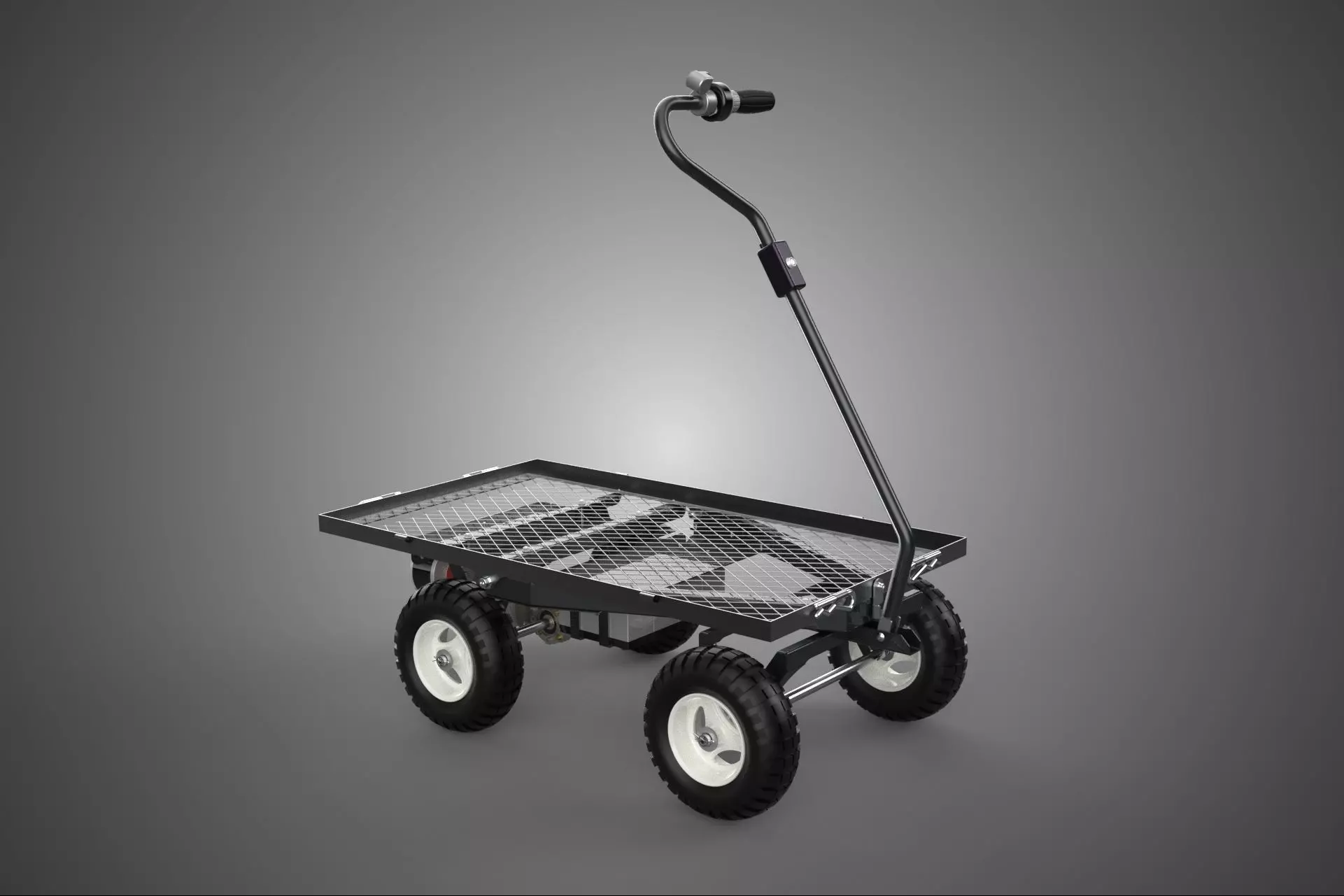
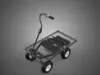
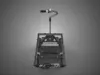
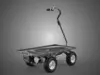
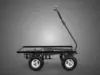
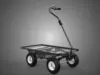
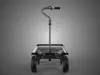
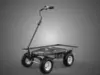
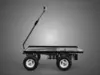
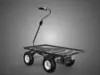
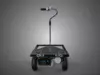
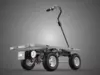
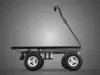
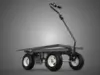
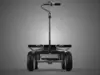
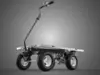
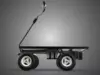
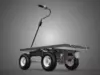
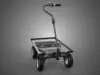
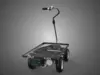
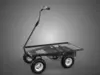
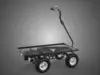
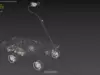
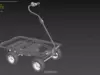
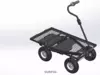
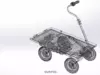
An Electric Metal Grid Mesh Flat Bed Deck Tray Trolley Cart Wagon 4 is a specialized, electrically-powered industrial transport device engineered for the efficient movement of goods across various indoor and outdoor environments. It integrates motorized propulsion with a robust, open-structure metallic load-bearing surface, typically supported by a four-wheel chassis, to facilitate material handling operations. The designation 4 most commonly refers to the quad-wheel configuration, providing inherent stability and maneuverability.
Nomenclature and Functional Breakdown:
The comprehensive title, Electric Metal Grid Mesh Flat Bed Deck Tray Trolley Cart Wagon 4, is a compound descriptor emphasizing key functional and structural attributes:
- Electric: Denotes an integrated electric motor and battery system, providing powered locomotion, which distinguishes it from purely manual push/pull devices. This system typically includes rechargeable batteries (e.g., lead-acid, lithium-ion) and a control unit for variable speed and direction.
- Metal Grid Mesh: Specifies the construction material and design of the load platform. This indicates a metallic (often steel or aluminum) surface fabricated with an open grid or mesh pattern. This design offers distinct advantages such as reduced weight, enhanced airflow, superior drainage capabilities, and clear visibility of the cargo, making it suitable for diverse applications.
- Flat Bed Deck Tray: Collectively describes the primary load-carrying interface as a low-profile, open platform without restrictive sidewalls. This design allows for easy loading and unloading of oversized, irregularly shaped, or palletized items. While bed, deck, and tray are largely synonymous in this context, tray can occasionally imply a slight raised edge to contain smaller items.
- Trolley Cart Wagon: These terms are broadly interchangeable, referring to a wheeled utility vehicle for transporting loads. Trolley often suggests push/pull operation, cart is a general term for a small wheeled vehicle, and wagon can imply a larger capacity or pulled design. The Electric prefix clarifies its powered nature, transcending purely manual operation and improving efficiency.
- 4: Almost universally indicates the presence of four wheels, a common and stable wheel configuration for such transport devices, optimizing both load distribution and maneuverability.
Core Components and Features:
- Propulsion System: Comprises an electric motor (often DC, either brushed or brushless) powered by onboard rechargeable batteries. This system drives one or more wheels, enabling variable speeds and often includes features like regenerative braking and an electronic control unit for precise operation.
- Chassis and Frame: The underlying structure consists of a robust frame, typically constructed from welded steel (e.g., mild steel, galvanized steel, or stainless steel) or high-strength aluminum alloys for reduced weight. This chassis supports the deck, motor, batteries, and operator controls, engineered to withstand specified load capacities (ranging from tens to several hundreds of kilograms) and operational stresses.
- Load-Bearing Surface (Deck/Tray): The defining feature is the metal grid mesh platform. Materials commonly include galvanized steel, powder-coated steel, or stainless steel for corrosion resistance, durability, and ease of cleaning. The uniform apertures of the grid or mesh pattern serve multiple functional benefits:
- Weight Reduction: Less material usage compared to a solid deck, contributing to overall lighter vehicle weight and extended battery life.
- Ventilation: Allows unimpeded airflow, crucial for transporting items sensitive to heat, requiring aeration, or for use in environments with specific ventilation requirements.
- Drainage: Facilitates the runoff of liquids, making the trolley suitable for wet environments, outdoor use, or for transporting items that may leak.
- Visibility: Offers a clear view of items below the surface, useful for inspection or preventing the accumulation of debris and contaminants.
- Versatility: Accommodates various package sizes while preventing small items from falling through if aperture size is appropriately chosen.
- Wheels and Mobility: These trolleys typically feature four wheels, providing a stable base and optimal load distribution. Wheel types are selected based on the intended operational environment: solid rubber for indoor, smooth surfaces; pneumatic tires for uneven outdoor terrain; or polyurethane wheels for specific industrial applications requiring high load capacity and floor protection. Steering mechanisms can range from simple fixed rear wheels with swivel front wheels (caster system) to more complex differential steering or articulated steering for enhanced maneuverability in confined spaces.
- Control Interface and Safety: Operator controls generally include a handlebar or tiller for steering, a variable-speed throttle, and an integrated braking mechanism (e.g., mechanical, electromagnetic, or regenerative). Essential safety features often encompass emergency stop buttons, an audible horn, anti-tip mechanisms, overload protection sensors, key-start ignition, and battery charge indicators.
Operational Principles:
The operator guides the electric trolley using the control handle, engaging the throttle to initiate movement. The electric motor converts stored battery power into mechanical energy, driving the wheels. Braking systems allow for controlled deceleration and stopping. The electric propulsion system significantly reduces manual pushing or pulling strain, thereby minimizing operator fatigue and increasing efficiency over extended periods or with heavy loads.
Applications:
Electric Metal Grid Mesh Flat Bed Deck Tray Trolley Carts are highly versatile and deployed across a broad spectrum of sectors:
- Warehousing and Logistics: Essential for moving inventory, order picking, and transporting goods between loading docks and storage areas.