High-quality 3D assets at affordable prices — trusted by designers, engineers, and creators worldwide. Made with care to be versatile, accessible, and ready for your pipeline.
Included File Formats
This model is provided in 14 widely supported formats, ensuring maximum compatibility:
• - FBX (.fbx) – Standard format for most 3D software and pipelines
• - OBJ + MTL (.obj, .mtl) – Wavefront format, widely used and compatible
• - STL (.stl) – Exported mesh geometry; may be suitable for 3D printing with adjustments
• - STEP (.step, .stp) – CAD format using NURBS surfaces
• - IGES (.iges, .igs) – Common format for CAD/CAM and engineering workflows (NURBS)
• - SAT (.sat) – ACIS solid model format (NURBS)
• - DAE (.dae) – Collada format for 3D applications and animations
• - glTF (.glb) – Modern, lightweight format for web, AR, and real-time engines
• - 3DS (.3ds) – Legacy format with broad software support
• - 3ds Max (.max) – Provided for 3ds Max users
• - Blender (.blend) – Provided for Blender users
• - SketchUp (.skp) – Compatible with all SketchUp versions
• - AutoCAD (.dwg) – Suitable for technical and architectural workflows
• - Rhino (.3dm) – Provided for Rhino users
Model Info
• - All files are checked and tested for integrity and correct content
• - Geometry uses real-world scale; model resolution varies depending on the product (high or low poly)
• • - Scene setup and mesh structure may vary depending on model complexity
• - Rendered using Luxion KeyShot
• - Affordable price with professional detailing
Buy with confidence. Quality and compatibility guaranteed.
If you have any questions about the file formats, feel free to send us a message — we're happy to assist you!
Sincerely,
SURF3D
Trusted source for professional and affordable 3D models.
More Information About 3D Model :
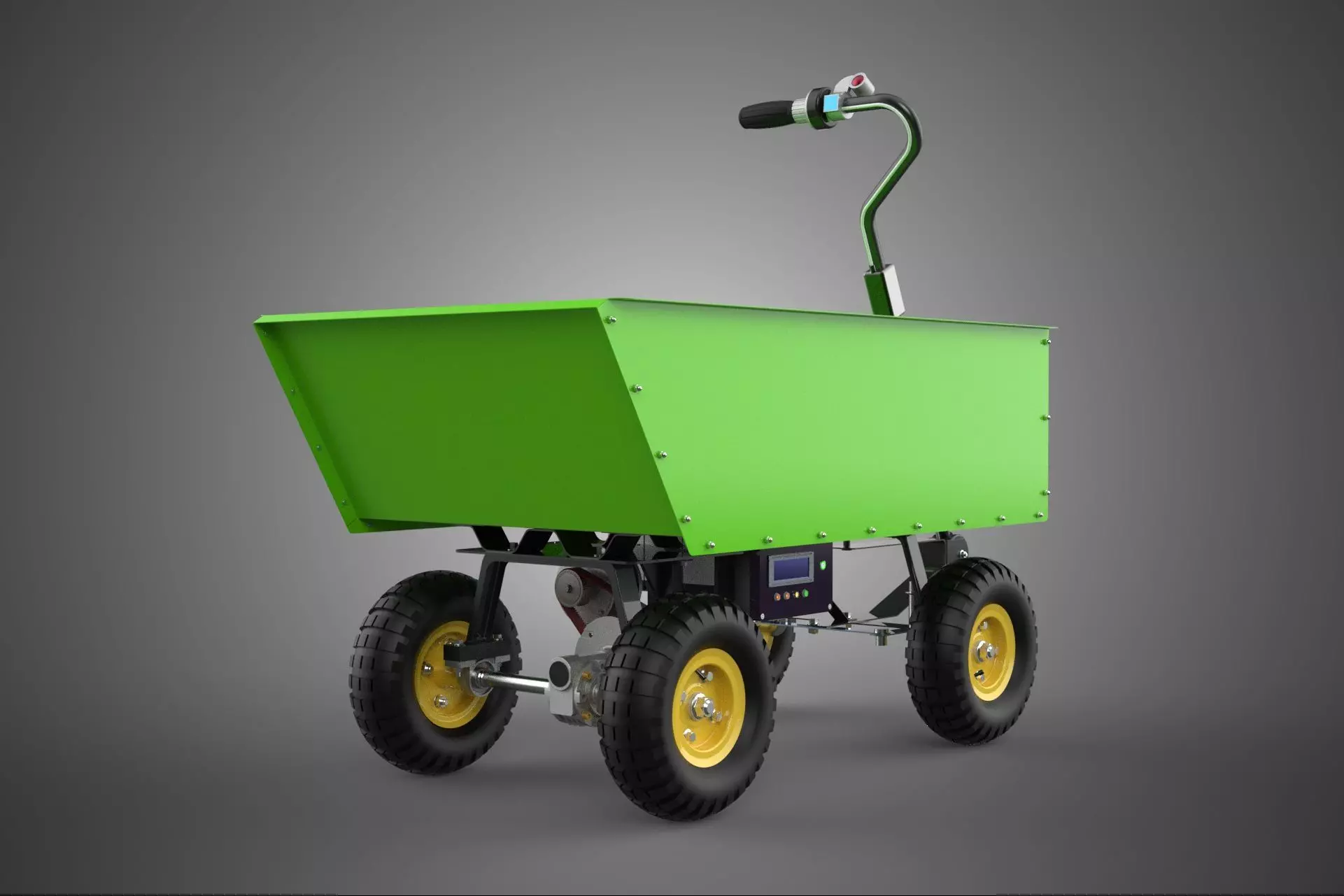
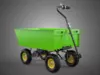
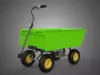
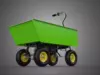
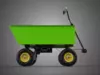
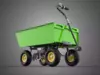
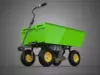
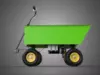
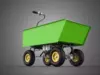
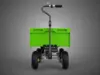
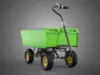
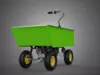
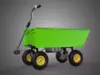
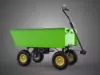
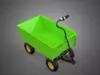
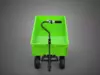
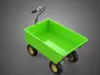
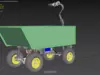
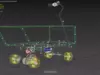
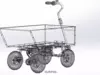
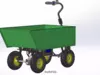
An Electric Garden, Agricultural, or Farm Cart, Wagon, Trolley, or Wheelbarrow designates a category of electrically powered utility vehicles engineered for the transportation of materials within horticultural, agricultural, and general farm environments. These devices represent a technological evolution from their purely manual or internal combustion engine (ICE) counterparts, integrating electric propulsion to enhance operational efficiency, mitigate physical labor, and minimize environmental impact.
Purpose and Applications:
These electric utility vehicles are deployed across a broad spectrum of tasks, including the conveyance of soil, compost, mulch, fertilizers, harvested crops, animal feed, tools, equipment, and various other essential supplies. Their applications span from residential gardens, nurseries, and commercial greenhouses to orchards, vineyards, and diverse farm operations. By providing motorized assistance, they substantially reduce the physical strain traditionally associated with manual material handling, proving particularly valuable for tasks requiring repetitive lifting and moving, or traversing challenging terrains such as inclines, soft ground, or uneven pathways.
Core Components and Design:
The fundamental design of these vehicles integrates several critical components:
- Electric Propulsion System: This system typically comprises a rechargeable battery pack (commonly lead-acid or lithium-ion), one or more direct current (DC) electric motors, and an electronic controller that precisely manages power delivery and speed. This configuration offers advantages such as quiet operation, zero point-of-use emissions, and reduced vibration compared to gasoline-powered alternatives.
- Robust Chassis and Frame: Constructed from durable materials such as steel or reinforced aluminum, the frame is engineered to withstand substantial loads, abrasive materials, and the corrosive elements frequently encountered in outdoor agricultural settings.
- Load Bed/Container: The design of the carrying capacity is highly variable. It can range from a simple flatbed for general items to deep bins, dump beds (manual or electrically assisted for effortless material discharge), and configurations featuring removable or hinged sides for enhanced versatility.
- Wheels and Tires: Pneumatic tires are standard, providing essential cushioning, superior traction on uneven or soft surfaces, and effective shock absorption. The number and configuration of wheels primarily differentiate the various subtypes:
- Electric Wheelbarrows: Typically feature one or two front-drive wheels, often supplemented by a rear caster or support leg. They are specifically designed for high maneuverability in confined spaces and frequently incorporate a tipping mechanism for convenient material discharge.
- Electric Carts/Trolleys: Generally equipped with two or four wheels, these are versatile haulers that can be pushed or pulled via an ergonomic handle. They may incorporate advanced steering mechanisms for precise directional control.
- Electric Wagons: Characterized by a four-wheel design, offering superior stability for heavier and bulkier loads. They can be self-propelled or specifically designed for towing behind another vehicle, providing substantial transport capacity.
- Controls and Safety Features: Operator controls typically encompass a variable-speed throttle, a forward/reverse selector, and a robust braking system (often mechanical disc or drum, with some advanced models featuring regenerative braking). Integrated safety features commonly include emergency stop buttons, overload protection mechanisms, parking brakes, and sometimes LED lighting for enhanced visibility in low-light conditions.
Advantages:
The adoption of electric power in these utility vehicles confers several distinct benefits:
- Labor Efficiency: Automates strenuous lifting and carrying tasks, significantly reducing operator fatigue and increasing overall productivity.
- Environmental Impact: Eliminates exhaust emissions at the point of operation, contributing to cleaner air quality and making them particularly suitable for enclosed environments such as greenhouses.
- Noise Reduction: Operates substantially quieter than ICE equivalents, thereby improving working conditions and minimizing disturbance in noise-sensitive environments.
- Ease of Use: Simple controls and responsive electric motors enhance maneuverability and user experience.
- Lower Operating Costs: Often features lower fuel (electricity) and maintenance costs compared to internal combustion engine vehicles.
Technical Specifications (General):
Payload capacities can range from approximately 100 kg (220 lbs) for smaller garden wheelbarrows to over 500 kg (1,100 lbs) for larger farm wagons. Battery run times typically vary from 2 to 8 hours on a single charge, contingent on the battery type, motor efficiency, load, and terrain. Motor power generally falls within the range of 250 watts to 1,000 watts. Charging times can range from 4 to 12 hours depending on battery capacity and charger output.
Maintenance and Evolution:
Routine maintenance primarily involves regular battery care (charging, periodic fluid checks for lead-acid types), consistent tire pressure management, and periodic brake adjustments. The sector is undergoing continuous evolution, driven by advancements in lithium-ion battery technology providing lighter weight and extended operational life, enhanced motor efficiency, sophisticated smart charging systems, and the integration of features like regenerative braking and more ergonomic designs. This ongoing evolution underscores their increasing importance in sustainable and efficient material handling across various land management sectors.