High-quality 3D assets at affordable prices — trusted by designers, engineers, and creators worldwide. Made with care to be versatile, accessible, and ready for your pipeline.
Included File Formats
This model is provided in 14 widely supported formats, ensuring maximum compatibility:
• - FBX (.fbx) – Standard format for most 3D software and pipelines
• - OBJ + MTL (.obj, .mtl) – Wavefront format, widely used and compatible
• - STL (.stl) – Exported mesh geometry; may be suitable for 3D printing with adjustments
• - STEP (.step, .stp) – CAD format using NURBS surfaces
• - IGES (.iges, .igs) – Common format for CAD/CAM and engineering workflows (NURBS)
• - SAT (.sat) – ACIS solid model format (NURBS)
• - DAE (.dae) – Collada format for 3D applications and animations
• - glTF (.glb) – Modern, lightweight format for web, AR, and real-time engines
• - 3DS (.3ds) – Legacy format with broad software support
• - 3ds Max (.max) – Provided for 3ds Max users
• - Blender (.blend) – Provided for Blender users
• - SketchUp (.skp) – Compatible with all SketchUp versions
• - AutoCAD (.dwg) – Suitable for technical and architectural workflows
• - Rhino (.3dm) – Provided for Rhino users
Model Info
• - All files are checked and tested for integrity and correct content
• - Geometry uses real-world scale; model resolution varies depending on the product (high or low poly)
• • - Scene setup and mesh structure may vary depending on model complexity
• - Rendered using Luxion KeyShot
• - Affordable price with professional detailing
Buy with confidence. Quality and compatibility guaranteed.
If you have any questions about the file formats, feel free to send us a message — we're happy to assist you!
Sincerely,
SURF3D
Trusted source for professional and affordable 3D models.
More Information About 3D Model :
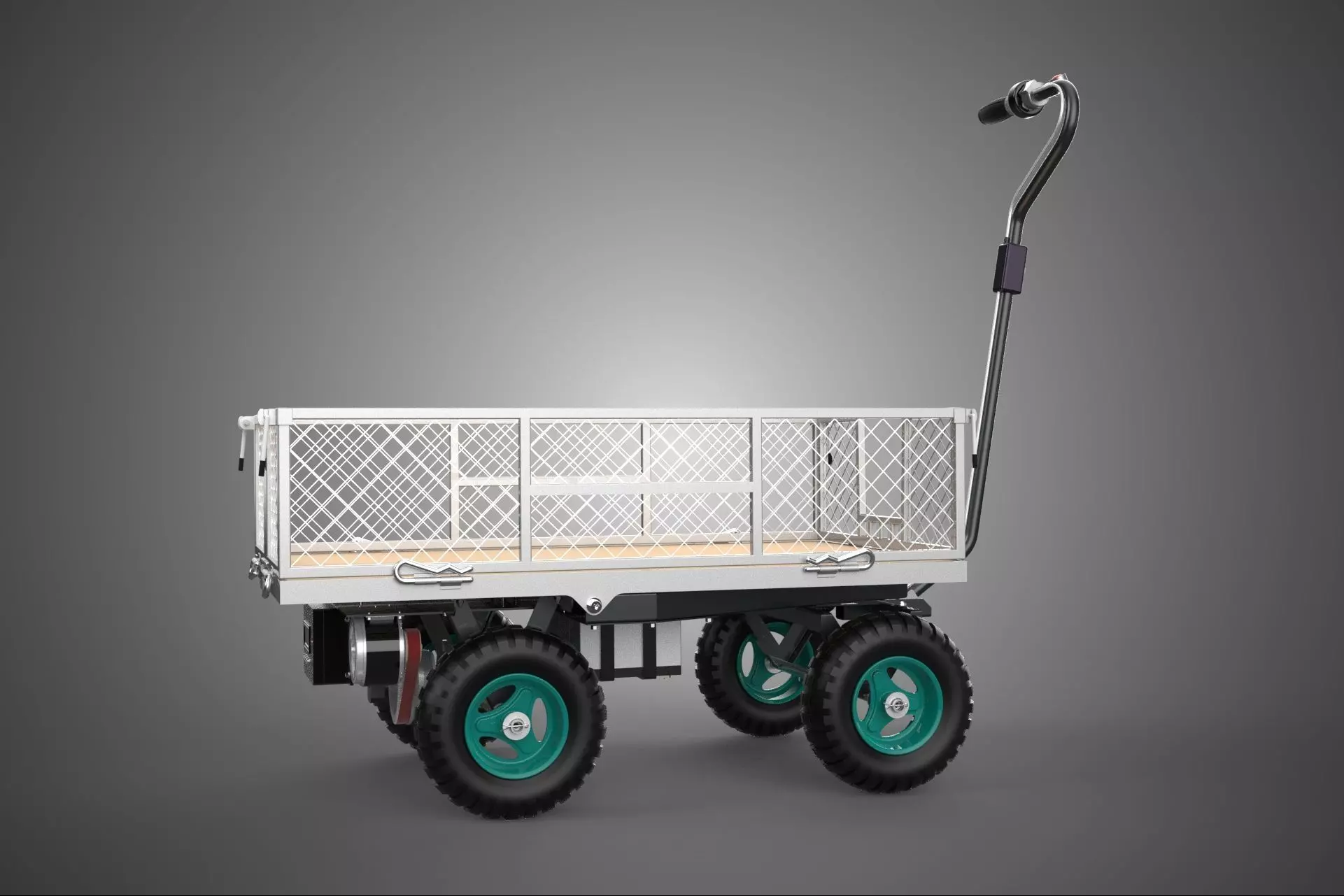
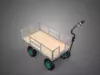
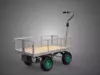
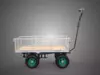
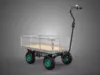
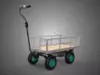
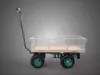
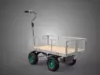
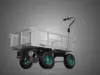
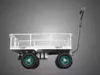
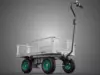
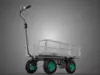
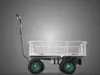
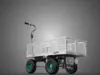
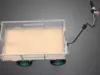
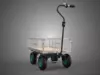
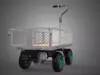
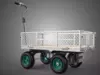
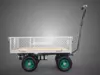
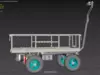
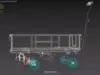
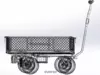
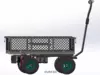
An Electric Powered Battery Utility Cart Garden Wagon Cargo Mesh 4W, often referred to simply as an electric utility wagon or battery-powered garden cart, is a specialized, motorized material handling device designed for the transportation of diverse loads across various terrains. It serves primarily as an efficient and environmentally conscious alternative to traditional manual wagons, wheelbarrows, or small internal combustion engine (ICE) powered utility vehicles. Its core function is to reduce physical strain on operators while increasing productivity in tasks requiring the movement of heavy, bulky, or numerous items.
The 'ELECTRIC POWERED BATTERY' designation indicates a drive system reliant on an electric motor(s) powered by a rechargeable battery pack, typically lead-acid or lithium-ion. This system eliminates direct emissions during operation and significantly reduces noise levels compared to gasoline-powered equivalents. The motor(s) provide torque to one or more wheels, enabling forward and reverse motion, often with variable speed control. Battery packs are engineered for specific ranges and load capacities, with charging typically conducted via a standard electrical outlet using an integrated or external charger. Battery management systems (BMS) are often incorporated, particularly with lithium-ion batteries, to optimize performance, longevity, and safety.
The underlying structure consists of a robust chassis, usually constructed from steel or reinforced aluminum, designed to withstand significant loads and the stresses of outdoor use. This frame provides the mounting points for the motor, battery, wheels, and cargo bed.
The 'CARGO MESH' feature refers to the design of the transport bed. It typically comprises durable steel or heavy-gauge wire mesh panels, often with collapsible or removable sides. This mesh construction offers several advantages: it reduces the overall weight of the cart, allows for easy drainage of liquids or loose debris, provides visibility of the cargo, and offers numerous tie-down points for securing irregular items. The open design also prevents accumulation of water and dirt, making cleaning easier.
The '4W' (four-wheel) configuration ensures stability and weight distribution, crucial for handling heavy loads across uneven terrain. Wheels often feature pneumatic tires, which provide cushioning and improved traction on soft ground (e.g., grass, gravel, dirt) compared to solid tires. Steering mechanisms vary, ranging from a simple pivot axle for the front wheels controlled by a handle, to more sophisticated multi-directional or all-wheel steering systems in advanced models. Operator controls typically include a throttle or speed selector, a power switch, and a brake mechanism. Safety features may encompass electromagnetic braking, emergency stop buttons, battery charge indicators, and overload protection systems.
Advantages of electric battery-powered utility carts include their quiet operation, absence of direct emissions (making them suitable for indoor use or noise-sensitive environments), lower maintenance requirements compared to ICE vehicles, and ease of use. They eliminate the need for fuel mixing and provide instant torque, simplifying operation for a wider range of users.
These utility carts find extensive application in various settings:
- Gardening and Landscaping: Transporting soil, mulch, plants, tools, firewood, and yard waste.
- Farms and Nurseries: Moving crops, feed, supplies, and equipment.
- Warehousing and Industrial: Shifting boxes, components, and goods within facilities (where permitted).
- Construction Sites: Hauling materials like bricks, sand, and small equipment over short distances.
- Residential Use: Large property maintenance, general hauling tasks.
While the core features remain consistent, specific models may vary in terms of motor power, battery capacity, maximum load weight, dimensions of the cargo bed, and additional functionalities such as dump mechanisms or integrated tool holders. Routine maintenance primarily involves battery charging, tire pressure checks, and occasional cleaning. Operators must adhere to manufacturer guidelines for safe operation, battery care, and load limits. The environmental impact is significantly reduced during operation compared to gasoline counterparts, though the overall footprint includes battery manufacturing and disposal considerations, which are increasingly managed through recycling programs.
In summary, the Electric Powered Battery Utility Cart Garden Wagon Cargo Mesh 4W represents an evolution in lightweight material handling, blending robust utility with modern electric propulsion for efficient, cleaner, and quieter operation across a spectrum of demanding tasks.
KEYWORDS: Electric utility cart, Battery-powered wagon, Garden cart, Material handling, Cargo mesh wagon, 4-wheel utility vehicle, Electric garden wagon, Battery electric vehicle, Outdoor utility cart, Silent operation, Zero emissions, Load transport, Landscaping equipment, Farm utility cart, Industrial cart, Rechargeable battery, Pneumatic tires, Heavy-duty wagon, Garden tools transport, Mesh cargo bed, Collapsible sides, Variable speed, Torque drive, Residential utility, Commercial utility, Green technology, Ergonomic design, Low maintenance, Environmentally friendly, Yard wagon.