DESCRIPTION

Radial Transistor - 2D Potentiometer - Concept.

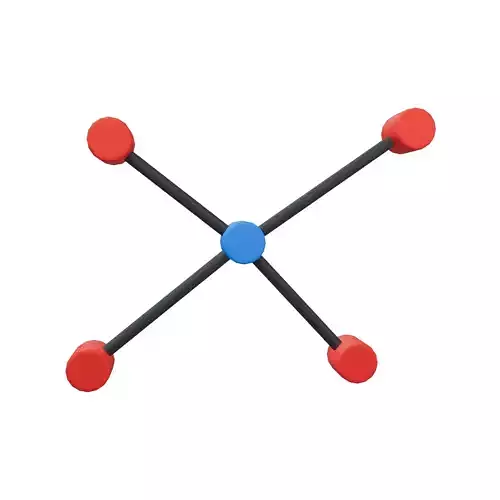
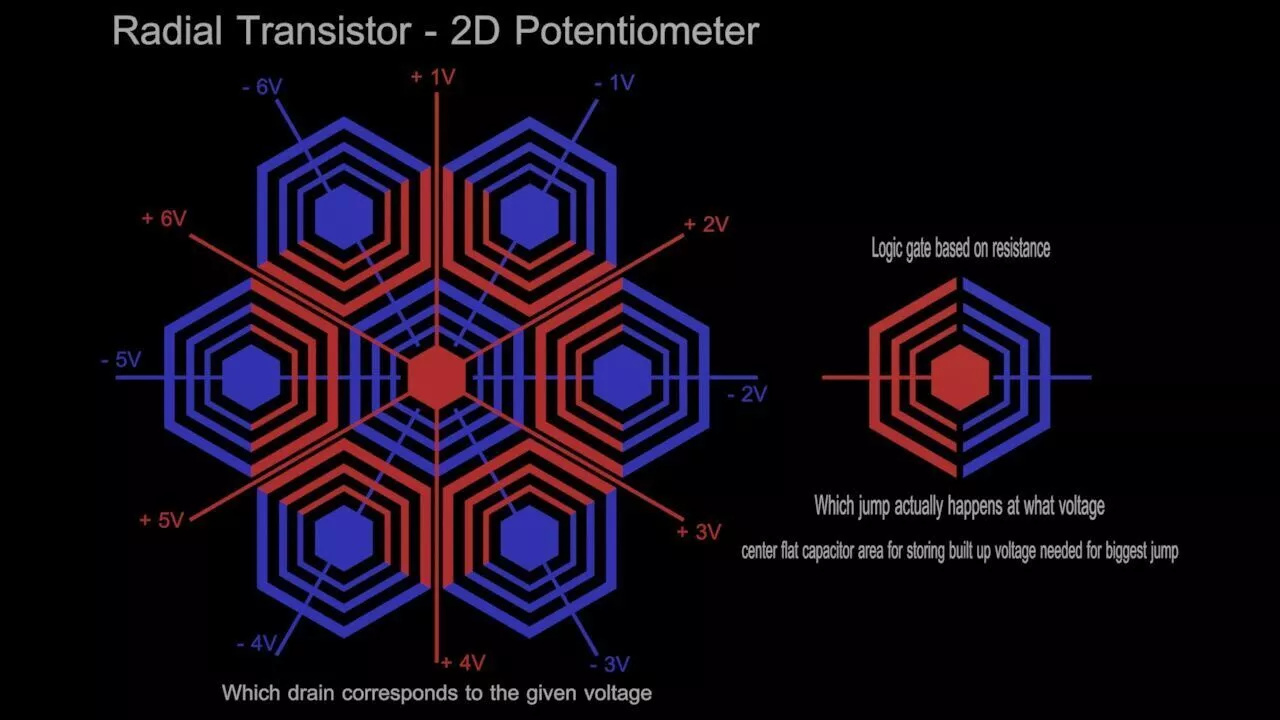
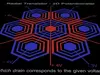
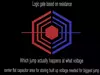
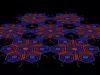
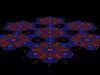
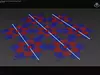
Feed a certain known voltage to the central flat capacitor area of the transistor, and have several different, yet known distances from the core, several thicknesses or resistances, before connection with the drain occurs.The red spokes represent a voltage carrier, the blue spokes represent the multiple drains, depending on which jump occurs. A logic gate based on resistance could be made as well, using different resistances through use of clever topology, that either can or can not drain at a specified voltage.

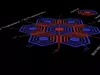
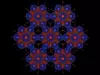
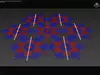
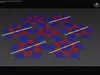
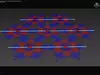
If we in turn tiled the radial transistor tiles, we could get a current flow going locked to a specific real world orientation, E.g. move a specific voltage left to right, or diagonally across the entire transistor plane. All following logic, the path of least resistance, if it can. Radial Transistor - 2D Potentiometer - Concept.

Feed a certain known voltage to the central flat capacitor area of the transistor, and have several different, yet known distances from the core, several thicknesses or resistances, before connection with the drain occurs.

The red spokes represent a voltage carrier, the blue spokes represent the multiple drains, depending on which jump occurs. A logic gate based on resistance could be made as well, using different resistances through use of clever topology, that either can or can not drain at a specified voltage.

If we in turn tiled the radial transistor tiles, we could get a current flow going locked to a specific real world orientation, E.g. move a specific voltage left to right, or diagonally across the entire transistor plane. All following logic, the path of least resistance, if it can. The Hexagonal shape lends itself exceptionally well for tiling, even at the smallest possible scales, these tiles can be closest to each other to populate a specific surface area as dense as possible with them, all repeating yet locally functioning in a 2D lattice. A highly efficient way to fill and use, a 2D, flat area of space, electrically speaking.

Thank you for reading, pleaseleave a like and or follow my account for more.

Have a great day out there.

REVIEWS & COMMENTS

See what other buyers think about this model - real feedback on quality,
accuracy, and usability.
There are no reviews or comments yet. Please be the first one to write it.

Radial Transistor - 2D Potentiometer - Concept 3D model

$7.00
Editorial License (no AI)
Like this model to show appreciation to the designer.
See how many times this model was viewed.
Share this model to support the designer and boost their visibility.
File formats
STL
Stereolithography<br />File Size: 3.75 MB
OBJ
OBJ | 2 files<br />File Size: 3.65 MB
FBX
Autodesk FBX<br />File Size: 1.37 MB
MAX
Autodesk 3ds Max | 2 files<br />File Size: 4.32 MB
Verified by CGTrader
Verified models are of higher quality as they have
passed CGT Standard technical and visual checks,
making them more professional-grade 3D assets.
Learn more.
FBX
This FBX file has successfully passed the CGT Standard technical and visual checks. The verification results are detailed in the section below.
File & scene
Binary FBX
Binary FBX file is more compact and faster to load and process.
Learn more
No unsupported objects
Unsupported objects:
- Lights
- Cameras
Learn more
Geometry
No N-gons
N-gons are polygons with five or more sides which might cause issues in certain processes like rendering or animation. Learn more
No faceted geometry
Faceted geometry uses flat surfaces without smoothing, which can look unrealistic on curves.
Learn more
Manifold geometry
Manifold geometry ensures all surfaces are properly connected, avoiding issues like edges shared by more than two faces.
Learn more
Textures & material
PBR textures
PBR textures simulate how light interacts with materials, making the model look realistic under different lighting.
Required PBR textures:
- Base Color
- Roughness
- Metalness
- Normal
Learn more
No embed textures
Embedded textures are stored inside the model file, increasing its size and sometimes causing compatibility issues.
Learn more
Square textures
Texture aspect ratio is the width-to-height ratio of a texture. Expected texture aspect ratio: 1:1
Learn more
Power of 2 texture sizes
Textures with dimensions in power of two (e.g. 512x512px, 1024x1024px) are used to optimize performance and memory usage.
Learn more
Assigned materials
Materials are applied to the 3D model to allow visualize a model's surface properties and appearance.
Learn more
UVs & naming
No UV overlaps
UVs overlap when multiple points on the 3D model's surface are mapped to the same point on the UV island causing texture stretching.
Learn more
UV unwrapped model
A UV unwrapped model means its 3D surface is flattened into 2D space, allowing textures to be applied accurately.
Learn more
Allowed characters
Allowed ASCII characters: a-zA-Z0-9-_
Learn more
Provided by designer
Information and details shared directly by the model's designer.
3D Features
Materials
The model has material settings that define how surfaces look (color, shine, transparency, etc.).
3D printing
Indicates whether the designer marked this model as suitable for 3D printing.
Model is not 3D printable
The designer indicates this model is intended for digital use only (rendering, animation, or AR/VR) and not for 3D printing.
Unwrapped UVs
Publish date
Model ID
Chat