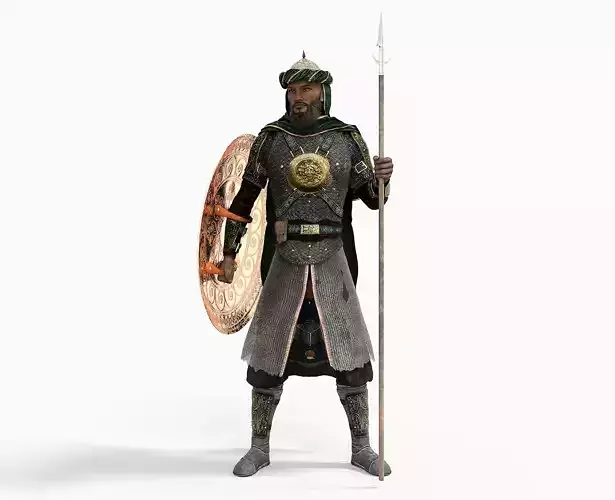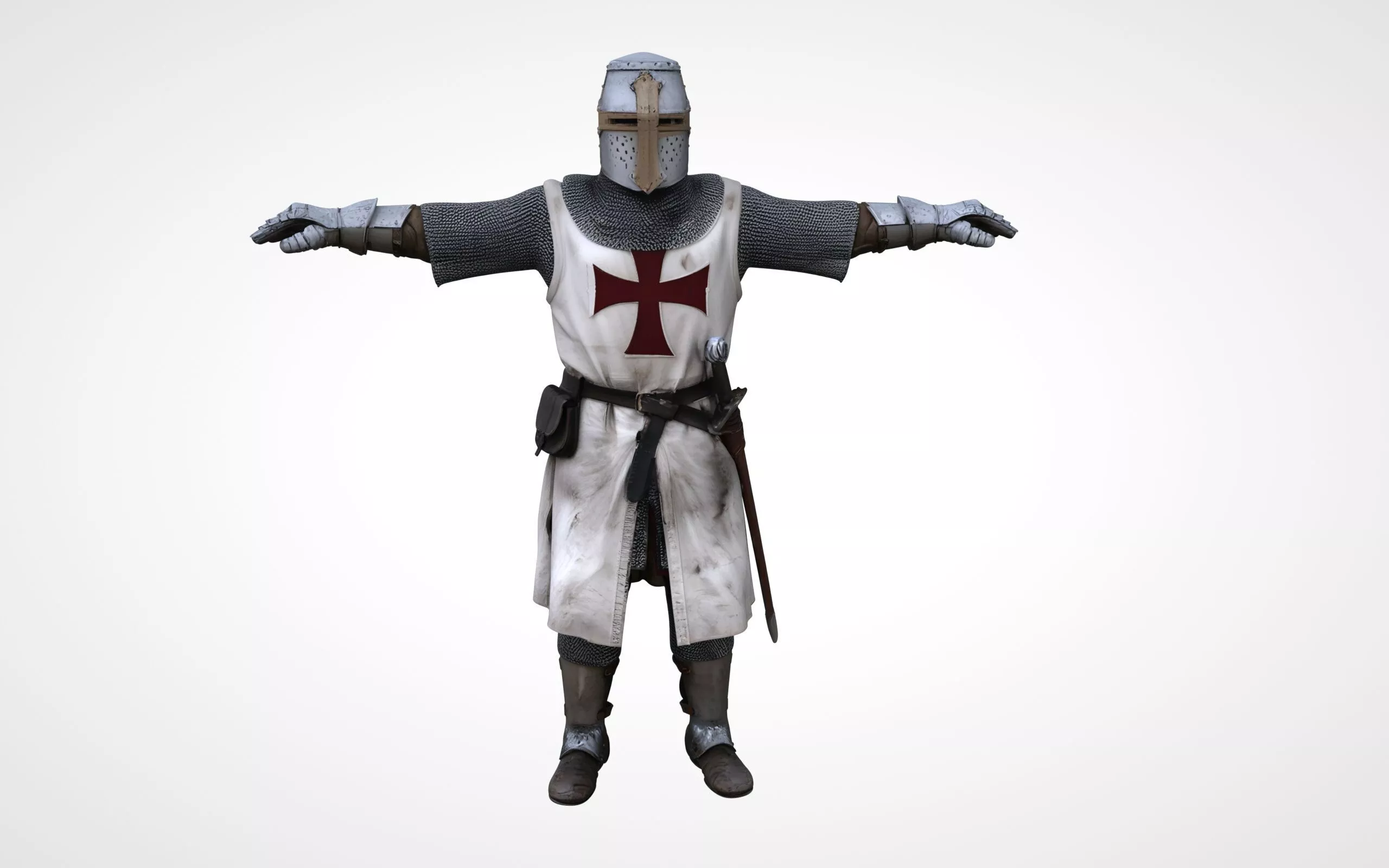
DESCRIPTION

The Crusades were a series of military campaigns launched by the papacy between 1095 and 1291 against Muslim rulers for the recovery and defence of the Holy Land, as part of a wider crusading movement. The First Crusade was proclaimed by Pope Urban II at the Council of Clermont in November 1095—a call to arms for Christians to reconquer Jerusalem from the Muslims, with promises of spiritual reward. By this time, the papacy's position as head of the Catholic Church had strengthened, and earlier conflicts with secular rulers and wars on the frontiers of Western Christendom had prepared it for the direction of armed force in religious causes. The successes of the First Crusade led to the establishment of four Crusader states in the Levant, where their defence required further expeditions from Catholic Europe.[note 1] The organisation of such large-scale campaigns demanded complex religious, social, and economic institutions, including crusade indulgences, military orders, and the taxation of clerical income. Over time, the crusading movement expanded to include campaigns against pagans, Christian dissidents, and other enemies of the papacy, promoted with similar spiritual rewards and continuing into the 18th century.[note 2]

The Crusade of 1101, the earliest papally sanctioned expedition inspired by the First Crusade, ended in disastrous defeats. For several decades thereafter, only smaller expeditions reached the Holy Land, yet their role in consolidating and expanding the Crusader states was pivotal. The fall of Edessa, the capital of the first Crusader state, prompted the Second Crusade, which failed in 1148. Its failure reduced support for crusading across Latin Christendom, leaving the Crusader states unable to resist Saladin's expansion. Having united Egypt and Muslim Syria under his rule, Saladin destroyed their combined armies at the Battle of Hattin in 1187. The Crusader states survived largely owing to the Third Crusade, a major campaign against Saladin, though Jerusalem remained under Muslim control. Initially directed against Egypt, the Fourth Crusade was diverted to the Byzantine Empire, culminating in the Sack of Constantinople and the establishment of the Latin Empire in 1204. The Fifth Crusade again targeted Egypt but failed to conquer it in 1219–21. By this period, crusade indulgences could also be obtained through other campaigns—such as the Iberian, Albigensian, and Northern Crusades—thereby diminishing enthusiasm for expeditions in the eastern Mediterranean.

Jerusalem was regained through negotiation during the Sixth Crusade in 1229, and in 1239–41 the Barons' Crusade restored much of the territory the Crusader states had lost. However, the Sack of Jerusalem by Muslim freebooters soon ended Crusader rule in the Holy City. Louis IX of France launched two major campaigns—the Seventh Crusade against Egypt in 1248–51 and the Eighth Crusade against Tunis in 1270—both of which ended in failure. In place of the large-scale passagium generale, the smaller passagium particulare became the predominant form of crusading campaigns in the late 13th century. The Crusader states, however, were unable to withstand the advance of the Mamluks. Having reunited Egypt and Muslim Syria by 1260, they went on to attack the Crusader states, capturing the Crusaders' last mainland strongholds in 1291. Although plans for the reconquest of the Holy Land continued to be made in the following decades, only the Alexandrian Crusade briefly revived crusading activity in the region in 1365.

REVIEWS & COMMENTS

See what other buyers think about this model - real feedback on quality,
accuracy, and usability.
There are no reviews or comments yet. Please be the first one to write it.

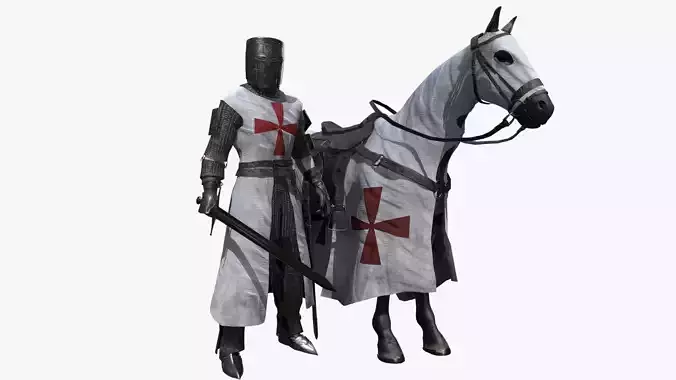
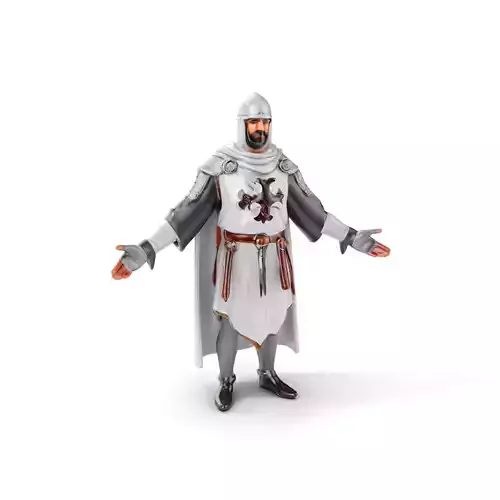
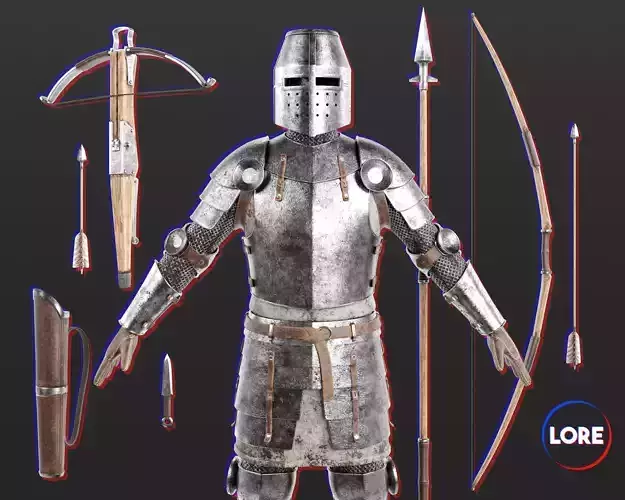
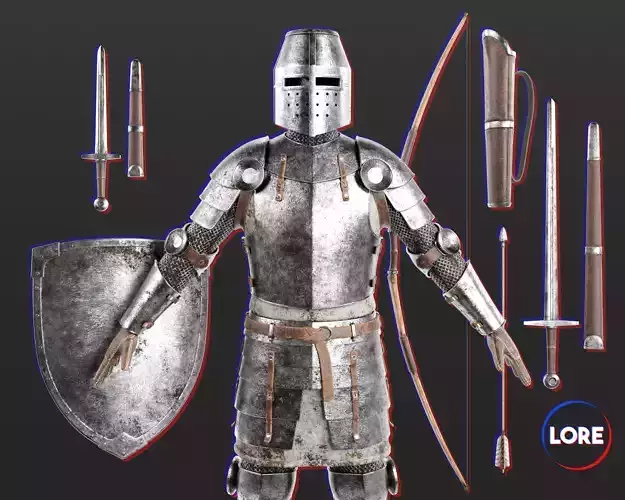
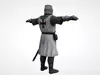
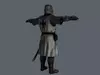
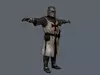
Crusader soldier warrior t-pose 3D model 3D model

Royalty Free License
One-time purchaseRoyalty-free
$52
  • Yours forever — royalty-free license
  • All 7 file formats included
  • Instant download after purchase
Like this model to show appreciation to the designer.
See how many times this model was viewed.
Share this model to support the designer and boost their visibility.
File formats
STL
Stereolithography<br />Version: 1<br />File Size: 23.8 MB
3DS
3D Studio<br />Version: 1<br />File Size: 12.7 MB
FBX
Autodesk FBX<br />Version: 7.5<br />File Size: 51.6 MB
DAE
Collada<br />Version: 1.5<br />File Size: 47.7 MB
C4D
Cinema 4D<br />Version: 19 - Renderer: Default 19<br />File Size: 28.8 MB
JPG
JPG<br />Version: 19<br />File Size: 38.1 MB
PNG
PNG<br />File Size: 38.1 MB
Verified by CGTrader
Verified models are of higher quality as they have
passed CGT Standard technical and visual checks,
making them more professional-grade 3D assets.
Learn more.
FBX
This FBX file has successfully passed the CGT Standard technical and visual checks. The verification results are detailed in the section below.
File & scene
Binary FBX
Binary FBX file is more compact and faster to load and process.
Learn more
No unsupported objects
Unsupported objects:
- Lights
- Cameras
Learn more
Geometry
No N-gons
N-gons are polygons with five or more sides which might cause issues in certain processes like rendering or animation. Learn more
No faceted geometry
Faceted geometry uses flat surfaces without smoothing, which can look unrealistic on curves.
Learn more
Manifold geometry
Manifold geometry ensures all surfaces are properly connected, avoiding issues like edges shared by more than two faces.
Learn more
Textures & material
PBR textures
PBR textures simulate how light interacts with materials, making the model look realistic under different lighting.
Required PBR textures:
- Base Color
- Roughness
- Metalness
- Normal
Learn more
No embed textures
Embedded textures are stored inside the model file, increasing its size and sometimes causing compatibility issues.
Learn more
Square textures
Texture aspect ratio is the width-to-height ratio of a texture. Expected texture aspect ratio: 1:1
Learn more
Power of 2 texture sizes
Textures with dimensions in power of two (e.g. 512x512px, 1024x1024px) are used to optimize performance and memory usage.
Learn more
Assigned materials
Materials are applied to the 3D model to allow visualize a model's surface properties and appearance.
Learn more
UVs & naming
No UV overlaps
UVs overlap when multiple points on the 3D model's surface are mapped to the same point on the UV island causing texture stretching.
Learn more
UV unwrapped model
A UV unwrapped model means its 3D surface is flattened into 2D space, allowing textures to be applied accurately.
Learn more
Allowed characters
Allowed ASCII characters: a-zA-Z0-9-_
Learn more
Provided by designer
Information and details shared directly by the model's designer.
3D Features
PBR
Uses Physically Based Rendering materials, which give the model realistic lighting and surface properties.
Textures
The model includes image files (textures) that add color, patterns, or detail to its surfaces.
Materials
The model has material settings that define how surfaces look (color, shine, transparency, etc.).
UV Mapping
The model's surfaces are mapped to a 2D image, allowing textures to display correctly.
Plugins Used
Some external plugins were used to create the model. These may be required for full functionality.
3D printing
Indicates whether the designer marked this model as suitable for 3D printing.
Model is not 3D printable
The designer indicates this model is intended for digital use only (rendering, animation, or AR/VR) and not for 3D printing.
Geometry
Polygon mesh
A model built from polygons (triangles or quads) connected in a mesh.
1099998 polygons
The total number of polygons (flat shapes) that make up the 3D model.
/
689000 vertices
The number of points (corners) that define the shape of the model's polygons.
Unwrapped UVs
Publish date
Model ID
Chat