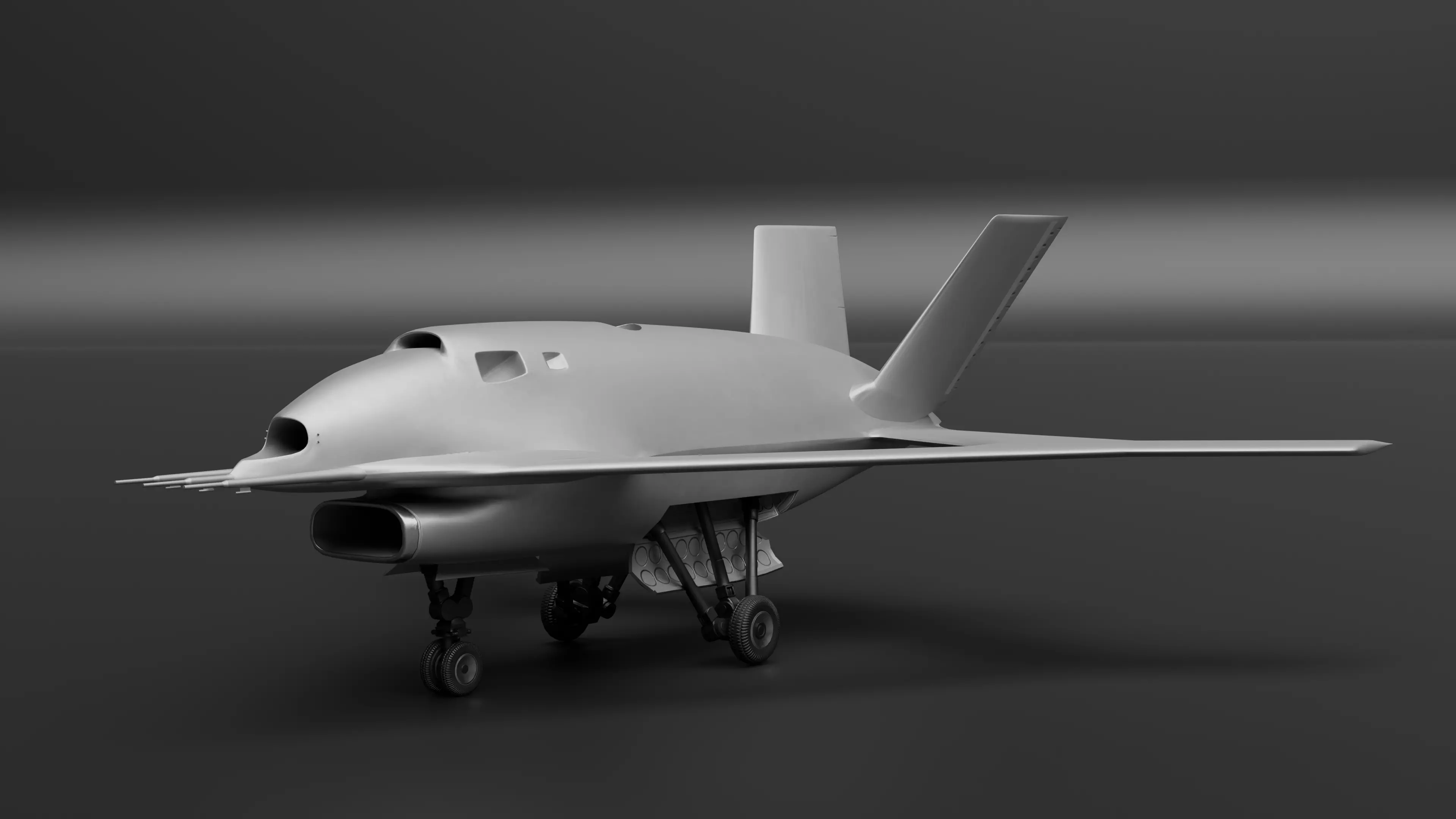
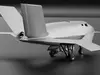
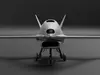
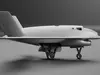
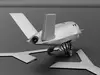
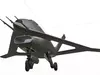
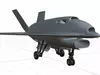
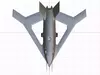
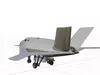
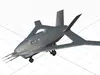
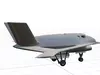
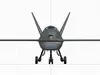
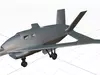
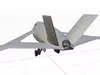
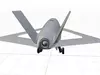
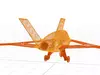
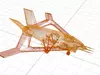
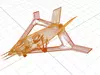
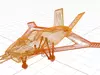
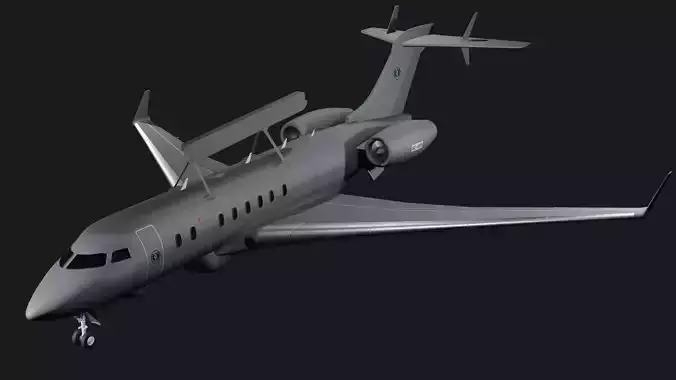
Perfect for use in games and simulation projects.
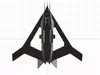
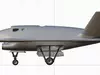
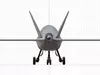
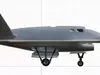
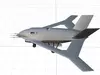
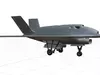
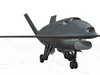
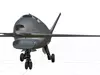
The DARPA Aurora X-65 CRANE represents one of the most ambitious experimental aircraft programs currently underway, aiming to completely reimagine how airplanes achieve flight control. Traditionally, aircraft rely on mechanical control surfaces such as ailerons, elevators, rudders, and flaps to maneuver by physically altering the shape of wings or tail surfaces and thereby redirecting airflow. This system, while proven and effective for over a century, introduces significant compromises: moving parts create mechanical complexity, add weight, increase drag, demand frequent maintenance, and often limit stealth capabilities due to gaps, hinges, and discontinuities in the aircraft’s surface. DARPA’s CRANE program—short for Control of Revolutionary Aircraft with Novel Effectors—seeks to overcome these limitations by developing and validating an entirely new system of control: Active Flow Control (AFC). Rather than moving entire sections of a wing or tail, AFC uses precisely engineered bursts of compressed air emitted through embedded slots or actuators across the aircraft’s surface to modify airflow and generate the forces necessary for pitch, roll, and yaw. In principle, this technology can offer smoother aerodynamics, reduce radar cross-section by eliminating protruding edges, cut down maintenance by removing mechanical linkages, and provide designers with entirely new levels of freedom when shaping future aircraft.
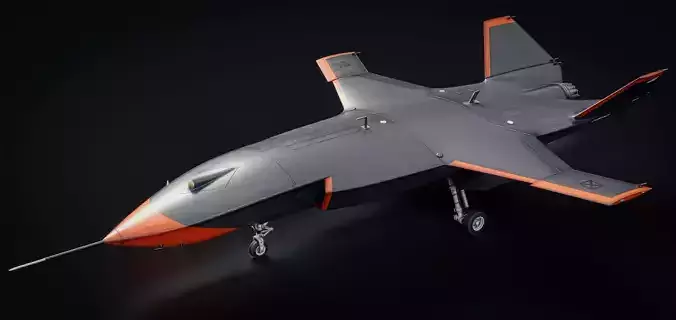
The experimental aircraft designed to carry out this demonstration is designated the X-65, and it is being developed and built by Aurora Flight Sciences, a Boeing subsidiary with extensive experience in advanced aerospace prototypes. The X-65 is a moderately sized, uncrewed aircraft intended to be large enough to produce data at a tactically relevant scale, rather than being dismissed as a purely laboratory curiosity. It is expected to have a wingspan of approximately 30 feet (about 9 meters), a maximum gross weight exceeding 7,000 pounds (roughly 3,200 kilograms), and a top speed of up to Mach 0.7, placing it in the subsonic-to-transonic regime where many military and commercial aircraft operate. The aircraft has been purposefully designed with modularity in mind. Its wing sections and AFC effectors are swappable, allowing researchers to replace and reconfigure components quickly in order to test different effectors, slot placements, and airflow control strategies. This modular approach reflects DARPA’s broader philosophy of experimentation and iteration, enabling the program to generate multiple rounds of data without requiring entirely new airframes.
Operationally, the X-65 will progress through a phased demonstration strategy. At first, it will fly with a hybrid system combining traditional moving control surfaces and embedded Active Flow Control effectors. This stage ensures that safety margins are preserved and that engineers can compare AFC performance against conventional controls in real-world conditions. The second stage of testing will gradually “lock out” traditional control surfaces, shifting more responsibility to the AFC effectors. In the final stage, the X-65 will be flown with external moving surfaces fully disabled, relying exclusively on AFC to control the aircraft in all phases of flight. Achieving stable, repeatable, and safe flight under such conditions would mark a historic first for aviation technology, comparable in significance to the early introduction of fly-by-wire systems in the 1970s.
The strategic importance of this work is substantial. If Active Flow Control can be proven viable at scale, future aircraft may no longer need to carry the heavy, drag-inducing, and maintenance-intensive array of moving parts that dominate today’s airframes. The result could be aircraft that are lighter, faster, stealthier, and more efficient. Military aircraft in particular stand to benefit, as stealth is degraded by surface gaps, hinges, and discontinuities that AFC could eliminate. Commercial aviation could also benefit in the long term, with smoother, simpler airframes reducing fuel burn and maintenance costs. Moreover, AFC systems may offer unique resilience advantages, as they contain fewer vulnerable moving parts and could be distributed across the surface of an aircraft, making them less susceptible to single-point failures or battle damage.
The timeline for the X-65 CRANE program reflects its ambitious goals. In its initial phases, Aurora and its partners conducted extensive wind tunnel testing and computational simulations to validate the concept and optimize actuator placement. By early 2024, Aurora began building the full-scale demonstrator, marking the transition into Phase 3 of the program. DARPA announced that rollout of the X-65 is scheduled for early 2025, with a first flight expected by the summer of the same year. These milestones indicate that the program is on a fast track compared to many other experimental X-plane efforts, underscoring DARPA’s confidence in both the technology and the team leading its development. If successful, the X-65 will become the world’s first aircraft to demonstrate sustained and practical flight using only Active Flow Control, setting the stage for a profound shift in how future air vehicles—military and civilian alike—are designed, built, and flown.
Formats include: OBJ, FBX. Feel free to check out the other models, just click on the user name to see the complete portfolio.