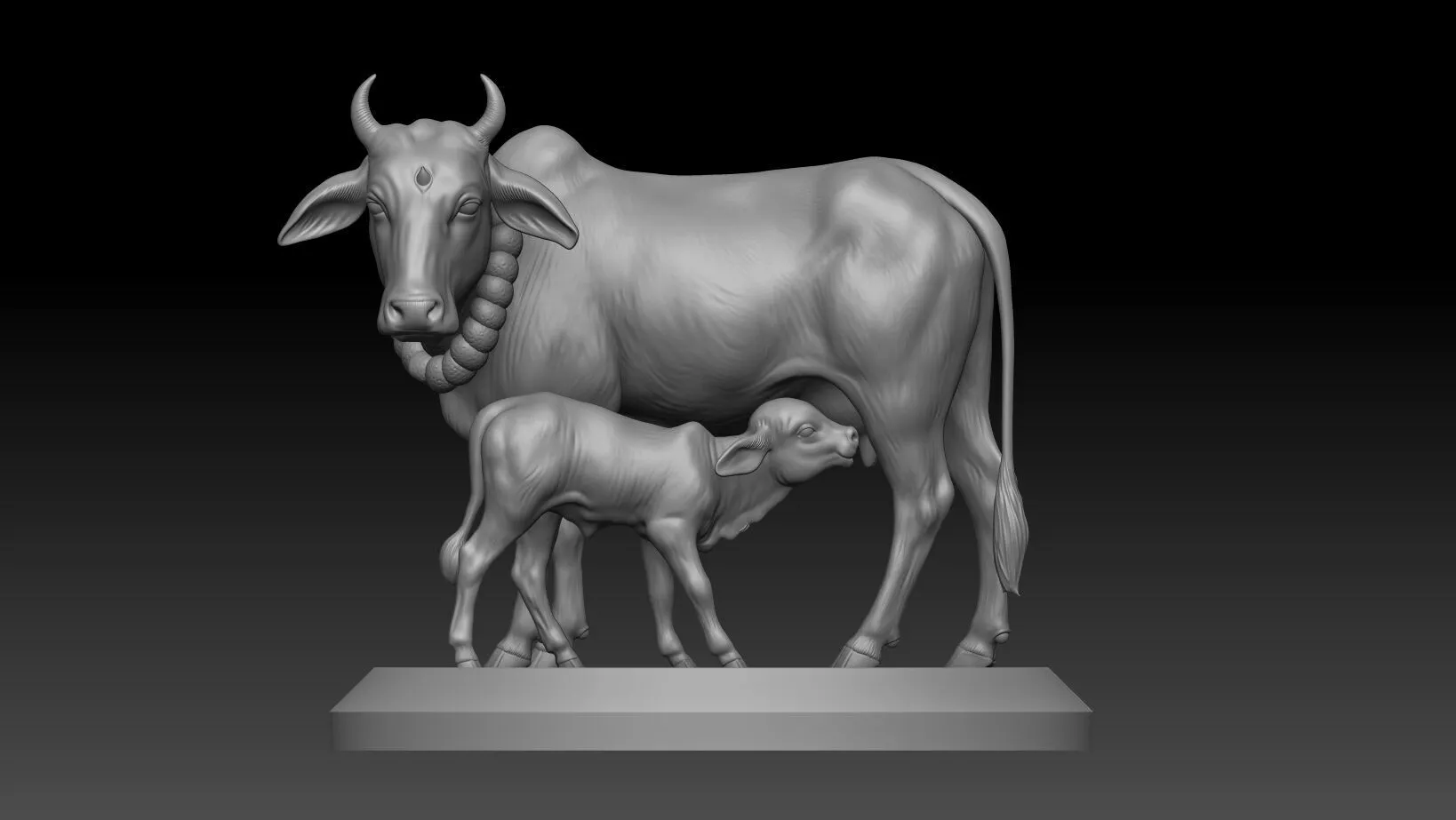
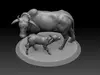
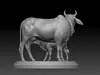
In Hindu mythology, the cow and calf represent abundance, selfless giving, and maternal devotion. They are earthly embodiments of Kamadhenu (or Surabhi), the miraculous, wish-fulfilling cosmic cow that emerged during the churning of the ocean (Samudra Manthan).
The Symbolism and LoreDivine Embodiment: In Hindu belief, the cow represents purity and the entirety of nature. The calf signifies innocence and continuity. Together, they represent the sustaining, nourishing relationship between divinity and life.Cosmic Structure: According to the scriptures, a cow's body encompasses the entire universe. Her four legs represent the four Vedas, her horns symbolize the Holy Trinity (Brahma, Vishnu, and Shiva), and her eyes are said to house the Sun and the Moon.Lord Krishna and Cows: The cow holds a deeply intimate place in Vaishnavism. Lord Krishna spent his childhood as a Gopala (cowherd) in Vrindavan, highlighting the spiritual significance of cattle and emphasizing the protection of these animals
Cultural and Vastu SignificanceBecause of their auspicious nature, depictions of a cow with its calf (Kamadhenu) are widely used in Indian homes and temples to attract positive energy and prosperity. Devotees often keep brass or marble idols in their homes.To invite peace and abundance, the Kamadhenu Cow and Calf Idol is traditionally placed in the northeast corner of a living room or within the home's puja (prayer) room.If you're interested, I can also share information on:How to worship the cow in daily Hindu ritualsOther specific stories of mythical cows (like Nandini or Bahula)The Vastu principles for placing a cow and calf idol in your house