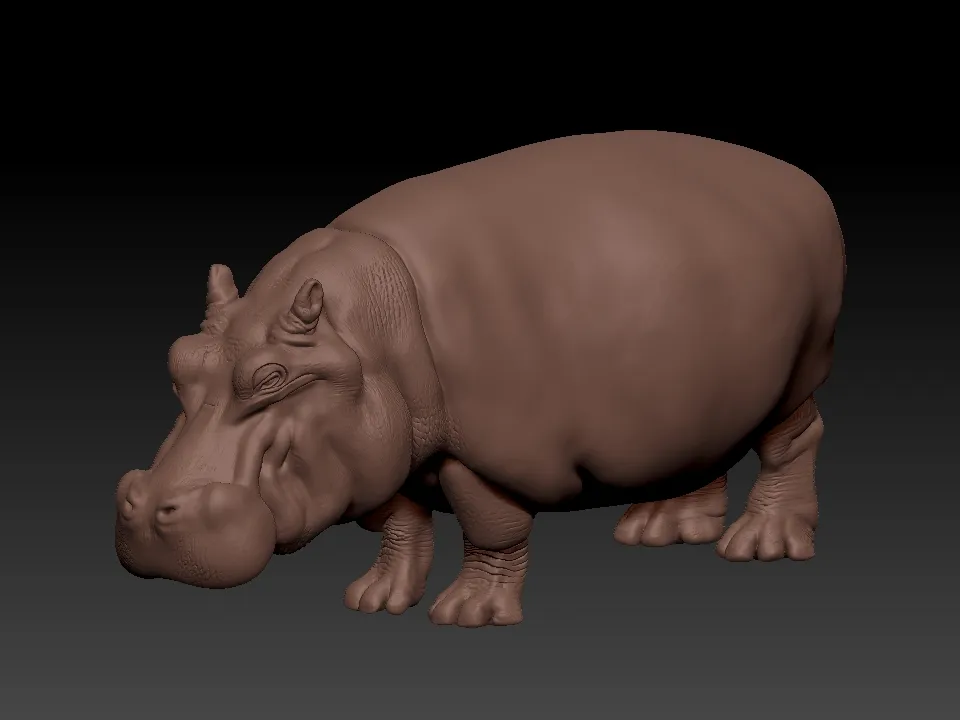
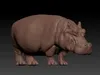
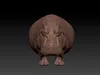
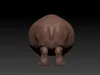
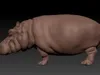
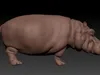
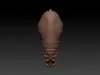
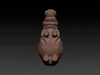
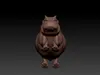
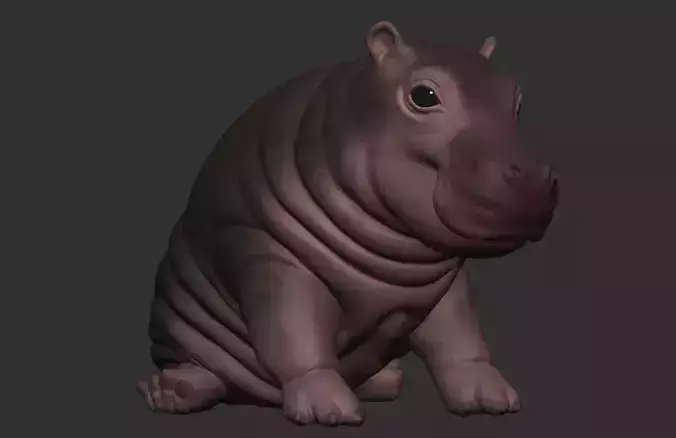
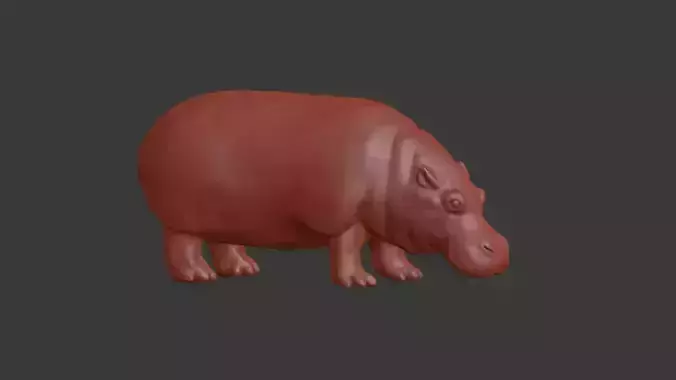
The hippopotamus, or Hippopotamus amphibius, is an amphibious African ungulate mammal whose name means river horse in Greek. They are considered the second-largest land animal. Hippos have bulky bodies on stumpy legs, large heads, short tails, and four toes on each foot, each with a nail-like hoof.Well-adapted for aquatic life, their ears, eyes, and nostrils are located high on their heads, allowing the rest of their body to stay submerged. Hippos are unable to sweat and must retreat to the water to keep cool and avoid dehydration. They dwell in eastern, central, and southern Africa in rivers, lakes, and swamps next to grasslands.The hippopotamus (Hippopotamus amphibius) is an amphibious African ungulate mammal that lives in rivers, lakes, and swamps next to grasslands. Once ranging throughout the continent, hippos now live in eastern, central, and parts of southern Africa. They favor shallow areas where they can sleep half-submerged, and as many as 150 hippos may use one pool in the dry season. By night, hippos walk as far as 10 km into surrounding grasslands to feed.Hippos graze on land, consuming approximately 35 kg (80 pounds) of food per night, which is relatively little for their size because they spend much of their time buoyed by warm water, which reduces their energy needs. They use their tough, wide lips to grasp grass and jerk their heads to graze.Though they don't chew cud, hippos retain food in the stomach for a long time, where protein is extracted through fermentation. Their digestive process is important to their ecosystems, cycling nutrients into African rivers and lakes, which supports fish populations that are a crucial protein source for local people.Hippos spend much of their time in shallow water, often sleeping half-submerged in groups of up to 150 during the dry season. They favor aquatic environments because they lack sweat glands and their skin dehydrates quickly without periodic dips to stay cool. Their ears, eyes, and nostrils are positioned high on their heads, allowing the rest of their body to stay submerged. They can also close their ears and nostrils to keep water out and hold their breath for up to five minutes underwater, where their dense bodies allow them to walk along the bottom. At night, hippos travel up to 10 km (6 miles) into grasslands to graze for about five or six hours.This model is made in zbrush and it is used for 3d printing only.