High-quality 3D assets at affordable prices — trusted by designers, engineers, and creators worldwide. Made with care to be versatile, accessible, and ready for your pipeline.
Included File Formats
This model is provided in 14 widely supported formats, ensuring maximum compatibility:
• - FBX (.fbx) – Standard format for most 3D software and pipelines
• - OBJ + MTL (.obj, .mtl) – Wavefront format, widely used and compatible
• - STL (.stl) – Exported mesh geometry; may be suitable for 3D printing with adjustments
• - STEP (.step, .stp) – CAD format using NURBS surfaces
• - IGES (.iges, .igs) – Common format for CAD/CAM and engineering workflows (NURBS)
• - SAT (.sat) – ACIS solid model format (NURBS)
• - DAE (.dae) – Collada format for 3D applications and animations
• - glTF (.glb) – Modern, lightweight format for web, AR, and real-time engines
• - 3DS (.3ds) – Legacy format with broad software support
• - 3ds Max (.max) – Provided for 3ds Max users
• - Blender (.blend) – Provided for Blender users
• - SketchUp (.skp) – Compatible with all SketchUp versions
• - AutoCAD (.dwg) – Suitable for technical and architectural workflows
• - Rhino (.3dm) – Provided for Rhino users
Model Info
• - All files are checked and tested for integrity and correct content
• - Geometry uses real-world scale; model resolution varies depending on the product (high or low poly)
• • - Scene setup and mesh structure may vary depending on model complexity
• - Rendered using Luxion KeyShot
• - Affordable price with professional detailing
Buy with confidence. Quality and compatibility guaranteed.
If you have any questions about the file formats, feel free to send us a message — we're happy to assist you!
Sincerely,
SURF3D
Trusted source for professional and affordable 3D models.
More Information About 3D Model :
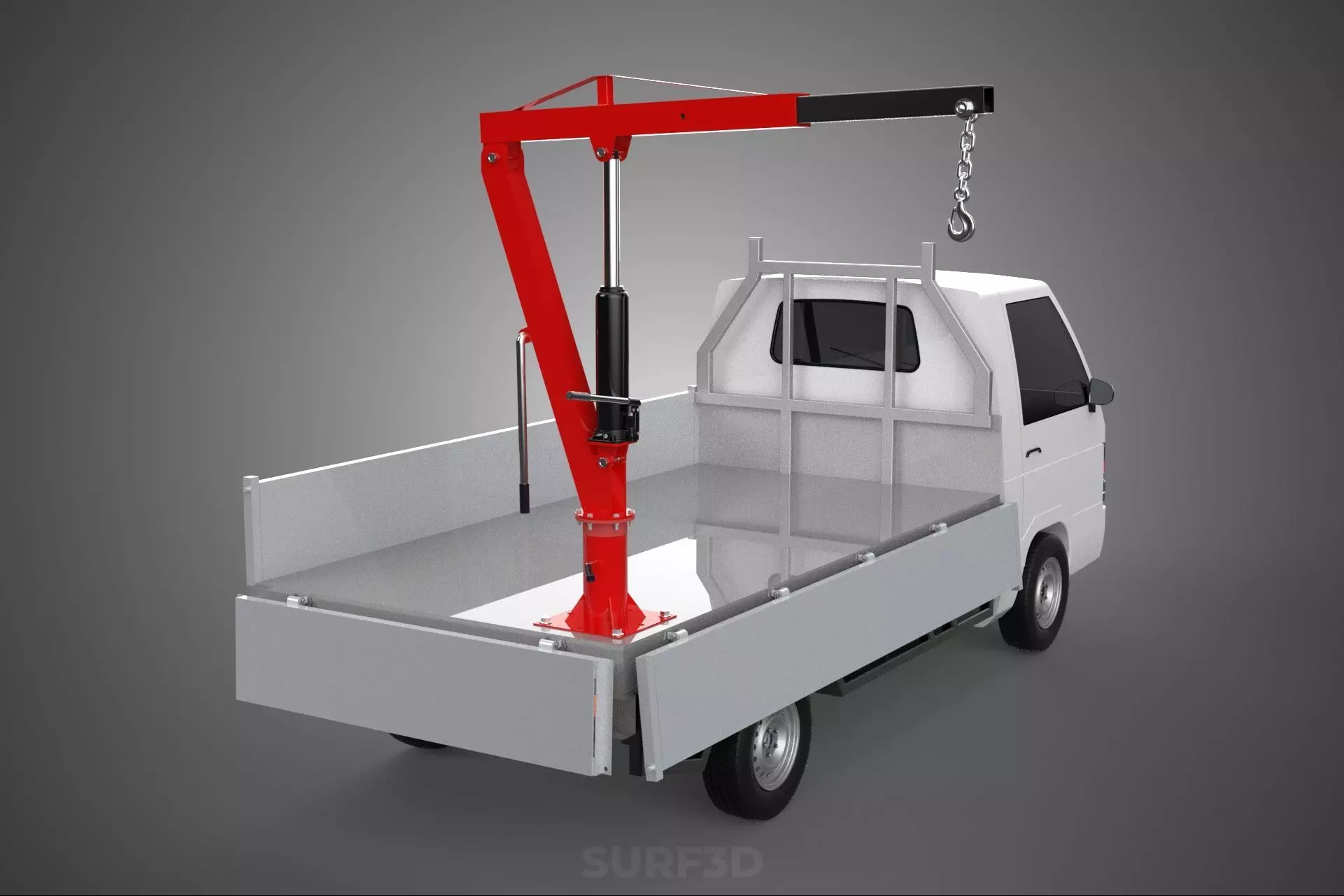
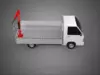
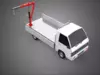
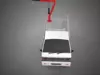
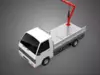
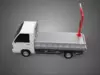
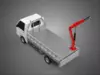
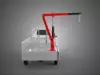
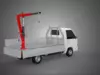
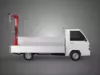
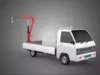
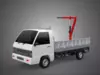
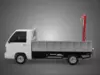
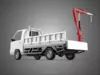
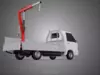
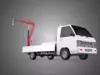
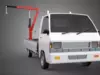
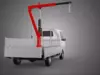
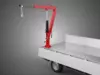
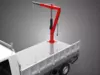
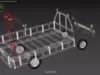
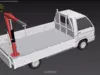
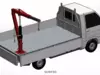
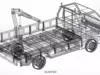
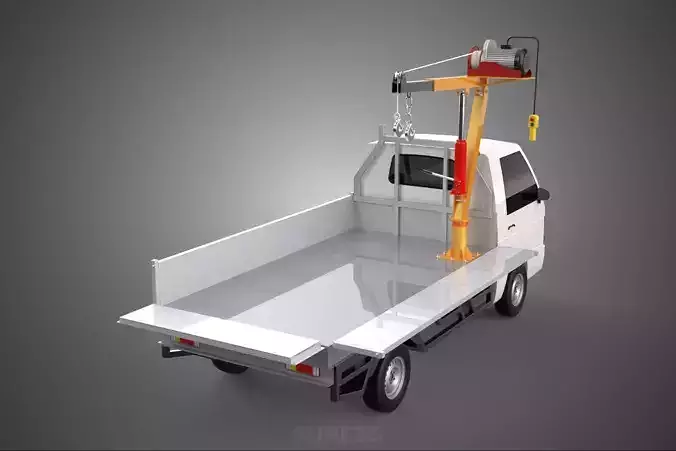
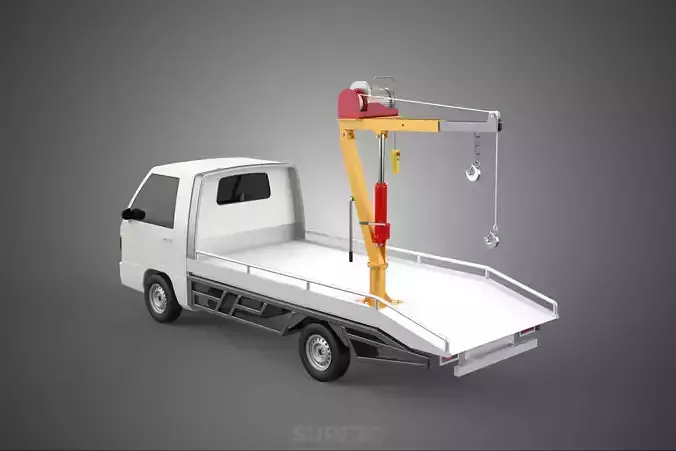
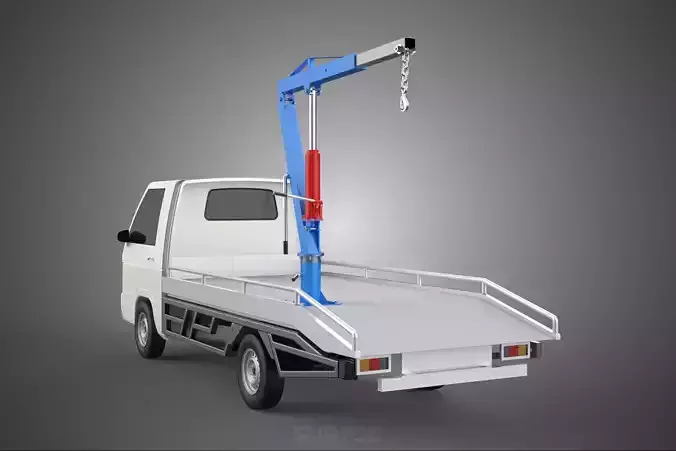
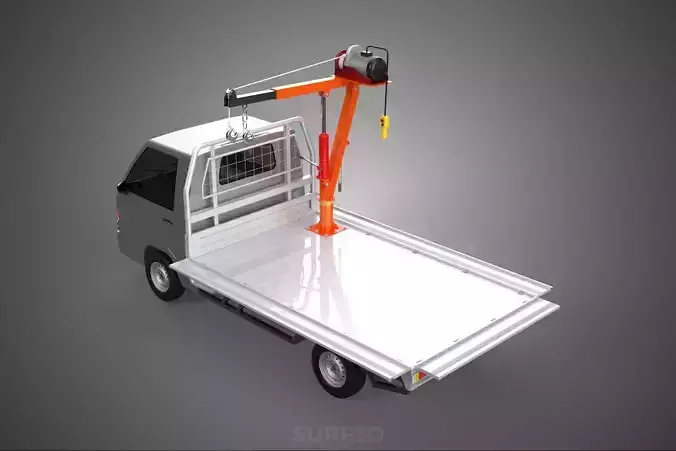
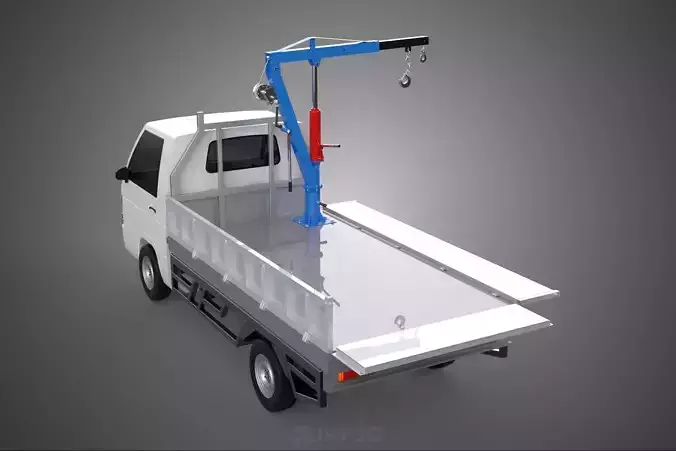
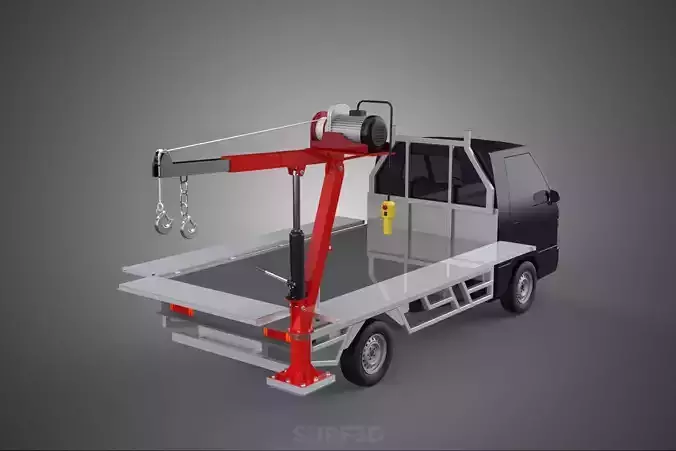
FOLDABLE MANUAL HYDRAULIC LIFTER JIB CRANE DROPSIDE PICKUP TRUCK
A Foldable Manual Hydraulic Lifter Jib Crane Dropside Pickup Truck refers to a specialized commercial vehicle configuration designed to combine the inherent mobility and cargo utility of a standard pickup truck with integrated, localized material handling capabilities. This composite system is specifically engineered to enable the independent loading, unloading, and precise positioning of heavy or bulky items at diverse and often remote work sites, thereby reducing or eliminating the reliance on external lifting equipment such as forklifts or dedicated site cranes.
Component Integration and Functionality:
- Dropside Pickup Truck Chassis: This forms the foundational mobile platform. It is distinguished by a flatbed design equipped with hinged or fully removable side and rear panels, commonly referred to as dropsides. This design significantly enhances accessibility to the cargo area from multiple directions, streamlining the loading and unloading processes, particularly for items handled by the crane. When the dropsides are lowered or removed, the truck can accommodate wider or longer loads that might otherwise be unmanageable.
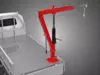
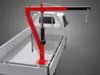
- Jib Crane Mechanism: An articulating jib crane is securely affixed to the truck's chassis, typically mounted at a rear corner of the bed, although configurations with a central mounting behind the cab also exist. The crane comprises a robust vertical mast anchored to the truck frame, from which a horizontal boom (or jib arm) extends. A hoisting mechanism, usually featuring a hook or similar attachment point, is integrated into the boom for securing loads. The crane is designed to facilitate slewing (horizontal rotation) to maneuver loads within its defined operational radius.
- Manual Hydraulic Lifter: Integrated within the crane's structure, this system provides the lifting power. Operation involves a hand-operated pump that, through mechanical leverage, generates hydraulic pressure. This pressure extends a hydraulic cylinder, which in turn elevates the jib boom and the suspended load. Lowering of the load is precisely controlled via a manual release valve, which allows for a controlled descent. The manual designation underscores that the primary power for lifting, and often for slewing and boom extension, relies solely on human physical effort rather than electric or engine power.
- Foldable Design: A pivotal feature, the crane's jib arm, and in some models, its mast, are engineered to collapse, fold down, or retract when not in active use. This design significantly minimizes the crane's overall footprint, preventing it from obstructing cargo space or vehicle maneuverability when not required. This compact storage configuration also ensures compliance with road dimension regulations during transit and facilitates easier storage of the vehicle in confined spaces.
Design Features and Operational Considerations:
- Mounting and Stability: The entire crane assembly is robustly bolted or welded directly to the vehicle's frame, often incorporating reinforcement plates to optimally distribute and manage the significant load stresses exerted during lifting operations. For safe and stable operation, particularly during lifting, the truck is invariably equipped with deployable outriggers or stabilizing jacks. These extend laterally from the vehicle's chassis, significantly increasing its stability footprint and preventing tipping.
- Lifting Capacity: These systems offer a range of lifting capacities, typically spanning from several hundred kilograms to over a ton, depending on the specific crane model, the inherent strength of the truck's chassis, and the design of the hydraulic system. Strict adherence to manufacturer-specified load charts, which detail safe lifting capacities at various boom extensions and angles, is paramount for operational safety.
- Materials: High-strength steel or lightweight aluminum alloys are commonly employed in the crane's construction. These materials are chosen for their durability, structural integrity, and to optimize the overall weight of the assembly, minimizing impact on the truck's payload capacity.
Advantages:
The integration of these components offers several distinct benefits:
- Versatility and Mobility: Transforms a conventional pickup truck into a highly mobile, self-sufficient material handling unit capable of executing lifting tasks at diverse and often isolated job sites.
- Cost-Effectiveness: Represents a more economical solution compared to acquiring and maintaining dedicated crane trucks or relying on separate, external lifting equipment for every job site.
- Space Efficiency: The foldable design minimizes the crane's interference with general cargo hauling when not in operation and enables more compact vehicle storage.
- Operational Independence: Empowers a single operator to efficiently manage loading and unloading tasks without the need for additional personnel or specialized machinery.
Limitations:
- Manual Effort: The reliance on manual hydraulic pumping and physical maneuvering necessitates significant operator effort, which can lead to fatigue during prolonged or high-volume lifting tasks.
- Lifting Speed and Capacity: Operations are inherently slower and feature lower lifting capacities when compared to electric, engine-powered, or larger industrial-grade cranes.
- Safety Protocols: Adherence to strict safety protocols, including understanding and respecting load limits, ensuring proper outrigger deployment, and maintaining a clear operational area, is critical to prevent accidents and ensure vehicle stability.
Applications:
This type of vehicle finds widespread utility across a diverse range of sectors and applications, including:
- Construction: For the lifting and precise positioning of tools, small machinery (e.g., generators, compactors), and various building materials.