High-quality 3D assets at affordable prices — trusted by designers, engineers, and creators worldwide. Made with care to be versatile, accessible, and ready for your pipeline.
Included File Formats
This model is provided in 14 widely supported formats, ensuring maximum compatibility:
• - FBX (.fbx) – Standard format for most 3D software and pipelines
• - OBJ + MTL (.obj, .mtl) – Wavefront format, widely used and compatible
• - STL (.stl) – Exported mesh geometry; may be suitable for 3D printing with adjustments
• - STEP (.step, .stp) – CAD format using NURBS surfaces
• - IGES (.iges, .igs) – Common format for CAD/CAM and engineering workflows (NURBS)
• - SAT (.sat) – ACIS solid model format (NURBS)
• - DAE (.dae) – Collada format for 3D applications and animations
• - glTF (.glb) – Modern, lightweight format for web, AR, and real-time engines
• - 3DS (.3ds) – Legacy format with broad software support
• - 3ds Max (.max) – Provided for 3ds Max users
• - Blender (.blend) – Provided for Blender users
• - SketchUp (.skp) – Compatible with all SketchUp versions
• - AutoCAD (.dwg) – Suitable for technical and architectural workflows
• - Rhino (.3dm) – Provided for Rhino users
Model Info
• - All files are checked and tested for integrity and correct content
• - Geometry uses real-world scale; model resolution varies depending on the product (high or low poly)
• • - Scene setup and mesh structure may vary depending on model complexity
• - Rendered using Luxion KeyShot
• - Affordable price with professional detailing
Buy with confidence. Quality and compatibility guaranteed.
If you have any questions about the file formats, feel free to send us a message — we're happy to assist you!
Sincerely,
SURF3D
Trusted source for professional and affordable 3D models.
More Information About 3D Model :
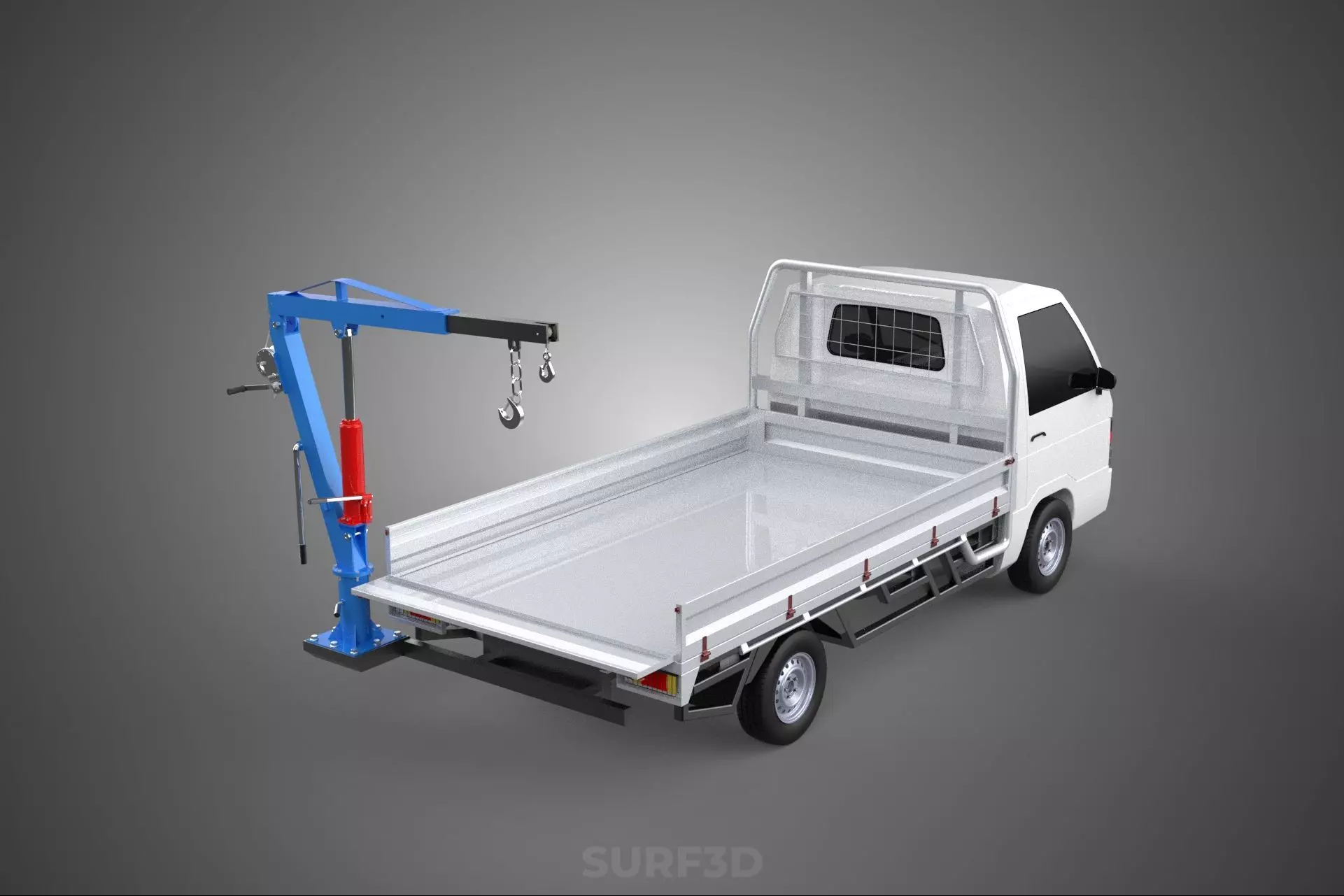
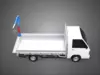
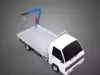
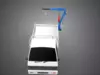
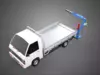
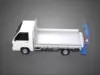
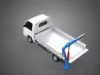
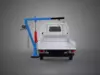
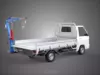
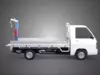
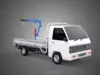
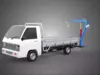
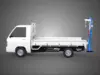
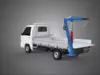
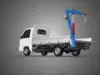
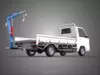
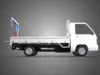
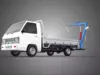
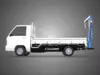
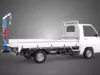
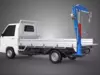
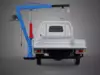
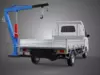
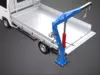
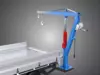
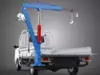
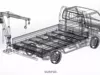
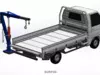
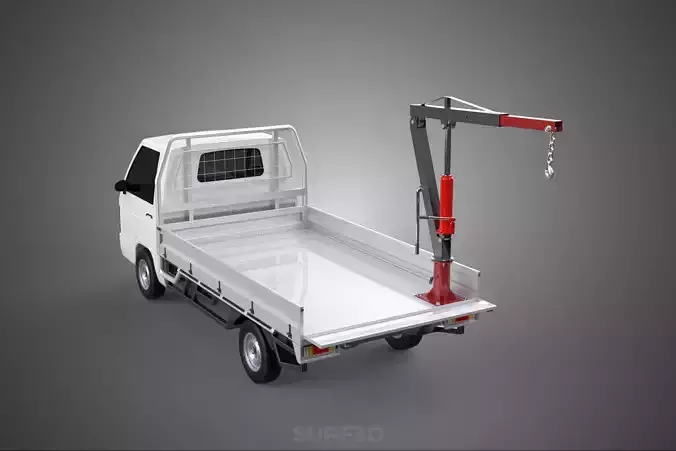
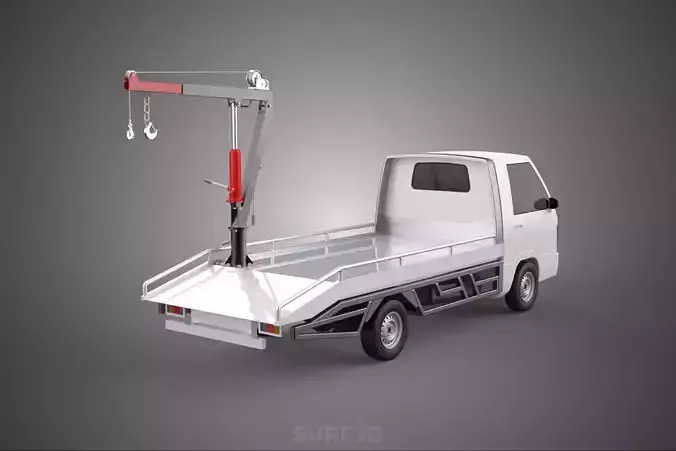
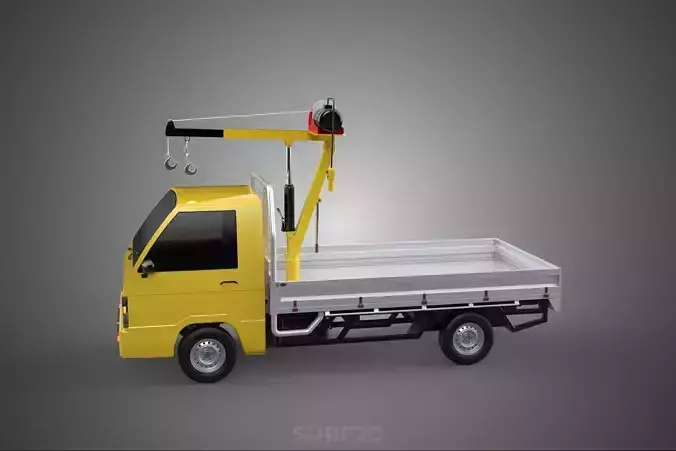
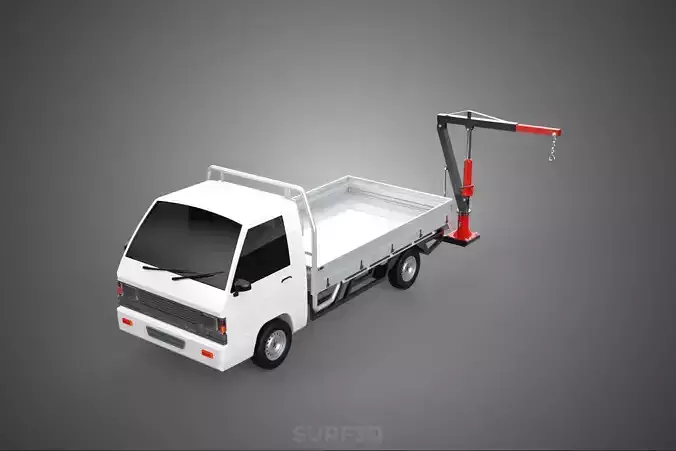
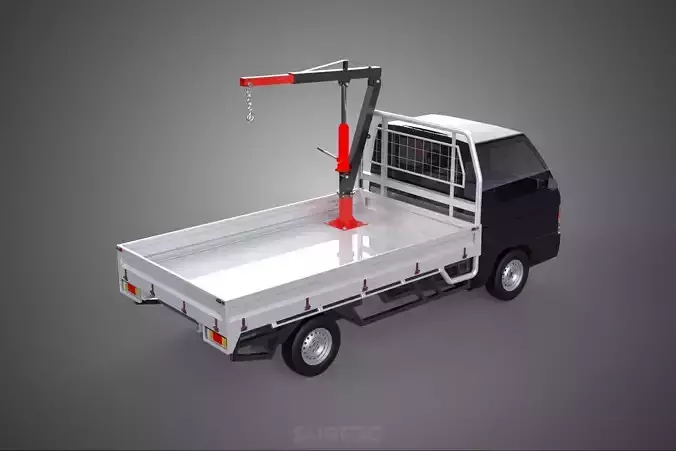
A folding mounted bed crane hoist, operated by a hand winch and securely attached to a pickup truck, is a specialized material handling apparatus engineered to provide portable and autonomous lifting capabilities. This system facilitates the loading, unloading, and positioning of heavy, bulky, or awkward objects onto and from a truck's cargo bed, particularly in locations where traditional powered lifting equipment is unavailable or impractical.
Nomenclature and Components:
The device's descriptive title precisely delineates its integrated features:
- Pickup Truck: Serves as the fundamental mobile platform, offering both transport and a stable foundation for the lifting mechanism.
- Mounted: Denotes a secure, typically semi-permanent attachment to the truck's bed structure, often via a reinforced base plate bolted directly to the bed floor or chassis frame. This mounting ensures operational stability and safety.
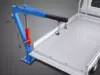
- Crane: Refers to the overarching mechanical structure designed for lifting and horizontal movement of loads. It commonly employs a davit crane or a small jib crane configuration, comprising a vertical mast (or pillar) and a horizontal or angled boom (or jib) that extends over the load area.
- Hoist: The mechanism specifically responsible for the vertical displacement of the load. In this context, it is powered by a hand winch.
- Lifting: The primary function, involving the vertical raising and lowering of objects.
- Hand Winch: A manually operated, gear-driven device. It functions by coiling a cable, typically steel wire rope, around a drum as a crank handle is rotated. This mechanism provides significant mechanical advantage, converting rotational input into a powerful linear pulling force to raise or lower the attached load.
- Folding: A pivotal design feature that allows the crane's boom, and sometimes its mast, to collapse, pivot, or retract into a more compact configuration. This design optimizes vehicle maneuverability, enables the use of bed covers, and maximizes available cargo space when the crane is not in active use or during transit.
Design and Construction:
These cranes are typically constructed from robust materials, predominantly high-strength steel, often treated with a powder coating or other corrosion-resistant finishes to ensure durability in varied environmental conditions. The design frequently incorporates a pivot point at the base of the mast, enabling manual slewing (rotation) of the boom, which may range up to 360 degrees on some models, to precisely position the load. The folding mechanism can involve a hinged boom that folds downward or a telescopic boom that retracts. The hand winch is securely affixed to the crane's mast or boom and is usually equipped with a ratcheting mechanism and a robust braking system to safely secure and hold a load at any desired height. The lifting cable terminates in a heavy-duty hook, typically fitted with a safety latch to prevent accidental disengagement of the load. Rated lifting capacities are critical specifications, commonly ranging from 500 to 2,000 pounds (approximately 225 to 900 kg), which dictate safe operational limits.
Operational Principles:
Operation commences by manually extending or unfolding the crane's boom, positioning it directly above the item designated for lifting. The hoist's hook is then securely attached to the load. The operator subsequently utilizes the hand winch's crank handle to slowly and controllably raise the load. Once clear of the ground or surrounding obstacles, the crane boom can be manually rotated to swing the load onto the truck bed or to an adjacent location. Lowering is accomplished by carefully releasing the winch's brake or engaging a controlled unwind mechanism. Following use, the crane is typically folded back into its compact configuration to restore the truck's aerodynamic profile and unencumbered cargo capacity.
Applications:
This type of lifting equipment offers broad utility across numerous sectors. Common applications include:
- Agriculture: Loading feed sacks, small implements, or machinery components.
- Construction: Handling tools, building materials, generators, or compressors at remote job sites.
- Maintenance and Repair: Assisting in the lifting of engines, pumps, or heavy components during field service.
- Outdoor Recreation: Facilitating the loading of ATVs, motorcycles, or large game animals.
- Small-Scale Logistics: Aiding in the delivery and collection of parcels or equipment too heavy for manual handling.
- Emergency Services: Providing utility for moving equipment or assisting with minor recovery operations.
Advantages:
Primary advantages of this system include its independence from external power sources, making it exceptionally well-suited for remote and off-grid operations. Its compact, foldable design minimizes obstruction and allows for efficient vehicle use when the crane is dormant. It represents a cost-effective alternative to powered lifts or larger, stationary cranes, providing significant ergonomic benefits by mitigating manual strain and reducing the risk of musculoskeletal injuries. Manual operation provides the operator with precise, tactile control over load movement.
Limitations and Considerations:
Key limitations include slower operational speeds compared to electric or hydraulic hoists, and the physical effort required from the operator, particularly when lifting near the maximum rated capacity. Lifting capacity is strictly governed by the winch's design and the crane's structural integrity. Proper installation, meticulous adherence to the manufacturer's load limits, and even weight distribution are paramount to prevent structural failure, vehicle instability, or rollovers. Regular inspection of the lifting cable, hook, and all mounting hardware is critical for ensuring ongoing safe operation.
Safety:
Safe operation mandates a comprehensive understanding of the crane's load limits, the application of proper rigging techniques, and maintaining a stable operating environment.