High-quality 3D assets at affordable prices — trusted by designers, engineers, and creators worldwide. Made with care to be versatile, accessible, and ready for your pipeline.
Included File Formats
This model is provided in 14 widely supported formats, ensuring maximum compatibility:
• - FBX (.fbx) – Standard format for most 3D software and pipelines
• - OBJ + MTL (.obj, .mtl) – Wavefront format, widely used and compatible
• - STL (.stl) – Exported mesh geometry; may be suitable for 3D printing with adjustments
• - STEP (.step, .stp) – CAD format using NURBS surfaces
• - IGES (.iges, .igs) – Common format for CAD/CAM and engineering workflows (NURBS)
• - SAT (.sat) – ACIS solid model format (NURBS)
• - DAE (.dae) – Collada format for 3D applications and animations
• - glTF (.glb) – Modern, lightweight format for web, AR, and real-time engines
• - 3DS (.3ds) – Legacy format with broad software support
• - 3ds Max (.max) – Provided for 3ds Max users
• - Blender (.blend) – Provided for Blender users
• - SketchUp (.skp) – Compatible with all SketchUp versions
• - AutoCAD (.dwg) – Suitable for technical and architectural workflows
• - Rhino (.3dm) – Provided for Rhino users
Model Info
• - All files are checked and tested for integrity and correct content
• - Geometry uses real-world scale; model resolution varies depending on the product (high or low poly)
• • - Scene setup and mesh structure may vary depending on model complexity
• - Rendered using Luxion KeyShot
• - Affordable price with professional detailing
Buy with confidence. Quality and compatibility guaranteed.
If you have any questions about the file formats, feel free to send us a message — we're happy to assist you!
Sincerely,
SURF3D
Trusted source for professional and affordable 3D models.
More Information About 3D Model :
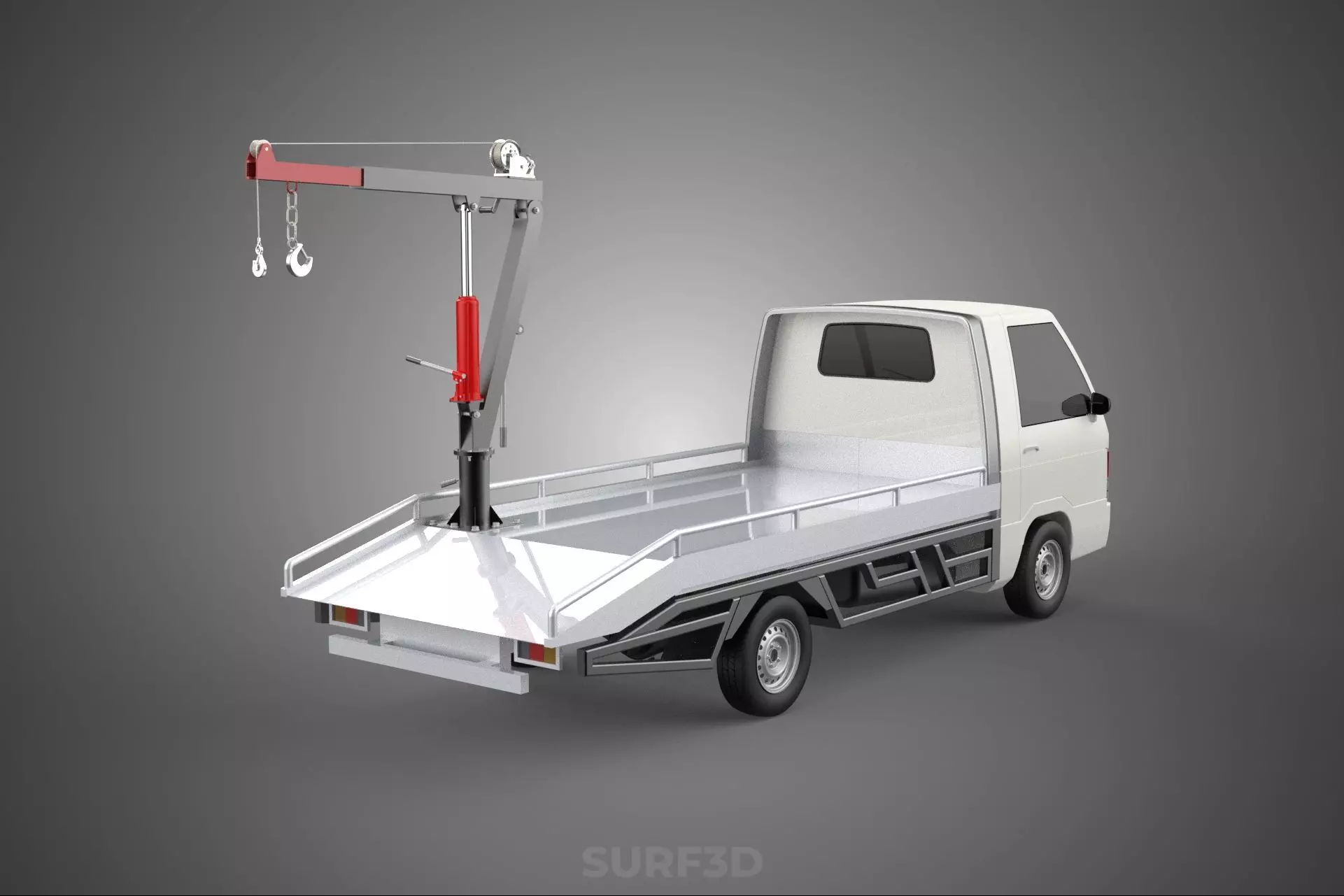
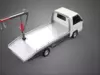
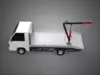
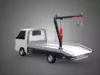
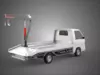
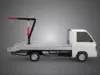
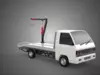
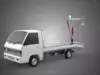
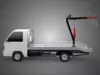
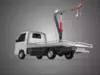
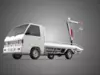
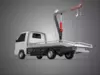
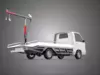
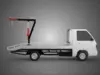
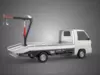
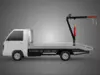
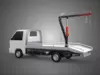
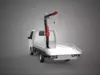
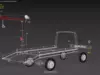
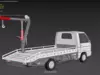
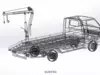
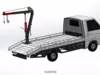
A CRANE LIFTING SWIVEL WINCH HOIST JIB HOOK attach on FLATBED TRUCK PICKUP describes a highly versatile and mobile lifting apparatus, commonly referred to as a utility crane, service crane, or vehicle-mounted articulating crane. This integrated system combines the portability of a light-duty commercial vehicle with the robust capabilities of a compact crane, enabling the lifting, lowering, and precise positioning of materials in diverse environments, particularly where larger, dedicated crane systems are impractical or economically unfeasible.
System Overview:
The fundamental design involves a compact crane assembly permanently or semi-permanently affixed to the chassis of a flatbed truck or a heavy-duty pickup truck. This configuration creates a self-contained unit capable of both transporting materials and performing lifting operations. Such systems are optimized for agility and accessibility, making them invaluable for field service operations, construction sites with limited space, and various municipal or utility tasks.
Core Components and Functionality:
- Mounting Platform (Flatbed Truck/Pickup):
The foundation of the system is a commercially available flatbed truck or a robust pickup truck. These vehicles provide the essential mobility to transport the crane to various worksites. The flatbed design offers a stable and often spacious area for mounting the crane assembly, typically situated directly behind the cab or near the rear axle, while also allowing for the transport of tools, additional equipment, or the materials being handled. The vehicle's chassis, frame, and suspension are critically reinforced to safely bear the static weight of the crane and the dynamic forces exerted during lifting operations. To ensure stability and prevent overturning during lifts, especially when handling loads at maximum reach or capacity, most units are equipped with hydraulically deployable outriggers that extend horizontally and vertically from the truck frame to create a wider, more stable base of support.
- Crane Lifting System:
This encompasses the primary mechanisms responsible for material handling:
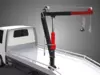
- Jib (Boom): The jib is the extendable or articulating arm of the crane, typically constructed from high-strength steel. In this context, it is most commonly an articulating (knuckleboom) or telescopic design:
- Articulating Jibs: Feature multiple hinged sections that can fold and extend, offering exceptional maneuverability, the ability to reach into confined spaces, and capacity to lift loads over obstacles.
- Telescopic Jibs: Consist of nested sections that extend hydraulically, providing greater horizontal outreach and often higher lifting capacities at a given radius.
The jib's primary function is to provide the necessary outreach and vertical clearance for the load.
- Winch/Hoist Mechanism: This is the core lifting component. A steel wire rope or chain is spooled around a rotating drum, which is powered by a hydraulic motor (most prevalent in vehicle-mounted applications due to its efficiency and power density) or an electric motor. The hoist mechanism is responsible for precisely raising and lowering the load, with controlled speed. Lifting capacities vary significantly based on the crane's design, boom length, and the supporting vehicle's specifications, typically ranging from a few hundred kilograms to several metric tons.
- Swivel (Slew/Rotation) Mechanism: Positioned at the base of the crane assembly, the swivel mechanism permits the entire jib and hoist unit to rotate horizontally. This rotation can range from a limited arc (e.g., 270 degrees) to a continuous 360-degree rotation. Achieved via a slewing ring bearing and a hydraulic motor, this capability is crucial for accurately positioning loads without requiring the repositioning of the entire vehicle, thereby significantly enhancing operational flexibility and efficiency.
- Hook: The terminal device attached to the end of the hoist cable or chain. Crane hooks are specifically designed for securely engaging various types of loads, often featuring spring-loaded safety latches to prevent accidental disengagement during lifting or movement. They are available in various sizes and capacities to accommodate different lifting requirements and load configurations.
Operational Principles:
The operation of such a system generally follows a sequence:
- Vehicle Placement: Positioning the truck on a stable, level surface, ensuring adequate clearance for crane operation.
- Stabilization: Deploying the outriggers to level the vehicle and distribute the load over a wider footprint, minimizing the risk of instability or overturning.
- Crane Deployment: Extending, articulating, and slewing the jib to achieve the desired reach and height for the lifting task.
- Lifting Execution: Operating the winch/hoist to lift the load, followed by controlled slewing and lowering as required.
Modern systems often incorporate advanced hydraulic controls, which can be operated via manual levers, wired or wireless remote control units, or sophisticated computerized load management systems that provide real-time data on load weight, reach, and stability, enhancing safety and precision.
Applications:
The versatility and mobility of vehicle-mounted cranes make them indispensable across a wide range of industries and applications:
- Construction: Lifting and positioning building materials, tools, and small machinery on diverse job sites.
- Utilities: Installation and maintenance of power poles, transformers, streetlights, communication infrastructure, and pipelines.
- Landscaping & Arboriculture: Moving heavy rocks, large trees, and landscape features.
- Municipal Services: Public works departments for tasks such as sign installation, waste management, and general maintenance.
- Logistics & Delivery: Loading and unloading heavy goods, machinery, and equipment, especially at locations without loading docks or forklift access.
- Agricultural: Handling feed, equipment, and structural components on farms.
- Emergency Services: Light recovery, incident response, and assistance.
Safety Considerations:
Due to the inherent risks associated with lifting heavy loads, stringent safety protocols are paramount. Operators must possess appropriate training and certification, strictly adhere to load charts, respect stability limits, and ensure proper outrigger deployment. Overloading the crane or operating on unstable ground can lead to catastrophic accidents. Regular inspection and meticulous maintenance of all crane and vehicle components are essential for safe and reliable operation.
KEYWORDS: Mobile crane, Utility crane, Service crane, Articulating crane, Knuckle boom, Telescopic boom, Vehicle-mounted crane, Truck crane, Pickup crane, Flatbed crane, Hoist system, Winch, Jib, Lifting equipment, Material handling, Hydraulic crane, Construction equipment, Municipal vehicle, Load handling, Outriggers, Slew drive, Swivel base, Hook block, Compact crane, Portable crane, Field service, Equipment transport, Load positioning, Industrial lifting, Versatile lifting, Material transfer, On-site lifting.