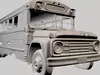
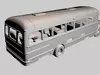
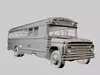
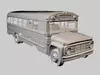
DESCRIPTION

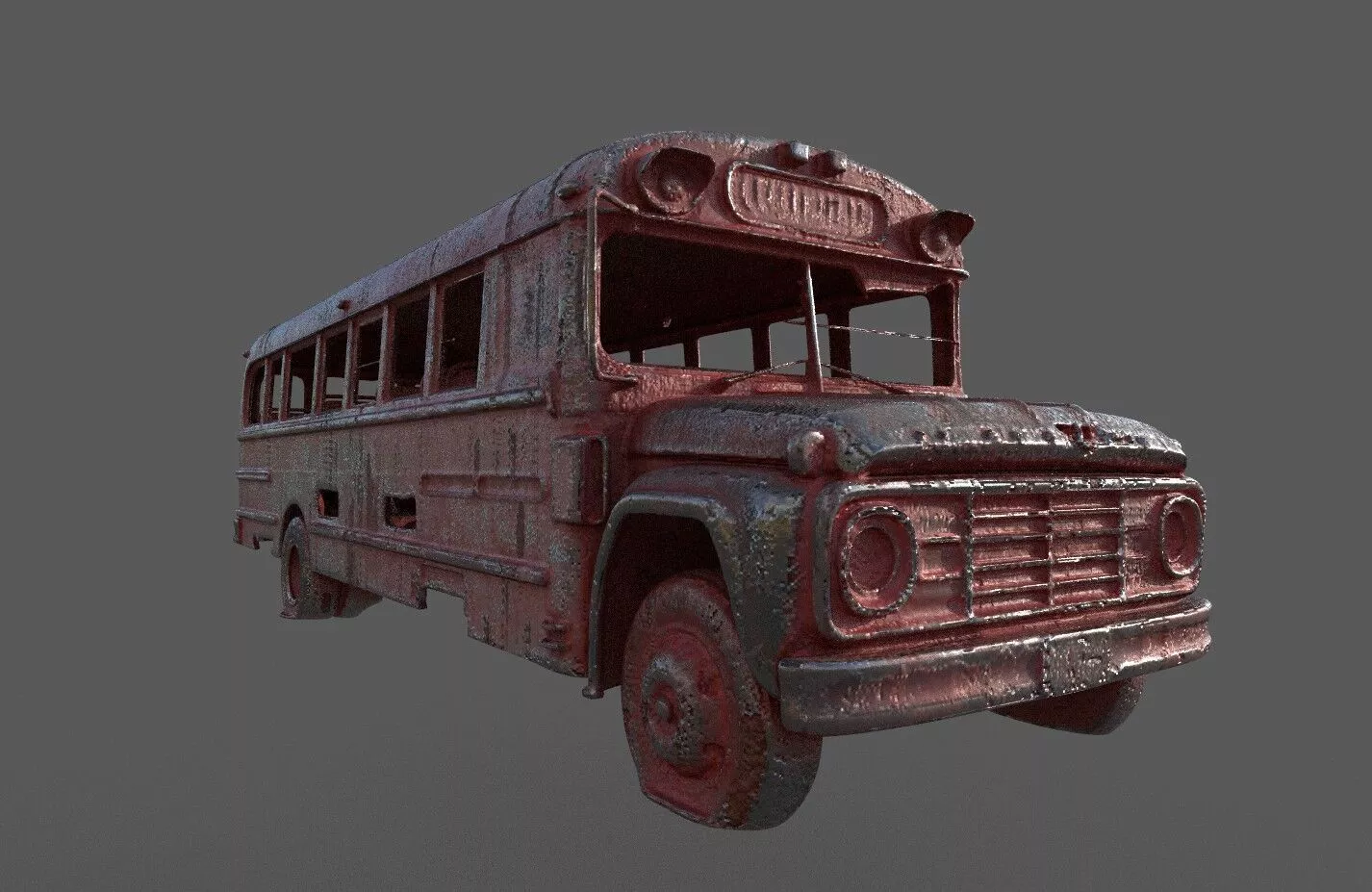
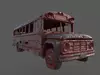
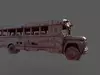
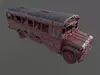
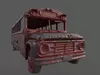
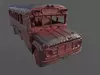
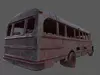
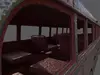
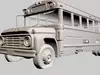
scrap school bus 3D model school student iron wreckage road highway vehicle service junkyardA school bus is any type of bus owned, leased, contracted to, or operated by a school or school district. It is regularly used to transport students to and from school or school-related activities, but not including a charter bus or transit bus.[1] Various configurations of school buses are used worldwide; the most iconic examples are the yellow school buses of the United States which are also found in other parts of the world, including Canada.

In North America, school buses are purpose-built vehicles distinguished from other types of buses by design characteristics mandated by federal and state/provincial regulations. In addition to their distinct paint color (National School Bus Glossy Yellow), school buses are fitted with exterior warning lights (to give them traffic priority) and multiple safety devices.[2]

A Thomas Saf-T-Liner C2 school bus, with its exterior (top) and interior (bottom) shownDesign history19th centuryMain article: Kid hack

One-horse kid hack (Early 1910s)

A 1912 Studebaker truck with a school bus bodyIn the second half of the 19th century, many rural areas of the United States and Canada were served by one-room schools. For those students who lived beyond practical walking distance from school, transportation was facilitated in the form of the kid hack; at the time, hack was a term referring to certain types of horse-drawn carriages.[3] Essentially re-purposed farm wagons, kid hacks were open to the elements, with little to no weather protection.

In 1892, Indiana-based Wayne Works (later Wayne Corporation) produced its first school car[3][4] A purpose-built design, the school car was constructed with perimeter-mounted wooden bench seats and a roof (the sides remained open).[3] As a horse-drawn wagon, the school car was fitted with a rear entrance door (intended to avoid startling the horses while loading or unloading passengers); over a century later, the design remains in use (as an emergency exit).

In 1869, Massachusetts became the first state to add transportation to public education; by 1900, 16 other states would transport students to school.[4]

1900–1930

Blue Bird No. 1, the first bus constructed by A.L. Luce, founder of the Blue Bird Body Company. It is based on a 1927 Ford Model T chassis.Following the first decade of the twentieth century, several developments would affect the design of the school bus and student transport. As vehicles evolved from horse-drawn to horseless propulsion on a wider basis, the wagon bodies of kid hacks and school cars were adapted to truck frames. While transitioning into purpose-built designs, a number of features from wagons were retained, including wood construction, perimeter bench seating, and rear entry doors. Weather protection remained minimal; some designs adopted a tarpaulin stretched above the passenger seating.

In 1915, International Harvester constructed its first school bus;[4] today, its successor company Navistar still produces school bus cowled chassis.

In 1919, the usage of school buses became funded in all 48 US states.[4]

In 1927, Ford dealership owner A.L. Luce produced a bus body for a 1927 Ford Model T. The forerunner of the first Blue Bird school buses, steel was used to panel and frame the bus body; wood was relegated to a secondary material.[5] While fitted with a roof, the primary weather protection of the Luce bus design included roll-up canvas side curtains.[5]

REVIEWS & COMMENTS

See what other buyers think about this model - real feedback on quality,
accuracy, and usability.
There are no reviews or comments yet. Please be the first one to write it.
NEW
Recently added to CGTrader - explore one of the latest models on the marketplace.

scrap school bus 3D model Low-poly 3D model

$58.00
Royalty Free License
Hire
Like this model to show appreciation to the designer.
See how many times this model was viewed.
Share this model to support the designer and boost their visibility.
File formats
STL
Stereolithography<br />Version: 1<br />File Size: 93.4 MB
FBX
Autodesk FBX<br />Version: 7.5<br />File Size: 103 MB
3DS
3D Studio<br />Version: 1<br />File Size: 48.7 MB
DAE
Collada<br />Version: 1.5<br />File Size: 154 MB
JPG
JPG<br />Version: 19<br />File Size: 60.2 MB
PNG
PNG<br />File Size: 60.2 MB
C4D
Cinema 4D<br />Version: 19 - Renderer: Default 19<br />File Size: 67.9 MB
Verified by CGTrader
Verified models are of higher quality as they have
passed CGT Standard technical and visual checks,
making them more professional-grade 3D assets.
Learn more.
FBX
This FBX file has successfully passed the CGT Standard technical and visual checks. The verification results are detailed in the section below.
File & scene
Binary FBX
Binary FBX file is more compact and faster to load and process.
Learn more
No unsupported objects
Unsupported objects:
- Lights
- Cameras
Learn more
Geometry
No N-gons
N-gons are polygons with five or more sides which might cause issues in certain processes like rendering or animation. Learn more
No faceted geometry
Faceted geometry uses flat surfaces without smoothing, which can look unrealistic on curves.
Learn more
Manifold geometry
Manifold geometry ensures all surfaces are properly connected, avoiding issues like edges shared by more than two faces.
Learn more
Textures & material
PBR textures
PBR textures simulate how light interacts with materials, making the model look realistic under different lighting.
Required PBR textures:
- Base Color
- Roughness
- Metalness
- Normal
Learn more
No embed textures
Embedded textures are stored inside the model file, increasing its size and sometimes causing compatibility issues.
Learn more
Square textures
Texture aspect ratio is the width-to-height ratio of a texture. Expected texture aspect ratio: 1:1
Learn more
Power of 2 texture sizes
Textures with dimensions in power of two (e.g. 512x512px, 1024x1024px) are used to optimize performance and memory usage.
Learn more
Assigned materials
Materials are applied to the 3D model to allow visualize a model's surface properties and appearance.
Learn more
UVs & naming
No UV overlaps
UVs overlap when multiple points on the 3D model's surface are mapped to the same point on the UV island causing texture stretching.
Learn more
UV unwrapped model
A UV unwrapped model means its 3D surface is flattened into 2D space, allowing textures to be applied accurately.
Learn more
Allowed characters
Allowed ASCII characters: a-zA-Z0-9-_
Learn more
Provided by designer
Information and details shared directly by the model's designer.
3D Features
Textures
The model includes image files (textures) that add color, patterns, or detail to its surfaces.
UV Mapping
The model's surfaces are mapped to a 2D image, allowing textures to display correctly.
Plugins Used
Some external plugins were used to create the model. These may be required for full functionality.
3D printing
Indicates whether the designer marked this model as suitable for 3D printing.
Model is not 3D printable
The designer indicates this model is intended for digital use only (rendering, animation, or AR/VR) and not for 3D printing.
Geometry
Polygon mesh
A model built from polygons (triangles or quads) connected in a mesh.
1138003 polygons
The total number of polygons (flat shapes) that make up the 3D model.
/
1142000 vertices
The number of points (corners) that define the shape of the model's polygons.
Unwrapped UVs
Publish date
Model ID
Chat