High-quality 3D assets at affordable prices — trusted by designers, engineers, and creators worldwide. Made with care to be versatile, accessible, and ready for your pipeline.
Included File Formats
This model is provided in 14 widely supported formats, ensuring maximum compatibility:
• - FBX (.fbx) – Standard format for most 3D software and pipelines
• - OBJ + MTL (.obj, .mtl) – Wavefront format, widely used and compatible
• - STL (.stl) – Exported mesh geometry; may be suitable for 3D printing with adjustments
• - STEP (.step, .stp) – CAD format using NURBS surfaces
• - IGES (.iges, .igs) – Common format for CAD/CAM and engineering workflows (NURBS)
• - SAT (.sat) – ACIS solid model format (NURBS)
• - DAE (.dae) – Collada format for 3D applications and animations
• - glTF (.glb) – Modern, lightweight format for web, AR, and real-time engines
• - 3DS (.3ds) – Legacy format with broad software support
• - 3ds Max (.max) – Provided for 3ds Max users
• - Blender (.blend) – Provided for Blender users
• - SketchUp (.skp) – Compatible with all SketchUp versions
• - AutoCAD (.dwg) – Suitable for technical and architectural workflows
• - Rhino (.3dm) – Provided for Rhino users
Model Info
• - All files are checked and tested for integrity and correct content
• - Geometry uses real-world scale; model resolution varies depending on the product (high or low poly)
• • - Scene setup and mesh structure may vary depending on model complexity
• - Rendered using Luxion KeyShot
• - Affordable price with professional detailing
Buy with confidence. Quality and compatibility guaranteed.
If you have any questions about the file formats, feel free to send us a message — we're happy to assist you!
Sincerely,
SURF3D
Trusted source for professional and affordable 3D models.
More Information About 3D Model :
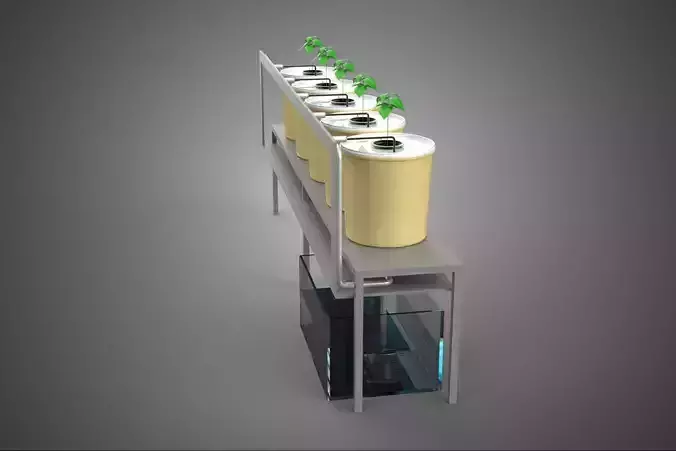
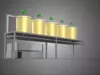
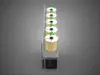
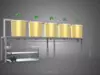
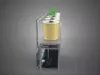
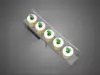
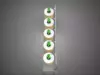
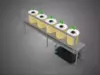
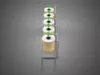
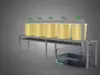
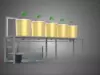
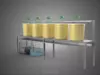
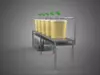
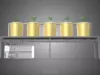
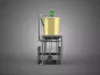
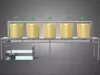
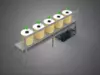
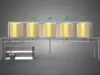
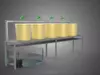
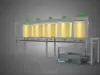
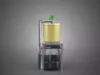
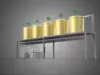
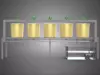
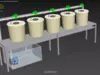
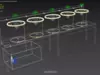
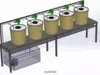
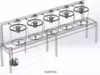
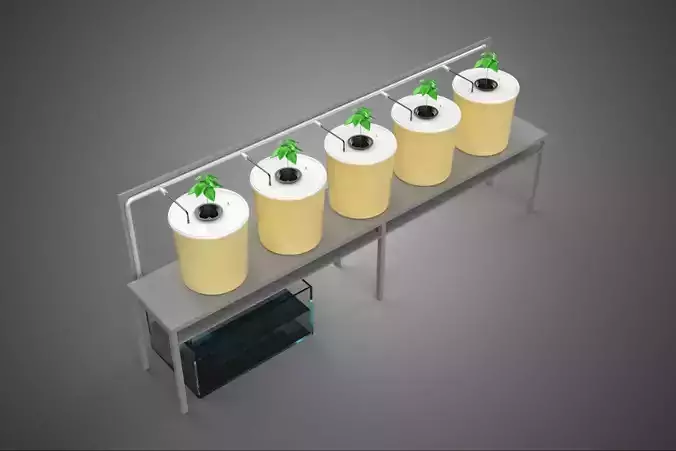
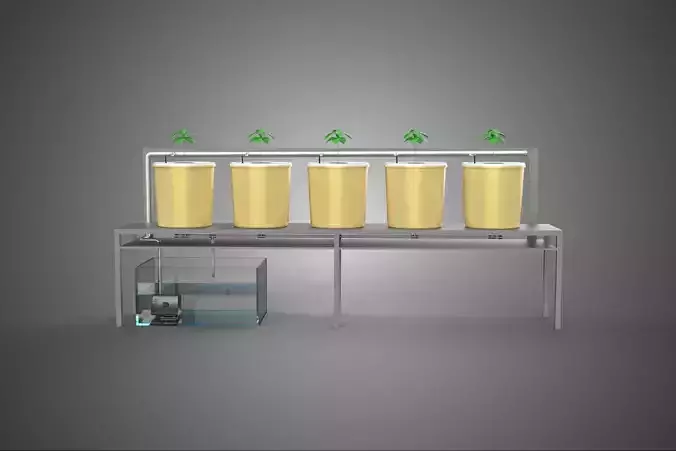
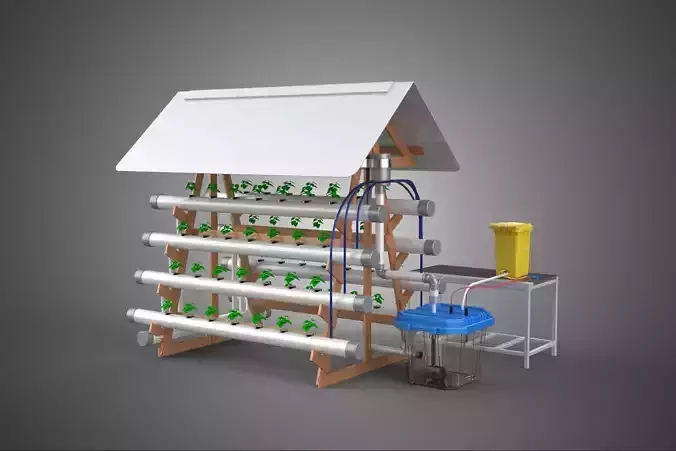
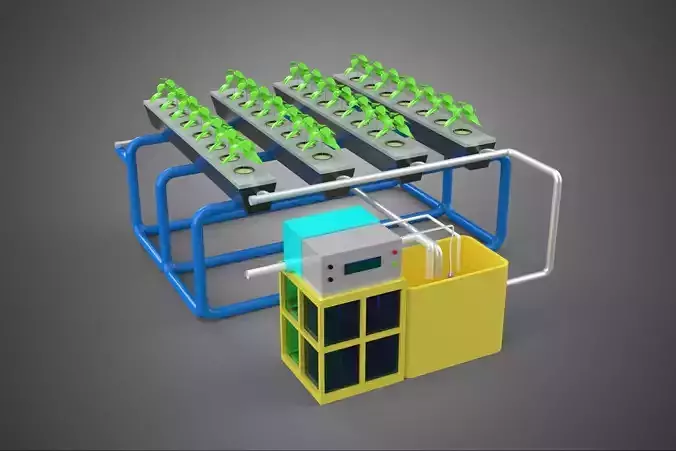
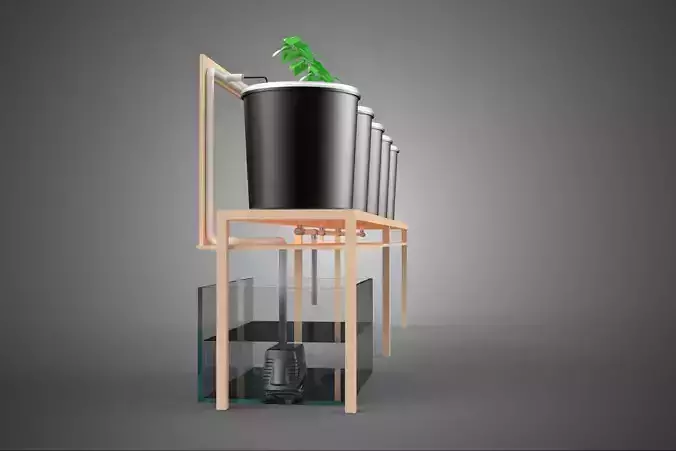
The Bato Bucket, commonly referred to as the Dutch Bucket System or Bato Pot, is a specialized, modular configuration utilized extensively in commercial hydroponic and controlled environment agriculture (CEA). The system is defined by its array of individual, recirculating containers (pots) designed for the cultivation of large, demanding crops, particularly those that require substantial structural support and efficient root zone management, such as fruiting vine crops.
Nomenclature and Definition
The term Dutch Bucket derives from its origins in the Netherlands, a pioneer in advanced greenhouse technology. Bato is a trade name frequently associated with the specific design of the container. The system integrates elements of traditional media culture hydroponics with efficient drip-feed and recirculation technology.
The Pot component of the system is typically a high-density, food-grade polypropylene or polyethylene container, usually trapezoidal or rectangular, optimized for stable placement and ease of handling within the array structure. These pots are often arranged linearly or in blocks, constituting the scalable Array.
Functional Mechanics
The Bato Bucket system operates as a closed-loop, recirculating hydroponic methodology, though variants can be adapted for non-recirculating (drain-to-waste) applications.
- Nutrient Delivery: A central reservoir holds the nutrient solution (a precise mixture of water and essential mineral salts). A pump distributes this solution via a network of mainlines and individual drip emitters, which deliver the solution directly to the growing medium within each pot.
- Drainage and Recirculation: A critical feature of the Bato Pot design is its unique drainage mechanism. Each pot is fitted with a specialized elbow fitting or siphon drain positioned near the base. This fitting is crucial for maintaining a shallow reservoir, typically 2–5 centimeters (1–2 inches), at the bottom of the container. This reservoir prevents the growing media from drying out completely while ensuring the bulk of the remaining solution drains rapidly. This rapid, continuous flushing action prevents waterlogging and mitigates the risk of root rot and high mineral salt buildup in the root zone. The drained solution is collected via a return channel (often a PVC pipe or trough) and flows back to the central reservoir, where pH and Electrical Conductivity (EC) are monitored and adjusted before reuse.
### Growing Media and Aeroponic/Hydroponic Distinction
The system is fundamentally hydroponic, relying on inert growing media to anchor the plant and facilitate nutrient uptake. Common substrates include perlite, coco coir, rockwool cubes, or expanded clay pebbles (hydroton). The choice of media affects water retention and aeration properties.
While primarily a media-based hydroponic system, the container's structural configuration makes it adaptable to concepts associated with aeroponics or advanced soilless culture. True aeroponics involves suspending the roots in air and misting them with nutrient solution. The inclusion of Aeroponic in the system's descriptor often reflects its advanced status as a soilless technique offering superior root zone oxygenation and controlled feeding compared to traditional soil culture or simpler hydroponic methods like Deep Water Culture (DWC) without recirculation. In practice, the Bato Bucket is overwhelmingly utilized in its media-based hydroponic configuration.
### Applications and Advantages
The modular array structure offers significant scalability and operational flexibility, making the Bato Bucket System highly favored for commercial production of high-value, long-term fruiting plants, including:
- Tomatoes (especially indeterminate varieties)
- Cucumbers
- Bell Peppers and Chili Peppers
- Eggplants
Advantages include excellent control over nutrient delivery, ease of maintenance (individual pots can be replaced without disturbing the entire system), efficient water use due to recirculation, and superior oxygen levels in the root zone facilitated by the specialized drainage system.
KEYWORDS: Bato Bucket, Dutch Bucket System, Soilless Culture, Hydroponics, Controlled Environment Agriculture, Drip Irrigation, Recirculating System, Modular Array, Plant Pot, Growing Container, Nutrient Delivery System, Perlite, Coco Coir, Rockwool, Hydroton, Drain to Waste, Greenhouse Technology, Vine Crops, Tomatoes, Cucumbers, Peppers, Commercial Cultivation, Root Zone Management, Siphon Drain, Open System, Polypropylene Container, Recirculating Deep Water Culture, Food Grade Plastic, Hydroponic Array, CEA, Flow-Through System.