High-quality 3D assets at affordable prices — trusted by designers, engineers, and creators worldwide. Made with care to be versatile, accessible, and ready for your pipeline.
Included File Formats
This model is provided in 14 widely supported formats, ensuring maximum compatibility:
• - FBX (.fbx) – Standard format for most 3D software and pipelines
• - OBJ + MTL (.obj, .mtl) – Wavefront format, widely used and compatible
• - STL (.stl) – Exported mesh geometry; may be suitable for 3D printing with adjustments
• - STEP (.step, .stp) – CAD format using NURBS surfaces
• - IGES (.iges, .igs) – Common format for CAD/CAM and engineering workflows (NURBS)
• - SAT (.sat) – ACIS solid model format (NURBS)
• - DAE (.dae) – Collada format for 3D applications and animations
• - glTF (.glb) – Modern, lightweight format for web, AR, and real-time engines
• - 3DS (.3ds) – Legacy format with broad software support
• - 3ds Max (.max) – Provided for 3ds Max users
• - Blender (.blend) – Provided for Blender users
• - SketchUp (.skp) – Compatible with all SketchUp versions
• - AutoCAD (.dwg) – Suitable for technical and architectural workflows
• - Rhino (.3dm) – Provided for Rhino users
Model Info
• - All files are checked and tested for integrity and correct content
• - Geometry uses real-world scale; model resolution varies depending on the product (high or low poly)
• • - Scene setup and mesh structure may vary depending on model complexity
• - Rendered using Luxion KeyShot
• - Affordable price with professional detailing
Buy with confidence. Quality and compatibility guaranteed.
If you have any questions about the file formats, feel free to send us a message — we're happy to assist you!
Sincerely,
SURF3D
Trusted source for professional and affordable 3D models.
More Information About 3D Model :
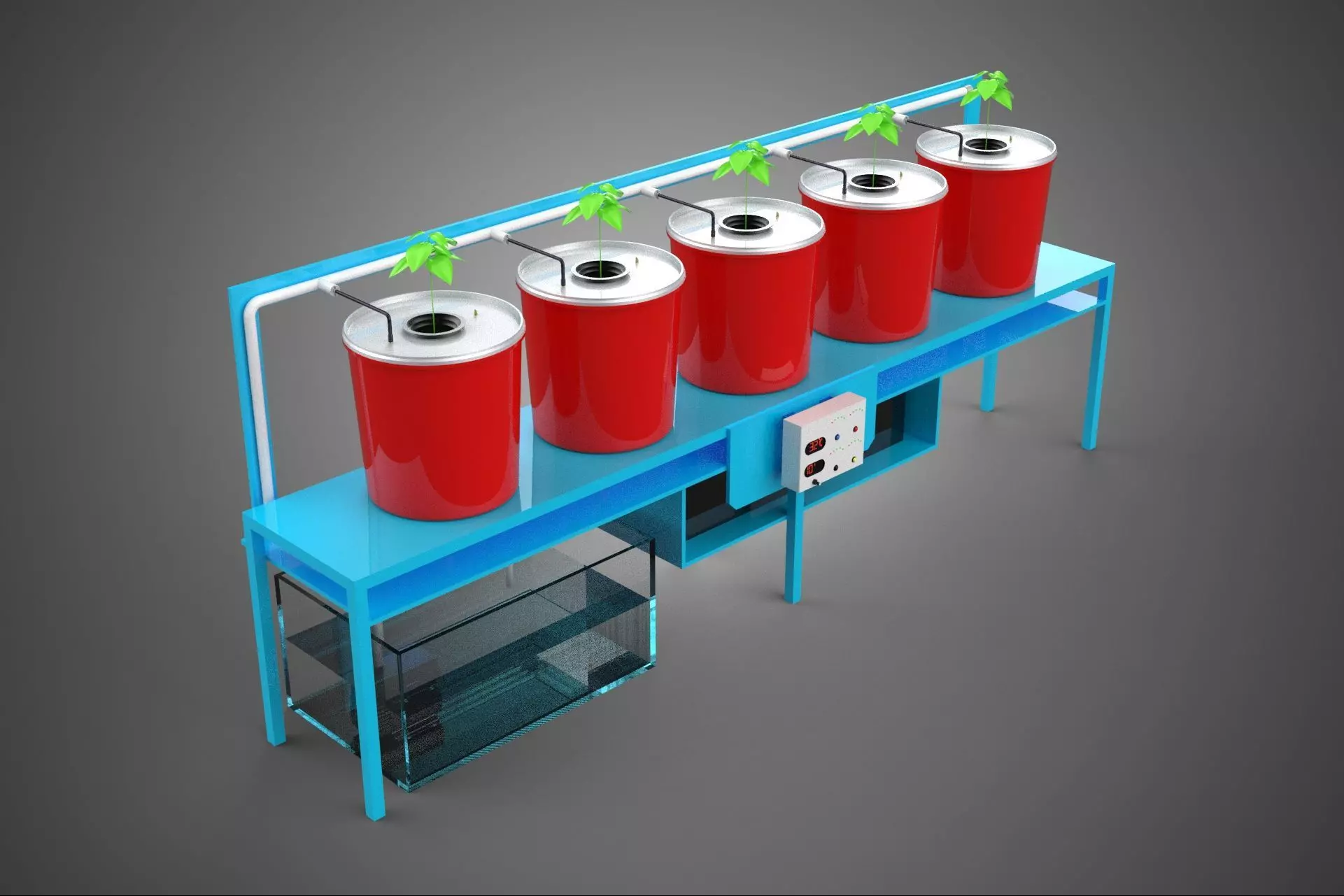
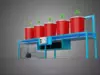
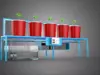
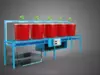
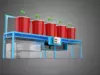
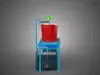
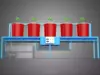
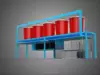
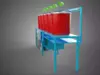
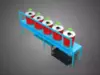
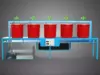
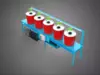
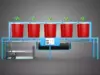
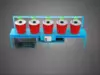
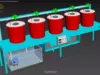
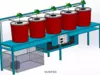
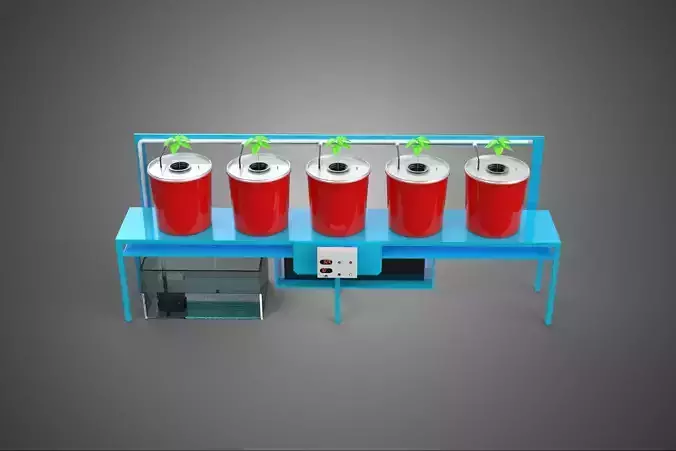
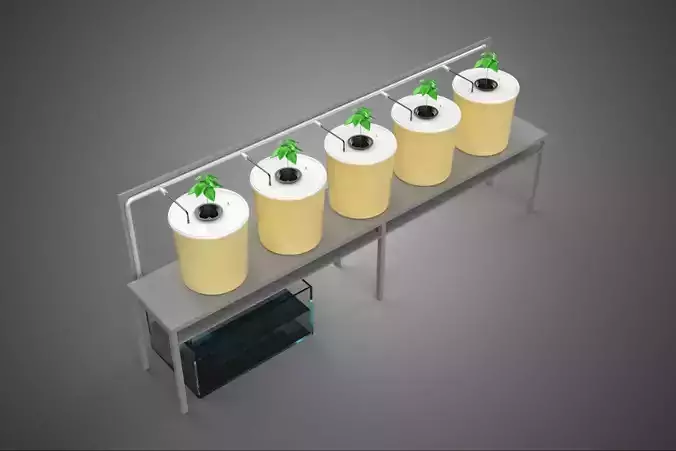
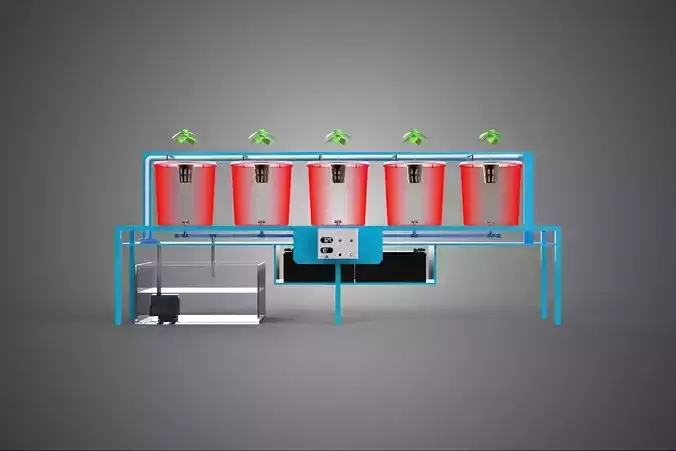
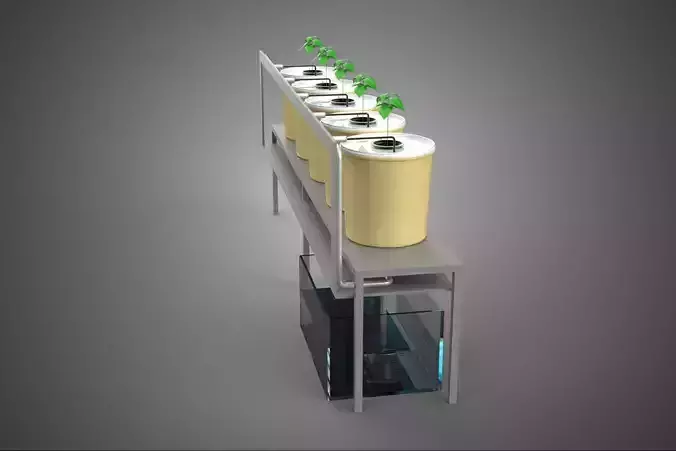
Internet of Things (IoT) Smart Control Dutch Bucket Hydroponic System Setup for Plant Cultivation
The IoT Smart Control Dutch Bucket Hydroponic System Setup for Plant Cultivation represents an advanced integration of controlled environment agriculture (CEA) techniques with pervasive computing technology. This system utilizes the established principles of Dutch Bucket (Bato Bucket) hydroponics, a recirculating deep culture method, augmented by an Internet of Things (IoT) framework to enable automated monitoring, precision nutrient delivery, and remote operational control. This integrated approach optimizes resource utilization, enhances plant growth rates, and reduces manual labor requirements compared to conventional agricultural practices or non-automated hydroponic setups.
System Architecture and Components
The setup is fundamentally composed of three interconnected layers: the physical horticultural apparatus, the sensing and actuation layer, and the centralized IoT control platform.
1. Physical Horticultural Apparatus (Dutch Bucket System)
The Dutch Bucket system consists of individual growing containers (buckets, typically 10–20 liters in volume) arranged in a linear or modular configuration, often supported by inert media such as perlite, coco coir, or rockwool.
- Growing Medium: Provides physical support for the plant roots. Unlike deep water culture, the medium is frequently drained.
- Nutrient Reservoir: A central tank storing the precise blend of water and dissolved inorganic nutrient salts essential for plant growth (macro- and micronutrients).
- Irrigation/Drainage Lines: A drip irrigation system delivers the nutrient solution directly to the base of each bucket. Excess solution drains out through an overflow elbow at the bottom of the bucket and is channeled back to the central reservoir, making the system recirculating (closed-loop). This recirculation minimizes water waste and ensures uniform nutrient access.
#### 2. Sensing and Actuation Layer (Hardware Interface)
This layer is responsible for real-time data acquisition and physical manipulation of the environment parameters.
- Sensors: Critical environmental variables are continuously monitored:
- Nutrient Solution Parameters: Electrical Conductivity (EC) to measure nutrient concentration; Potential of Hydrogen (pH) to assess nutrient uptake efficacy; and temperature.
- Ambient Environment: Air temperature, relative humidity, and light intensity (often measured in Photosynthetic Photon Flux Density or PPFD).
- Fluid Level: Water level sensors in the reservoir ensure proper volume for recirculation.
- Actuators: Controlled by the IoT platform to maintain optimal conditions:
- Pumps: Main nutrient pump for scheduled irrigation cycles; dosing pumps for pH up/down adjustments; and pumps for replenishing concentrated stock solutions (A and B nutrients) based on EC readings.
- Valves: Regulate the flow of water and nutrients.
- Environmental Controls: Integration with HVAC systems, ventilation fans, and LED grow lights for photoperiod management and climate regulation.
#### 3. IoT Smart Control Platform (Software and Connectivity)
The core innovation lies in the centralized control unit, typically comprising a microcontroller (e.g., ESP32, Raspberry Pi) integrated with cloud-based services.
- Data Aggregation and Transmission: Sensor data is collected, pre-processed, and transmitted wirelessly (Wi-Fi, Zigbee) to a cloud server or local gateway.
- Algorithm-Based Decision Making: Control logic determines the required adjustments based on pre-set optimal ranges (e.g., pH 5.5–6.5; EC 1.5–2.5 mS/cm). Machine learning models or fuzzy logic systems can be employed in advanced setups to predict nutrient demand and environmental drift.
- Remote User Interface (UI): A web or mobile application allows the operator to view historical data, monitor current status, receive alerts regarding system anomalies, and remotely adjust setpoints or trigger manual operations (e.g., nutrient top-up, flushing cycles).
- Connectivity and Protocols: Utilizes standard IoT protocols such as MQTT (Message Queuing Telemetry Transport) for efficient, low-bandwidth data exchange between devices and the cloud.
### Operational Benefits and Applications
The integration of IoT smart control enhances the Dutch Bucket system by providing unparalleled precision and efficiency:
- Precision Nutrient Management: Automated EC and pH adjustment ensures plants receive optimal nutrient ratios continuously, minimizing deficiencies or toxicity.
- Water and Energy Efficiency: The recirculating nature, coupled with automated control over irrigation cycles based on plant growth stage and environmental factors, significantly reduces water consumption and energy usage associated with unnecessary pumping.
- Scalability and Modularity: The modular design of Dutch Buckets facilitates scaling the system from small research units to large commercial vertical farms, with the IoT infrastructure managing complexity across numerous modules.
- Proactive Maintenance and Alerting: Real-time monitoring allows for immediate detection of equipment failures (e.g., pump malfunction, sensor drift) or environmental excursions, enabling prompt corrective action before crop damage occurs.
This system is particularly well-suited for cultivating high-value, fruiting crops such as tomatoes, cucumbers, peppers, and various vine crops, which benefit from the stable environment and highly localized nutrient delivery characteristic of the Dutch Bucket method.