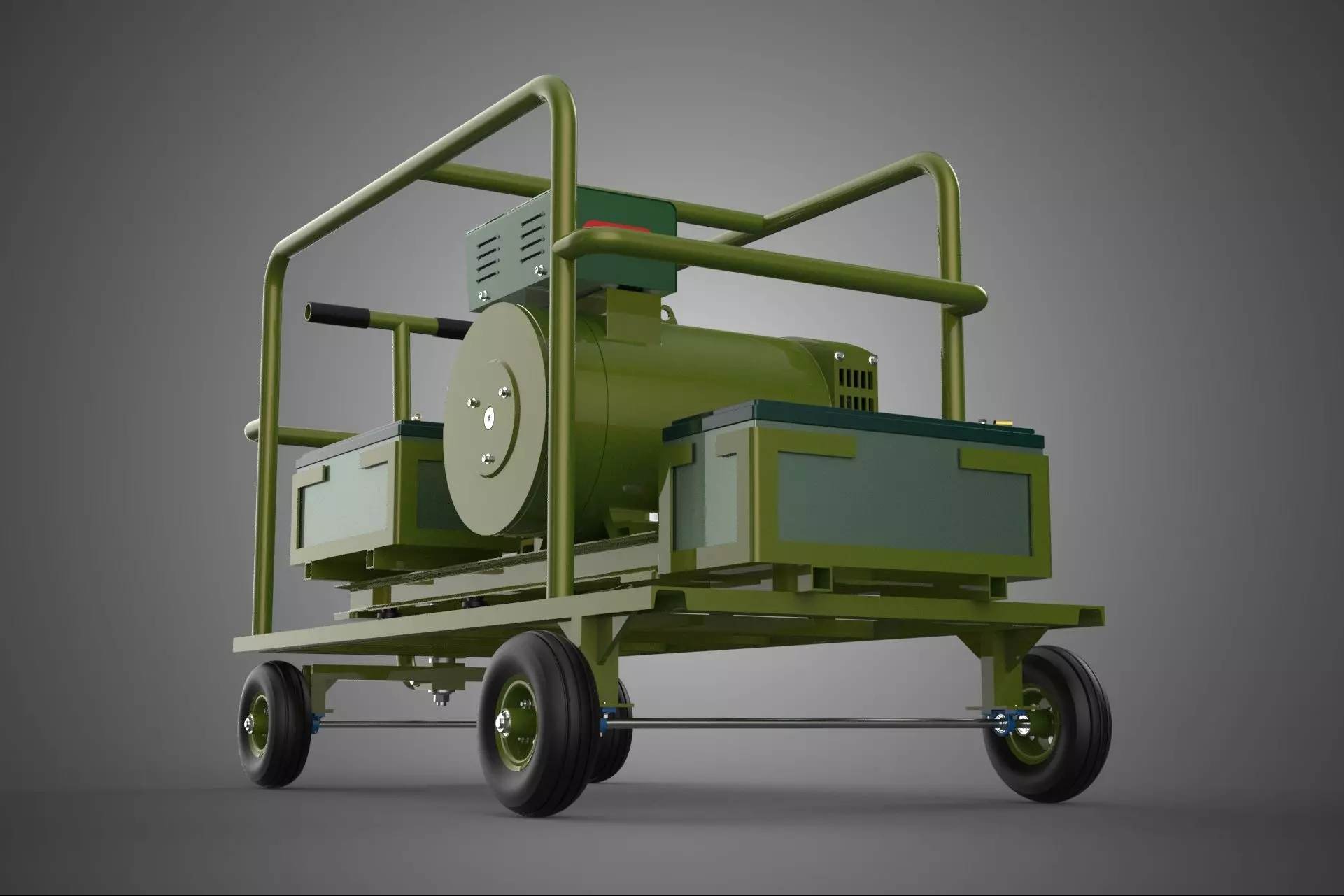
High-quality 3D assets at affordable prices — trusted by designers, engineers, and creators worldwide. Made with care to be versatile, accessible, and ready for your pipeline.
Included File Formats
This model is provided in 14 widely supported formats, ensuring maximum compatibility:
• - FBX (.fbx) – Standard format for most 3D software and pipelines
• - OBJ + MTL (.obj, .mtl) – Wavefront format, widely used and compatible
• - STL (.stl) – Exported mesh geometry; may be suitable for 3D printing with adjustments
• - STEP (.step, .stp) – CAD format using NURBS surfaces
• - IGES (.iges, .igs) – Common format for CAD/CAM and engineering workflows (NURBS)
• - SAT (.sat) – ACIS solid model format (NURBS)
• - DAE (.dae) – Collada format for 3D applications and animations
• - glTF (.glb) – Modern, lightweight format for web, AR, and real-time engines
• - 3DS (.3ds) – Legacy format with broad software support
• - 3ds Max (.max) – Provided for 3ds Max users
• - Blender (.blend) – Provided for Blender users
• - SketchUp (.skp) – Compatible with all SketchUp versions
• - AutoCAD (.dwg) – Suitable for technical and architectural workflows
• - Rhino (.3dm) – Provided for Rhino users
Model Info
• - All files are checked and tested for integrity and correct content
• - Geometry uses real-world scale; model resolution varies depending on the product (high or low poly)
• • - Scene setup and mesh structure may vary depending on model complexity
• - Rendered using Luxion KeyShot
• - Affordable price with professional detailing
Buy with confidence. Quality and compatibility guaranteed.
If you have any questions about the file formats, feel free to send us a message — we're happy to assist you!
Sincerely,
SURF3D
Trusted source for professional and affordable 3D models.
More Information About 3D Model :
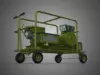
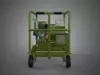
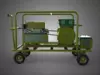
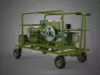
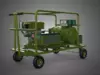
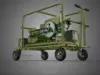
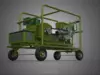
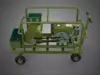
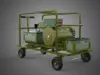
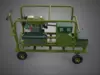
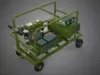
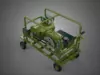
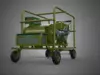
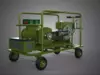
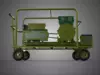
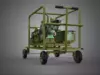
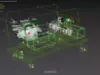
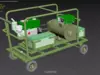
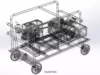
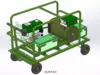
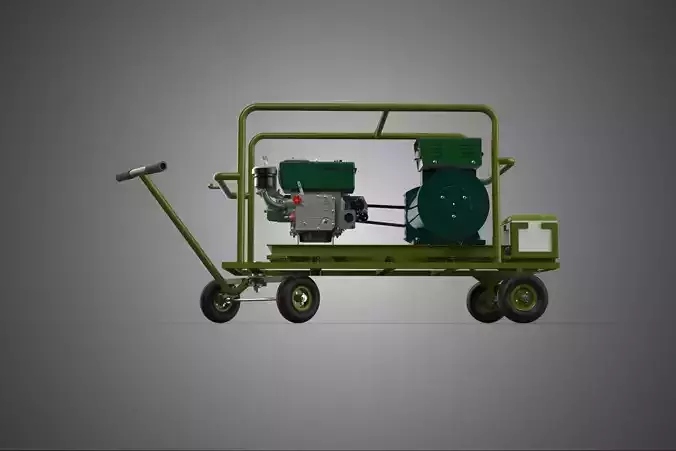
AUXILIARY POWER SUPPLY IN ARMY DEFENSE, RECOVERY, AND RESCUE OPERATIONS
Auxiliary Power Supply (APS) refers to decentralized, supplementary, or emergency electrical generation and storage systems critical for maintaining operational continuity, particularly when primary power sources (such as national grids, centralized generators, or main vehicle engines) are unavailable, compromised, or logistically impractical. Within the context of Army Defense, Recovery, and Rescue Operations (AD RRO), APS systems are indispensable components of tactical infrastructure, ensuring electrical resilience across the full spectrum of military and humanitarian missions.
Role in Army Defense and Tactical Operations
In military defense contexts, APS systems provide essential power independence, a concept vital for maximizing survivability and combat effectiveness. They facilitate the function of critical battlefield elements, including:
- C4ISR Systems: APS ensures uninterrupted power for Command, Control, Communications, Computers, Intelligence, Surveillance, and Reconnaissance assets. This includes powering satellite communication uplinks, tactical radios, field servers, sensor arrays, counter-UAS (Unmanned Aircraft Systems) jammers, and data processing centers necessary for real-time situational awareness and decision-making.
- Signature Management (Silent Watch): Many modern combat vehicles, including armored personnel carriers and main battle tanks, utilize APS units—often high-capacity battery packs or fuel cells—to run sensitive electronics, environmental controls, and surveillance systems while the main engine is shut down. This capability, known as 'silent watch,' drastically reduces acoustic, thermal, and electromagnetic signatures, enhancing concealment and minimizing fuel consumption during static observation periods.
- Forward Operating Bases (FOBs) and Mobile Units: APS scales from small, man-portable units (powering individual radio sets or medical devices) up to large tactical generators necessary for sustaining temporary field hospitals, field maintenance facilities, logistics hubs, and air defense complexes. These units must be highly mobile, ruggedized against shock and vibration, and compatible with military-grade fuels (e.g., JP-8).
### Criticality in Recovery and Rescue Operations (RRO)
Recovery and Rescue Operations—encompassing Combat Search and Rescue (CSAR), disaster relief, humanitarian assistance, and the recovery of critical materiel—often occur in environments characterized by massive infrastructure failure or immediate danger. APS ensures that specialized technical equipment can function immediately upon deployment.
Specific RRO Applications:
- Life Support and Medical Aid: In disaster zones, rapidly deployable APS powers mobile surgical units, refrigeration for blood and pharmaceuticals, life-saving medical devices, and intensive care field lighting.
- Extraction and Engineering: Heavy recovery missions rely on APS to run hydraulic tools, high-capacity winches, specialized cutting equipment, decompression chambers, and high-intensity temporary lighting necessary for night extraction operations (e.g., extricating personnel from collapsed structures or recovering downed aircraft).
- Coordination and Logistics: Post-disaster coordination requires robust communications. APS powers temporary coordination centers, repeater stations, and specialized antennas used by search teams and inter-agency relief forces to maintain contact in areas where civilian infrastructure is non-existent or destroyed. The rapidity of APS deployment is directly proportional to the speed and success rate of rescue missions.
### Technical Attributes and Logistical Requirements
Military-specification APS systems must adhere to stringent MIL-STD standards (such as MIL-STD-810G for environmental ruggedness and MIL-STD-461 for electromagnetic compatibility). Key operational requirements include low acoustic emission (especially for clandestine operations), robust EMI/EMC shielding to prevent interference with sensitive C4ISR assets, and high fuel efficiency.
Modern tactical doctrine increasingly favors hybrid APS solutions, combining traditional diesel generators with advanced battery energy storage systems (BESS) or proton exchange membrane (PEM) fuel cells. This hybrid approach optimizes fuel consumption, provides instantaneous surge capacity, and enables extended silent operation periods, vital for sustaining complex operations under duress. Logistical planning for APS deployment requires sophisticated fuel delivery chains and highly trained maintenance personnel capable of rapid diagnostics and repair in remote, austere, or contested environments.
KEYWORDS: Tactical Power, Generators, C4ISR, Disaster Relief, Silent Watch, CSAR, Field Hospital, Ruggedization, MIL-STD, Resilience, Energy Security, Mobile Infrastructure, Expeditionary Forces, Logistics, Fuel Cells, Hybrid Systems, Acoustic Signature, Electromagnetic Compatibility, Vehicle-Integrated Power, BESS, Sustainment, Austere Environment, Operational Continuity, Humanitarian Aid, Recovery Mission, Power Management, Defense Operations, Field Maintenance, Redundancy, JP-8.