High-quality 3D assets at affordable prices — trusted by designers, engineers, and creators worldwide. Made with care to be versatile, accessible, and ready for your pipeline.
Included File Formats
This model is provided in 14 widely supported formats, ensuring maximum compatibility:
• - FBX (.fbx) – Standard format for most 3D software and pipelines
• - OBJ + MTL (.obj, .mtl) – Wavefront format, widely used and compatible
• - STL (.stl) – Exported mesh geometry; may be suitable for 3D printing with adjustments
• - STEP (.step, .stp) – CAD format using NURBS surfaces
• - IGES (.iges, .igs) – Common format for CAD/CAM and engineering workflows (NURBS)
• - SAT (.sat) – ACIS solid model format (NURBS)
• - DAE (.dae) – Collada format for 3D applications and animations
• - glTF (.glb) – Modern, lightweight format for web, AR, and real-time engines
• - 3DS (.3ds) – Legacy format with broad software support
• - 3ds Max (.max) – Provided for 3ds Max users
• - Blender (.blend) – Provided for Blender users
• - SketchUp (.skp) – Compatible with all SketchUp versions
• - AutoCAD (.dwg) – Suitable for technical and architectural workflows
• - Rhino (.3dm) – Provided for Rhino users
Model Info
• - All files are checked and tested for integrity and correct content
• - Geometry uses real-world scale; model resolution varies depending on the product (high or low poly)
• • - Scene setup and mesh structure may vary depending on model complexity
• - Rendered using Luxion KeyShot
• - Affordable price with professional detailing
Buy with confidence. Quality and compatibility guaranteed.
If you have any questions about the file formats, feel free to send us a message — we're happy to assist you!
Sincerely,
SURF3D
Trusted source for professional and affordable 3D models.
More Information About 3D Model :
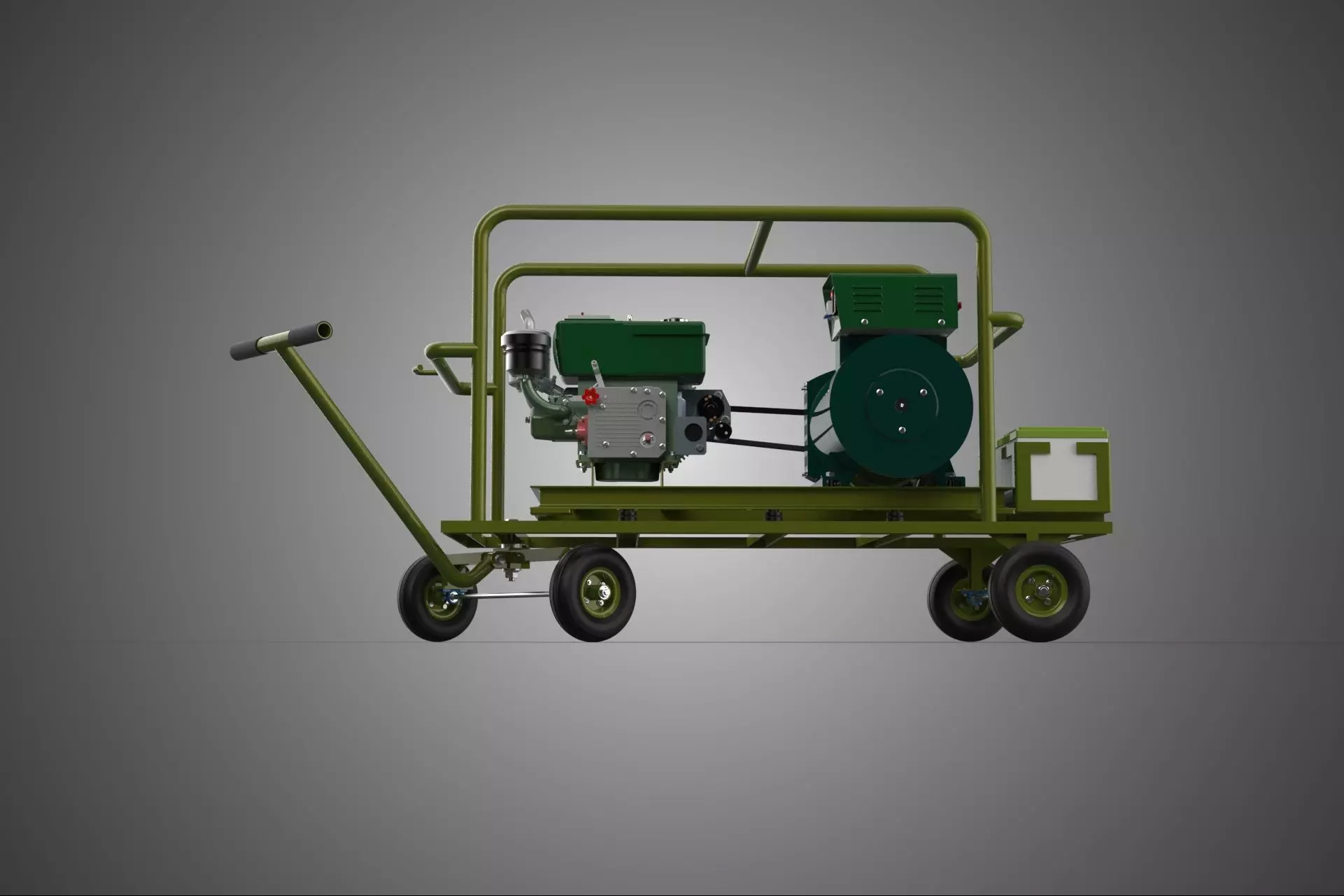
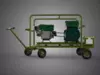
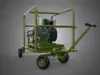
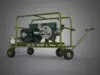
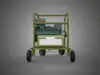
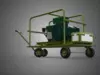
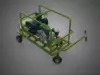
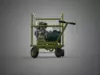
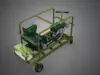
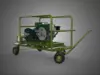
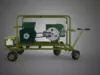
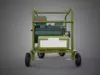
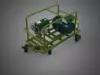
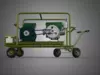
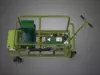
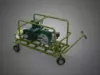
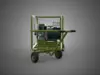
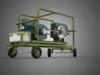
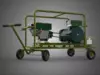
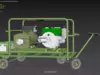
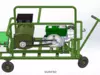
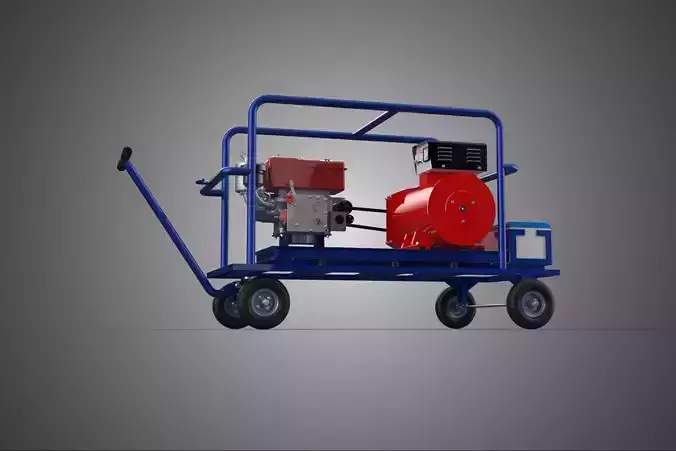
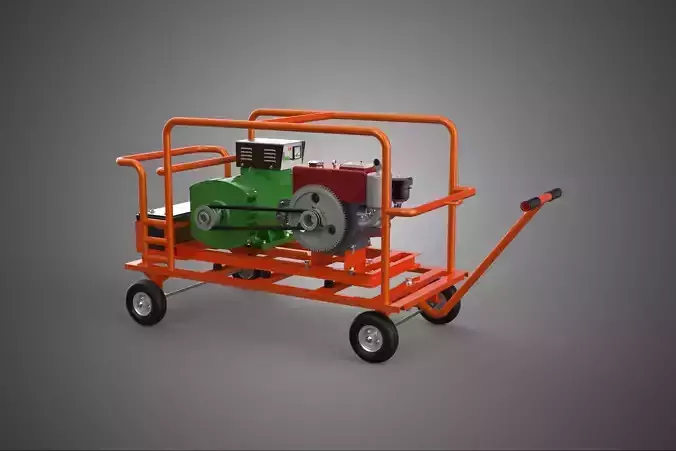
A Military Army Tactical Power Generator Set (commonly referred to as a Tactical Genset) is a specialized, self-contained energy conversion system designed to provide reliable electrical power for deployed military forces in austere and dynamic operational environments. These units are critical components of field logistics, supporting essential functions such as Command, Control, Communications, Computer, Intelligence, Surveillance, and Reconnaissance (C4ISR) infrastructure, field hospitals, temporary maintenance facilities, and Forward Operating Bases (FOBs).
Nomenclature and Definition
The designation Military Tactical distinguishes these generator sets from commercial or industrial units primarily through adherence to stringent military specifications (MIL-SPECs) regarding ruggedization, electromagnetic compatibility (EMC), acoustic signature management, and mobility. A typical genset comprises three principal integrated components:
- Diesel Engine: The prime mover, utilizing compression-ignition technology. Diesel engines are selected for their superior fuel efficiency, robust torque characteristics, long operational lifespan, and compatibility with standardized military fuels such as JP-8 (Jet Propellant 8), which enhances logistical commonality across NATO forces.
- Synchronous Alternator: Also known as the generator head, this component converts the rotational mechanical energy supplied by the diesel engine into electrical energy, typically producing Alternating Current (AC) at standardized voltages (e.g., 120/208V or 277/480V three-phase).
- Control and Enclosure System: A comprehensive suite of controllers, voltage regulators, circuit protection devices, and a ruggedized enclosure that facilitates mobility and protects the internal components from environmental ingress, physical shock, and vibration.
### Key Design Requirements (Military Specifications)
Tactical generator sets are engineered to overcome the unique challenges of military deployment, necessitating specialized design features often mandated by standards such as MIL-STD-705 (Engine and Performance Testing) and environmental standard MIL-STD-810.
#### 1. Ruggedization and Environmental Tolerance
Units are constructed using high-strength materials and shock-dampening mountings to withstand high G-forces encountered during transport and deployment. They must operate reliably across extreme climatic ranges, typically specified for temperatures from -32°C to +50°C, and maintain functionality under conditions of high humidity, sand, dust, fungus, and salt spray. The enclosures often employ specialized filtrations systems to ensure clean air intake for the engine while minimizing dust ingestion.
#### 2. Mobility and Deployability
Tactical gensets are designed for rapid deployment and redeployment. Smaller units are often skid-mounted for easy integration into tactical vehicles or shelters (S-280, ISO containers). Larger units are typically trailer-mounted (T-models) equipped with standardized lifting eyes, forklift slots, and tie-down points compatible with military transport platforms, including fixed-wing aircraft (e.g., C-130, C-17) and rotary-wing assets (sling loading capability).
#### 3. Signature Management
Operational security requires minimizing the unit’s detectability. Tactical gensets incorporate advanced signature reduction technologies:
- Acoustic Signature: Low-noise military generators (LNG) utilize extensive sound attenuation materials, specialized baffling, and low-speed fan designs to reduce audible noise levels, typically aiming for 65–75 dBA at 7 meters, depending on the power rating.
- Infrared (IR) Signature: Exhaust gases and hot surfaces are the primary thermal signatures. Military units employ thermal baffling, heat shields, and exhaust gas diluters to rapidly mix hot gases with ambient air, lowering the unit's infrared emissivity and detectability by thermal imaging systems.
- Electromagnetic Compatibility (EMC): Compliance with MIL-STD-461 is mandatory to ensure the genset neither interferes with sensitive C4ISR equipment nor is susceptible to electromagnetic pulses (EMP) or high-intensity radiated fields (HIRF).
#### 4. Power Ratings and Applications
Tactical gensets range significantly in power output, categorized by their application:
- Small (5 kW to 30 kW): Used for individual communication nodes, small radar units, and medical tents. Often the lightest weight configuration.
- Medium (40 kW to 150 kW): Standard power source for tactical command posts, maintenance shelters, and medium-sized radar systems.
- Large (200 kW to 500 kW+): Employed for powering extensive Forward Operating Bases, large satellite communication uplinks, and high-energy directed-energy systems. These often feature parallel synchronization capability for redundancy and load sharing.
KEYWORDS: C4ISR, Diesel Engine, Genset, Tactical Power, Military Logistics, JP-8 Fuel, Ruggedization, MIL-STD-810, Acoustic Suppression, Infrared Signature, EMP Hardening, Mobility, Alternator, Prime Mover, Synchronous Generator, Field Operations, Deployable Power, Power Distribution, MIL-SPEC, Trailer-Mounted, Skid-Mounted, Load Sharing, Voltage Regulation, Thermal Management, Forward Operating Base, Fuel Efficiency, Standby Power, Three-Phase, Environmental Tolerance, Field Maintenance.